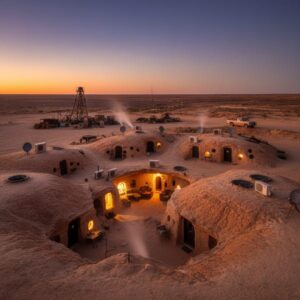
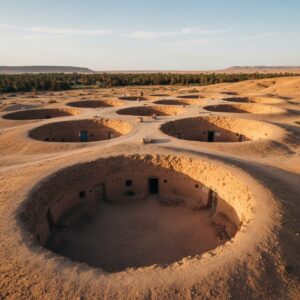

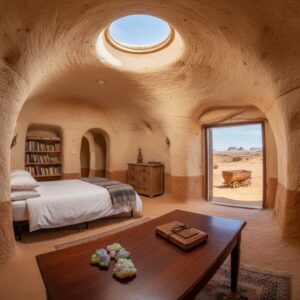
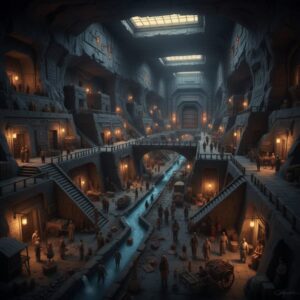
Which underground town is known as the ‘Opal Capital of the World’?

1 / 10 Questions
0 Points

Which underground town is known as the 'Opal Capital of the World'?

Mintabie

White Cliffs

Coober Pedy

Lightning Ridge

Points won
0
Correct score
0%

More Questions

More Articles

Did You Know? 12 Quirky Facts About Ancient Civilizations

Did You Know? 12 Quirky Facts About Ancient Civilizations

⏱️ 4 min read

Did You Know? 12 Quirky Facts About Ancient Civilizations

Ancient civilizations have left us with countless mysteries, innovations, and fascinating cultural practices. While history books often focus on major events and achievements, there are numerous quirky and lesser-known facts that provide unique insights into how our ancestors lived. Here are twelve surprising facts about ancient civilizations that showcase their ingenuity, peculiar customs, and remarkable achievements.

1. Egyptian Makeup Was Medicinal

The iconic dark eye makeup worn by ancient Egyptians wasn't just for cosmetic purposes. The lead-based makeup actually helped prevent eye infections and repelled flies. Scientists discovered that the makeup stimulated the production of nitric oxide in the skin, which strengthened the immune system against eye diseases common in the Nile region.

2. Roman Concrete Self-Repairs

Ancient Roman concrete is more durable than its modern counterpart, and scientists recently discovered why. The mixture contains lime clasts that react with seawater, allowing the concrete to self-heal cracks over time. This explains why 2,000-year-old Roman harbors remain intact while modern concrete structures deteriorate within decades.

3. Aztec Children's Games Were Mandatory

In Aztec society, children were legally required to play games. The Aztecs believed that playing was essential for development and considered it as important as academic education. Games often simulated adult activities and helped children learn vital skills for their future roles in society.

4. Chinese Earthquake Detector

In 132 AD, Chinese scientist Zhang Heng invented the world's first seismoscope. This bronze device, shaped like a vase with eight dragons, could detect earthquakes up to 400 miles away. When an earthquake occurred, a bronze ball would drop from a dragon's mouth into a frog's mouth below, indicating the direction of the earthquake.

5. Mesopotamian Beer Prescriptions

The ancient Mesopotamians prescribed beer as medicine. The oldest known prescription for beer dates back to 2000 BCE. Physicians would combine beer with various herbs and minerals to treat ailments ranging from digestive problems to headaches. Some prescriptions specified drinking beer through a bronze straw.

6. Greek Restaurant Reviews

Ancient Greeks created the world's first restaurant critics. In 350 BCE, a writer named Archestratus wrote a poem called "Hedypatheia" (Life of Luxury), which reviewed restaurants and food throughout the Mediterranean, essentially creating the world's first food guide.

7. Maya Blue's Unique Chemistry

The Maya created a pigment so durable it has survived over 1,000 years of exposure to harsh weather and modern solvents. Maya Blue was made by combining indigo with a special clay, creating a chemical bond that makes it nearly indestructible. Scientists are still studying its unique properties today.

8. Persian Air Conditioning

Ancient Persians developed an early form of air conditioning called "badgirs" or wind catchers. These tall towers caught wind from any direction and funneled it down to cool the buildings below. The system was so effective that some Iranian buildings still use this technology today.

9. Spartan Fashion Police

In ancient Sparta, there were actual fashion police. Laws regulated clothing, hairstyles, and personal grooming. Men could be fined or punished for growing their hair too long or wearing elaborate clothes, as such practices were considered signs of vanity and weakness.

10. Incan Knotted Mathematics

The Inca civilization developed a sophisticated mathematical system using knotted strings called quipus. These devices could record complex numerical data, including census information, tax records, and astronomical calculations. Some researchers believe quipus may have also been used to record narratives and historical events.

11. Viking Cleaning Rituals

Contrary to popular belief, Vikings were quite hygienic. Archaeological evidence shows they had specialized grooming tools, and written records indicate they bathed weekly - a frequency that was unusual for medieval Europeans. They also used a strong soap made from ash and animal fat.

12. Indus Valley Urban Planning

The Indus Valley Civilization had remarkably advanced urban planning. Cities like Mohenjo-daro had sophisticated drainage systems, public baths, and standardized architecture. They developed a grid system for their streets and implemented waste management systems that were more advanced than those in many parts of the world until the 20th century.

Conclusion

These twelve fascinating facts demonstrate that ancient civilizations were far more sophisticated and innovative than often credited. From their technological achievements to their social customs, these societies developed solutions and systems that continue to impress researchers today. Many of their innovations laid the groundwork for modern practices, while others remain unmatched even by contemporary standards. Understanding these quirky aspects of ancient civilizations helps us appreciate the ingenuity and complexity of our ancestors' societies.

Did You Know? 20 Surprising Facts About US War Memorials

Did You Know? 20 Surprising Facts About US War Memorials

⏱️ 8 min read

War memorials across the United States stand as powerful testaments to sacrifice, courage, and national memory. While millions visit these hallowed sites each year, many fascinating details about their construction, symbolism, and history remain unknown to the average visitor. From architectural secrets to hidden inscriptions, these monuments contain remarkable stories that illuminate both their creation and the conflicts they commemorate.

Architectural Marvels and Hidden Details

1. The Vietnam Veterans Memorial's Reflective Design Was Intentionally Controversial

Maya Lin was only 21 years old when her design for the Vietnam Veterans Memorial was selected from over 1,400 entries. The black granite's reflective surface was deliberately chosen to create a mirror effect, allowing visitors to see themselves alongside the names of the fallen—a powerful statement about war's impact on all Americans. The memorial initially faced fierce opposition from veterans who called it a "black gash of shame," but it has since become one of Washington D.C.'s most visited monuments.

2. Arlington National Cemetery Rests on Robert E. Lee's Former Estate

The nation's most famous military cemetery was strategically established on Confederate General Robert E. Lee's confiscated plantation during the Civil War. Union Quartermaster General Montgomery Meigs, whose son was killed in battle, deliberately placed the first graves near the Lee family's rose garden to ensure the property could never return to the family. This act of wartime retribution became America's most sacred burial ground.

3. The Marine Corps War Memorial Required 100 Tons of Bronze

The iconic Iwo Jima Memorial, officially known as the Marine Corps War Memorial, stands as the largest bronze statue ever cast. The sculpture weighs approximately 100 tons and depicts the famous flag-raising photographed by Joe Rosenthal. The flagpole attached to the monument is an actual working flagpole where an American flag flies 24 hours a day by presidential proclamation.

Symbolic Elements and Sacred Traditions

4. The Tomb of the Unknown Soldier Guards Change Every Hour Year-Round

Since 1937, the Tomb of the Unknown Soldier at Arlington has been guarded continuously, 24 hours a day, 365 days a year, regardless of weather conditions. Sentinels take exactly 21 steps during their walk across the tomb, symbolizing the 21-gun salute, the highest honor given any military or foreign dignitary. Guards change every hour on the hour from October through March and every half hour during summer months.

5. The World War II Memorial Contains 4,048 Gold Stars

Each of the 4,048 gold stars on the Freedom Wall at the World War II Memorial represents 100 American military deaths, symbolizing the more than 400,000 Americans who died during the war. Visitors often leave flowers, coins, and notes at the base of the wall, creating spontaneous shrines of remembrance.

6. The Korean War Veterans Memorial Features 19 Statues Representing All Service Branches

The 19 stainless steel statues at the Korean War Veterans Memorial were deliberately designed to appear as a squad on patrol. When their reflection appears in the polished granite wall beside them, the number of figures visually doubles to 38, representing the 38th parallel that divides North and South Korea. The statues stand slightly over seven feet tall and weigh approximately 1,000 pounds each.

Historical Oddities and Lesser-Known Facts

7. The USS Arizona Memorial Leaks Nine Quarts of Oil Daily

The sunken battleship beneath the USS Arizona Memorial at Pearl Harbor continues to leak approximately nine quarts of oil into the harbor each day. Many visitors call these droplets "black tears" or "the tears of the Arizona," viewing them as a poignant reminder of the 1,177 crew members still entombed within the ship's hull.

8. The Lincoln Memorial's Statue Contains a Hidden Face

According to legend, sculptor Daniel Chester French carved the face of Confederate General Robert E. Lee into the back of Abraham Lincoln's head at the Lincoln Memorial. While this remains unverified and likely apocryphal, the memorial does contain deliberate symbolism: Lincoln's hands form the letters "A" and "L" in American Sign Language, a tribute to French's work with the deaf community.

9. Vietnam Veterans Memorial Names Are Listed Chronologically, Not Alphabetically

The 58,320 names on the Vietnam Veterans Memorial are arranged by date of casualty rather than alphabetically, creating a temporal journey through the war. The listing begins and ends at the monument's center point, where the dates of the first and last casualties meet, symbolically completing the circle of sacrifice.

10. The National World War I Memorial Was Only Completed in 2021

Despite World War I ending in 1918, the United States didn't have a national World War I memorial in Washington D.C. until 2021. The memorial features a 58-foot-long bronze sculpture titled "A Soldier's Journey," depicting 38 human figures and making it the largest freestanding bronze sculpture in the Western Hemisphere.

Personal Tributes and Touching Traditions

11. More Than 400,000 Items Are Left at the Vietnam Wall Annually

The Vietnam Veterans Memorial collects an estimated 400,000 objects left by visitors each year, including letters, photographs, military medals, boots, teddy bears, and even motorcycle parts. The National Park Service carefully catalogs and preserves these items in a climate-controlled warehouse, creating an ever-growing collection of personal remembrance.

12. The Eternal Flame at JFK's Grave Burns Using an Electric Spark

President John F. Kennedy's grave at Arlington National Cemetery features an eternal flame that has burned since his burial in 1963. The flame uses a constant electric spark to reignite the gas flow, ensuring it never goes out, even during rain or high winds. Jackie Kennedy lit the flame during the funeral service using a taper provided by a soldier.

13. Civilians Designed Most Major War Memorials

Surprisingly, most of America's most iconic war memorials were designed by civilian architects and artists rather than military personnel. Maya Lin, Henry Bacon (Lincoln Memorial designer), and Horace Peaslee (Arlington Amphitheater) were all civilians who won design competitions or commissions for military monuments.

Engineering Feats and Construction Challenges

14. The Pentagon Memorial Benches Point Toward Birth Years or Impact Site

Each of the 184 memorial benches at the Pentagon Memorial represents a life lost on September 11, 2001. The benches are arranged according to victims' ages, from 3 to 71 years old. Those whose benches face the Pentagon represent individuals inside the building, while those facing outward represent passengers on American Airlines Flight 77.

15. Mount Rushmore Was Originally Planned as a War Memorial

While not exclusively a war memorial today, Mount Rushmore was conceived partly to honor presidents who led the nation through war. Sculptor Gutzon Borglum selected Washington, Jefferson, Theodore Roosevelt, and Lincoln specifically for their roles in preserving and expanding American democracy, including during wartime conflicts.

16. The Gettysburg Battlefield Contains More Than 1,300 Monuments

Gettysburg National Military Park features more monuments and memorials than any other battlefield in the world. The 1,328 monuments, markers, and tablets commemorate units and individuals from both Union and Confederate forces, creating the largest collection of outdoor sculpture in North America.

Modern Memorials and Continuing Legacies

17. Gold Star Families Helped Design Modern Memorial Features

Families who lost service members in recent conflicts have become increasingly involved in memorial design processes. The Global War on Terrorism Memorial, currently in development, includes extensive input from Gold Star families to ensure authentic representation of modern military service and sacrifice.

18. Many War Memorials Include Time Capsules

Numerous American war memorials contain time capsules sealed within their foundations. The Korean War Veterans Memorial includes a time capsule sealed in 1995, intended to be opened in 2045, fifty years after the memorial's dedication. These capsules typically contain photographs, letters, military records, and contemporary newspapers.

19. The National D-Day Memorial Is Not Located in Washington D.C.

Unlike most major national war memorials, the National D-Day Memorial is located in Bedford, Virginia. This small town suffered the highest per capita D-Day losses of any American community, losing 19 soldiers from a population of just 3,000. The memorial features a dramatic sculpture garden and invasion pool representing the beaches of Normandy.

20. Memorial "Rubbings" Create Preservation Challenges

The popular practice of making pencil rubbings of names at war memorials, particularly the Vietnam Veterans Memorial, gradually damages the stone surface. The National Park Service now discourages rubbings and instead provides volunteers who make free paper copies for visitors, preserving the memorial while honoring the tradition of taking home a tangible connection to loved ones.

Conclusion

These remarkable facts reveal that American war memorials are far more than stone and bronze monuments. They are living testaments to sacrifice, incorporating profound symbolism, architectural innovation, and deeply personal connections between past and present. From the oil still weeping from the USS Arizona to the carefully cataloged mementos left at the Vietnam Wall, these memorials continue to evolve as places of reflection, education, and healing. Understanding these hidden details enriches our appreciation for both the artistry of these structures and the profound human experiences they represent. As new generations visit these sacred spaces, the stories embedded within them ensure that the memories of those who served will never fade from American consciousness.