









⏱️ 6 min read
Ancient Persia stands as one of history's most influential civilizations, shaping the development of politics, culture, and society across three continents for over a millennium. From modern-day Iran to territories spanning from Egypt to India, the Persian Empire left an indelible mark on human civilization that continues to resonate today. The following remarkable facts reveal the sophistication, innovation, and grandeur of this extraordinary ancient culture.
The Empire's Remarkable Achievements and Characteristics
1. The World's First Superpower
The Achaemenid Persian Empire, founded by Cyrus the Great in 550 BCE, became the world's first true superpower, ruling over approximately 44% of the global population at its peak. This vast empire stretched from the Indus Valley in the east to Libya in the west, and from the Caucasus in the north to the Arabian Sea in the south, making it the largest empire the ancient world had ever seen up to that point.
2. Revolutionary Human Rights Charter
Cyrus the Great issued the Cyrus Cylinder in 539 BCE, widely considered the world's first human rights charter. This clay cylinder proclaimed religious freedom, abolished slavery, and established racial equality throughout the empire. The United Nations translated this ancient document in 1971, recognizing its significance as a milestone in human rights history.
3. Pioneering Postal System
The ancient Persians developed the "Chapar Khaneh," an extraordinarily efficient postal system that served as inspiration for modern postal services. This network featured relay stations positioned at regular intervals throughout the empire, allowing mounted couriers to deliver messages rapidly across thousands of miles. The system was so effective that it could transmit messages from Susa to Sardis, a distance of 1,677 miles, in just seven days.
4. Advanced Underground Water Systems
Persian engineers invented the qanat system, an ingenious underground irrigation network that transported water from aquifers in mountainous regions to arid lowlands. These subterranean channels, some extending for dozens of miles, minimized water loss through evaporation and are still functional in Iran today, some after 3,000 years of continuous operation.
5. Paradise Gardens Concept
The Persians created the concept of the paradise garden, known as "pairidaeza" in Old Persian, from which the English word "paradise" derives. These elaborate gardens featured geometric designs, water channels, fruit trees, and flowering plants, symbolizing the four elements and serving as earthly representations of heaven.
6. Religious Tolerance Policy
Unlike many ancient empires, Persia practiced remarkable religious tolerance, allowing conquered peoples to maintain their own beliefs, customs, and laws. This policy of acceptance helped maintain stability across the diverse empire and earned the Persians loyalty from various ethnic and religious groups, including Jews, whom Cyrus freed from Babylonian captivity.
7. Elite Immortal Warriors
The Persian military included an elite fighting force called the "Immortals," consisting of exactly 10,000 soldiers. This unit maintained its constant number by immediately replacing any warrior who fell ill, was injured, or died, creating the impression of an invincible, eternal army that struck fear into enemies.
8. Standardized Currency System
Darius I introduced the daric, a standardized gold coin that facilitated trade throughout the empire and beyond. This monetary system represented one of history's earliest examples of international currency, promoting economic integration and commercial exchange across vast distances.
9. Sophisticated Road Network
The Royal Road, stretching over 1,600 miles from Sardis to Susa, represented an engineering marvel of the ancient world. This well-maintained highway system included rest stations, security posts, and fresh horse stations, enabling efficient communication, trade, and military movement throughout the empire.
10. Women's Rights and Property Ownership
Persian women enjoyed considerably more rights than their counterparts in other ancient civilizations. They could own property, conduct business, receive equal pay for equal work, and even travel independently. Archaeological evidence shows women working in various professions, from laborers to supervisors, receiving the same wages as men.
11. Refrigeration Technology
Ancient Persians invented the yakhchal, an evaporative cooling structure that could store ice and preserve food even during scorching summers. These dome-shaped buildings used wind catchers and underground storage chambers to maintain freezing temperatures, demonstrating remarkable understanding of thermodynamics and architectural design.
12. Zoroastrianism's Lasting Influence
Zoroastrianism, the ancient Persian religion founded by the prophet Zoroaster, profoundly influenced later monotheistic religions including Judaism, Christianity, and Islam. Concepts such as heaven and hell, the final judgment, the coming of a savior, and the eternal struggle between good and evil all have roots in Zoroastrian theology.
13. Medical and Scientific Advances
Persian physicians made groundbreaking contributions to medicine, including early forms of anesthesia, surgical techniques, and pharmacology. They established some of the world's first teaching hospitals and compiled extensive medical encyclopedias that preserved Greek medical knowledge and added their own innovations.
14. Wine Culture and Viticulture
Ancient Persians were master vintners who refined winemaking techniques and cultivated numerous grape varieties. Wine played a significant role in Persian culture, featured in poetry, royal banquets, and religious ceremonies, with the Shiraz grape originating from the Persian city of the same name.
15. Architectural Innovation
Persian architects pioneered the use of the iwan, a massive vaulted hall open on one side, which became a defining feature of Islamic architecture. They also perfected the squinch and pendentive, architectural elements that allowed circular domes to rest on square bases, influencing construction techniques for centuries.
16. Tax System Based on Productivity
The Persian Empire implemented a sophisticated taxation system where provinces paid taxes based on their agricultural productivity and resources rather than arbitrary amounts. This fair assessment system, organized by Darius I, helped maintain economic stability and reduced rebellion caused by excessive taxation.
17. Elaborate Ceremonial Capital
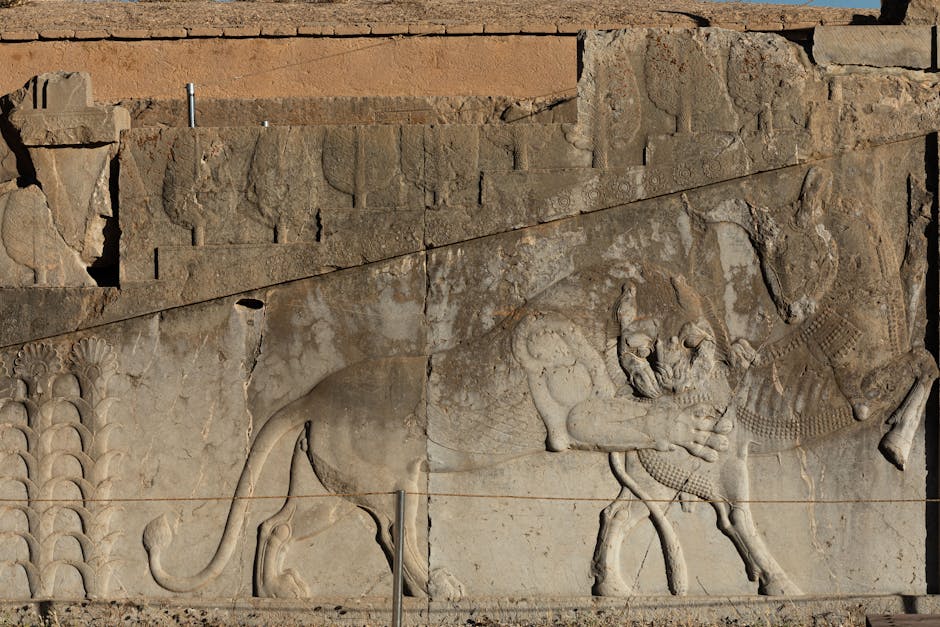
Persepolis, built by Darius I and his successors, served as the ceremonial capital where representatives from all corners of the empire gathered annually to present tribute and celebrate the Persian New Year. The city's magnificent ruins still showcase the empire's artistic achievements, with intricate reliefs depicting the diversity of Persian subjects.
18. Culinary Contributions
Persian cuisine influenced food culture across Asia and Europe, introducing ingredients like spinach, eggplant, and various spices to different regions. They refined cooking techniques, developed elaborate rice dishes including the precursor to modern pilaf, and created sophisticated flavor combinations that continue to influence Middle Eastern and Central Asian cooking.
19. Diplomatic Protocol Standards
The Persian court established elaborate diplomatic protocols that influenced international relations for centuries. These included the exchange of gifts, formal reception ceremonies, and the use of translators and intermediaries, setting standards for diplomatic conduct that persist in modified forms today.
20. Advanced Metallurgy and Craftsmanship
Persian metalworkers achieved exceptional skill in creating weapons, jewelry, and decorative objects. They developed Damascus steel techniques, perfected gold and silver work, and created intricate patterns through metal inlay. Their craftsmanship was so renowned that Persian artisans were highly sought after throughout the ancient world.
Conclusion
Ancient Persia's contributions to civilization extend far beyond military conquests and territorial expansion. From human rights principles and religious tolerance to technological innovations and cultural achievements, the Persian Empire established foundations that continue to influence modern society. These twenty facts merely scratch the surface of Persian civilization's rich legacy, revealing a sophisticated culture that valued knowledge, fairness, and innovation. Understanding ancient Persia's achievements provides essential context for appreciating how this remarkable civilization shaped the development of human society across multiple continents and millennia, leaving an enduring impact that resonates throughout our contemporary world.