
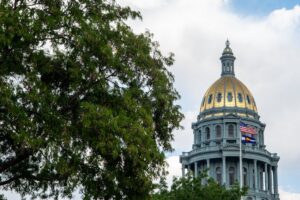






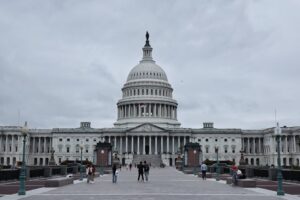

Which City Is The Capital Of Washington?

1 / 10 Questions
0 Points

Which City Is The Capital Of Washington?

Seattle

Spokane

Tacoma

Olympia

Points won
0
Correct score
0%

More Questions

More Articles

Did You Know? 20 Surprising Facts About US Colleges

Did You Know? 20 Surprising Facts About US Colleges

⏱️ 4 min read

Did You Know? 20 Surprising Facts About US Colleges

The United States higher education system is filled with fascinating history, unique traditions, and surprising facts that many people don't know about. Here are 20 intriguing facts about American colleges and universities that showcase the diversity and complexity of the nation's academic institutions.

1. First American College

Harvard University, established in 1636, is the oldest institution of higher learning in the United States. Initially, it was created to train Puritan ministers, and its first class had just nine students.

2. Smallest College

Deep Springs College in California typically enrolls only 25-30 students at a time. Located on a cattle ranch and alfalfa farm, students combine academic studies with manual labor.

3. Largest University Campus

Berry College in Georgia boasts the largest contiguous college campus in the world, spanning over 27,000 acres - nearly twice the size of Manhattan.

4. Underground Library

The University of Michigan's Hatcher Graduate Library sinks one floor every year due to its weight. The architects failed to account for the weight of books when designing the building.

5. College with No Tuition

Berea College in Kentucky charges no tuition and admits only students from low-income families. Students work campus jobs to help offset educational costs.

6. Oldest Building

The Wren Building at the College of William & Mary is the oldest college building still standing in America, dating back to 1700.

7. First Women's College

Mount Holyoke College, founded in 1837, was the first women's college in the United States and became a model for other women's institutions.

8. Underwater Classroom

Florida Keys Community College features the only underwater college classroom in the country, used for marine biology and diving courses.

9. Presidential Education

Only one U.S. President never attended college: Harry S. Truman. Every other president has had some form of higher education.

10. Pizza Consumption

The average college campus pizza place serves approximately 500-1,200 pizzas per week, with orders peaking during final exam periods.

11. Smallest Degree Program

Webb Institute in New York offers only one degree: Naval Architecture and Marine Engineering, with a 100% job placement rate for graduates.

12. First Black College

Cheyney University of Pennsylvania, founded in 1837, is the oldest historically black college in America.

13. Unusual Mascot

The University of California Santa Cruz's official mascot is the Banana Slug, chosen by students for its non-aggressive nature and environmental consciousness.

14. Library Size

Harvard University's library system contains over 20 million volumes, making it the largest academic library system in the world.

15. College Town

Athens, Georgia has more bars per capita than any other U.S. city, largely due to the University of Georgia student population.

16. Secret Societies

Yale University has at least seven secret societies, with Skull and Bones being the most famous, founded in 1832.

17. Research Output

American universities produce approximately 30% of the world's scientific research papers, more than any other country.

18. College Sports Revenue

The University of Texas football program generates over $100 million in revenue annually, making it the most profitable college sports program.

19. Student Debt

The total U.S. student loan debt exceeds $1.7 trillion, which is more than credit card debt and auto loan debt combined.

20. International Students

U.S. colleges host over one million international students annually, with the majority coming from China, India, and South Korea.

Conclusion

These 20 facts demonstrate the incredible diversity, rich history, and unique characteristics of American higher education institutions. From historic firsts to modern achievements, U.S. colleges continue to shape global education and culture in surprising ways. Whether it's through innovative programs, unique traditions, or record-breaking statistics, American universities remain at the forefront of higher education worldwide.

Understanding these lesser-known aspects of U.S. colleges helps paint a more complete picture of the American higher education landscape and its significant impact on society, culture, and global academics. These institutions continue to evolve while maintaining their distinctive characteristics that make them unique in the world of higher education.
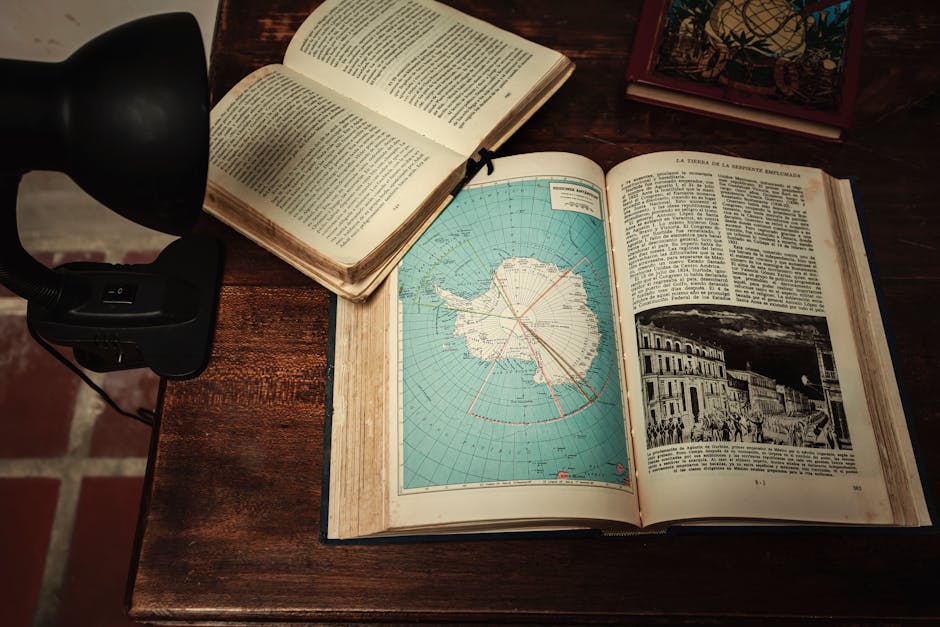
Top 10 Key Moments in Global Exploration History

Top 10 Key Moments in Global Exploration History

⏱️ 4 min read

Top 10 Key Moments in Global Exploration History

Throughout human history, exploration has driven progress, shaped civilizations, and expanded our understanding of the world. From ancient maritime voyages to modern space missions, these pivotal moments have redefined human capabilities and knowledge. Here are ten transformative moments that changed the course of exploration history.

1. The Phoenician Circumnavigation of Africa (600 BCE)

Under the commission of Egyptian Pharaoh Necho II, Phoenician sailors completed the first known circumnavigation of Africa. This three-year journey proved that Africa was surrounded by water and established important maritime trade routes. The expedition demonstrated advanced navigation skills and ship-building techniques of the ancient world.

2. Marco Polo's Journey to China (1271-1295)

Marco Polo's epic 24-year journey along the Silk Road opened Western eyes to Eastern civilization. His detailed accounts of China under Kublai Khan's rule, documented in "The Travels of Marco Polo," introduced Europeans to Asian cultures, technologies, and trade possibilities. This journey catalyzed centuries of East-West exchange and inspired future explorers.

3. Zheng He's Treasure Voyages (1405-1433)

Chinese admiral Zheng He led seven massive naval expeditions throughout the Indian Ocean, reaching as far as East Africa. His fleet of hundreds of ships, some being the largest wooden vessels ever built, demonstrated China's naval superiority and established diplomatic relations across Asia and Africa. These voyages represented the peak of Chinese maritime exploration.

4. Christopher Columbus's Atlantic Crossing (1492)

Columbus's first voyage across the Atlantic Ocean initiated sustained contact between Europe and the Americas. While seeking a western route to Asia, his expedition accidentally discovered the New World, leading to the Columbian Exchange and fundamentally altering the course of global history. This journey marked the beginning of the Age of Discovery.

5. Vasco da Gama's Route to India (1497-1499)

The Portuguese explorer's successful navigation around Africa to reach India established the first direct sea route between Europe and Asia. This achievement revolutionized international trade, broke the Venetian and Arab monopoly on Asian trade goods, and laid the foundation for European maritime empires.

6. Ferdinand Magellan's Circumnavigation (1519-1522)

Though Magellan himself did not survive the journey, his expedition completed the first circumnavigation of the globe. This voyage proved conclusively that the Earth was round, discovered the Pacific Ocean, and revealed the true size of the planet. It stands as one of the greatest achievements in maritime history.

7. James Cook's Pacific Voyages (1768-1779)

Cook's three major voyages mapped vast areas of the Pacific Ocean, making first European contact with numerous island cultures and the eastern coast of Australia. His expeditions combined exploration with scientific observation, setting new standards for maritime research and cartography. His detailed maps and journals significantly advanced naval navigation.

8. Lewis and Clark Expedition (1804-1806)

The Corps of Discovery Expedition, led by Meriwether Lewis and William Clark, completed the first American overland expedition to the Pacific coast. This journey mapped the Louisiana Purchase, documented hundreds of new species, and established relations with Native American tribes. Their detailed journals provided vital information for American westward expansion.

9. First Summit of Mount Everest (1953)

Edmund Hillary and Tenzing Norgay became the first climbers to reach Earth's highest point, marking a milestone in mountaineering history. Their success on Mount Everest demonstrated the limits of human endurance and technical climbing ability, inspiring generations of mountaineers and establishing Nepal as a premier destination for high-altitude climbing.

10. Apollo 11 Moon Landing (1969)

The successful landing of humans on the Moon represented humanity's greatest exploration achievement. Neil Armstrong and Buzz Aldrin's lunar walk proved that human exploration could extend beyond Earth, ushering in the space age and demonstrating unprecedented technological capabilities. This mission fulfilled President Kennedy's challenge and marked the peak of the Space Race.

Conclusion

These ten pivotal moments in exploration history represent humanity's enduring drive to push boundaries and discover the unknown. From ancient maritime journeys to space exploration, each achievement built upon previous successes and inspired future generations. These explorations not only expanded geographical knowledge but also advanced technology, cultural exchange, and scientific understanding. Their legacy continues to influence modern exploration efforts, from deep-sea research to interplanetary missions.

Together, these moments illustrate how human curiosity, courage, and innovation have consistently overcome seemingly impossible challenges, redefining what we believe possible and constantly pushing the boundaries of human achievement. As we look to future frontiers in space exploration and deep-sea discovery, these historic achievements remind us of humanity's remarkable capacity for exploration and discovery.