










What’s the only muscle in the human body not attached at both ends?

1 / 10 Questions
0 Points

What's the only muscle in the human body not attached at both ends?

The tongue

The eye

The diaphragm

The heart

Points won
0
Correct score
0%

More Questions

More Articles

Did You Know? 20 Quirky Facts About American Bridges

Did You Know? 20 Quirky Facts About American Bridges

⏱️ 6 min read

America's bridges are more than just functional structures connecting one point to another. They represent remarkable feats of engineering, historical significance, and sometimes downright peculiar characteristics that make them truly unique. From coast to coast, these architectural marvels hold secrets, stories, and surprising facts that even frequent travelers might not know. Here are twenty fascinating and quirky facts about American bridges that showcase their extraordinary nature.

The Peculiar and Extraordinary

1. The Golden Gate Bridge Wasn't Supposed to Be Gold

The iconic Golden Gate Bridge in San Francisco is actually painted "International Orange," not gold. The color was originally used as a sealant and primer, but consulting architect Irving Morrow found it enhanced visibility in fog and complemented the natural surroundings better than the Navy's proposed gray and yellow stripes.

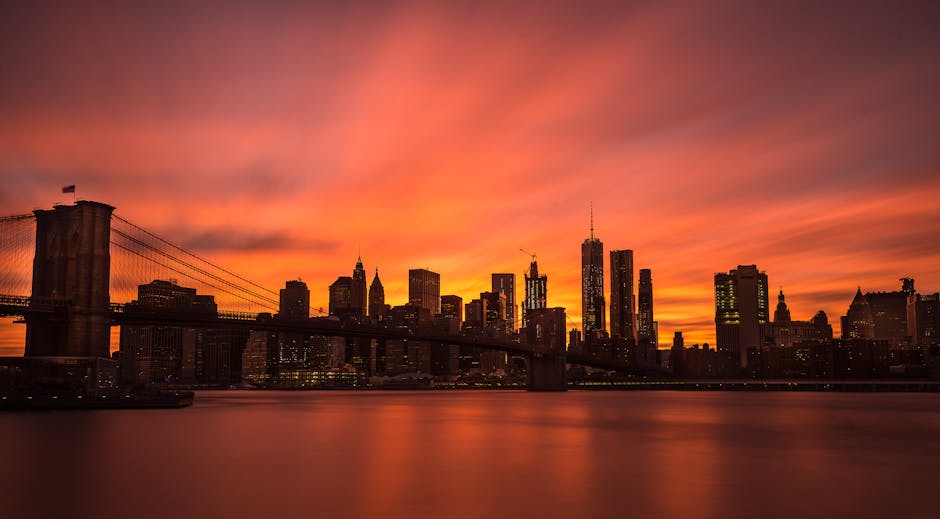
2. Brooklyn Bridge's Wine Cellar Secret

Hidden within the stone vaults of the Brooklyn Bridge's Manhattan anchorage lies a former wine cellar. During the 19th century, these naturally cool, dark spaces were rented out to wine merchants who stored thousands of bottles there, taking advantage of the stable temperature conditions created by the massive stone structure.

3. The Singing Bridge of Louisiana

The Calcasieu River Bridge in Louisiana creates a distinctive singing sound when vehicles drive over it. The noise comes from the metal grating that makes up the bridge deck, causing drivers' vehicles to produce a humming melody as they cross the 135-foot-tall structure.

4. Mackinac Bridge's Annual Walking Tradition

Every Labor Day since 1958, the Mackinac Bridge closes to vehicle traffic for the annual Bridge Walk, where tens of thousands of people walk across the five-mile span connecting Michigan's Upper and Lower Peninsulas. Governors traditionally lead this walk, which can take up to two hours to complete.

5. The Floating Evergreen Point Bridge

Seattle's Evergreen Point Floating Bridge is the longest floating bridge in the world at 7,708 feet. It literally floats on Lake Washington, supported by 77 concrete pontoons. The bridge can rise and fall with lake levels and is designed to withstand hundred-year storms and earthquakes.

Engineering Marvels and Records

6. The Fastest Bridge Construction in America

The I-35W bridge in Minneapolis was rebuilt in an astonishing 340 days after the original structure collapsed in 2007. The contractor received a $27 million bonus for completing it 100 days ahead of schedule, making it one of the fastest major bridge reconstructions in American history.

7. Seven Mile Bridge's Hollywood Fame

Florida's Seven Mile Bridge has appeared in numerous films including "True Lies" and "Fast & Furious" franchises. The original bridge, built in 1912 by railroad magnate Henry Flagler, now serves as the world's longest fishing pier, running parallel to the current automotive bridge.

8. The Bridge That Moves Sideways

The Aerial Lift Bridge in Duluth, Minnesota, is one of only two remaining aerial transfer bridges in the United States. Its 390-foot span lifts vertically up to 135 feet to allow ships to pass beneath, completing this movement in just 55 seconds.

9. Royal Gorge's Dizzying Heights

Colorado's Royal Gorge Bridge held the title of world's highest bridge for 75 years, suspended 955 feet above the Arkansas River. The bridge uses 1,292 wooden planks and can sway up to 16 feet in high winds, yet remains structurally sound due to its cable suspension design.

10. The Covered Bridge Capital

Pennsylvania has more covered bridges than any other state, with over 200 still standing. These bridges were covered not to protect travelers from weather, but to preserve the wooden structural elements from rot and decay, effectively extending their lifespan from 10-15 years to 80-100 years.

Historical Oddities and Cultural Significance

11. London Bridge's Arizona Home

The original London Bridge was purchased by Robert McCulloch in 1968 for $2.46 million and reassembled stone by stone in Lake Havasu City, Arizona. Urban legend claims McCulloch thought he was buying the more ornate Tower Bridge, though this has been disputed by historians.

12. The Bridge Built Backwards

The Carquinez Bridge in California was constructed using an unusual method where workers built it from the center outward in both directions simultaneously. This cantilever construction technique allowed for faster completion but required precise engineering calculations to ensure both halves met perfectly in the middle.

13. New River Gorge's Single-Day Record

West Virginia's New River Gorge Bridge closes to vehicles one day each year for "Bridge Day," when it becomes the largest extreme sports event in the country. Over 400 BASE jumpers legally leap from the 876-foot-high bridge, while hundreds of thousands of spectators watch from the deck.

14. The Sunshine Skyway's Guardian Angels

After the tragic 1980 collapse of the original Sunshine Skyway Bridge in Tampa Bay, which killed 35 people, the new bridge was equipped with massive concrete "dolphins" designed to protect the structure from ship collisions. These barriers can withstand impacts from vessels up to 87,000 tons.

15. Chesapeake Bay Bridge-Tunnel's Island Rest Stops

The 23-mile-long Chesapeake Bay Bridge-Tunnel features four man-made islands. These islands serve as transition points between bridge and tunnel sections and include rest areas, fishing piers, and restaurants, making it the only bridge-tunnel complex with full-service stops in the middle of the ocean.

Unusual Features and Surprising Details

16. The Bridge With Its Own ZIP Code

The Verrazano-Narrows Bridge connecting Staten Island and Brooklyn is so large it has its own ZIP code for maintenance operations. The bridge's towers are 1⅝ inches farther apart at the top than at the bottom to account for Earth's curvature.

17. Kinzua Bridge's Tornado Transformation

Pennsylvania's Kinzua Bridge, once the world's tallest railroad bridge, was partially destroyed by a tornado in 2003. Rather than rebuild, it was converted into a observation deck called the "Kinzua Sky Walk," allowing visitors to walk out over the toppled remnants 300 feet below.

18. The Oldest Covered Bridge Still in Use

The Haverhill-Bath Covered Bridge in New Hampshire, built in 1829, is the oldest covered bridge still open to vehicular traffic in America. It spans 278 feet across the Ammonoosuc River and has survived nearly two centuries of harsh New England weather.

19. San Francisco-Oakland Bay Bridge's Secret Treasure

During the demolition of the eastern span of the Bay Bridge, workers discovered a time capsule sealed in 1936 containing newspapers, coins, and photos. The original bridge was built using more steel than the Golden Gate Bridge, though it receives far less tourist attention.

20. The Bridge That Pays for Itself

The Ambassador Bridge between Detroit and Windsor, Ontario, is the busiest international border crossing in North America and is privately owned. Approximately 25% of all trade between the United States and Canada crosses this bridge, generating substantial toll revenue that has made it one of the most profitable bridges in the world.

Connecting History and Innovation

These twenty quirky facts demonstrate that American bridges are far more than utilitarian structures. They embody innovation, resilience, and sometimes whimsical characteristics that make them beloved landmarks. From bridges that sing and float to those harboring wine cellars and hosting annual celebrations, these engineering marvels continue to capture our imagination while serving essential transportation needs. Whether spanning mighty rivers, deep gorges, or vast bodies of water, America's bridges tell stories of human ambition, creativity, and the endless pursuit of connecting communities across seemingly impossible divides. The next time you cross a bridge, remember that beneath the ordinary act of passage may lie extraordinary tales of engineering ingenuity and historical significance.
Global History Trivia: 20 Questions on Ancient Wars

Global History Trivia: 20 Questions on Ancient Wars

⏱️ 7 min read

Ancient warfare shaped civilizations, redrew borders, and left indelible marks on human history. From the bronze-clad warriors of antiquity to the sophisticated siege engines of classical empires, conflicts throughout the ancient world reveal fascinating details about military strategy, technological innovation, and the rise and fall of great powers. Testing your knowledge of these pivotal battles and military campaigns offers insight into how warfare evolved and influenced the development of human society.

Test Your Knowledge of Ancient Military Conflicts

1. The Battle That Saved Greek Independence

At Marathon in 490 BCE, approximately 10,000 Athenian and Plataean warriors faced a Persian force estimated at 25,000 to 100,000 soldiers. Despite being heavily outnumbered, the Greeks employed innovative tactics, including strengthening their flanks and charging at a run to minimize exposure to Persian arrows. The Greek victory preserved their independence and demonstrated that the mighty Persian Empire could be defeated.

2. Thermopylae's Famous Last Stand

King Leonidas I of Sparta led 300 Spartans, along with several thousand allied Greek forces, to hold the narrow pass at Thermopylae against King Xerxes' massive Persian army in 480 BCE. Although ultimately defeated due to betrayal when a local showed the Persians a mountain path, the Spartans' sacrifice bought crucial time for Greek city-states to prepare their defenses and became a legendary symbol of courage.

3. Alexander's Tactical Masterpiece at Gaugamela

In 331 BCE at Gaugamela, Alexander the Great commanded approximately 47,000 troops against Darius III's Persian force of potentially 100,000 or more soldiers. Alexander's brilliant use of the oblique formation, combined with his cavalry charge that created a gap in enemy lines, resulted in a decisive victory that effectively ended the Persian Empire and opened the road to Babylon.

4. Cannae's Devastating Double Envelopment

Hannibal Barca achieved military history's most studied tactical victory at Cannae in 216 BCE during the Second Punic War. With roughly 50,000 troops, he annihilated a Roman force of 80,000 by executing a perfect double envelopment, surrounding the Romans on all sides. Estimates suggest 50,000 to 70,000 Romans died in a single day, making it one of antiquity's bloodiest battles.

5. The Punic Wars' Duration and Impact

Rome and Carthage fought three separate Punic Wars spanning 118 years (264-146 BCE). These conflicts transformed Rome from a regional Italian power into the dominant Mediterranean superpower, while Carthage was ultimately destroyed, its territory converted into the Roman province of Africa, and allegedly its fields sown with salt.

6. Julius Caesar's Conquest of Gaul

Between 58 and 50 BCE, Julius Caesar conducted campaigns throughout Gaul (modern-day France and Belgium), fighting numerous Celtic tribes. His military success, documented in his "Commentarii de Bello Gallico," resulted in the deaths of an estimated one million Gauls and the enslavement of another million, while expanding Roman territory significantly northward.

7. The Siege of Alesia's Engineering Marvel

During Caesar's Gallic Wars in 52 BCE, the siege of Alesia showcased Roman engineering prowess. Caesar constructed two lines of fortifications: an inner ring to contain 80,000 Gauls inside the fortress and an outer ring to defend against a relief force of 250,000. This double circumvallation, spanning approximately 35 kilometers, enabled Caesar's 60,000 troops to achieve victory.

8. Spartacus and the Slave Rebellion

From 73 to 71 BCE, the gladiator Spartacus led the largest slave uprising in Roman history, known as the Third Servile War. His army grew to approximately 120,000 escaped slaves and defeated multiple Roman legions before finally being crushed by Marcus Licinius Crassus. Six thousand captured rebels were crucified along the Appian Way as a warning.

9. The Battle of Actium's Political Consequences

In 31 BCE, Octavian's fleet, commanded by Marcus Agrippa, defeated the combined forces of Mark Antony and Cleopatra VII at Actium off the western coast of Greece. This naval engagement effectively ended the Roman Republic, as Octavian became Augustus, the first Roman Emperor, ushering in the Imperial period that would last centuries.

10. The Devastating Siege of Jerusalem

In 70 CE, Roman forces under Titus besieged Jerusalem during the First Jewish-Roman War. After five months, the Romans breached the walls, destroyed the Second Temple, and killed an estimated 600,000 to 1.1 million people. This catastrophic defeat fundamentally altered Jewish history and dispersed the population across the Mediterranean world.

11. The Teutoburg Forest Ambush

In 9 CE, Germanic tribes led by Arminius ambushed and destroyed three Roman legions commanded by Publius Quinctilius Varus in the Teutoburg Forest. The loss of approximately 20,000 soldiers shocked Rome and permanently halted Roman expansion beyond the Rhine River, establishing a long-term frontier that shaped European geography.

12. The Peloponnesian War's Length

Athens and Sparta, along with their respective allies, fought the Peloponnesian War from 431 to 404 BCE—a devastating 27-year conflict that weakened all Greek city-states. Athens' eventual defeat marked the end of its golden age and shifted power dynamics throughout the Greek world, leaving Greece vulnerable to Macedonian conquest.

13. Ancient China's Warring States Period

From 475 to 221 BCE, China experienced the Warring States period, during which seven major states competed for supremacy through nearly constant warfare. This era saw remarkable military innovations, including early forms of crossbows, cavalry tactics, and sophisticated siege warfare, ultimately ending when the Qin state conquered its rivals and unified China.

14. The Battle of Kadesh's Historic Peace Treaty

Around 1274 BCE, Egyptian Pharaoh Ramesses II fought the Hittite Empire at Kadesh in modern-day Syria, in one of history's largest chariot battles with possibly 5,000-6,000 chariots engaged. Though tactically inconclusive, it led to the Egyptian-Hittite peace treaty of 1259 BCE, one of the earliest surviving international agreements.

15. Assyrian Military Innovation and Brutality

The Neo-Assyrian Empire (911-609 BCE) pioneered numerous military innovations, including iron weapons, siege towers, battering rams, and one of history's first professional standing armies. Their deliberate use of psychological warfare through brutal reprisals and mass deportations helped them dominate Mesopotamia for centuries.

16. The Greco-Persian Wars' Combined Duration

The Greco-Persian Wars, encompassing multiple campaigns and battles including Marathon, Thermopylae, Salamis, and Plataea, stretched from 499 to 449 BCE—approximately 50 years of intermittent conflict. These wars fundamentally influenced Western civilization by preserving Greek independence and allowing classical Greek culture to flourish.

17. Roman Triumph Ceremony Requirements

For a Roman general to receive a triumph—a grand victory parade through Rome—specific conditions had to be met: the war must have been against a foreign enemy, at least 5,000 enemy soldiers must have been killed in a single engagement, and territory must have been gained for Rome. These strict requirements made triumphs rare and prestigious.

18. The Hoplite Phalanx Formation

Ancient Greek city-states revolutionized warfare with the hoplite phalanx, a dense infantry formation typically eight ranks deep where soldiers protected themselves and their neighbors with overlapping shields. This formation required citizen-soldiers to purchase their own bronze armor and weapons, linking military service to property ownership and influencing Greek political development.

19. Carthaginian War Elephants in Battle

Carthage famously employed war elephants in battles against Rome, with Hannibal notably bringing approximately 37 elephants across the Alps in 218 BCE. These North African forest elephants, smaller than modern African elephants, served both tactical and psychological purposes, though many died during the arduous mountain crossing and harsh Italian winter.

20. The Siege of Troy's Archaeological Reality

While Homer's Iliad places the Trojan War around 1200 BCE and describes a ten-year siege, archaeological evidence suggests a real city of Troy did exist and was destroyed multiple times. The historical basis likely involved conflicts between Mycenaean Greeks and the city controlling strategic trade routes through the Dardanelles, though the epic's supernatural elements remain legendary.

Understanding Ancient Warfare's Legacy

These twenty questions about ancient military conflicts reveal warfare's profound impact on human civilization. From tactical innovations like the phalanx and double envelopment to engineering marvels exemplified by Roman siege works, ancient commanders developed strategies still studied in military academies today. The outcomes of these battles determined which languages, laws, and cultures would dominate vast regions, influencing modern nations' very foundations. Understanding these ancient wars provides crucial context for comprehending how military power, political ambition, and technological advancement have always been intertwined in shaping human history. The courage, strategy, and sometimes brutality displayed in these conflicts remind us that warfare has consistently served as a crucible for human societies, forging empires and destroying civilizations throughout the ancient world.