







The Rosetta Stone was crucial in deciphering which ancient writing system?

1 / 10 Questions
0 Points

The Rosetta Stone was crucial in deciphering which ancient writing system?

Cuneiform

Linear A

Mayan glyphs

Egyptian hieroglyphs

Points won
0
Correct score
0%

More Questions

More Articles

Top 10 Quirky American Festivals You’ll Want to Visit

Top 10 Quirky American Festivals You’ll Want to Visit

⏱️ 4 min read

Top 10 Quirky American Festivals You'll Want to Visit

The United States is home to some of the most unique and eccentric festivals in the world, celebrating everything from food to folklore. These unconventional gatherings showcase the diversity and creativity of American culture, drawing visitors from across the globe. Here are ten of the quirkiest festivals that deserve a spot on your travel bucket list.

1. Emma Crawford Coffin Races - Manitou Springs, Colorado

Held every October, this peculiar festival commemorates Emma Crawford, whose coffin allegedly raced down a mountainside after heavy rains unearthed her grave in 1929. Today, teams push decorated coffins containing living "Emmas" in a race down Manitou Avenue. The event features a parade, costume contests, and live entertainment, drawing thousands of spectators annually.

2. Frozen Dead Guy Days - Nederland, Colorado

This three-day festival celebrates the cryogenically frozen remains of Bredo Morstoel, preserved in a Tuff Shed above the town since 1989. Activities include coffin racing, frozen T-shirt contests, polar plunging, and the ever-popular "Frozen Dead Guy" look-alike competition. The March festival has become a quirky tribute to all things frozen and deceased.

3. Duck Tape Festival - Avon, Ohio

Every June, this adhesive-themed celebration draws craft enthusiasts and DIY lovers. The festival features a Duck Tape parade with floats made entirely of duct tape, fashion shows showcasing duct tape clothing, and sculptures created from the versatile material. Workshops teach visitors creative ways to use the sticky stuff, while vendors sell countless patterns and colors.

4. Woolly Worm Festival - Banner Elk, North Carolina

Each October, this festival centers around woolly worm races, where caterpillars climb vertical strings to predict the severity of the upcoming winter. According to folklore, the brown and black bands on these creatures forecast winter weather patterns. The winning worm becomes the official winter weather predictor, and its owner receives a cash prize.

5. Mosquito Festival - Clute, Texas

Celebrating the pesky insect that put their town on the map, Clute's July festival includes a Mosquito Calling Contest, Mosquito Chase 5K run, and the Mr. and Mrs. Mosquito Legs Contest. While actual mosquitoes are not welcome, the festival provides family entertainment, carnival rides, and BBQ cook-offs, attracting over 13,000 visitors annually.

6. Testicle Festival - Clinton, Montana

Known locally as "Testy Festy," this unique culinary celebration features Rocky Mountain oysters (bull testicles) prepared in various ways. The August event includes testicle eating contests, bull chip throwing competitions, and live music. Despite its provocative nature, the festival has become a beloved Montana tradition, drawing curious food enthusiasts from around the country.

7. Roadkill Cook-off - Marlinton, West Virginia

This September festival features dishes prepared to look like roadkill, though actual roadkill is not permitted. Cooks compete with recipes like "Bumper Bruised Bear" and "Highway Hash," while ensuring all meat comes from legal sources. The event includes a pageant, car show, and live entertainment, celebrating Appalachian culture with a humorous twist.

8. BlobFest - Phoenixville, Pennsylvania

Commemorating the 1958 horror film "The Blob," which was partially filmed in Phoenixville's Colonial Theatre, this July festival features a reenactment of the movie's famous theater escape scene. Activities include sci-fi movie screenings, costume contests, street fairs, and the "Run Out," where participants flee the theater screaming just like in the film.

9. National Hollerin' Contest - Spivey's Corner, North Carolina

This unique competition celebrates the art of hollering, a traditional form of communication used by rural farmers before telephones. Contestants perform different types of hollers, from distress calls to "happy hollers." Though currently on hiatus, the June event's legacy continues to celebrate this disappearing form of vocal communication.

10. Gilroy Garlic Festival - Gilroy, California

Known as the "Garlic Capital of the World," Gilroy hosts this aromatic festival featuring all things garlic, including garlic ice cream, garlic-infused cocktails, and the famous garlic fries. The July event includes cooking competitions, garlic-braiding demonstrations, and a "Garlic Queen" coronation, drawing over 100,000 visitors annually.

Conclusion

These ten festivals represent just a fraction of the unusual celebrations that make America's cultural landscape so diverse and entertaining. From coffin races to garlic-flavored desserts, these events offer unique experiences that go beyond traditional festival fare. They showcase local history, cultural traditions, and the American appetite for the extraordinary, providing unforgettable memories for those brave enough to attend. Whether you're a food enthusiast, thrill-seeker, or cultural explorer, these quirky festivals offer something for everyone, proving that sometimes the most unconventional celebrations create the most lasting impressions.
Top 10 Secrets of Mount Rushmore You Didn’t Know

Top 10 Secrets of Mount Rushmore You Didn’t Know

⏱️ 7 min read

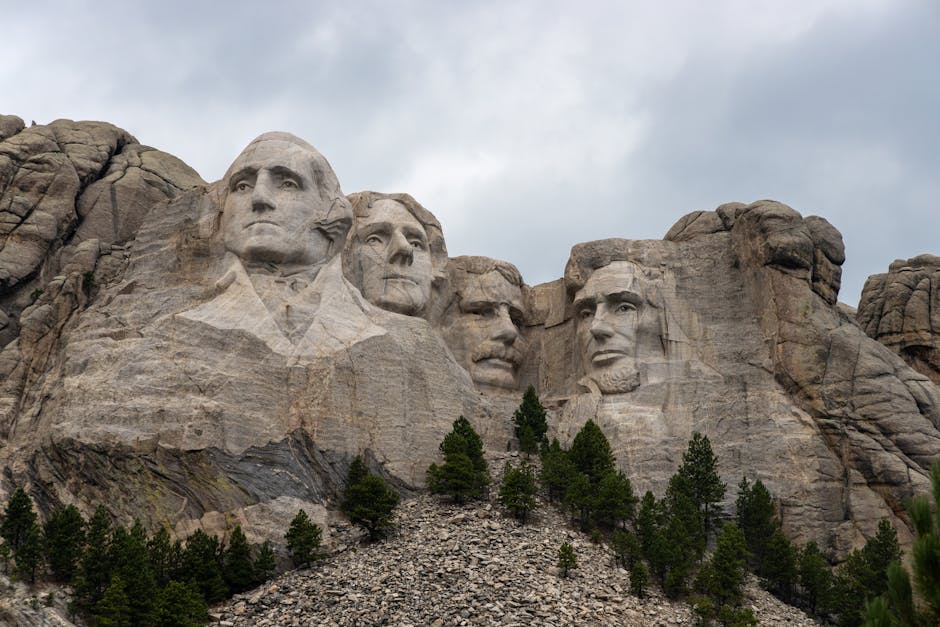
Mount Rushmore stands as one of America's most iconic landmarks, with the massive faces of four presidents carved into the granite cliffs of South Dakota's Black Hills. While millions visit this monument each year, few are aware of the fascinating secrets, hidden details, and untold stories behind its creation. Beyond the striking visage visible from the viewing platform lies a rich history of ambition, compromise, and extraordinary craftsmanship that transformed Gutzon Borglum's vision into reality.

Hidden Stories Behind America's Granite Monument

1. The Secret Chamber Behind Lincoln's Head

Few visitors realize that behind Abraham Lincoln's carved face lies a hidden chamber known as the Hall of Records. Sculptor Gutzon Borglum envisioned this 70-foot tunnel carved into the mountain as a vault to preserve American history for future civilizations. The chamber was intended to house important documents including the Constitution, the Declaration of Independence, and the Bill of Rights. While the project was never completed during Borglum's lifetime, in 1998, a repository of records was finally placed in the unfinished hall, sealed behind a 1,200-pound granite capstone. The chamber contains sixteen porcelain panels with text describing the monument's history and the reasons for selecting each president.

2. The Original Design Featured Full Bodies

Borglum's initial ambitious design called for the presidents to be carved from head to waist, not just as the colossal faces we see today. The original plans included carving the figures down to their waistlines, showing more of each president's form and stature. However, due to insufficient funding, unstable rock conditions, and the onset of World War II, the project was scaled back significantly. The monument was declared complete in 1941, following Borglum's death, even though it represented only about 20% of his original vision. Budget constraints limited the total cost to just under one million dollars, a fraction of what the full design would have required.

3. Thomas Jefferson Was Moved to the Other Side

Thomas Jefferson's placement on Mount Rushmore wasn't part of the original plan's positioning. Initially, Jefferson was supposed to be carved on George Washington's right side, where Theodore Roosevelt currently stands. Workers spent eighteen months carving Jefferson in that location before discovering that the granite was unsuitable and too fragile to support the massive sculpture. After this costly mistake, the entire face had to be blasted off and restarted on Washington's left side. The dynamited Jefferson face left a visible scar on the mountain that can still be detected by careful observers, though it has weathered considerably over the decades.

4. No Workers Died During Construction

Despite the dangerous nature of carving a mountain with dynamite and working hundreds of feet above the ground, not a single worker died during Mount Rushmore's fourteen years of construction. This remarkable safety record is extraordinary considering that nearly 400 workers participated in the project, dangling from cables while operating jackhammers and handling explosives. The workers, many of whom were miners recruited from the surrounding area during the Great Depression, removed approximately 450,000 tons of rock. They were paid eight dollars per day, which was considered excellent wages during the 1930s economic crisis. The project's commitment to safety protocols and Borglum's insistence on proper equipment contributed to this unprecedented achievement.

5. Ninety Percent Was Carved Using Dynamite

Contrary to popular belief that the monument was meticulously hand-carved, approximately 90% of Mount Rushmore was actually carved using carefully controlled dynamite blasts. Borglum developed an innovative technique called "honeycombing," where workers drilled holes in a specific pattern and depth, then placed small dynamite charges to remove rock in precise increments. This method allowed sculptors to blast away granite to within inches of the final surface. Only the final three to six inches were finished using hand tools, bumpers, and pneumatic hammers. This revolutionary technique made the massive project feasible within the available timeframe and budget while maintaining the artistic integrity Borglum demanded.

6. The Mountain Was Originally Named for a New York Lawyer

Before becoming synonymous with presidential grandeur, the mountain was named after Charles E. Rushmore, a New York attorney who had no connection to the Black Hills region. During an expedition to the area in 1885 to inspect mining claims, Rushmore asked his guide about the mountain's name. When told it had no official name, the guide jokingly replied that from then on it would be known as Rushmore. The name stuck, and it was officially recognized by the U.S. Board on Geographic Names. Ironically, Charles Rushmore later became one of the monument's financial supporters, donating $5,000 to the project—making him the largest individual contributor at the time.

7. The Faces Are Designed to Last 7.2 Million Years

Geologists have calculated that Mount Rushmore's granite faces erode at a rate of approximately one inch every 10,000 years, meaning the monument could remain recognizable for over seven million years under current environmental conditions. The Black Hills granite was specifically chosen for its fine grain and exceptional durability. This erosion rate is remarkably slow compared to most other materials and monuments worldwide. The lack of significant weathering since completion in 1941 has validated these predictions. However, modern concerns about climate change, acid rain, and increased freeze-thaw cycles may accelerate deterioration, prompting ongoing preservation efforts and regular monitoring by the National Park Service.

8. Each President Was Chosen for Specific Reasons

The selection of Washington, Jefferson, Theodore Roosevelt, and Lincoln wasn't arbitrary but represented specific themes in American history. George Washington symbolizes the nation's founding and independence. Thomas Jefferson represents expansion and the Louisiana Purchase. Abraham Lincoln embodies preservation of the nation and equality. Theodore Roosevelt was chosen to represent industrial development and conservation efforts. Interestingly, Roosevelt was the only president still alive during the early planning stages, though he died before any carving began. The choices proved controversial, particularly Roosevelt's inclusion over other historically significant presidents, but Borglum defended his selections as representing the nation's first 150 years of democracy, growth, preservation, and development.

9. The Lakota Sioux Consider the Site Sacred and Stolen

Mount Rushmore occupies land within the Black Hills, which holds profound spiritual significance for the Lakota Sioux people, who call it "Six Grandfathers." The region was granted to the tribe through the 1868 Treaty of Fort Laramie, but the U.S. government seized the land following the discovery of gold in 1874. The Supreme Court ruled in 1980 that the land was taken illegally and awarded financial compensation, which the Lakota have refused to accept, demanding the land's return instead. The unclaimed compensation, held in trust, has grown to over one billion dollars with interest. This ongoing controversy adds a complex layer to Mount Rushmore's legacy, highlighting the tension between American symbolism and indigenous sovereignty that remains unresolved today.

10. A Planned Fifth Face Was Never Realized

Plans existed for a fifth face on Mount Rushmore, though historians debate who it might have been. Some documentation suggests Susan B. Anthony was seriously considered, which would have made the monument more inclusive by representing women's suffrage and rights. Other accounts indicate that additional space left by Borglum was intentionally kept available for future generations to add presidents as they deemed appropriate. However, the combination of Borglum's death, World War II, funding exhaustion, and the technical challenges of the remaining rock made any additions impossible. The National Park Service has since determined that no further carving will occur, preserving the monument as Borglum and his son Lincoln left it in 1941.

Conclusion

Mount Rushmore's secrets reveal a monument far more complex than the simple patriotic symbol many perceive. From the hidden Hall of Records to the controversial history of the land itself, these lesser-known facts demonstrate the ambition, ingenuity, and compromise involved in creating this American icon. Understanding the technical innovations like honeycomb blasting, the remarkable safety record, and the unfulfilled grand visions provides deeper appreciation for both the achievement and its limitations. The ongoing dialogue about its location on sacred indigenous land reminds visitors that even our most celebrated landmarks exist within complicated historical contexts that deserve acknowledgment and respect.