







The History of Space Exploration Firsts

1 / 10 Questions
0 Points

Which nation shocked the world by launching the first artificial satellite?

China

United States

France

Soviet Union

Points won
0
Correct score
0%

More Questions

More Articles

Top 10 Must-Know Facts About the Forbidden City

Top 10 Must-Know Facts About the Forbidden City

⏱️ 4 min read

Top 10 Must-Know Facts About the Forbidden City

The Forbidden City, located in the heart of Beijing, China, stands as one of the world's most magnificent architectural wonders and a testament to imperial Chinese history. This UNESCO World Heritage site served as the imperial palace for 24 emperors during the Ming and Qing dynasties. Here are ten essential facts that showcase its historical significance, architectural brilliance, and cultural importance.

1. Unprecedented Scale and Size

The Forbidden City spans an impressive 72 hectares (180 acres), making it the world's largest palace complex. It contains 980 buildings with 8,707 rooms, surrounded by a 52-meter-wide moat and a 10-meter-high wall. The complex perfectly exemplifies ancient Chinese architecture's grandeur and attention to detail.

2. Symbolic Architecture and Colors

Every architectural element in the Forbidden City carries deep symbolic meaning. The dominant yellow roof tiles were exclusively reserved for imperial buildings, as yellow symbolized the emperor. The buildings feature red walls, representing happiness, good fortune, and prosperity in Chinese culture. The entire layout follows strict feng shui principles, oriented precisely along the north-south axis of ancient Beijing.

3. Construction Timeline and Labor

Built between 1406 and 1420 during the Ming Dynasty, the construction required more than one million workers and 100,000 skilled artisans. The project demanded extraordinary resources, including specially selected nanmu wood from the jungles of southwestern China and marble from quarries near Beijing. Over 30 million bricks and 60,000 marble carvers were utilized during construction.

4. Advanced Engineering Features

The palace complex showcases remarkable engineering achievements. Its drainage system, featuring elaborate marble gutters and bronze drains, remains effective after 600 years. The buildings incorporate sophisticated earthquake-resistant features, including interlocking wooden brackets (dougong) that allow structures to flex without collapsing during seismic activity.

5. Imperial Collection and Artifacts

The Palace Museum within the Forbidden City houses over 1.8 million pieces of art and artifacts, representing the world's largest collection of Chinese cultural relics. This includes rare books, ceramics, paintings, bronze works, and imperial items spanning multiple dynasties. Less than 1% of this vast collection is on display at any given time.

6. Strict Access Restrictions

During imperial times, access to the Forbidden City was severely restricted. Common citizens were forbidden from entering without special permission, under penalty of death. Even government officials could only enter for official business. The emperor's guards, eunuchs, and selected female servants were among the few permitted to live within its walls.

7. Unique Supernatural Protection

The palace features numerous supernatural protections according to Chinese traditions. These include bronze lions guarding the gates, nine mythical dragons on the roofs, and the number nine (representing imperial authority) appearing throughout the complex. The total number of studs on the gates is always nine or its multiples.

8. Daily Life and Protocols

Life within the Forbidden City followed strict protocols. The emperor's daily routine, from meals to ceremonies, was precisely scheduled. Thousands of eunuchs and maids served the imperial family, following elaborate rules governing everything from how to address the emperor to which paths they could use within the palace.

9. Strategic Military Design

The complex was designed with defense in mind. Its 10-meter-high walls are made of special bricks that could withstand cannon fire. The gates feature multiple layers of defense, including heavy doors and guard towers. The moat served both as a water source and a defensive barrier.

10. Modern Conservation Efforts

Today, the Forbidden City faces new challenges in preservation. Advanced conservation techniques are employed to protect ancient wooden structures from decay, maintain delicate paintwork, and prevent weather damage. The Palace Museum implements strict visitor quotas and employs cutting-edge technology for artifact preservation and security.

Conclusion

The Forbidden City remains one of humanity's most remarkable architectural and cultural achievements. These ten facts barely scratch the surface of its historical significance and complexity. From its impressive scale and sophisticated engineering to its rich cultural symbolism and modern preservation efforts, the Forbidden City continues to captivate millions of visitors annually while standing as a testament to Chinese imperial history and architectural excellence.
Did You Know These 20 Facts About US Roadside Attractions?

Did You Know These 20 Facts About US Roadside Attractions?

⏱️ 7 min read

America's highways are lined with quirky monuments, bizarre sculptures, and eccentric landmarks that have captured the imagination of travelers for generations. These roadside attractions represent a uniquely American form of folk art and entrepreneurship, transforming ordinary road trips into memorable adventures. From oversized objects to mysterious monuments, these attractions tell the story of American creativity, humor, and the open road culture that defined much of the 20th century.

Fascinating Facts About America's Roadside Wonders

1. The World's Largest Ball of Twine Required Over Four Decades to Create

In Cawker City, Kansas, Frank Stoeber spent 29 years creating a massive ball of twine that weighed 5,000 pounds when he stopped in 1974. The community then took over, and today the ball weighs over 20,000 pounds and measures more than 40 feet in circumference. An annual twine-a-thon event allows visitors to continue adding to this enormous sphere.

2. South of the Border Spans Two States Simultaneously

The famous South of the Border attraction near Dillon, South Carolina, sits so close to the North Carolina border that its 200-foot sombrero tower and sprawling complex essentially straddle two states. This kitschy Mexican-themed rest stop features over 350 billboards spanning 175 miles in both directions, making it one of the most advertised attractions in America.

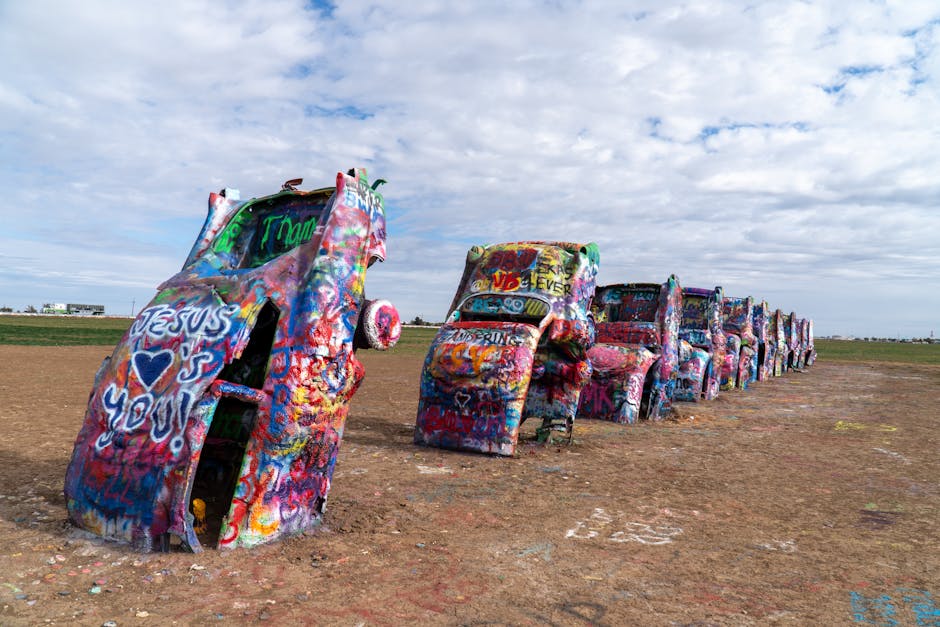
3. Cadillac Ranch Cars Are Buried at the Same Angle as the Great Pyramid

Located in Amarillo, Texas, the ten Cadillacs planted nose-first into the ground are positioned at a 52-degree angle, matching the angle of the Pyramid of Giza. Created by the art collective Ant Farm in 1974, this installation has become an interactive canvas where visitors are encouraged to spray paint the vehicles.

4. Lucy the Elephant Predates the Statue of Liberty

Built in 1881 in Margate City, New Jersey, Lucy the Elephant stands six stories tall and was constructed two years before the Statue of Liberty arrived in America. This architectural folly was originally built as a real estate promotion and has served as a home, business office, and tavern throughout its history.

5. The Mystery Spot Defies Scientific Explanation According to Millions

Opening in 1939 in Santa Cruz, California, The Mystery Spot features a circular area where the laws of physics seemingly don't apply. Visitors experience unusual phenomena including objects rolling uphill and people appearing to change height. While scientists attribute it to optical illusions, the attraction maintains its mysterious reputation.

6. Wall Drug Started with Free Ice Water During the Depression

Wall Drug in Wall, South Dakota, transformed from a struggling pharmacy into a massive tourist complex by offering free ice water to travelers in 1936. Today, the 76,000-square-foot facility still provides free ice water while serving approximately 20,000 visitors daily during peak season.

7. The Original Wigwam Motel Inspired the Cozy Cone in Cars

Built in the 1930s and 1940s, the Wigwam Motels feature concrete teepees that guests can sleep in. The Holbrook, Arizona location directly inspired the Cozy Cone Motel in Pixar's "Cars" movie, bringing renewed attention to this Route 66 classic.

8. Coral Castle Was Built Single-Handedly Using Unknown Methods

Edward Leedskalnin spent 28 years creating Coral Castle in Florida, carving and moving over 1,100 tons of coral rock entirely alone. He worked only at night and left no explanation of how he moved stones weighing several tons each, leading to persistent theories about his construction methods.

9. The Giant Peachoid Water Tower Holds One Million Gallons

Standing 135 feet tall in Gaffney, South Carolina, this water tower was painted to resemble a peach in 1981. The structure holds one million gallons of water and has become such an icon that it was featured in the opening credits of "House of Cards."

10. Carhenge Perfectly Replicates Stonehenge's Dimensions

Built in 1987 near Alliance, Nebraska, Carhenge uses 39 vintage American automobiles to replicate Stonehenge's structure with remarkable accuracy. The monument was created as a memorial and has since been painted gray to more closely resemble the ancient British landmark.

11. The World's Largest Chest of Drawers Was Actually a Furniture Advertisement

High Point, North Carolina, home to the furniture industry, features a building shaped like a giant bureau that stands 38 feet tall. Built in 1926, it originally advertised the High Point Chamber of Commerce and represents the city's furniture manufacturing heritage.

12. Muffler Men Were Mass-Produced Highway Giants

International Fiberglass created approximately 200 twenty-foot-tall fiberglass men in the 1960s, originally designed to advertise muffler shops. These giants were repurposed across America to hold everything from axes to hot dogs, becoming beloved roadside icons.

13. The Thing Remains Arizona's Most Successful Mystery Marketing

Along Interstate 10 in Arizona, hundreds of billboards ask "What is The Thing?" This attraction has successfully maintained curiosity for decades, refusing to reveal its secret in advertising. The mystery has proven so effective that it remains one of the Southwest's most visited roadside stops.

14. Paul Bunyan Statues Number Over Two Hundred Nationwide

The legendary lumberjack appears in giant statue form throughout logging regions, particularly in the Midwest and Pacific Northwest. California, Minnesota, and Michigan each claim to have the "authentic" Paul Bunyan, with statues ranging from 18 to over 30 feet tall.

15. The Blue Whale of Catoosa Was a Anniversary Gift

This 80-foot-long blue whale in Catoosa, Oklahoma, was built by Hugh Davis in the 1970s as an anniversary gift to his wife, who collected whale figurines. It became a beloved swimming hole for local children and remains a cherished Route 66 photo opportunity.

16. Dinosaur Park Sculptures Have Stood Since the Great Depression

Rapid City, South Dakota's Dinosaur Park features seven concrete dinosaurs created in 1936 as a Works Progress Administration project. These Depression-era sculptures have become such icons that they appear on the city's official seal.

17. The World's Largest Collection of Smallest Versions Exists in One Place

Erika Nelson's World's Largest Collection of the World's Smallest Versions of the World's Largest Things is a traveling exhibition showcasing miniature versions of roadside attractions. This meta-collection celebrates American roadside culture through carefully crafted small-scale replicas.

18. Salvation Mountain Required Over 100,000 Gallons of Paint

Leonard Knight spent 28 years creating Salvation Mountain near Niland, California, using adobe clay and over 100,000 gallons of donated paint. This three-story tall folk art installation features biblical verses and has been recognized as a national treasure worthy of preservation.

19. The House on the Rock Contains No Rock House

Despite its name, this Wisconsin attraction, which opened in 1959, features a sprawling complex of bizarre collections including the world's largest carousel. The original house does sit atop a rock formation, but the attraction has grown into a surreal maze of eclectic exhibits.

20. Interstate Highway System Nearly Eliminated Roadside Attractions

The 1956 Interstate Highway Act created high-speed roads that bypassed small towns, threatening the existence of roadside attractions that depended on slower highway traffic. Many attractions closed, but surviving landmarks have experienced renewed interest as travelers seek authentic Americana experiences.

The Enduring Legacy of American Roadside Culture

These twenty facts reveal how roadside attractions represent more than mere curiosities—they embody American ingenuity, humor, and the entrepreneurial spirit. From giant objects to mysterious monuments, these landmarks transformed functional highways into entertainment corridors and gave small communities distinctive identities. While modern GPS and interstate highways have changed how Americans travel, these attractions continue to draw visitors seeking authentic experiences and connections to a slower-paced era. They remind us that the journey itself can be as memorable as the destination, and that sometimes the most remarkable discoveries happen when we take the scenic route.