




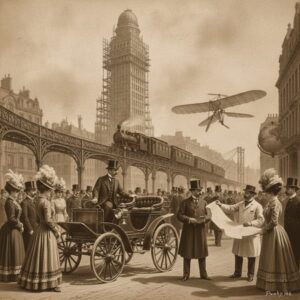






Historical Prophecies That Accidentally Came True

1 / 10 Questions
0 Points

What 1898 novel eerily predicted the Titanic disaster 14 years before it happened?

Futility, or the Wreck of the Titan

The Ice Ship

Voyage of the Doomed

The Sinking of the Colossus

Points won
0
Correct score
0%

More Questions

More Articles

Fun Landmarks Trivia: 20 Facts About Global Wonders

Fun Landmarks Trivia: 20 Facts About Global Wonders

⏱️ 4 min read

Fun Landmarks Trivia: 20 Facts About Global Wonders

From ancient wonders to modern marvels, landmarks around the world captivate millions of visitors annually. Here are 20 fascinating facts about some of Earth's most remarkable monuments and structures that showcase human ingenuity and natural beauty.

1. Great Wall's True Length

The Great Wall of China isn't actually one continuous wall but a network of walls spanning 13,171 miles. Contrary to popular belief, it cannot be seen from space with the naked eye, despite its impressive length.

2. Eiffel Tower's Color Changes

The Eiffel Tower has been painted 19 different times since its construction in 1889. Its current brown color is actually a specially formulated "Eiffel Tower Brown" that requires 60 tons of paint every seven years.

3. Petra's Hidden Features

Only 15% of the ancient city of Petra has been excavated. The vast majority remains underground, suggesting countless undiscovered treasures beneath the Jordanian desert.

4. Taj Mahal's Optical Illusion

The minarets of the Taj Mahal were deliberately built tilting slightly outward. This architectural trick ensures that if they were to collapse, they would fall away from the main dome rather than onto it.

5. Christ the Redeemer's Lightning Protection

The iconic statue in Rio de Janeiro is struck by lightning approximately 6 times per year. It's made of reinforced concrete and soapstone, with lightning rods in the head and arms to prevent damage.

6. Easter Island's Moving Mystery

The massive Moai statues of Easter Island, weighing up to 86 tons each, were moved up to 11 miles from their quarry site using a sophisticated "walking" technique developed by ancient Polynesians.

7. Statue of Liberty's Original Color

Lady Liberty was originally copper-colored when erected in 1886. Its iconic green patina developed naturally over 20 years due to oxidation of the copper skin.

8. Stonehenge's Welsh Origins

The bluestones used in Stonehenge's construction were quarried in Wales, approximately 160 miles away, and transported to the site around 2500 BCE.

9. Leaning Tower's Intentional Lean

Modern engineers maintain the Leaning Tower of Pisa at a precise angle of 3.99 degrees. If straightened completely, the tower would likely become unstable due to its centuries-old foundation.

10. Machu Picchu's Earthquake Protection

The stones in Machu Picchu are cut so precisely and fit so tightly that not even a knife blade can fit between them, creating an earthquake-resistant structure.

11. Sydney Opera House's Tiles

The iconic sail-shaped roof consists of 1,056,006 Swedish-made ceramic tiles, arranged in a chevron pattern to create its distinctive appearance.

12. Colosseum's Naval History

The Roman Colosseum was occasionally flooded to stage naval battles called naumachiae, using an elaborate system of underground channels and mechanisms.

13. Mount Rushmore's Secret Room

Behind Abraham Lincoln's head is a hidden chamber called the Hall of Records, designed to store important American documents for future generations.

14. Angkor Wat's Astronomical Alignment

The temples of Angkor Wat are precisely aligned with the spring equinox, creating a spectacular solar alignment where the sun rises directly over the central tower.

15. Big Ben's Time Keeping

The famous clock is adjusted using old British pennies placed on or removed from its pendulum - adding one penny changes its speed by 0.4 seconds per day.

16. Hagia Sophia's Hidden Cross

Beneath its Islamic mosaics, the Hagia Sophia contains numerous Christian symbols and crosses, preserved beneath layers of plaster for centuries.

17. Golden Gate's Paint Job

The Golden Gate Bridge's distinctive color, "International Orange," was originally just a primer. The color was kept because it provided visibility in San Francisco's frequent fog.

18. Parthenon's Perfect Proportions

The Parthenon incorporates the Golden Ratio throughout its design, with its façade fitting perfectly into a golden rectangle.

19. Chichen Itza's Sound Effects

When you clap at the base of the main pyramid, the echo mimics the sound of the quetzal bird, a sacred animal to the Maya civilization.

20. Burj Khalifa's Temperature Gradient

The temperature at the top of the Burj Khalifa is typically 15°F (8°C) cooler than at ground level, due to its extreme height of 2,717 feet.

These fascinating facts demonstrate how landmarks worldwide continue to surprise and educate us about human achievement, architectural innovation, and cultural significance. From ancient engineering marvels to modern architectural feats, each landmark holds secrets and stories that make them even more remarkable than they appear at first glance.
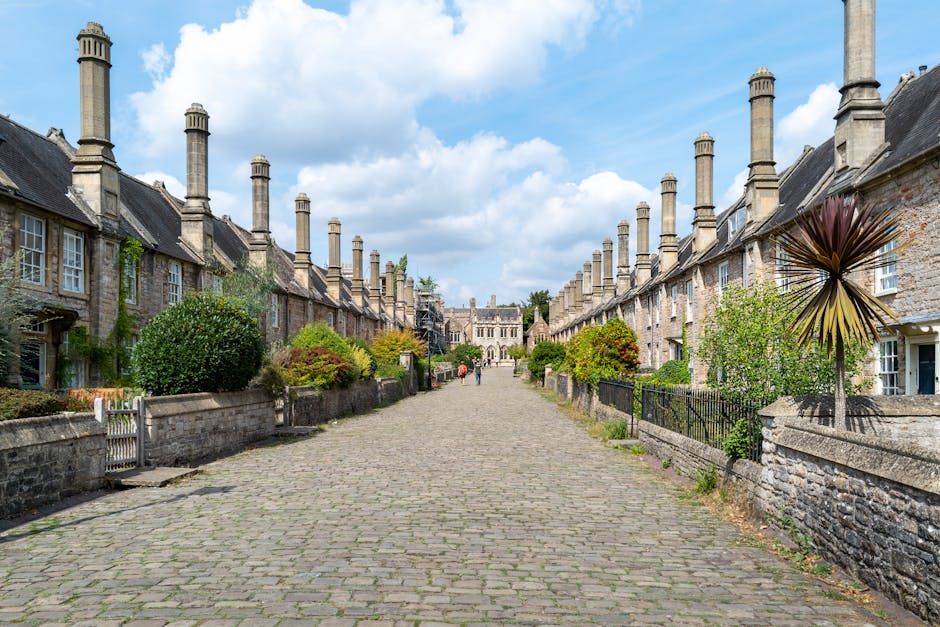
Did You Know? 15 Fun Facts About US Historic Homes

Did You Know? 15 Fun Facts About US Historic Homes

⏱️ 4 min read

Did You Know? 15 Fun Facts About US Historic Homes

The United States is home to countless historic houses that tell fascinating stories of our nation's past. From presidential residences to architectural marvels, these homes hold secrets and surprising facts that many people don't know. Here are 15 intriguing facts about America's historic homes that showcase the rich heritage of residential architecture and history in the United States.

1. The White House's Original Color

Contrary to what many believe, the White House wasn't always white. It was originally built with gray-colored sandstone. The white paint tradition began in 1798 when lime-based whitewash was applied to protect the porous stone from freezing and cracking during winter.

2. Biltmore's Impressive Statistics

The Biltmore Estate in Asheville, North Carolina, remains America's largest private residence ever built. The house features 250 rooms, 35 bedrooms, 43 bathrooms, and 65 fireplaces. Construction took six years to complete, from 1889 to 1895.

3. Mount Vernon's Paint Secret

George Washington's Mount Vernon appears to be made of stone blocks, but it's actually wooden siding. Sand was thrown onto wet paint to create a stone-like texture, a common 18th-century technique called rustication.

4. Monticello's Hidden Features

Thomas Jefferson's Monticello home contains numerous innovative features, including a wine dumbwaiter, a revolving serving door, and a compass on the ceiling of his front porch that helped him track the wind direction.

5. Winchester Mystery House's Oddities

The Winchester Mystery House in San Jose, California, has stairs that lead to nowhere, doors that open into walls, and windows overlooking other rooms. Sarah Winchester continuously built onto the house for 38 years, creating a maze-like structure with 160 rooms.

6. Falling Water's Natural Integration

Frank Lloyd Wright's Falling Water was built directly over a waterfall, incorporating the natural feature into the home's design. The house's cantilevers were revolutionary for their time and appear to float above the water.

7. The Breakers' Electricity Pioneer

The Breakers in Newport, Rhode Island, was one of the first private homes in America to have electricity. It was equipped with its own electrical generators because the city didn't have a power grid when it was built in 1895.

8. Hearst Castle's Zoo History

William Randolph Hearst's California mansion once housed the world's largest private zoo. The property featured exotic animals like polar bears, tigers, and various species of antelope roaming the grounds.

9. Paul Revere House Survival

The Paul Revere House in Boston is downtown's oldest surviving building, dating to around 1680. It is also one of the few remaining examples of 17th-century architecture in an urban area in the United States.

10. Elvis Presley's Graceland Economics

When Elvis purchased Graceland in 1957, he paid $102,500 for the mansion and grounds. Today, the property generates over $150 million annually in tourism revenue for Memphis, Tennessee.

11. Mark Twain House Innovation

The Mark Twain House in Hartford, Connecticut, was one of the first private residences in America to have a telephone and indoor plumbing. It also featured an early form of air conditioning through a ventilation system.

12. Taos Pueblo's Ancient Legacy

The Taos Pueblo in New Mexico consists of ancient adobe homes that have been continuously inhabited for over 1,000 years, making them some of the oldest continuously occupied homes in the United States.

13. Robie House's Japanese Influence

Frank Lloyd Wright's Robie House in Chicago was heavily influenced by Japanese architecture, featuring horizontal lines and overhanging eaves. The design was so influential that when Japan planned to demolish the Imperial Hotel in Tokyo (also designed by Wright), they sent a delegation to study the Robie House.

14. Molly Brown House Survival

The Molly Brown House in Denver survived demolition in the 1970s through a grassroots preservation effort. The preservation success helped establish Denver's historic preservation movement and saved numerous other historic properties.

15. The Oldest Wood-Frame House

The Fairbanks House in Dedham, Massachusetts, built between 1637 and 1641, is the oldest surviving timber-frame house in North America. The house has remained in the same family for eight generations and provides crucial insights into early colonial architecture.

These fascinating facts about America's historic homes demonstrate the incredible architectural innovation, historical significance, and cultural importance of these preserved structures. From technological advances to architectural breakthroughs, these homes stand as testaments to American ingenuity and the evolution of domestic life throughout the nation's history. Their preservation ensures that future generations can continue to learn from and appreciate these remarkable pieces of our architectural heritage.