










⏱️ 7 min read
Bridges represent some of humanity's most impressive engineering achievements, connecting lands, cultures, and communities across impossible divides. These structures have evolved from simple log crossings to architectural marvels that push the boundaries of design and technology. Throughout history, bridges have transformed civilizations, enabled trade, and inspired awe with their beauty and ingenuity. The following fascinating facts reveal the incredible diversity, innovation, and significance of bridges around the world.
Remarkable Bridge Facts From Around the World
1. The Danyang-Kunshan Grand Bridge Holds the World Length Record
Spanning an astounding 164.8 kilometers (102.4 miles), the Danyang-Kunshan Grand Bridge in China holds the Guinness World Record as the longest bridge on Earth. This massive viaduct, which opened in 2011, carries the Beijing-Shanghai High-Speed Railway across the Yangtze River Delta. The construction required over 10,000 workers and took just four years to complete. The bridge's length is so extraordinary that if you were driving across it at highway speeds, the journey would take approximately 2 hours. This engineering marvel demonstrates China's commitment to infrastructure development and showcases modern construction capabilities.
2. Ancient Roman Bridges Still Function After 2,000 Years
The engineering prowess of ancient Rome continues to impress modern engineers, as numerous Roman bridges remain standing and functional after more than two millennia. The Pont du Gard in France, built around 19 BC, and the Alcántara Bridge in Spain, completed in 106 AD, still carry traffic today. These bridges were constructed using precise stone-cutting techniques and innovative arch designs that distribute weight efficiently. The Romans used no mortar in many of their bridges, relying instead on perfectly fitted stones that create compression strength. This longevity testifies to the sophistication of Roman engineering and the timeless principles of proper load distribution.
3. The Golden Gate Bridge's Cables Could Circle the Earth Three Times
San Francisco's iconic Golden Gate Bridge contains enough steel wire in its cables to wrap around the Earth's equator three times over. Each of the bridge's two main cables measures 7,650 feet in length and consists of 27,572 individual wires bundled together. If unwound and placed end-to-end, these wires would stretch approximately 80,000 miles. The cables support the bridge's massive 1.2-mile span and were spun in place using a technique that took six months to complete. The bridge's distinctive International Orange color was specifically chosen to enhance visibility in San Francisco's frequent fog and complement the natural surroundings.
4. Living Root Bridges Grow Stronger Over Time
In the northeastern Indian state of Meghalaya, indigenous Khasi and Jaintia people have cultivated living bridges from the aerial roots of rubber fig trees for centuries. Unlike conventional bridges that deteriorate over time, these living root bridges actually grow stronger and more stable as the roots thicken and interweave. The process of growing a functional bridge takes 10-15 years of careful guidance and training of the roots across rivers and streams. Some of these remarkable structures are over 500 years old and can support the weight of 50 or more people simultaneously. The double-decker root bridge near the village of Nongriat has become particularly famous, featuring two levels of walkways.
5. The Millau Viaduct Towers Higher Than the Eiffel Tower
France's Millau Viaduct holds the distinction of being the tallest bridge in the world, with its highest pylon reaching 343 meters (1,125 feet) above its base—taller than the Eiffel Tower's 324 meters. The bridge's roadway itself sits 270 meters above the Tarn River valley, creating a breathtaking crossing through the clouds. Designed by British architect Norman Foster and French structural engineer Michel Virlogeux, this cable-stayed bridge opened in 2004 and reduced travel time through the region by hours. The slender, elegant design minimizes visual impact while maintaining extraordinary strength, capable of withstanding winds up to 210 kilometers per hour.
6. Bridge Resonance Can Cause Catastrophic Collapse
The phenomenon of mechanical resonance has caused several famous bridge collapses throughout history, most notably the original Tacoma Narrows Bridge in 1940. When external forces match a bridge's natural frequency, oscillations can amplify dramatically, leading to structural failure. The Tacoma Narrows Bridge earned the nickname "Galloping Gertie" due to its undulating movements before it spectacularly twisted apart and collapsed just four months after opening. This disaster revolutionized bridge engineering, leading to extensive wind tunnel testing and aerodynamic considerations in modern bridge design. Today, engineers carefully calculate resonance frequencies and incorporate damping systems to prevent such failures.
7. The World's Oldest Bridge Is Nearly 3,000 Years Old
The Arkadiko Bridge in Greece, dating to approximately 1300-1190 BC, remains the oldest surviving bridge still in use. This Mycenaean corbel arch bridge was part of a military road between ancient cities and continues to serve local traffic today. The bridge exemplifies the corbel arch technique, where stones are carefully placed so each layer projects slightly beyond the one below until meeting in the middle. Standing about 13 feet high and 72 feet long, this modest structure has withstood nearly three millennia of use, earthquakes, and weather. Its survival demonstrates that proper design and quality construction can create structures that outlast entire civilizations.
8. Floating Bridges Rest Directly on Water
Floating bridges, also called pontoon bridges, represent a unique engineering solution for crossing waters too deep or wide for conventional bridge construction. The Evergreen Point Floating Bridge in Seattle, Washington, stretches 7,708 feet across Lake Washington, making it the longest floating bridge on Earth. These structures rest on hollow concrete pontoons that provide buoyancy while being anchored to the lakebed or riverbed with cables. Floating bridges must account for changing water levels, wind-driven waves, and the unique challenge of allowing the roadway to move with water conditions while maintaining driver safety. Norway operates several floating bridges to cross its deep fjords.
9. Some Bridges Are Designed to Break Apart During Earthquakes
Modern seismic engineering has led to counterintuitive bridge designs that intentionally incorporate breakaway sections and controlled failure points. These features allow bridges to absorb earthquake energy by permitting specific components to detach or deform, protecting the overall structure from catastrophic collapse. The Rion-Antirion Bridge in Greece, connecting the Peloponnese peninsula to mainland Greece, uses special shock absorbers and sliding joints that allow the deck to move independently during earthquakes. Base isolation systems place the bridge structure on special bearings that can slide horizontally, decoupling the bridge from ground motion. This approach has proven highly effective in earthquake-prone regions worldwide.
10. The Brooklyn Bridge Was Built Using Pressurized Caissons
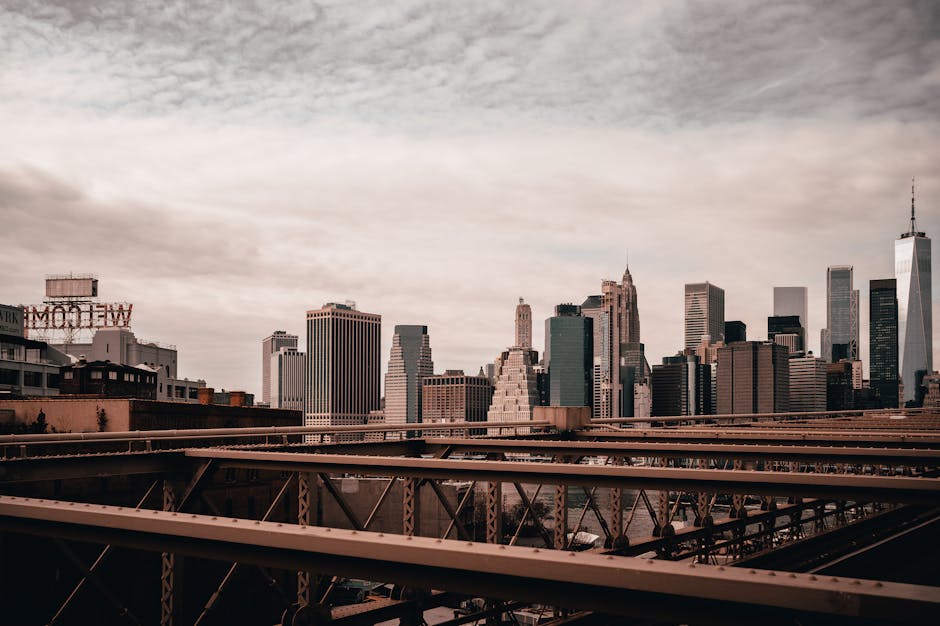
Construction of New York's Brooklyn Bridge pioneered the use of pneumatic caissons—massive watertight chambers that allowed workers to excavate underwater foundations. Workers descended into these pressurized chambers to dig through the riverbed and pour concrete foundations for the bridge towers. However, many workers, including chief engineer Washington Roebling, suffered from "caisson disease" (decompression sickness, or "the bends") due to rapid pressure changes. This painful and sometimes fatal condition wasn't understood at the time, and approximately 110 workers became seriously ill during construction. The bridge's completion in 1883 marked a triumph of engineering ambition, though it came at a significant human cost and led to better safety protocols for future underwater construction projects.
Connecting Past, Present, and Future
These ten fascinating facts illustrate how bridges represent far more than mere crossings—they embody human ambition, creativity, and the relentless drive to overcome natural obstacles. From ancient Roman engineering principles still relevant today to cutting-edge seismic protection systems, bridge construction continues to evolve while honoring timeless structural fundamentals. Whether naturally grown from tree roots, floating on water surfaces, or towering above clouds, bridges demonstrate the remarkable diversity of solutions engineers have developed for the fundamental challenge of spanning distances. As technology advances, future bridges will undoubtedly continue pushing boundaries while serving their essential purpose of bringing people together across the divides that separate them.