











Towns Where Everyone Lives in a Single Building Together

1 / 10 Questions
0 Points

Which Alaska town houses nearly everyone under one roof?

Juneau

Nome

Whittier

Barrow

Points won
0
Correct score
0%

More Questions

More Articles

Top 10 Surprising Facts About the Scientific Revolution

Top 10 Surprising Facts About the Scientific Revolution

⏱️ 6 min read

The Scientific Revolution, spanning roughly from the 16th to the 18th century, fundamentally transformed humanity's understanding of the natural world. While many know about famous figures like Galileo and Newton, this period contains numerous lesser-known facts that reveal the complex, often contradictory nature of this pivotal era. These surprising details illuminate how modern science emerged from a fascinating blend of rational inquiry, mystical beliefs, and fierce intellectual courage.

Revolutionary Discoveries and Hidden Truths

1. Isaac Newton's Secret Obsession with Alchemy

While Isaac Newton is celebrated as one of history's greatest scientists and the father of classical physics, he devoted significantly more time to alchemy than to physics or mathematics. Scholars estimate that Newton wrote over a million words on alchemical subjects, far exceeding his scientific output. He conducted countless experiments trying to transmute base metals into gold and searched for the mythical Philosopher's Stone. Newton kept these pursuits largely secret during his lifetime, knowing that alchemy was viewed with suspicion. This reveals that even the most rational minds of the Scientific Revolution still operated within a worldview that blended emerging science with ancient mystical traditions.

2. Women Made Critical Contributions Despite Systematic Exclusion

Despite being barred from universities and scientific societies, women played crucial roles during the Scientific Revolution. Margaret Cavendish became the first woman to attend a meeting of the Royal Society of London in 1667, though only as a one-time visitor. Maria Sibylla Merian revolutionized entomology with her detailed observations of insect metamorphosis, traveling to Suriname at age 52 to document tropical insects. Maria Winkelmann discovered a comet in 1702 but struggled to receive credit due to her gender. These women, and many others who worked as assistants to male relatives or published anonymously, contributed essential observations and calculations that advanced scientific knowledge despite facing enormous obstacles.

3. The Catholic Church Funded Much Scientific Research

Contrary to popular belief that the Catholic Church uniformly opposed scientific advancement, the Church actually funded significant scientific research throughout this period. The Jesuits, in particular, established an extensive network of observatories and became leading astronomers and mathematicians. Jesuit scientists made important contributions to seismology, optics, and planetary motion. The Church supported this work because understanding the natural world was seen as a way to better appreciate God's creation. The relationship between the Church and science was far more nuanced than simple opposition, though high-profile conflicts like Galileo's trial have overshadowed this complexity in popular memory.

4. Scientific Instruments Were Luxury Status Symbols

During the Scientific Revolution, owning telescopes, microscopes, and other scientific instruments became fashionable among European aristocracy and wealthy merchants. These devices were often beautifully crafted from precious materials and displayed in cabinets of curiosity alongside rare specimens and artifacts. Wealthy patrons hosted scientific demonstrations as entertainment at social gatherings, where guests might observe insects under microscopes or view Saturn's rings. This transformation of scientific instruments into status symbols actually helped fund their development and spread scientific ideas beyond academic circles, democratizing knowledge in unexpected ways.

5. Coffee Houses Became Centers of Scientific Exchange

The explosion of coffee houses across Europe in the 17th century created informal spaces where scientific ideas could circulate freely. Unlike universities, which were restricted to enrolled students and faculty, coffee houses welcomed anyone who could afford the penny admission. Natural philosophers, merchants, artisans, and curious laypeople gathered to discuss new discoveries, debate theories, and share observations. In London, different coffee houses became associated with particular interests—some focused on astronomy, others on mathematics or natural history. This caffeinated culture of conversation accelerated the exchange of ideas and helped create a public sphere for scientific discourse.

6. Many Revolutionary Thinkers Faced Death Threats and Exile

The pursuit of scientific truth often came with severe personal consequences. René Descartes lived in the Dutch Republic partly to avoid persecution in Catholic France. Thomas Hobbes fled to France during the English Civil War, and his materialist philosophy later made him a target of both religious and political enemies. Giordano Bruno was burned at the stake in 1600 for his cosmological views, including the idea of infinite worlds. Even after making groundbreaking discoveries, scientists lived with constant awareness that their ideas could bring imprisonment, exile, or death, demonstrating remarkable courage in continuing their work.

7. Medical Breakthroughs Relied on Grave Robbing

The advancement of anatomical knowledge during the Scientific Revolution depended heavily on illegal acquisition of human bodies. Since dissection was strictly regulated and legal cadavers were scarce, anatomists often relied on grave robbers, called "resurrection men," to supply fresh corpses. Andreas Vesalius, whose detailed anatomical drawings revolutionized medicine, reportedly stole bodies from gibbets and graveyards. This grim necessity created an underground economy around body procurement and raised ethical questions that weren't formally addressed until the 19th century, yet without these practices, modern medicine's understanding of human anatomy would have developed far more slowly.

8. The Printing Press Created the First Scientific Community

Before the printing press, scientific knowledge spread slowly through hand-copied manuscripts and personal correspondence. The proliferation of printing technology allowed scientists to share discoveries rapidly across Europe, creating the first true international scientific community. Scientific journals emerged, with the first peer-reviewed journals appearing in 1665. This allowed researchers in different countries to build upon each other's work, replicate experiments, and engage in debates through published papers rather than waiting months for letters to arrive. The printing revolution transformed science from isolated individual efforts into a collaborative, cumulative enterprise.

9. Practical Craftsmanship Rivaled Academic Theory

The Scientific Revolution witnessed unprecedented collaboration between learned scholars and skilled craftspeople. Instrument makers, lens grinders, miners, and navigators possessed practical knowledge that proved essential to scientific advancement. The invention and refinement of the telescope, for instance, required lens grinders to develop techniques that scholars could theorize about but not execute themselves. This breakdown of the traditional hierarchy between "head work" and "hand work" was revolutionary in itself, as empirical observation and experimental manipulation became valued alongside classical learning and mathematical reasoning.

10. Many Scientists Pursued Multiple Disciplines Simultaneously

The concept of narrow specialization didn't exist during the Scientific Revolution. Most natural philosophers pursued knowledge across multiple fields simultaneously. Gottfried Wilhelm Leibniz made contributions to mathematics, philosophy, physics, linguistics, and history. Robert Hooke investigated topics ranging from microscopy to architecture to paleontology. This interdisciplinary approach meant that insights from one field often sparked breakthroughs in another. The modern division of science into separate, specialized disciplines would have seemed strange to Scientific Revolution thinkers, who saw all natural knowledge as interconnected parts of a unified whole.

The Complex Legacy of Revolutionary Science

These ten facts reveal that the Scientific Revolution was far more complex, contradictory, and fascinating than simplified narratives suggest. It was an era where rational empiricism coexisted with mystical pursuits, where institutional barriers couldn't completely suppress determined minds, and where the pursuit of truth required both intellectual brilliance and personal courage. Understanding these nuances helps us appreciate that scientific progress has never been a simple, linear march toward truth, but rather a messy, human endeavor shaped by social forces, economic realities, and individual passions. The foundations of modern science rest not only on brilliant discoveries but on the complicated, often surprising circumstances that made those discoveries possible.
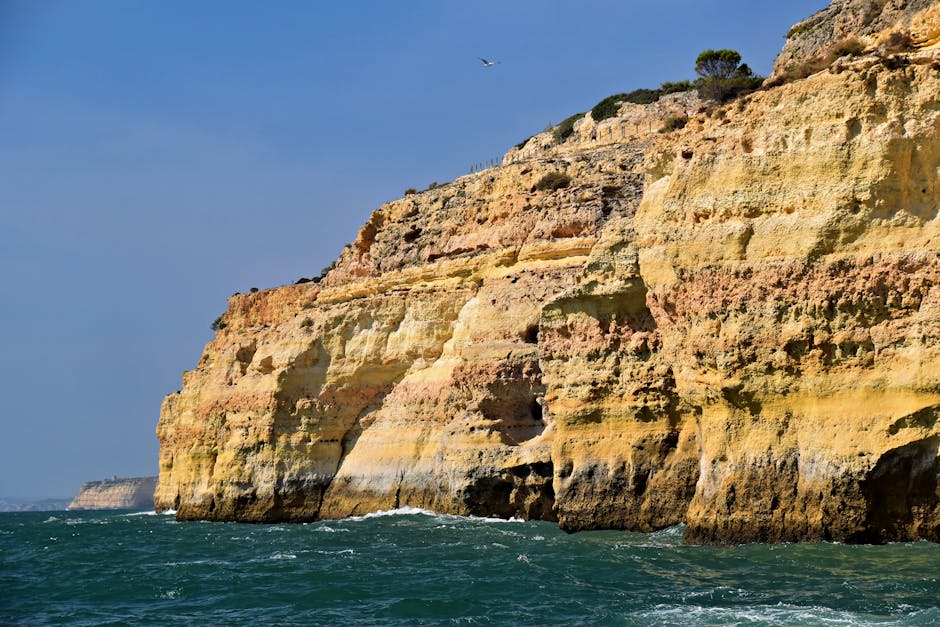
Did You Know These 15 Facts About US Coastal Geography?

Did You Know These 15 Facts About US Coastal Geography?

⏱️ 6 min read

The United States boasts one of the most diverse and extensive coastlines in the world, stretching across multiple oceans and climate zones. From the rocky shores of Maine to the tropical beaches of Hawaii, American coastal geography presents a fascinating tapestry of natural wonders, ecological diversity, and impressive statistics that often go unnoticed. These remarkable features have shaped the nation's history, economy, and environmental landscape in profound ways.

Extraordinary Dimensions of America's Shoreline

The Astounding Total Coastline Measurement

The United States possesses approximately 95,471 miles of coastline when measuring the general outline of the shore, including islands, sounds, bays, rivers, and creeks to the head of tidewater. This figure makes the U.S. coastline one of the longest in the world, ranking behind only Canada. When considering just the general coastline without these intricate measurements, the figure stands at about 12,380 miles, but the more detailed tidal shoreline measurement reveals the true complexity of America's coastal boundaries.

Alaska's Dominant Coastal Contribution

Alaska alone accounts for more than half of the entire U.S. coastline, with approximately 54,563 miles of tidal shoreline. This single state surpasses the combined coastlines of all other U.S. states, showcasing the massive scale of America's northernmost territory. Alaska's coastline includes three distinct maritime borders: the Pacific Ocean, Arctic Ocean, and Bering Sea, each presenting unique geographical characteristics and ecological systems.

The Gulf Coast's Remarkable Length

The Gulf of Mexico coastline extends for approximately 1,680 miles along the general outline, touching five states: Texas, Louisiana, Mississippi, Alabama, and Florida. However, when accounting for all the inlets, bays, and barrier islands, the Gulf Coast's tidal shoreline measures over 17,000 miles. This region features some of the most productive fishing waters in the nation and includes vital wetland ecosystems that serve as natural storm barriers.

Unique Coastal Features and Phenomena

The Continental Shelf's Varying Width

The continental shelf along U.S. coasts varies dramatically in width depending on location. Off the Atlantic coast, particularly near Cape Cod, the shelf extends up to 250 miles offshore, creating the famous Georges Bank fishing grounds. In contrast, along much of the Pacific coast, especially near California, the continental shelf can be as narrow as 10 miles, leading to dramatically different marine ecosystems and ocean conditions between the two coasts.

America's Only Triple Ocean Coastline

The United States is one of only three countries in the world with coastline on three different oceans: the Atlantic, Pacific, and Arctic Oceans. This unique geographical position provides the nation with diverse marine resources, strategic maritime access, and varied coastal climates ranging from tropical to polar. Only Canada and Russia share this distinction of having territory bordering three oceans.

The Chesapeake Bay's Massive Watershed

The Chesapeake Bay, the largest estuary in the United States, has a watershed covering approximately 64,000 square miles across six states. The bay itself contains over 11,600 miles of shoreline, more than the entire U.S. West Coast combined. This extraordinary water body produces more than 500 million pounds of seafood annually and serves as a critical habitat for over 3,600 species of plants and animals.

Coastal Islands and Barrier Systems

The Outer Banks' Dynamic Movement

North Carolina's Outer Banks, a 200-mile stretch of barrier islands, moves westward at varying rates due to erosion and sediment deposition. Some sections shift as much as 15 feet per year, making these islands some of the most dynamic coastal landforms in the United States. These barrier islands protect the mainland from storm surge and ocean waves while providing critical habitat for numerous species.

Florida's Dual Coastline Distinction

Florida holds the unique distinction of having coastline on both the Atlantic Ocean and the Gulf of Mexico, giving it more coastal shoreline than any other state in the contiguous United States at approximately 8,436 miles of tidal shoreline. The state's peninsula geography means that no point in Florida is more than 60 miles from saltwater, profoundly influencing its climate, economy, and culture.

The Channel Islands' Biodiversity Hotspot

California's Channel Islands, located off the coast of Southern California, contain over 2,000 species of plants and animals, with 145 species found nowhere else on Earth. These islands have been isolated from the mainland for thousands of years, creating unique evolutionary paths for many species. The surrounding waters constitute one of the most productive marine environments in the world.

Coastal Climate and Environmental Factors

The Gulf Stream's Warming Influence

The Gulf Stream, a powerful warm ocean current, flows along the U.S. East Coast at speeds up to 5.6 miles per hour, transporting approximately 100 times more water than all the world's rivers combined. This current profoundly affects the climate of the Eastern Seaboard, keeping coastal waters warmer and influencing weather patterns as far inland as the Appalachian Mountains.

West Coast Upwelling Zones

The California coast experiences seasonal upwelling, where deep, cold, nutrient-rich waters rise to the surface, creating some of the most productive fishing grounds in the world. This phenomenon occurs when winds push surface waters offshore, allowing deeper waters to rise and replace them. These upwelling zones support massive populations of phytoplankton, which form the base of a rich marine food web.

Coastal Wetlands' Carbon Storage Capacity

U.S. coastal wetlands, including salt marshes and mangrove forests, cover approximately 30 million acres and store carbon at rates up to 40 times faster than terrestrial forests. These "blue carbon" ecosystems play a crucial role in climate regulation while simultaneously protecting coastlines from erosion and storm damage. Despite their importance, the United States has lost more than half of its original wetlands since colonial times.

Human Impact and Coastal Development

Population Concentration Along Coasts

Approximately 40% of the U.S. population, or about 128 million people, live in coastal counties, despite these areas representing only 10% of the nation's land area (excluding Alaska). This concentration creates significant environmental pressures, including habitat loss, water pollution, and increased vulnerability to coastal hazards such as hurricanes and sea-level rise.

The Economic Power of Coastal Tourism

Coastal tourism and recreation generate over $124 billion annually for the U.S. economy, supporting more than 2.4 million jobs. Beach-related activities alone attract nearly 180 million visitors each year, making coastal areas among the nation's most valuable economic resources. This industry depends heavily on maintaining healthy coastal ecosystems and pristine beach environments.

Rising Sea Levels' Projected Impact

Sea levels along U.S. coastlines have risen approximately 8 inches since 1880, with the rate of increase accelerating in recent decades. Scientists project that sea levels could rise an additional 1 to 4 feet by 2100, potentially affecting millions of coastal residents and threatening critical infrastructure valued in the trillions of dollars. This rise poses particular challenges for low-lying areas such as South Florida, the Gulf Coast, and the Chesapeake Bay region.

Conclusion

The coastal geography of the United States represents an extraordinary natural heritage characterized by remarkable diversity, scale, and ecological significance. From the sheer magnitude of Alaska's shoreline to the unique marine ecosystems supported by ocean currents and upwelling zones, these fifteen facts illuminate the complex and dynamic nature of America's maritime boundaries. Understanding these geographical features becomes increasingly important as coastal populations grow and environmental challenges mount. The nation's coastlines are not merely scenic attractions but vital economic engines, biodiversity repositories, and cultural touchstones that require careful stewardship for future generations. As sea levels rise and human pressures intensify, appreciating the intricate geography of these coastal zones becomes essential for informed decision-making about conservation, development, and climate adaptation strategies.