




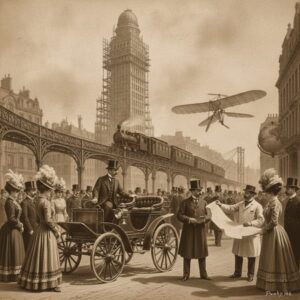





Historical Prophecies That Accidentally Came True

1 / 10 Questions
0 Points

What 1898 novel eerily predicted the Titanic disaster 14 years before it happened?

Futility, or the Wreck of the Titan

The Ice Ship

Voyage of the Doomed

The Sinking of the Colossus

Points won
0
Correct score
0%

More Questions

More Articles

Did You Know These 12 Facts About the Arc de Triomphe?

Did You Know These 12 Facts About the Arc de Triomphe?

⏱️ 7 min read

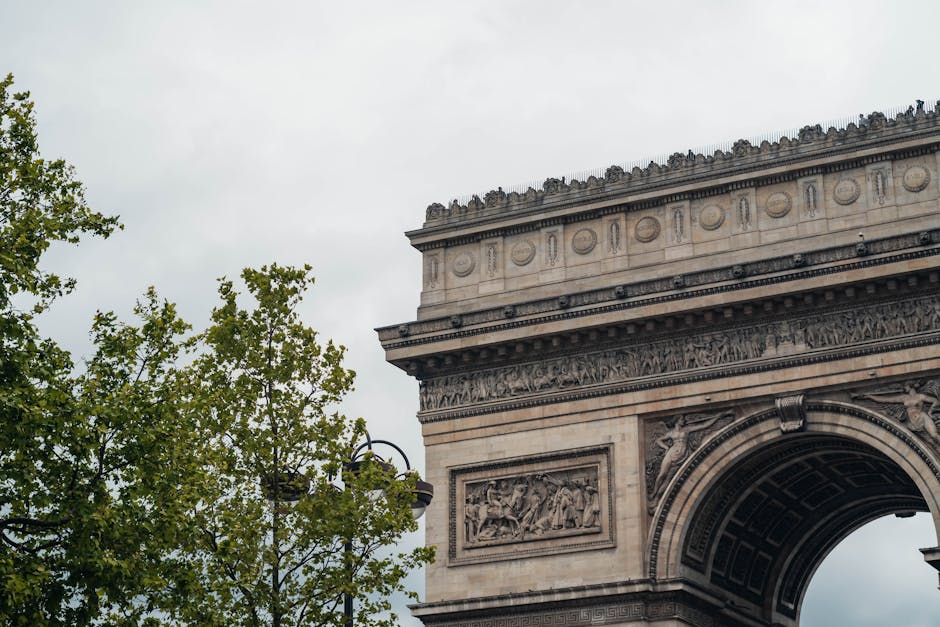
Standing majestically at the center of the Place Charles de Gaulle in Paris, the Arc de Triomphe is one of the world's most recognizable monuments. While millions of tourists photograph this iconic landmark each year, many fascinating details about its history, construction, and significance remain relatively unknown. From its Napoleonic origins to its modern-day role in French national ceremonies, the Arc de Triomphe holds secrets that even frequent visitors might not know.

Remarkable Facts About Paris's Iconic Monument

1. Napoleon Never Saw It Completed

Emperor Napoleon Bonaparte commissioned the Arc de Triomphe in 1806 to honor the Grande Armée and celebrate his victory at the Battle of Austerlitz. However, construction took 30 years to complete, finishing in 1836. Napoleon died in exile in 1821, fifteen years before the monument's completion. Ironically, his remains did pass under the arch in 1840 when they were returned to France for reburial at Les Invalides. When Napoleon married his second wife, Marie-Louise of Austria, in 1810, only a wooden mock-up of the arch existed for the wedding procession.

2. It's the Second Largest Triumphal Arch in the World

The Arc de Triomphe measures an impressive 50 meters (164 feet) in height, 45 meters (148 feet) in width, and 22 meters (72 feet) in depth. Despite its monumental size, it ranks as the second largest triumphal arch globally. The largest is the Arch of Triumph in Pyongyang, North Korea, which was deliberately built to be slightly larger. The Parisian arch's massive scale was intentional, designed to dwarf other triumphal arches and symbolize the might of Napoleon's military achievements.

3. The Tomb of the Unknown Soldier Lies Beneath

Since November 11, 1920, the Arc de Triomphe has housed the Tomb of the Unknown Soldier from World War I. The eternal flame at the tomb, rekindled every evening at 6:30 PM, has never been extinguished since it was first lit on November 11, 1923. This daily ceremony honors all unidentified soldiers who died for France. The flame continued burning even during the German occupation of Paris in World War II, and German soldiers were actually ordered to respect and maintain the site.

4. Twelve Avenues Radiate from the Monument

The Arc de Triomphe stands at the center of Place Charles de Gaulle, formerly known as Place de l'Étoile (meaning "Star Square"). Twelve grand avenues radiate from the monument in a star pattern, including the famous Champs-Élysées. This urban planning masterpiece was designed by Baron Haussmann during his renovation of Paris in the 1850s and 1860s. The configuration creates one of the most complex traffic circles in the world, where cars entering the roundabout have the right of way—a unique exception to French traffic law.

5. Intricate Sculptural Details Tell Military Stories

The monument features four massive sculptural groups at its base, each representing a significant moment in French military history. The most famous is "The Departure of the Volunteers of 1792," commonly known as "La Marseillaise," created by François Rude. The reliefs depict various battles and military triumphs from the Revolutionary and Napoleonic periods. Additionally, the interior walls are engraved with the names of 558 French generals, with those who died in battle underlined. The surfaces also list 128 battles fought between 1792 and 1815.

6. A Daring Aerial Stunt Made History

On August 7, 1919, pilot Charles Godefroy flew his Nieuport biplane through the Arc de Triomphe. This unauthorized flight was performed to honor French pilots who had died during World War I and whose efforts Godefroy felt were insufficiently recognized during the Victory Parade. The wingspan of his aircraft was only about 30 feet, leaving minimal clearance on either side of the arch's 48-foot-wide opening. No photographs exist of the actual flight, but a cameraman filmed the event, providing the only documentation of this remarkable feat.

7. Viewing Platform Offers Unparalleled Parisian Vistas

Visitors can climb 284 steps to reach the observation deck at the top of the Arc de Triomphe, which provides one of the most spectacular views of Paris. From this vantage point, all twelve avenues radiating from the monument are visible, along with landmarks including the Eiffel Tower, Sacré-Cœur, and the modern Grande Arche de la Défense, which was deliberately aligned with the Arc de Triomphe. The interior also houses a small museum dedicated to the monument's history and the significance of French triumphal arches.

8. The Foundation Took Two Years to Complete

Construction of the Arc de Triomphe began in 1806, but workers spent the first two years solely on the foundation. The unstable ground at the Chaillot hill location required extensive underground work to ensure the massive structure would remain stable. Engineer Jean-Arnaud Raymond designed the foundation system, which had to support approximately 100,000 tons of stone. This meticulous groundwork proved successful, as the monument has stood firm for nearly two centuries despite its enormous weight and Paris's clay-rich soil.

9. Hitler's Visit Changed World War II Symbolism

Adolf Hitler visited the Arc de Triomphe on June 23, 1940, during his only tour of conquered Paris. He laid a wreath at the Tomb of the Unknown Soldier, a gesture that was photographed and publicized. However, this moment later became symbolic of French resistance when General Charles de Gaulle led the Liberation of Paris parade down the Champs-Élysées and past the Arc on August 26, 1944. De Gaulle's famous walk reclaimed the monument as a symbol of French freedom and resilience.

10. The Arch's Surface Contains Hidden Messages

The shield at the top of the monument bears the inscription "Here lies a French soldier who died for his country 1914-1918." Less visible are numerous other inscriptions throughout the structure. The inner walls feature patriotic phrases and dedications, while the attic contains a list of major Revolutionary and Napoleonic victories. Some inscriptions were added at different times, creating a layered historical text that reflects changing French attitudes toward military glory and national identity over nearly two centuries.

11. Elaborate National Ceremonies Continue Today

The Arc de Triomphe remains central to French national ceremonies and commemorations. Every Bastille Day (July 14), the French President attends a ceremony at the tomb, and the annual military parade begins at the arch before proceeding down the Champs-Élysées. Veterans' organizations, foreign dignitaries, and visiting heads of state regularly lay wreaths at the Tomb of the Unknown Soldier. These continuing traditions maintain the monument's relevance as a living memorial rather than merely a historical artifact.

12. Recent Artistic Wrapping Created Global Sensation

In September 2021, the Arc de Triomphe was wrapped in 25,000 square meters of recyclable polypropylene fabric bound with red ropes, fulfilling a vision by artists Christo and Jeanne-Claude. Although Christo passed away in 2020, his team completed the installation, which was viewable for 16 days. This temporary artwork, titled "L'Arc de Triomphe, Wrapped," transformed the monument into a shimmering, silvery-blue sculptural object, attracting millions of visitors and generating worldwide attention. The project demonstrated how even centuries-old monuments can be reimagined through contemporary art.

Conclusion

The Arc de Triomphe stands as far more than an impressive architectural achievement. Its fascinating history encompasses military triumph and tragedy, daring aviation feats, wartime occupation and liberation, and continuing national significance. From Napoleon's unrealized vision to modern artistic interventions, the monument has evolved while maintaining its core purpose as a memorial to French military valor. Whether viewed as a historical landmark, an artistic canvas, or a living memorial, the Arc de Triomphe continues to captivate visitors with stories that extend far beyond its imposing stone facade. These twelve facts reveal just a portion of the rich narrative embedded in this Parisian icon, reminding us that even the most photographed landmarks hold secrets waiting to be discovered.
Top 10 Fascinating Facts About the Louisiana Purchase

Top 10 Fascinating Facts About the Louisiana Purchase

⏱️ 6 min read

The Louisiana Purchase stands as one of the most consequential real estate transactions in world history, fundamentally transforming the United States and shaping the nation's destiny. In 1803, this monumental agreement between the United States and France doubled the size of the young republic and set the stage for westward expansion. Beyond the basic facts taught in schools, this historic event contains numerous surprising and fascinating elements that reveal the complexity, controversy, and far-reaching implications of this territorial acquisition.

The Extraordinary Details Behind America's Greatest Land Deal

1. The Price Was Astonishingly Low

The United States acquired approximately 828,000 square miles of territory for just $15 million, which translates to roughly three cents per acre. In today's currency, accounting for inflation, this would equal approximately $342 million—still an incredible bargain for land that now comprises all or part of fifteen states. This transaction effectively doubled the size of the United States overnight, making it one of history's most cost-effective expansions of national territory. The purchase included not just empty wilderness, but valuable port cities, fertile agricultural land, and critical waterways that would prove essential to American commerce and development.

2. Napoleon Needed Money for War

France's willingness to sell stemmed primarily from Napoleon Bonaparte's urgent need for funds to finance his military campaigns in Europe. Napoleon had originally envisioned rebuilding France's North American empire, but a successful slave rebellion in Haiti led by Toussaint L'Ouverture derailed these plans. The loss of Haiti, combined with the looming threat of renewed warfare with Britain, convinced Napoleon that Louisiana was both indefensible and potentially more valuable as a source of immediate capital. His finance minister initially opposed the sale, but Napoleon's determination to raise war funds quickly overrode all objections.

3. Jefferson Exceeded His Constitutional Authority

President Thomas Jefferson, a strict constructionist who believed in limited federal power, found himself in a profound philosophical dilemma. The Constitution contained no explicit provision allowing the federal government to acquire new territory. Despite his personal reservations about expanding executive power, Jefferson ultimately decided that the opportunity was too valuable to pass up. He contemplated seeking a constitutional amendment to authorize the purchase but feared that delay might cause Napoleon to reconsider. This decision established an important precedent for executive action in foreign affairs, even when constitutional authority remained ambiguous.

4. The Exact Boundaries Were Completely Unclear

When the purchase was finalized, neither party could precisely define what territory was actually included in the transaction. The French claimed they were selling the same territory Spain had ceded to them, but the Spanish documents were deliberately vague. The western and southern boundaries remained subjects of intense dispute for years, leading to ongoing negotiations with Spain and eventually contributing to tensions that would factor into the Mexican-American War. American negotiators essentially purchased land without knowing exactly what they had bought, a remarkable gamble that could have resulted in serious international conflicts.

5. Congress Approved the Deal in Record Time

Despite the constitutional questions, staggering cost, and territorial uncertainties, Congress debated and approved the Louisiana Purchase in just three weeks during a special session in October 1803. This remarkable speed reflected both the perceived value of the opportunity and the political realities of the time. Federalist opponents argued against the purchase, claiming it would dilute the power of existing states and potentially bankrupt the nation, but Democratic-Republicans held sufficient majorities to overcome this resistance. The Senate ratified the treaty by a vote of 24 to 7, demonstrating strong support despite legitimate concerns.

6. The Purchase Nearly Didn't Happen

American negotiators James Monroe and Robert Livingston were initially authorized only to purchase New Orleans and the Floridas for up to $10 million. When French Foreign Minister Talleyrand unexpectedly offered the entire Louisiana territory, the American diplomats lacked authority to accept. With communication to Washington taking weeks, they made the audacious decision to exceed their instructions and negotiate for the whole territory. This bold action, taken without presidential approval, could have resulted in embarrassment and diplomatic disaster, but Jefferson and Congress ultimately supported their initiative, recognizing the unprecedented opportunity.

7. Spain Protested the Sale as Illegal

Spain had ceded Louisiana to France in 1800 under the secret Treaty of San Ildefonso, which included a provision that France could not sell the territory to another nation. When Napoleon violated this agreement by selling to the United States, Spain vehemently protested, arguing the transaction was invalid. However, Spain lacked the military power to enforce its objections, and the United States proceeded with taking possession. This controversy created lingering tensions between the United States and Spain regarding boundaries and territorial claims that persisted for years, ultimately being partially resolved through the Adams-Onís Treaty of 1819.

8. Native American Nations Were Never Consulted

The Louisiana Territory was home to dozens of Native American nations, including the Osage, Sioux, Cheyenne, and many others, who had inhabited these lands for centuries. Neither France, which claimed ownership, nor the United States, which purchased it, consulted with or sought consent from these indigenous peoples. The purchase agreement fundamentally disregarded Native American sovereignty and set the stage for decades of displacement, broken treaties, and conflict. This aspect of the Louisiana Purchase represents one of the most troubling dimensions of American expansion, as territorial acquisition came at the devastating cost of indigenous rights and lives.

9. The Lewis and Clark Expedition Was a Direct Result

President Jefferson commissioned Meriwether Lewis and William Clark to explore the newly acquired territory even before the purchase was finalized, having planned the expedition as early as January 1803. The famous journey, which lasted from 1804 to 1806, sought to map the territory, establish American presence, find a water route to the Pacific, and document the flora, fauna, and indigenous peoples. The expedition's findings proved invaluable in understanding the vast resources now under American control and stimulated further westward migration. Their detailed journals and maps transformed theoretical territorial ownership into practical knowledge that facilitated settlement and development.

10. The Purchase Intensified the Slavery Debate

The acquisition of such vast territory immediately raised contentious questions about whether slavery would be permitted in new states formed from the Louisiana Purchase. This issue would dominate American politics for decades, contributing to sectional tensions that eventually erupted in the Civil War. The Missouri Compromise of 1820 attempted to address these tensions by establishing geographical boundaries for slavery within the purchased territory, but this proved to be only a temporary solution. The Louisiana Purchase thus became not just a story of territorial expansion but also a catalyst for the nation's most fundamental moral and political crisis.

Lasting Impact on American History

The Louisiana Purchase reshaped the United States in ways that extended far beyond simple territorial expansion. It established precedents for executive authority in foreign affairs, accelerated westward expansion, and created the geographical foundation for America's emergence as a continental power. The purchase also raised profound questions about constitutional interpretation, indigenous rights, and slavery that would influence American politics and society for generations. Understanding these ten fascinating aspects of the Louisiana Purchase provides deeper insight into how a single diplomatic transaction could so dramatically alter the course of a nation's history and continue to shape the modern United States.