


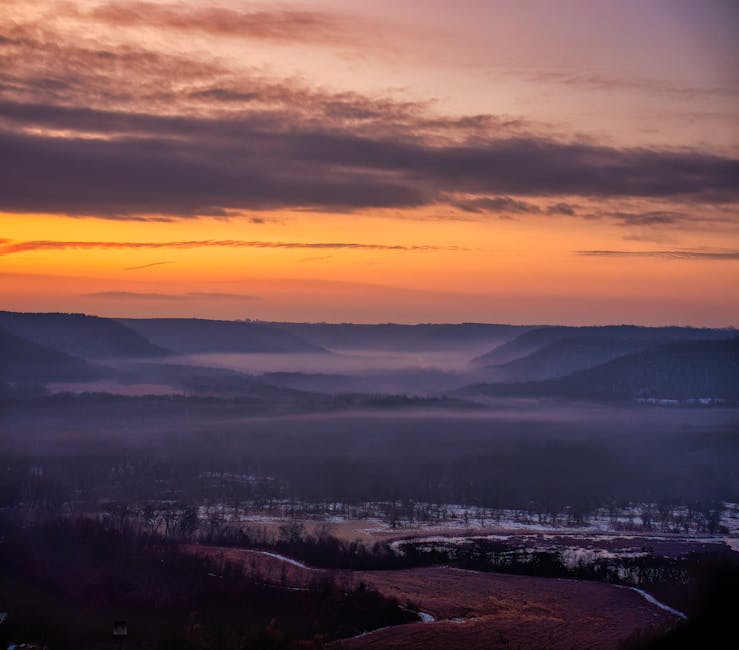
U.S. Mountains That Were Accidentally Measured Wrong for a Century

1 / 10 Questions
0 Points

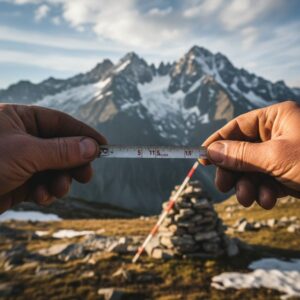
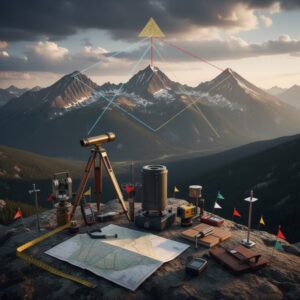
Which U.S. mountain was remeasured in 2015 and found to be 10 feet shorter than previously thought?

Mount Whitney

Pikes Peak

Denali

Mount Rainier

Points won
0
Correct score
0%

More Questions

More Articles

Top 10 Stunning Geographical Wonders From Around the World

Top 10 Stunning Geographical Wonders From Around the World

⏱️ 4 min read

Top 10 Stunning Geographical Wonders From Around the World

Our planet is home to countless breathtaking natural formations that showcase Earth's incredible geological processes and environmental diversity. From towering mountains to deep canyons, these geographical wonders stand as testament to millions of years of natural forces at work. Here are ten of the most stunning geographical wonders that continue to captivate visitors from around the globe.

1. Grand Canyon, United States

Carved by the Colorado River over millions of years, the Grand Canyon stretches 277 miles long, up to 18 miles wide, and reaches depths of over a mile. Its colorful rock layers reveal a geological timeline spanning nearly two billion years, showcasing distinct bands of red, orange, and brown sedimentary rocks. The canyon's vast size and intricate erosion patterns make it one of Earth's most studied geological formations.

2. Great Barrier Reef, Australia

As the world's largest coral reef system, the Great Barrier Reef extends over 1,500 miles along Australia's eastern coast. This living structure comprises over 2,900 individual reefs and 900 islands, visible from space. Home to thousands of marine species, the reef represents one of Earth's most diverse ecosystems, formed over millions of years of coral growth and evolution.

3. Mount Everest, Nepal/China

Standing at 29,029 feet (8,848 meters), Mount Everest is Earth's highest peak above sea level. Formed by the collision of the Indian and Eurasian tectonic plates, this mammoth mountain continues to grow by about 4 millimeters each year. Its severe weather conditions, including extreme cold and powerful winds, create one of the planet's most challenging environments.

4. Victoria Falls, Zambia/Zimbabwe

Known locally as "Mosi-oa-Tunya" (The Smoke that Thunders), Victoria Falls is the world's largest waterfall by combined height and width. The falls drop 355 feet into a narrow gorge, creating a spectacular curtain of water spanning 5,604 feet in width. During peak flow, over 500 million liters of water cascade over its edge every minute.

5. Northern Lights (Aurora Borealis), Arctic Region

This spectacular atmospheric phenomenon occurs when charged particles from the sun interact with Earth's magnetic field and atmosphere. The resulting light show produces stunning displays of green, pink, and purple hues dancing across the night sky. Best viewed in the "aurora zone" between 60 and 75 degrees north latitude, this natural wonder attracts visitors to Arctic regions year-round.

6. Salar de Uyuni, Bolivia

The world's largest salt flat, spanning 4,086 square miles, formed from prehistoric lakes that dried up leaving behind a thick crust of salt. During the rainy season, a thin layer of water transforms the surface into the world's largest natural mirror. The flat contains over 10 billion tons of salt and significant lithium reserves, making it both a natural wonder and valuable resource.

7. Great Rift Valley, East Africa

Stretching over 3,700 miles from Lebanon to Mozambique, this vast geological feature represents Earth's largest surface fissure. Formed by the separation of tectonic plates, the valley contains some of Africa's deepest lakes, highest mountains, and most active volcanoes. Its diverse landscapes have played a crucial role in human evolution and continue to shape the continent's geography.

8. Ha Long Bay, Vietnam

Featuring over 1,600 limestone islands and islets rising dramatically from emerald waters, Ha Long Bay showcases the power of marine erosion over millions of years. These karst formations, created by the dissolution of limestone rocks, contain numerous caves and grottoes. The bay's unique landscape demonstrates the interplay between geological processes and sea-level changes over time.

9. Pamukkale, Turkey

These stunning white travertine terraces, formed by calcium-rich thermal springs, create a dramatic landscape often called the "Cotton Castle." The terraces contain warm, mineral-rich pools that have attracted visitors for thousands of years. The unique geological formation continues to grow as calcium carbonate deposits slowly build new terraces.

10. Dead Sea, Israel/Jordan

Located at Earth's lowest land elevation (1,412 feet below sea level), the Dead Sea's extremely high salt concentration (33.7%) makes it one of the world's saltiest bodies of water. This hypersaline lake prevents most organisms from surviving, hence its name. The unusual water chemistry creates exceptional buoyancy and has led to the formation of unique salt crystals and mineral deposits along its shores.

These remarkable geographical wonders showcase Earth's diverse geological processes and natural forces. From water-carved canyons to tectonic-formed mountains, each formation tells a unique story of our planet's evolution. While these ten wonders represent some of the most spectacular examples, they are just a fraction of the countless natural marvels that make Earth an extraordinary planet worthy of exploration and preservation.

  • Each wonder demonstrates different geological processes
  • Many continue to evolve and change over time
  • All play crucial roles in local ecosystems
  • Most are protected as UNESCO World Heritage sites
  • They attract millions of visitors annually

Top 10 Surprising Stories Behind US Lighthouses

Top 10 Surprising Stories Behind US Lighthouses

⏱️ 6 min read

America's coastlines are dotted with iconic lighthouses that have guided mariners safely to shore for centuries. While these towering beacons are celebrated for their architectural beauty and navigational importance, many harbor remarkable tales of heroism, mystery, and human perseverance that remain largely unknown. From ghostly legends to acts of extraordinary courage, the stories behind these maritime sentinels reveal a fascinating dimension of American history that goes far beyond their functional purpose.

Remarkable Tales from America's Coastal Guardians

1. The Lighthouse Keeper Who Raised Nine Children Alone

Ida Lewis of Lime Rock Lighthouse in Newport, Rhode Island, became America's most celebrated lighthouse keeper after rescuing at least 18 people during her 54-year tenure. What makes her story particularly remarkable is that she assumed the duties at age 15 when her father suffered a stroke, all while caring for her invalid parents and eight younger siblings. Her most famous rescue occurred in 1869 when she saved two soldiers whose boat had capsized in freezing waters. President Ulysses S. Grant personally visited her, and she received gold medals from the Life Saving Benevolent Association, becoming a national heroine whose courage challenged gender stereotypes of the Victorian era.

2. The Lighthouse That Survived a Nuclear Bomb Test

The Scotch Cap Light Station in Alaska met a catastrophic end in 1946, but not from any test—it was obliterated by a tsunami generated by an Aleutian earthquake. The wave, estimated at 100 feet high, completely destroyed the lighthouse and killed all five Coast Guard personnel inside. This tragedy led to the creation of the Pacific Tsunami Warning System. Meanwhile, the lighthouse at Sand Island near Johnston Atoll witnessed actual nuclear testing in the 1960s, standing as a silent observer to one of the most significant military operations of the Cold War era.

3. The Confederate Lighthouse Lens Hidden in a Swamp

During the Civil War, Confederate forces removed the first-order Fresnel lens from the Cape San Blas Lighthouse in Florida to prevent Union forces from using it for navigation. The priceless lens, worth thousands of dollars, was hidden in a swamp near Apalachicola. Despite numerous searches over the decades, this valuable piece of lighthouse equipment has never been recovered, making it one of the Civil War's enduring mysteries. The original lens remains somewhere in the Florida wilderness, a buried treasure of maritime history.

4. The Lighthouse Powered by Whale Oil and Human Determination

The Boston Light, America's first lighthouse station established in 1716, originally burned tallow candles and later whale oil to produce its beam. Lighthouse keepers had to haul heavy containers of whale oil up narrow spiral staircases multiple times daily. One keeper in the 1800s calculated that he climbed the equivalent of nearly five miles vertically each year just performing routine duties. The lighthouse required such dedication that it remained staffed long after automation became standard, and today it's the only officially manned lighthouse in the United States, maintained by the Coast Guard as a living monument to maritime tradition.

5. The Keeper Who Survived Three Months of Isolation During a Hurricane

In 1856, Emily Fish accompanied her husband to Point Pinos Lighthouse in California. When he died suddenly, she became the keeper and served for 21 years. During one winter storm, she was cut off from the mainland for three months with limited supplies. She kept the light burning every night by rationing oil and fuel, maintaining meticulous records, and surviving on stored provisions and rainwater. Her dedication ensured that no ships were lost on her watch during that harrowing winter, demonstrating the often-overlooked sacrifices made by lighthouse keepers and their families.

6. The Lighthouse Built by a Grieving Mother

The New London Ledge Lighthouse in Connecticut, completed in 1909, features an unusual Second Empire architectural style that resembles a mansion more than a typical lighthouse. Local legend tells of keeper John Randolph, whose wife ran away with a ferry captain in 1936. Despondent, he allegedly jumped to his death from the lighthouse gallery. Since then, numerous Coast Guard personnel have reported unexplained phenomena—doors opening and closing, beds being unmade after being made, and the foghorn blowing when turned off. Whether fact or folklore, "Ernie," as the ghost is called, has become an integral part of the lighthouse's identity.

7. The Lighthouse That Moved 2,900 Feet Inland

The Cape Hatteras Lighthouse in North Carolina, standing 210 feet tall, faced destruction from coastal erosion by the 1980s. In an unprecedented engineering feat in 1999, the entire 4,830-ton lighthouse was moved 2,900 feet inland over the course of 23 days. Using hydraulic jacks and a custom-built track system, engineers moved the structure at a pace of about 125 feet per day. The successful relocation preserved America's tallest brick lighthouse and proved that even the most massive historic structures could be saved through innovative engineering and determination.

8. The Lighthouse Keeper Who Fought Off Pirates

Rebecca Flaherty, keeper of the Robbins Reef Lighthouse in New York Harbor, served from 1886 to 1919 and became legendary for her fearlessness. Standing barely five feet tall, she single-handedly rescued more than 50 people during her tenure. Historical records suggest she once defended the lighthouse from would-be thieves attempting to steal equipment, using nothing but her commanding presence and a shotgun. Her famous motto, "Mind the light," became a testament to the unwavering dedication required of lighthouse keepers, regardless of personal danger or hardship.

9. The Lighthouse That Became a Prisoner of War Camp

Fort Point Lighthouse in San Francisco served multiple roles throughout its history, but one of the most unusual occurred during World War II. The area around the lighthouse was used as a military installation, and the fort itself temporarily housed prisoners of war. The lighthouse continued to operate throughout this period, creating the surreal situation where a beacon of safety and guidance functioned alongside a detention facility. This dual purpose reflected the complex military necessities of wartime America.

10. The Youngest Lighthouse Keeper in American History

Kate Moore became acting keeper of Black Rock Harbor Lighthouse in Connecticut at age 12 when her father fell ill in 1817. She officially received the appointment at age 17 and served for 54 years, making her one of the longest-serving keepers in American history. During her tenure, she never allowed the light to fail, maintained detailed meteorological records, and rescued numerous sailors from the treacherous waters of Long Island Sound. Her appointment by President James Madison made her a pioneer for women in what was traditionally considered a male profession.

Enduring Symbols of American Resilience

These ten remarkable stories reveal that America's lighthouses represent far more than navigational aids—they are monuments to human courage, ingenuity, and perseverance. From teenage girls assuming enormous responsibilities to engineering marvels that moved thousands of tons of brick and mortar, these tales illuminate the extraordinary lives lived in service of maritime safety. The keepers who tended these lights faced isolation, danger, and hardship, yet their dedication saved countless lives and helped build the nation's maritime infrastructure. Today, as most lighthouses have been automated, these stories serve as poignant reminders of the human element that once made these structures truly come alive, guiding not just ships but embodying the best of the American spirit.