








⏱️ 6 min read
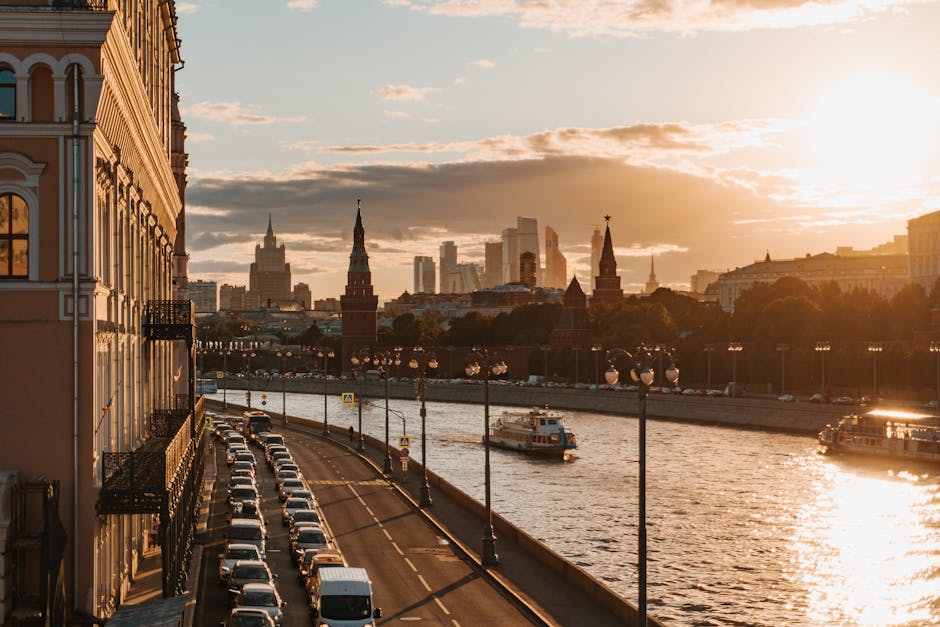
The Kremlin stands as one of the most recognizable symbols of Russia, its distinctive red walls and golden domes capturing the imagination of people worldwide. While many associate it primarily with political power and Cold War intrigue, this fortress complex holds centuries of fascinating history, architectural marvels, and unexpected secrets that few visitors ever discover. From hidden underground passages to surprising wildlife inhabitants, the Kremlin's story extends far beyond its role as the seat of Russian government.
Uncovering the Kremlin's Hidden Treasures
1. The Kremlin Is Actually Multiple Kremlins
While "the Kremlin" typically refers to Moscow's famous fortress, the word "kreml" simply means "fortress" in Russian. There are actually more than 20 kremlins scattered throughout Russia, including notable examples in Novgorod, Kazan, and Pskov. The Moscow Kremlin earned its distinction as "the Kremlin" due to its role as the political center of Russia, but each kremlin represents an important piece of Russian architectural and historical heritage. The term itself derives from the Old Russian "kremnik," meaning a citadel within a city.
2. A City Within a City Spanning 27 Hectares
The Kremlin isn't merely a single building but an entire complex covering 27.7 hectares (approximately 68 acres) in the heart of Moscow. Within its distinctive triangular walls lie 20 towers, five palaces, four cathedrals, and numerous other structures. This fortified complex houses government offices, museums, residences, and even nine churches. The walls stretch for 2,235 meters and reach heights of up to 19 meters, with thickness varying between 3.5 and 6.5 meters. This makes the Kremlin comparable in size to some small medieval towns.
3. The Ruby Stars Replaced Imperial Eagles
The five-pointed red stars that crown the Kremlin's tallest towers are iconic symbols of Soviet power, but they weren't always there. Until 1935, double-headed imperial eagles topped these towers, representing Tsarist Russia. The Soviet government removed these symbols and replaced them with illuminated ruby-colored stars weighing between one and one-and-a-half tons each. These stars are constructed from ruby glass and steel, with the largest spanning 3.75 meters from point to point. They rotate with the wind and are still illuminated every night, consuming significant electricity to maintain their glow.
4. Underground Tunnels and Secret Passages Network
Beneath the Kremlin lies an extensive network of tunnels and secret passages, some dating back to the 15th century. These underground corridors served various purposes throughout history, including escape routes for royalty, storage for treasures, and even as prisons. Some tunnels allegedly connected the Kremlin to distant parts of Moscow, allowing rulers to flee in times of danger. During the Soviet era, additional bunkers and passages were constructed, including a secret metro line reserved for government officials. The full extent of this subterranean network remains classified, with many passages still unexplored or deliberately sealed.
5. The Missing Napoleon Treasures
When Napoleon occupied Moscow in 1812, he attempted to destroy the Kremlin before his retreat. While many buildings were damaged, the planned demolition largely failed due to rain extinguishing fuses and the quick response of remaining Russian forces. However, Napoleon's forces did successfully loot numerous treasures. Legend holds that French troops stole the enormous golden cross from the Ivan the Great Bell Tower, which was never recovered. Some historians believe treasures were hidden in the underground passages during the occupation and remain undiscovered to this day.
6. Home to the World's Largest Bell and Cannon
The Kremlin houses two remarkable records: the Tsar Bell, the largest bell in the world, and the Tsar Cannon, one of the largest cannons ever made. The Tsar Bell weighs approximately 216 tons and stands over 6 meters tall, though it has never rung—an 11-ton fragment broke off during casting in 1737. The Tsar Cannon, cast in 1586, weighs 40 tons with a barrel length of 5.34 meters. Ironically, despite its fearsome appearance, the cannon likely never fired a shot in combat and may have been created purely as a demonstration of Russian craftsmanship and power.
7. Ravens Guard the Towers by Presidential Decree
Similar to the Tower of London, the Kremlin maintains a population of ravens, though for different reasons. While not as ceremonially significant as their British counterparts, ravens have inhabited the Kremlin grounds for centuries. In Russian folklore, ravens are considered prophetic birds, and their presence is seen as a connection to ancient traditions. The Kremlin's ravens are semi-wild, and staff ensure they remain around the complex. These intelligent birds have become unofficial guardians of the fortress, often seen perched on the ancient towers and walls.
8. The Walls Changed Color Throughout History
The Kremlin's famous red brick walls haven't always displayed their current distinctive color. Historical records and paintings indicate that during various periods, the walls were whitewashed, giving the complex a completely different appearance. The white walls were practical, helping to preserve the brick from weathering. The decision to expose the red brick came in the Soviet era, as red became symbolically important to the Communist government. Today, the red walls are so iconic that it's difficult to imagine the Kremlin appearing any other way, yet for much of its history, it was known as the "White-stoned Kremlin."
9. Three Cathedrals Crown Cathedral Square
At the heart of the Kremlin lies Cathedral Square, dominated by three magnificent cathedrals built within decades of each other in the late 15th and early 16th centuries. The Assumption Cathedral served as the coronation church for Russian tsars, the Archangel Cathedral became their burial place, and the Annunciation Cathedral functioned as the royal family's private chapel. These three structures represent the pinnacle of Russian medieval architecture, featuring distinctive onion domes covered in gold leaf. The square itself served as the ceremonial center of Russian power, where religious and political authority intersected. The frescoes and icons within these cathedrals contain some of Russia's most valuable religious artworks.
10. The Kremlin Armory Houses a Diamond Fund Collection
The Kremlin Armory, despite its name, has functioned as a museum since 1806 and houses one of the world's most valuable collections of regalia, jewelry, and ceremonial weapons. Within the Armory is the Diamond Fund, a separate exhibition displaying extraordinary gems and precious items. This collection includes the Orlov Diamond, a 189.62-carat gem that adorns the Imperial Sceptre, and the Shah Diamond, presented to Russia by Persia. The collection also features Catherine the Great's coronation crown, containing 4,936 diamonds. The total value of the Diamond Fund remains classified, but experts estimate it could exceed billions of dollars. These treasures represent not just material wealth but centuries of Russian imperial history and craftsmanship.
The Living Legacy of Russia's Historic Heart
The Kremlin continues to serve as Russia's political center while simultaneously functioning as a museum complex that attracts millions of visitors annually. These ten surprising facts only scratch the surface of the mysteries and marvels contained within its ancient walls. From architectural superlatives to underground secrets, from symbolic transformations to priceless treasures, the Kremlin embodies the complexity and grandeur of Russian history. Whether viewed as a political symbol, an architectural masterpiece, or a repository of national heritage, the Kremlin remains an endlessly fascinating landmark that continues to reveal new secrets to those who study it carefully. Understanding these lesser-known aspects provides deeper appreciation for this fortress that has witnessed and shaped centuries of dramatic history.