






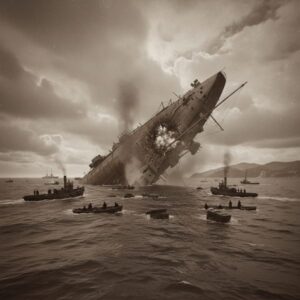

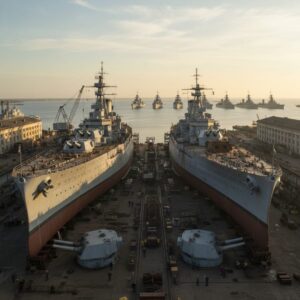
U.S. Battleships That Were Sunk in Training Exercises Gone Wrong

1 / 10 Questions
0 Points

Which U.S. battleship became the Navy's largest accidental loss when it sank during a 1921 bombing test?

USS Alabama

USS Virginia

USS New Jersey

USS Indiana

Points won
0
Correct score
0%

More Questions

More Articles

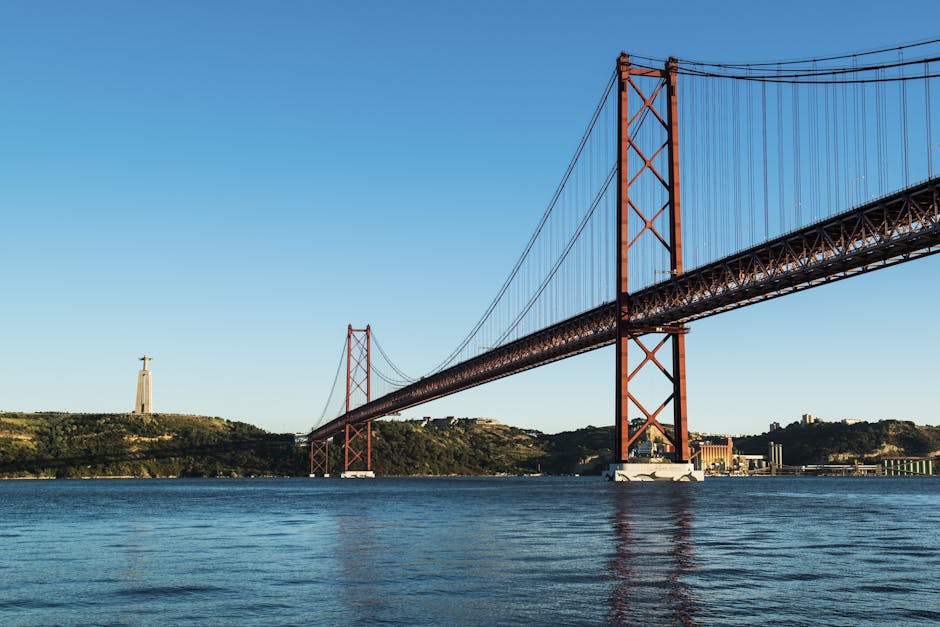
Top 10 Engineering Marvels in the USA – Bridges

Top 10 Engineering Marvels in the USA – Bridges

⏱️ 7 min read

The United States boasts some of the world's most impressive bridge structures, showcasing human ingenuity, engineering excellence, and architectural beauty. These monumental constructions have not only connected communities and transformed transportation but have also become iconic landmarks that define their regions. From coast to coast, American bridges represent centuries of innovation, pushing the boundaries of what's possible in civil engineering and standing as testaments to human determination and technical prowess.

Celebrating America's Greatest Bridge Engineering Achievements

1. Golden Gate Bridge – San Francisco's Art Deco Masterpiece

Spanning the Golden Gate Strait between San Francisco and Marin County, this suspension bridge opened in 1937 and held the title of the world's longest suspension bridge main span for nearly three decades. Its distinctive International Orange color wasn't just an aesthetic choice—it enhances visibility in San Francisco's frequent fog while complementing the natural landscape. The bridge stretches 1.7 miles with towers rising 746 feet above the water, and its construction required innovative safety measures, including the first large-scale use of safety nets that saved 19 workers' lives. Engineers overcame treacherous tides, powerful winds, and earthquake concerns to create this Art Deco icon that now carries approximately 112,000 vehicles daily.

2. Brooklyn Bridge – America's First Steel-Wire Suspension Bridge

Completed in 1883, the Brooklyn Bridge revolutionized bridge construction and became a National Historic Landmark. Designer John Augustus Roebling conceived this Gothic-inspired structure, though his son Washington Roebling oversaw its construction after his father's death. The bridge's 1,595-foot main span was the longest in the world at completion, utilizing steel-wire cables—a pioneering choice that proved its worth for over 140 years. The construction took 14 years and required innovative use of pneumatic caissons for underwater foundation work. Today, it connects Manhattan and Brooklyn, accommodating vehicles, pedestrians, and cyclists while serving as an enduring symbol of New York City's grandeur.

3. Chesapeake Bay Bridge-Tunnel – The Engineering Wonder Spanning 17.6 Miles

This remarkable structure combines bridges, tunnels, and artificial islands to cross the mouth of the Chesapeake Bay in Virginia. Completed in 1964 and expanded in 1999, it stretches 17.6 miles across open water, incorporating two mile-long tunnels that allow ship traffic to pass overhead. The American Society of Civil Engineers named it one of the "Seven Engineering Wonders of the Modern World." The structure includes four artificial islands, two tunnels, high-level bridges, approach roads, and nearly 12 miles of low-level trestle. This massive undertaking required 12,000 pilings driven into the bay floor and transformed travel between Virginia's Eastern Shore and mainland.

4. Mackinac Bridge – Connecting Michigan's Two Peninsulas

The Mackinac Bridge, known locally as "Mighty Mac," spans the Straits of Mackinac to connect Michigan's Upper and Lower Peninsulas. When completed in 1957, its 3,800-foot main span made it the world's longest suspension bridge between anchorages. The bridge stretches five miles total, with towers reaching 552 feet above water. Engineers designed it to withstand harsh weather conditions, including high winds that can reach 31 miles per hour before closure. The structure required 931,000 tons of concrete and 71,000 tons of structural steel. Its construction finally fulfilled a century-old dream of connecting Michigan's two land masses, eliminating the need for ferry services that were often interrupted by harsh winter conditions.

5. Hoover Dam Bypass Bridge – Modern Engineering Above the Colorado River

Officially named the Mike O'Callaghan–Pat Tillman Memorial Bridge, this concrete arch bridge opened in 2010 as part of the Hoover Dam bypass project. It stands 890 feet above the Colorado River, making it the second-highest bridge in the United States. The bridge's 1,905-foot length includes a 1,060-foot arch span, which was the longest concrete arch in the Western Hemisphere at completion. Engineers utilized innovative construction techniques, including building the arch from both canyon walls simultaneously until the sections met in the middle. The structure reduces travel time and provides spectacular views while eliminating the security concerns and traffic bottlenecks that plagued the old route across Hoover Dam.

6. Royal Gorge Bridge – Colorado's High-Altitude Icon

Suspended 956 feet above the Arkansas River, the Royal Gorge Bridge held the record as the world's highest bridge for 72 years after its 1929 completion. This suspension bridge spans 1,260 feet across Colorado's dramatic Royal Gorge near Cañon City. Originally built as a tourist attraction rather than a transportation necessity, it remains one of America's most visited bridge sites. The wooden deck planks rest on a steel framework supported by 1,292 cables, each three-quarters of an inch thick. Despite facing significant damage from a 2013 wildfire, the bridge survived and underwent extensive restoration, demonstrating both its original engineering quality and modern preservation techniques.

7. Seven Mile Bridge – The Florida Keys Overseas Highway Crown Jewel

This bridge connects Knight's Key to Little Duck Key in the Florida Keys, forming a crucial segment of the Overseas Highway that links the Keys to mainland Florida. The current structure, completed in 1982, replaced Henry Flagler's original railroad bridge, which was transformed into an automobile bridge after a 1935 hurricane. Stretching 35,867 feet (6.79 miles), it's actually slightly shorter than its "Seven Mile" name suggests, but remains one of the longest bridges in the world. The bridge includes 440 spans and required innovative engineering to withstand hurricanes, saltwater corrosion, and the constant pounding of waves. Its construction elevated the roadbed significantly higher than the original to accommodate modern ships and provide better hurricane protection.

8. Sunshine Skyway Bridge – Florida's Cable-Stayed Monument

This striking cable-stayed bridge crosses Tampa Bay in Florida, connecting St. Petersburg to Terra Ceia. Completed in 1987, it replaced a structure that suffered a catastrophic collision with a freighter in 1980, resulting in 35 deaths. The new design incorporated extensive safety features, including protective dolphins around the main support columns that can withstand ship impacts. Its 4.1-mile length includes a 21,877-foot main bridge section with a 1,200-foot center span that rises 193 feet above the water. The distinctive yellow cables and post-tensioned concrete design create a graceful appearance while meeting stringent engineering requirements for hurricane-force winds and seismic activity. The bridge has become an architectural landmark and tourist attraction in its own right.

9. New River Gorge Bridge – West Virginia's Steel Arch Triumph

Located near Fayetteville, West Virginia, this steel arch bridge was the world's longest single-span arch bridge when completed in 1977, with a main span of 1,700 feet. It stands 876 feet above the New River, making it the third-highest vehicular bridge in the United States. The bridge cut a 40-minute drive down to less than a minute, dramatically improving regional transportation. Its construction required only 18 months and used 88 million pounds of American-made steel and reinforced concrete. The Cor-Ten weathering steel gives it a distinctive rust-colored appearance while protecting against corrosion. The bridge has become so iconic that it appears on the West Virginia state quarter and hosts an annual Bridge Day celebration where BASE jumpers and rappellers legally descend from the structure.

10. Verrazano-Narrows Bridge – New York's Gateway Guardian

Connecting Brooklyn to Staten Island, this suspension bridge was the world's longest when it opened in 1964. Its 4,260-foot main span remained the longest in the world until 1981. Named after Italian explorer Giovanni da Verrazzano, the bridge rises 693 feet at its towers and accommodates 200,000 vehicles daily on its double-decked roadway. Engineers accounted for the Earth's curvature in its design—the towers are 1 5/8 inches farther apart at their tops than at their bases. The structure required 143,000 miles of wire cable and withstands winds up to 170 miles per hour. It serves as the starting point for the New York City Marathon and remains a vital transportation artery for the metropolitan area.

The Lasting Legacy of American Bridge Engineering

These ten bridges represent more than mere transportation infrastructure—they embody American ambition, innovation, and engineering excellence across different eras and regions. From the historic Brooklyn Bridge that pioneered steel-cable construction to the modern Hoover Dam Bypass that showcases contemporary concrete arch techniques, each structure tells a unique story of overcoming geographical challenges and pushing technical boundaries. These landmarks have transformed regional economies, connected communities, and inspired generations of engineers while standing as proud symbols of their locations. They remind us that bridges are not simply utilitarian structures but monuments to human creativity, perseverance, and the endless pursuit of connecting people and places across seemingly insurmountable barriers.
World History Trivia Quiz: 20 Questions on History

World History Trivia Quiz: 20 Questions on History

⏱️ 7 min read

History is filled with fascinating events, remarkable figures, and pivotal moments that have shaped our modern world. Testing knowledge through trivia questions offers an engaging way to explore the depths of human civilization, from ancient empires to contemporary developments. This collection examines twenty compelling historical topics that challenge understanding while illuminating the interconnected nature of global events across millennia.

Ancient Civilizations and Early Achievements

1. The Fall of the Roman Empire in 476 CE

The Western Roman Empire officially collapsed when Romulus Augustulus, the last Roman emperor, was deposed by the Germanic chieftain Odoacer. This momentous event marked the end of ancient Rome's political dominance and ushered in the Medieval period in Europe. The Eastern Roman Empire, known as the Byzantine Empire, continued to thrive for nearly another thousand years until 1453.

2. The Construction Timeline of the Great Pyramid of Giza

Built during the Fourth Dynasty for Pharaoh Khufu around 2580-2560 BCE, the Great Pyramid stands as the oldest of the Seven Wonders of the Ancient World and the only one still largely intact. Constructed with approximately 2.3 million stone blocks, this architectural marvel required an estimated 20,000 to 30,000 workers and took roughly 20 years to complete.

3. Julius Caesar's Assassination Date

On March 15, 44 BCE—the Ides of March—Roman dictator Julius Caesar was assassinated by a group of senators led by Brutus and Cassius. This political murder occurred in the Theatre of Pompey and involved 60 conspirators who believed they were saving the Roman Republic from tyranny. The assassination ultimately led to further civil war and the rise of the Roman Empire under Augustus.

4. The Significance of the Rosetta Stone's Discovery

Discovered in 1799 by French soldiers in Egypt during Napoleon's campaign, the Rosetta Stone became the key to deciphering Egyptian hieroglyphics. The stone contains the same text written in three scripts: Ancient Greek, Demotic, and hieroglyphic, allowing scholars like Jean-François Champollion to unlock the language of ancient Egypt and revolutionize our understanding of this civilization.

Medieval and Renaissance Milestones

5. The Year of the Norman Conquest of England

In 1066, William the Conqueror, Duke of Normandy, defeated King Harold II at the Battle of Hastings, fundamentally transforming English society, language, and governance. This conquest introduced Norman French culture and feudalism to England, creating a lasting impact on British history and establishing a new royal dynasty.

6. The Black Death's Devastating Impact on Europe

Between 1347 and 1353, the bubonic plague pandemic known as the Black Death swept through Europe, killing an estimated 75-200 million people—approximately one-third to one-half of the entire European population. This catastrophic event dramatically altered European society, economy, and culture, leading to labor shortages, social upheaval, and significant changes in feudal structures.

7. Johannes Gutenberg's Printing Press Revolution

Around 1440, German inventor Johannes Gutenberg developed the mechanical movable-type printing press, revolutionizing the spread of information and literacy throughout Europe. His most famous work, the Gutenberg Bible, completed around 1455, demonstrated the technology's potential and marked the beginning of the mass production of books, facilitating the Protestant Reformation and Scientific Revolution.

8. Christopher Columbus's First Voyage to the Americas

In 1492, Christopher Columbus, sailing under Spanish patronage, reached the Caribbean islands, initiating sustained European contact with the Americas. Although Columbus never realized he had discovered continents previously unknown to Europeans, his voyages led to widespread European exploration, colonization, and the eventual Columbian Exchange of goods, diseases, and cultures.

Revolutionary Periods and Modern Transformations

9. The American Declaration of Independence

On July 4, 1776, the Continental Congress adopted the Declaration of Independence, formally announcing the thirteen American colonies' separation from British rule. Primarily authored by Thomas Jefferson, this document articulated revolutionary principles of natural rights and popular sovereignty that would influence democratic movements worldwide.

10. The French Revolution's Commencement

The storming of the Bastille on July 14, 1789, symbolically marked the beginning of the French Revolution. This popular uprising against the monarchy and aristocratic privilege ultimately led to the overthrow of the Bourbon dynasty, the execution of King Louis XVI, and profound social and political changes that reshaped France and inspired revolutionary movements across Europe.

11. Napoleon Bonaparte's Final Defeat at Waterloo

On June 18, 1815, Napoleon Bonaparte suffered his definitive defeat at the Battle of Waterloo in present-day Belgium. Facing combined British and Prussian forces commanded by the Duke of Wellington and Gebhard von Blücher, Napoleon's loss ended his Hundred Days return to power and led to his permanent exile to Saint Helena.

12. The Emancipation Proclamation's Historic Issuance

President Abraham Lincoln issued the Emancipation Proclamation on January 1, 1863, during the American Civil War. This executive order declared enslaved people in Confederate states to be free, transforming the war's purpose to include the abolition of slavery alongside preserving the Union and paving the way for the Thirteenth Amendment.

Twentieth Century Conflicts and Changes

13. The Assassination That Sparked World War I

On June 28, 1914, Archduke Franz Ferdinand of Austria and his wife were assassinated in Sarajevo by Gavrilo Princip, a Bosnian Serb nationalist. This event triggered a chain reaction of diplomatic crises and alliance obligations that escalated into World War I, involving more than 30 nations and resulting in unprecedented destruction.

14. The Treaty of Versailles and Its Consequences

Signed on June 28, 1919, the Treaty of Versailles officially ended World War I but imposed harsh reparations and territorial losses on Germany. The treaty's punitive terms created economic hardship and resentment in Germany, contributing to political instability and the eventual rise of Adolf Hitler and Nazi ideology.

15. The Stock Market Crash of 1929

Beginning on October 24, 1929—known as Black Thursday—the New York Stock Exchange experienced catastrophic losses that triggered the Great Depression. This economic disaster spread globally, causing massive unemployment, bank failures, and widespread poverty, fundamentally altering government approaches to economic management.

16. D-Day: The Normandy Invasion

On June 6, 1944, Allied forces launched Operation Overlord, the largest amphibious invasion in history, landing approximately 156,000 troops on the beaches of Normandy, France. This pivotal World War II operation opened a critical western front against Nazi Germany, ultimately contributing to Allied victory in Europe.

17. The Atomic Bombings That Ended World War II

The United States dropped atomic bombs on Hiroshima on August 6, 1945, and Nagasaki on August 9, 1945, marking the only use of nuclear weapons in warfare. These devastating attacks killed an estimated 200,000 people and led to Japan's surrender on August 15, 1945, ending World War II while ushering in the nuclear age.

Contemporary Historical Moments

18. The Formation of the United Nations

Established on October 24, 1945, following World War II, the United Nations was created to promote international cooperation, maintain peace, and prevent future conflicts. With 51 founding member nations, the organization has grown to 193 members and serves as the primary forum for international diplomacy and conflict resolution.

19. The Fall of the Berlin Wall

On November 9, 1989, the Berlin Wall—symbol of Cold War division—was opened, allowing free passage between East and West Berlin for the first time in 28 years. This momentous event accelerated German reunification, symbolized the collapse of communist regimes across Eastern Europe, and effectively marked the end of the Cold War.

20. The Moon Landing Achievement

On July 20, 1969, NASA astronauts Neil Armstrong and Buzz Aldrin became the first humans to walk on the Moon during the Apollo 11 mission. Armstrong's famous words, "That's one small step for man, one giant leap for mankind," captured this extraordinary achievement in space exploration, demonstrating humanity's technological capabilities and scientific ambition.

Conclusion

These twenty historical questions and answers represent merely a fraction of humanity's complex and fascinating past. From the construction of ancient monuments to space exploration, from devastating plagues to revolutionary ideas, world history encompasses countless events that continue to influence contemporary society. Understanding these pivotal moments provides context for current events, helps recognize patterns in human behavior, and offers valuable lessons for future generations. Whether exploring ancient civilizations, revolutionary periods, or modern transformations, historical knowledge enriches our perspective and deepens appreciation for the diverse experiences that have shaped our global community across time.