




⏱️ 8 min read
Islands have captivated human imagination for centuries, serving as havens of biodiversity, cultural uniqueness, and geographical peculiarities. Scattered across the world's oceans, these isolated landmasses have developed extraordinary characteristics that set them apart from mainland territories. From strange wildlife evolution to unusual geological formations, the world's islands harbor some of the most fascinating oddities on our planet. This collection of remarkable facts reveals the unexpected, the unusual, and the utterly unique aspects of island geography that most people never learn about.
Remarkable Island Phenomena From Around the World
1. Iceland's Volcanic Island That Appeared Overnight
In 1963, fishermen off the coast of Iceland witnessed something extraordinary: a new island being born. Surtsey emerged from beneath the Atlantic Ocean through volcanic eruptions that continued for four years, eventually creating an island covering about 1.3 square kilometers. This geological marvel provided scientists with a rare opportunity to study how life colonizes virgin land. The island remains one of the most protected natural laboratories on Earth, with access strictly limited to researchers who must sterilize their equipment to avoid introducing foreign species. Surtsey demonstrates how volcanic activity continually reshapes our planet's geography, adding new landmasses to the world map.
2. Madagascar's Unique Evolutionary Isolation
Madagascar separated from the African continent approximately 165 million years ago, creating one of the most biologically unique places on Earth. This massive island is home to species found nowhere else in the world, with roughly 90% of its wildlife being endemic. The island's famous lemurs, bizarre baobab trees, and bizarre fossas evolved in complete isolation, creating an ecosystem that resembles no other place on the planet. This evolutionary laboratory demonstrates how geographical isolation can lead to spectacular biological diversity, making Madagascar the fourth largest island in the world and arguably the most ecologically distinctive.
3. The World's Most Remote Inhabited Island
Tristan da Cunha holds the record as the most remote inhabited archipelago on Earth, located in the South Atlantic Ocean. The nearest landmass lies 2,088 kilometers away, making this British territory extraordinarily isolated. The entire population of approximately 250 people lives in the settlement of Edinburgh of the Seven Seas, and residents share just nine surnames among them. The island has no airport, making it accessible only by boat from South Africa, a journey that takes five to six days. This extreme isolation has created a unique culture and community where everyone truly knows everyone else.
4. Japan's Rabbit-Overrun Island Paradise
Ōkunoshima, a small island in Japan's Inland Sea, has earned the nickname "Rabbit Island" due to its population of hundreds of wild rabbits that roam freely and fearlessly approach visitors. The rabbits' origins remain somewhat mysterious, though they likely descended from rabbits released after World War II, when the island's poison gas manufacturing facility was dismantled. Today, the island has transformed from a dark historical site into a tourist destination where visitors are welcomed by friendly, photogenic rabbits. The absence of natural predators has allowed the rabbit population to flourish, creating one of the world's most unusual wildlife attractions.
5. Socotra's Alien-Looking Flora
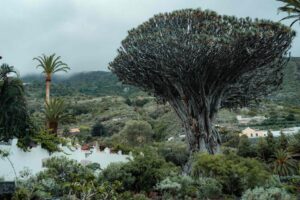
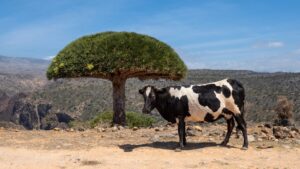
Socotra, a Yemeni island in the Arabian Sea, appears so otherworldly that it's often described as the most alien-looking place on Earth. The island's isolation for millions of years has produced bizarre plant species, including the famous dragon's blood tree with its umbrella-shaped canopy and crimson sap. Approximately one-third of Socotra's 800 plant species exist nowhere else on the planet. The island's landscape looks like something from science fiction, with bottle trees, desert roses, and cucumber trees dotting the terrain. This UNESCO World Heritage Site represents one of the most important centers of biodiversity in the world.
6. Greenland's Misleading Name and True Nature
Despite being called Greenland, approximately 80% of this massive island lies buried beneath ice, making it one of geography's most ironic misnomers. The island is actually the world's largest island that isn't a continent, covering over 2.1 million square kilometers. Historical accounts suggest the name was a Viking marketing ploy by Erik the Red, who wanted to attract settlers to his new discovery around 982 AD. The ice sheet covering Greenland is so massive that it contains about 8% of the world's fresh water, and if it melted completely, global sea levels would rise approximately seven meters.
7. The Island That Switches Countries Twice Yearly
The small uninhabited island of Märket in the Baltic Sea sits exactly on the border between Finland and Sweden, creating a unique geographical oddity. The border makes a distinctive zig-zag across the tiny 3.3-hectare island to ensure that a lighthouse built on the Finnish side in 1885 remains in Finnish territory. This peculiar border arrangement means that technically, one could walk between two countries in mere seconds. The lighthouse is automated, so no one actually lives on this remote rocky outcrop, but it represents one of the most unusual international boundaries in existence.
8. Indonesia's Volcanic Island Within a Lake Within an Island
Samosir Island in Lake Toba, Indonesia, creates a remarkable geographical phenomenon: it's one of the largest islands located in a lake on an island. Lake Toba itself was formed by a massive supervolcanic eruption approximately 75,000 years ago, one of the largest volcanic events in Earth's history. Samosir Island rises in the middle of this ancient caldera lake on the island of Sumatra. To make matters even more complex, Samosir contains its own small lakes, creating the rare occurrence of lakes within an island within a lake within an island. This geological nesting doll demonstrates the complex forces that shape our planet's surface.
9. The Island That Serves as a Dispute-Free Meeting Point
Hans Island, a tiny 1.3-square-kilometer rock between Greenland and Ellesmere Island, has been at the center of one of the world's friendliest territorial disputes. Canada and Denmark have both claimed this uninhabited island, conducting what's been dubbed the "Whisky War." When each country's military visits the island, they leave behind their national flag and a bottle of spirits—Canadian whisky or Danish schnapps. In 2022, the two nations finally reached an agreement to divide the island, creating a land border between Canada and Europe, making it one of the most amicably resolved territorial disputes in modern history.
10. Australia's Christmas Island Red Crab Migration
Christmas Island, an Australian territory in the Indian Ocean, experiences one of nature's most spectacular events when approximately 50 million red crabs migrate simultaneously from the forest to the ocean to breed. This annual phenomenon occurs during the wet season, typically in November or December, when the entire island becomes a moving carpet of crimson crustaceans. Roads close, special crab bridges and tunnels have been constructed, and residents plan their activities around this extraordinary migration. The synchronization depends on the lunar cycle and rainfall, creating a natural event so dramatic that it's visible from space.
11. The Self-Sufficient Island Nation Powered by Coconuts
Tokelau, a small island territory in the South Pacific, became the world's first territory to be powered entirely by renewable energy, specifically solar power with coconut oil biodiesel backup generators. This achievement is remarkable for an isolated island nation with limited resources. The three atolls that comprise Tokelau have no airport and are accessible only by boat from Samoa. With a population of approximately 1,500 people, this territory demonstrates how even the smallest, most remote communities can achieve complete energy independence through innovative use of available resources.
12. The Island That Exists in Two Different Days
The International Date Line creates a fascinating quirk in Kiribati, where the nation's islands span both sides of this imaginary line. In 1995, Kiribati adjusted the date line to bring all its islands into the same day, making it the first country to enter each new day. The Caroline Island was renamed Millennium Island as it became the first inhabited place to celebrate the year 2000. This geographical positioning means that Kiribati's easternmost and westernmost points are separated by only about 50 kilometers of ocean, yet would technically be in different days if the date line hadn't been adjusted. This demonstrates how human conventions like time zones can be modified to suit practical needs.
The Endless Fascination of Island Geography
These twelve remarkable facts merely scratch the surface of the countless oddities and wonders that islands present. From evolutionary laboratories to geological marvels, from quirky wildlife phenomena to unique human adaptations, islands continue to surprise and educate us about the diversity of our planet. Their isolation has produced unique ecosystems, unusual territorial arrangements, and extraordinary natural events that capture our imagination. Whether formed by volcanic activity, separated by continental drift, or shaped by rising sea levels, islands remind us that Earth's geography is dynamic, diverse, and endlessly fascinating. These isolated pieces of land scattered across our oceans serve as living laboratories, cultural preserves, and natural wonders that enrich our understanding of the world we inhabit.