



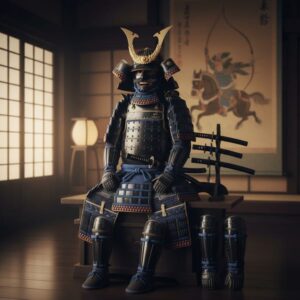




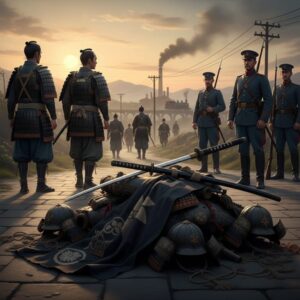
The History of the Samurai Warrior Class

1 / 10 Questions
0 Points

What does the word 'samurai' literally mean in Japanese?

To protect

To fight

To honor

To serve

Points won
0
Correct score
0%

More Questions

More Articles

World Landmarks Trivia: 15 Facts About Iconic Bridges

World Landmarks Trivia: 15 Facts About Iconic Bridges

⏱️ 4 min read

World Landmarks Trivia: 15 Facts About Iconic Bridges

Bridges have long fascinated humans as engineering marvels that connect communities and create architectural landmarks. From ancient stone arches to modern suspension spans, these structures tell stories of human innovation and determination. Here are 15 fascinating facts about some of the world's most iconic bridges.

1. Golden Gate Bridge's True Color

Contrary to its name, San Francisco's Golden Gate Bridge isn't golden at all. Its official color is "International Orange," specifically chosen to enhance the bridge's visibility in the city's frequent fog while also complementing the surrounding landscape.

2. Tower Bridge's Victorian Innovation

London's Tower Bridge was an engineering marvel of its time, built with a unique bascule (drawbridge) mechanism powered by the original Victorian hydraulic system. The original steam engines used to power the bridge's lifting mechanism are still on display in the bridge's museum.

3. Sydney Harbour Bridge's Record

The Sydney Harbour Bridge holds the record for the world's widest long-span bridge, measuring 48.8 meters wide. It's nicknamed "The Coathanger" due to its distinctive arch-based design and took eight years to complete, opening in 1932.

4. Brooklyn Bridge's Hidden Wine Cellar

During the Cold War, New York City maintained a hidden wine cellar in one of the Brooklyn Bridge's masonry vaults. These vaults were designed to withstand natural disasters and were considered ideal for storage.

5. Ponte Vecchio's Survival

Florence's Ponte Vecchio is the only bridge spanning the Arno River that survived World War II. According to popular belief, it was spared from destruction by direct orders from Hitler, who thought it too beautiful to destroy.

6. Millau Viaduct's Height

France's Millau Viaduct is the tallest bridge in the world, with one mast reaching 343 meters (1,125 feet) above ground. It's actually taller than the Eiffel Tower and spans the entire Tarn Valley.

7. Charles Bridge's Egg Mortar

Legend has it that eggs were mixed into the mortar used to build Prague's Charles Bridge in the 14th century. Recent analysis of the bridge's original mortar confirmed the presence of organic proteins, supporting this historical claim.

8. Capilano Suspension Bridge's Swaying

Vancouver's Capilano Suspension Bridge intentionally sways to prevent structural damage. The 140-meter bridge can support the weight of 96 full-grown elephants despite its apparent fragility.

9. Rialto Bridge's Competition

Venice's Rialto Bridge design was chosen through a competition that included proposals from Michelangelo and Palladio. However, Antonio da Ponte's design ultimately won, and the bridge was completed in 1591.

10. Henderson Waves' Unique Design

Singapore's Henderson Waves is the highest pedestrian bridge in the city-state, featuring a distinctive wave-like structure made of curved steel ribs. Its undulating design provides multiple sheltered seating areas along its span.

11. Khaju Bridge's Dual Purpose

Iran's Khaju Bridge in Isfahan serves not only as a bridge but also as a dam, with sluice gates under its arches to control water flow. It also features a pavilion in the middle used historically by the shah as a tea house.

12. Helix Bridge's DNA Structure

Singapore's Helix Bridge is designed to mimic the structure of DNA, with pairs of opposing steel tubes forming a double helix. At night, the bridge illuminates with specially designed lights that highlight its scientific inspiration.

13. Sunshine Skyway's Lightning Protection

Florida's Sunshine Skyway Bridge is equipped with a state-of-the-art lightning protection system, as it's located in one of the most lightning-struck areas in the United States. The bridge can withstand strikes of up to 200,000 amperes.

14. Pont du Gard's Precision

The ancient Roman aqueduct bridge Pont du Gard in France has a gradient of only 2.5 centimeters per kilometer, a remarkable feat of engineering precision for its time. This slight decline allowed water to flow naturally across its span.

15. Erasmusbrug's Nickname

Rotterdam's Erasmusbrug is nicknamed "The Swan" due to its distinctive asymmetrical pylon design. The bridge's unusual shape has made it a symbol of the city's modern architectural identity and innovation.

Conclusion

These 15 fascinating facts about iconic bridges demonstrate the incredible engineering achievements, historical significance, and cultural importance of these structures worldwide. From ancient Roman ingenuity to modern architectural marvels, bridges continue to capture our imagination while serving as vital connections between communities. Each bridge tells its own unique story, contributing to the rich tapestry of human architectural achievement and engineering innovation.
18 Fascinating Facts About the Prohibition Era

18 Fascinating Facts About the Prohibition Era

⏱️ 6 min read

The Prohibition Era stands as one of the most transformative and controversial periods in American history. From 1920 to 1933, the United States embarked on a bold social experiment that aimed to eliminate alcohol consumption but instead gave rise to organized crime, speakeasies, and a culture of defiance. This thirteen-year period reshaped American society in unexpected ways, leaving a lasting legacy that continues to influence law, culture, and politics today. The following facts reveal the complexities, contradictions, and fascinating realities of this remarkable chapter in American history.

The Constitutional Amendment and Its Implementation

1. The Volstead Act Made Prohibition Enforceable

While the 18th Amendment to the Constitution prohibited the manufacture, sale, and transportation of intoxicating liquors, it was the National Prohibition Act, commonly known as the Volstead Act, that defined what constituted an "intoxicating liquor" and established the enforcement mechanisms. Passed in October 1919, the act defined any beverage containing more than 0.5% alcohol as illegal, much stricter than many reformers had anticipated.

2. Prohibition Began at the Stroke of Midnight

Prohibition officially commenced at 12:01 AM on January 17, 1920. Many Americans held extravagant farewell parties for alcohol the night before, with bars and restaurants hosting mock funerals for "John Barleycorn," a personification of alcoholic beverages. These events marked the end of legal drinking in a nation that had never known such restrictions.

The Rise of Illegal Activities

3. Speakeasies Numbered in the Tens of Thousands

Illegal drinking establishments called speakeasies proliferated across America during Prohibition. New York City alone had an estimated 30,000 to 100,000 speakeasies by the late 1920s—more than double the number of legal bars before Prohibition. These hidden venues required passwords, secret knocks, and insider knowledge to gain entry, creating an air of excitement and rebellion around drinking.

4. Bootlegging Became a Billion-Dollar Industry

The illegal alcohol trade generated enormous profits, with estimates suggesting bootleggers earned over $3 billion annually at the height of Prohibition. Smugglers transported liquor from Canada, Mexico, and the Caribbean, while others produced moonshine domestically. This black market economy rivaled many legitimate industries of the era.

5. Al Capone's Empire Flourished on Illegal Alcohol

Perhaps no figure embodies Prohibition-era crime more than Al Capone, whose Chicago-based organization earned an estimated $60 million annually from bootlegging operations alone. Capone's criminal empire demonstrated how Prohibition inadvertently created opportunities for organized crime to gain unprecedented wealth and power.

Unexpected Social Changes

6. Women Entered Bars and Drinking Culture

Before Prohibition, respectable women rarely frequented saloons, which were considered male domains. Speakeasies, however, welcomed women as customers, fundamentally changing American drinking culture. This shift contributed to the broader social liberation of women during the 1920s, coinciding with women's suffrage and changing gender roles.

7. Cocktail Culture Exploded During the Dry Years

To mask the harsh taste of poorly made bootleg spirits, bartenders created elaborate cocktails with fruit juices, herbs, and other mixers. Many classic cocktails still enjoyed today, including the Sidecar and the Bee's Knees, were invented or popularized during Prohibition to make illegal alcohol more palatable.

8. Religious and Medical Exemptions Created Loopholes

The Volstead Act included exemptions for religious ceremonies and medicinal purposes, creating significant loopholes. Sacramental wine consumption increased dramatically, and the number of registered rabbis in some cities rose suspiciously. Physicians could prescribe whiskey for various ailments, and pharmacies became unexpected sources of legal alcohol, with some doctors earning substantial incomes writing prescriptions.

Enforcement Challenges and Failures

9. The Prohibition Bureau Was Severely Understaffed

At its peak, the Prohibition Bureau employed only about 3,000 agents to enforce the law across the entire nation. This skeleton force faced the impossible task of monitoring thousands of miles of coastline, borders, and countless urban centers, making effective enforcement virtually impossible from the start.

10. Corruption Undermined Law Enforcement

Widespread bribery and corruption plagued Prohibition enforcement. Bootleggers routinely paid off police officers, judges, and politicians to look the other way. In some cities, entire police departments were on the payroll of criminal organizations, rendering enforcement efforts meaningless and breeding public cynicism about the law.

11. Industrial Alcohol Poisoning Killed Thousands

Desperate drinkers sometimes consumed industrial alcohol, which the government deliberately poisoned with toxic chemicals to prevent consumption. An estimated 10,000 people died from drinking denatured alcohol during Prohibition, with many more suffering blindness and permanent disabilities. This tragic consequence highlighted the dangerous unintended effects of the policy.

Economic and Political Impacts

12. The Great Depression Changed Public Opinion

The economic devastation of the Great Depression shifted public sentiment against Prohibition. The potential tax revenue from legal alcohol sales became increasingly attractive to a government desperate for funds, while the job creation potential of a legal alcohol industry offered hope for employment during desperate times.

13. Tax Revenue Loss Hurt Government Finances

Before Prohibition, alcohol taxes provided up to 40% of federal revenue. This substantial loss of income forced the government to rely more heavily on other tax sources, including the recently implemented income tax, fundamentally changing the American taxation system.

Cultural Legacy and Repeal

14. NASCAR's Roots Trace to Bootlegging

Stock car racing evolved directly from Prohibition-era bootleggers who modified their vehicles to outrun police while transporting illegal liquor. These drivers later competed in organized races, eventually forming the foundation of NASCAR in 1948. The sport's origins remain tied to this outlaw heritage.

15. The 21st Amendment Repealed Prohibition Uniquely

Ratified on December 5, 1933, the 21st Amendment remains the only constitutional amendment to repeal another amendment. It was also the only amendment ratified by state conventions rather than state legislatures, as reformers wanted to bypass potentially corrupt or entrenched political bodies.

16. Repeal Happened Remarkably Quickly

Despite taking thirteen years to build momentum for repeal, the actual ratification process occurred with stunning speed. The necessary three-quarters of states ratified the 21st Amendment in just 288 days, the fastest ratification of any constitutional amendment before or since.

Lasting Consequences

17. Organized Crime Remained After Repeal

While Prohibition's end eliminated the illegal alcohol trade, the criminal organizations that flourished during the era had already established sophisticated networks and diversified into other illegal activities like gambling, prostitution, and drug trafficking. The infrastructure of organized crime persisted long after repeal.

18. Local Prohibition Laws Continue Today

Despite national repeal, hundreds of "dry" counties and municipalities across the United States still prohibit alcohol sales today. These local restrictions, concentrated primarily in the South, represent a continuing legacy of temperance sentiment and demonstrate that Prohibition's influence never completely disappeared from American life.

Conclusion

The Prohibition Era serves as a powerful reminder of how well-intentioned social reforms can produce unexpected and often counterproductive results. From empowering organized crime to changing drinking culture and women's social roles, Prohibition's effects reached far beyond the simple question of alcohol legality. The era's legacy continues to influence American attitudes toward vice laws, personal freedom, and the limits of government regulation. These eighteen facts illustrate how this ambitious experiment transformed American society in ways both intended and unforeseen, offering lessons that remain relevant to policy debates today. Understanding Prohibition's complexities helps explain not only this unique period but also broader questions about law, morality, and social change in American history.