









⏱️ 7 min read
Rising from the jungles of Mexico's Yucatan Peninsula, Chichen Itza stands as one of the most impressive archaeological sites in the world. This ancient Maya city captivates millions of visitors annually with its architectural brilliance, astronomical precision, and mysterious history. From its iconic pyramid to its hidden cenotes, Chichen Itza holds countless secrets that continue to astound researchers and travelers alike.
Discovering the Wonders of an Ancient Civilization
1. A New Wonder of the World
In 2007, Chichen Itza earned its place among the New Seven Wonders of the World through a global poll that attracted over 100 million votes. This recognition placed the ancient Maya city alongside other iconic structures like the Taj Mahal and the Great Wall of China, cementing its status as one of humanity's most significant architectural achievements. The designation has helped preserve and promote awareness of Maya cultural heritage worldwide.
2. The Serpent's Shadow Phenomenon
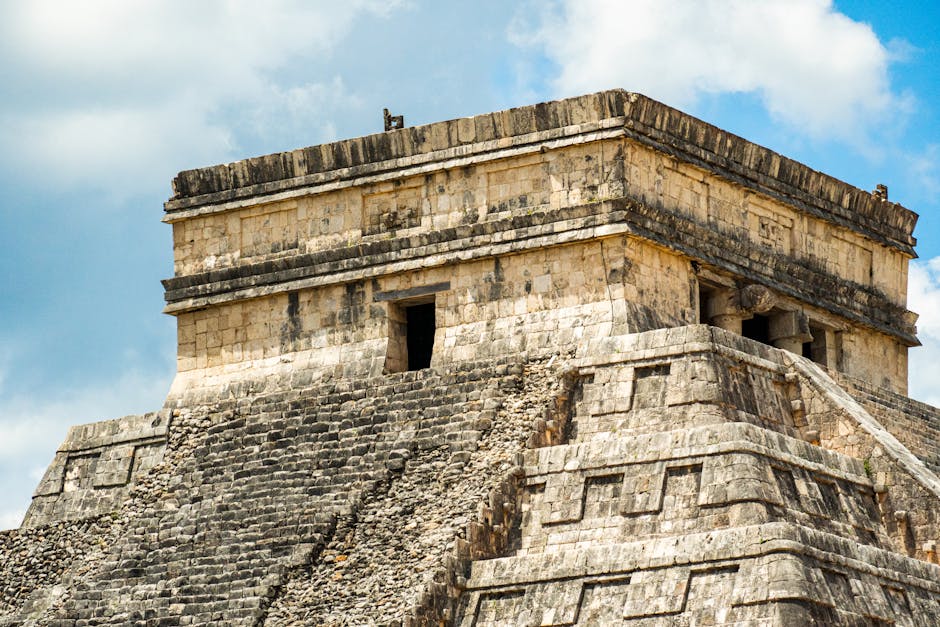
During the spring and autumn equinoxes, El Castillo pyramid creates an extraordinary optical illusion. As the sun sets, shadows cast along the pyramid's northern staircase form the appearance of a serpent slithering down the structure. This shadow connects with the massive serpent head carved at the pyramid's base, creating a stunning display that demonstrates the Maya's sophisticated understanding of astronomy and architecture. Thousands gather twice yearly to witness this ancient spectacle.
3. The Name's Dual Meaning
The name "Chichen Itza" translates to "at the mouth of the well of the Itza" in the Maya language. This refers to the sacred cenotes (natural sinkholes) that were vital to the city's survival and religious practices. The Itza were the ethnic group that dominated the region, and the name reflects both the geographical features and the cultural identity of this remarkable city.
4. Two Distinct Construction Periods
Archaeological evidence reveals that Chichen Itza was built and expanded during two major periods spanning from approximately 600 CE to 1200 CE. The earlier period featured traditional Maya architectural styles, while the later period showed significant Toltec influence from central Mexico. This blend of cultures created the unique architectural fusion visible throughout the site today.
5. The Acoustic Marvel of El Castillo
El Castillo, the main pyramid, was designed with remarkable acoustic properties. When visitors clap their hands at the base of the pyramid, the echo that returns sounds remarkably similar to the chirp of the quetzal bird, which was sacred to the Maya. This intentional acoustic engineering demonstrates the advanced knowledge Maya architects possessed regarding sound waves and resonance.
6. The Mathematical Precision of 365 Steps
El Castillo serves as a massive calendar carved in stone. The pyramid features four staircases, each with 91 steps, and when combined with the top platform, the total equals 365—matching the days in a solar year. Each of the pyramid's nine terraces is divided by a staircase, creating 18 sections on each side, corresponding to the 18 months in the Maya calendar year.
7. The Sacred Cenote's Mysterious Depths
The Sacred Cenote at Chichen Itza is a natural limestone sinkhole measuring approximately 60 meters in diameter and 27 meters deep. Archaeological excavations have recovered thousands of artifacts including jade, gold, pottery, and human remains from its depths. These discoveries confirm historical accounts that the Maya performed ritual sacrifices and offerings to the rain god Chaac at this sacred water source.
8. The Great Ball Court's Massive Scale
Chichen Itza boasts the largest ancient ball court in Mesoamerica, measuring 168 meters long and 70 meters wide. The walls tower 8 meters high, yet the court's acoustic design allows a whisper at one end to be clearly heard at the opposite end, 150 meters away. This architectural achievement showcases the Maya's mastery of both engineering and acoustics.
9. The Pyramid Within a Pyramid
In the 1930s, archaeologists discovered an earlier, smaller pyramid structure completely encased within El Castillo. This inner pyramid, accessible through a narrow tunnel, contains a chamber with a jade-studded jaguar throne and a chacmool statue. This architectural practice of building over existing structures was common in Mesoamerican cultures, representing renewal and the passage of time.
10. The Temple of the Warriors' Thousand Columns
Adjacent to the Temple of the Warriors stands the Group of a Thousand Columns, featuring hundreds of carved stone pillars that once supported a massive roof structure. These columns display intricate carvings of warriors, priests, and deities, providing invaluable insights into Maya military organization, religious practices, and social hierarchy during Chichen Itza's golden age.
11. The Observatory's Astronomical Precision
El Caracol, known as the Observatory, features a circular tower with narrow windows aligned to track celestial events. The Maya used this structure to observe Venus, which held tremendous religious and astrological significance. The building's windows correspond to the planet's extreme positions during its 584-day cycle, demonstrating the Maya's exceptional astronomical knowledge.
12. The Mysterious Abandonment
Around 1200 CE, Chichen Itza experienced a dramatic decline and was largely abandoned by 1400 CE. While theories abound regarding the reasons—including drought, warfare, and political upheaval—the exact cause remains one of archaeology's enduring mysteries. The site was never completely forgotten, however, as Maya people continued to make pilgrimages to the Sacred Cenote for centuries.
13. UNESCO World Heritage Recognition
In 1988, UNESCO designated Chichen Itza as a World Heritage Site, recognizing its outstanding universal value to human culture and history. This protection ensures international cooperation in preserving the site for future generations and acknowledges its importance as a testament to Maya civilization's achievements in architecture, astronomy, and urban planning.
14. The Chacmool Statue's Ritualistic Purpose
Throughout Chichen Itza, reclining chacmool statues can be found, featuring a distinctive pose with knees raised and head turned to the side. These stone figures held bowls on their stomachs where offerings—possibly including human hearts—were placed during religious ceremonies. The chacmool style shows strong Toltec influence and represents the cultural exchange between central Mexico and the Maya region.
15. The Skull Platform's Grim Display
The Tzompantli, or Platform of Skulls, features walls carved with hundreds of human skulls in relief. This platform was used to display the actual skulls of sacrificial victims and defeated enemies on wooden stakes, a practice common in Mesoamerican cultures. While shocking to modern sensibilities, these rituals were integral to Maya religious beliefs about maintaining cosmic order.
16. The Site's Modern Visitor Numbers
Chichen Itza welcomes approximately 2.6 million visitors annually, making it one of Mexico's most visited archaeological sites. This massive tourism industry provides economic benefits to the region but also presents conservation challenges. Authorities have implemented restrictions, including prohibiting climbing on structures since 2006, to protect the ancient monuments from degradation.
17. The Underground River System
Beneath Chichen Itza lies an extensive network of underground rivers and cenotes connected through the porous limestone bedrock. Recent technological surveys have revealed previously unknown water-filled caverns and caves beneath major structures. These hidden waterways were crucial to the city's survival in an area with no above-ground rivers, and they may still hold undiscovered archaeological treasures.
18. The Light and Sound Show Experience
Modern technology has enhanced the Chichen Itza experience through nightly multimedia shows that project lights and images onto the ancient structures while narrating the site's history. These presentations allow visitors to visualize how the city appeared in its heyday, complete with colorful painted facades and bustling plazas, bringing the ancient Maya civilization to life in spectacular fashion.
A Testament to Human Ingenuity
Chichen Itza represents far more than ancient ruins; it embodies the remarkable achievements of Maya civilization in astronomy, mathematics, architecture, and urban planning. From the equinox serpent that descends El Castillo to the acoustic marvels of the ball court, every element reflects sophisticated knowledge and careful planning. The site's multiple layers—both literal, as with the pyramid within a pyramid, and cultural, showing Maya and Toltec influences—tell a complex story of a civilization that thrived for centuries. Today, as millions walk the same pathways once traversed by Maya priests and nobles, Chichen Itza continues to inspire wonder and respect for the ingenuity of ancient peoples. Its designation as both a World Heritage Site and a Wonder of the World ensures that these magnificent structures will be preserved, allowing future generations to marvel at what human determination and intelligence can achieve.