












Who was the first President of the United States?

1 / 20 Questions
0 Points

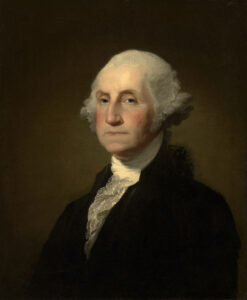
Who was the first President of the United States?

Thomas Jefferson

John Adams

George Washington

Benjamin Franklin

Points won
0
Correct score
0%

More Questions

More Articles

Did You Know These 15 Facts About the Great Wall’s History?

Did You Know These 15 Facts About the Great Wall’s History?

⏱️ 4 min read

Did You Know These 15 Facts About the Great Wall's History?

The Great Wall of China stands as one of humanity's most remarkable architectural achievements, spanning thousands of miles across China's northern borders. While many know it as a popular tourist destination, the wall harbors numerous fascinating historical facts that often surprise even history enthusiasts. Here are 15 lesser-known facts about this magnificent structure's history.

1. Multiple Dynasties Built It

Contrary to popular belief, the Great Wall wasn't built by a single dynasty. Construction began during the Spring and Autumn Period (771-476 BCE) and continued through numerous dynasties, including the Qin, Han, Sui, and Ming dynasties, each adding their own sections and modifications.

2. Not Actually Visible from Space

Despite the common myth, the Great Wall is not visible from space with the naked eye. This misconception began in 1932 and persisted until astronauts confirmed otherwise. Only certain parts can be seen from low Earth orbit under specific conditions.

3. The Original Mortar Recipe

The mortar used to bind the stones was made with a unique ingredient: sticky rice soup mixed with lime. This mixture proved remarkably strong, creating a super-strong adhesive that helped the wall survive for centuries.

4. Length Controversy

The wall's total length remains debated. Recent archaeological surveys suggest it spans approximately 21,196 kilometers (13,171 miles), including all branches. This is significantly longer than previously thought.

5. Construction Cost Millions of Lives

Historical records indicate that between 400,000 and 1 million workers died during the wall's construction. Many were buried within the wall itself, earning it the nickname "the longest cemetery in the world."

6. Military Communication System

The wall featured an advanced signal system using smoke signals, beacon fires, and drum beats to warn of enemy approaches. This system could send messages across hundreds of kilometers within hours.

7. Non-Defensive Functions

Beyond military defense, the wall served as a customs barrier, regulating trade along the Silk Road. It also helped enforce duties on goods transported along the trade route.

8. Different Building Materials

Early sections were made primarily of rammed earth and wood. Only during the Ming Dynasty (1368-1644) did stone and brick become the primary building materials, creating the iconic appearance we know today.

9. The Wall as a Road

The wall's top served as a military highway, allowing rapid deployment of troops and supplies across the empire. Its width allowed five horsemen to ride abreast in many sections.

10. Cultural Preservation Challenges

During the Cultural Revolution (1966-1976), many sections were deliberately destroyed, with stones used for building houses and roads. This destruction prompted later preservation efforts.

11. Astronomical Alignments

Some sections were built with astronomical considerations, aligning with the summer and winter solstices. These alignments helped ancient Chinese astronomers make calendar calculations.

12. Multiple Wall Systems

What we call "The Great Wall" is actually a series of multiple walls built by different dynasties, often parallel to each other. Some sections are hundreds of kilometers apart.

13. International Influences

The wall's construction techniques influenced fortification building across Asia. Similar defensive walls appeared in Korea and other neighboring regions, inspired by Chinese engineering.

14. Environmental Impact

Building the wall required massive deforestation for materials and clear sight lines, significantly impacting northern China's ecosystem. These environmental changes are still visible today.

15. Modern Discoveries Continue

As recently as 2012, archaeologists discovered previously unknown sections of the wall using advanced remote sensing technology. Some newly found portions are in Mongolia and other regions outside China's current borders.

Conclusion

The Great Wall of China represents far more than just a barrier against invaders. These 15 facts reveal its complex history as a marvel of engineering, a symbol of human determination, and a testament to ancient Chinese civilization's technological and organizational capabilities. From its varying construction methods to its multiple purposes and continuing archaeological discoveries, the Great Wall continues to fascinate researchers and visitors alike, offering new insights into one of humanity's greatest architectural achievements.

Understanding these lesser-known aspects helps appreciate not just the wall's physical presence but its profound impact on Chinese history, culture, and the development of human civilization. As modern preservation efforts continue, these historical facts become increasingly valuable in understanding and protecting this remarkable heritage site for future generations.
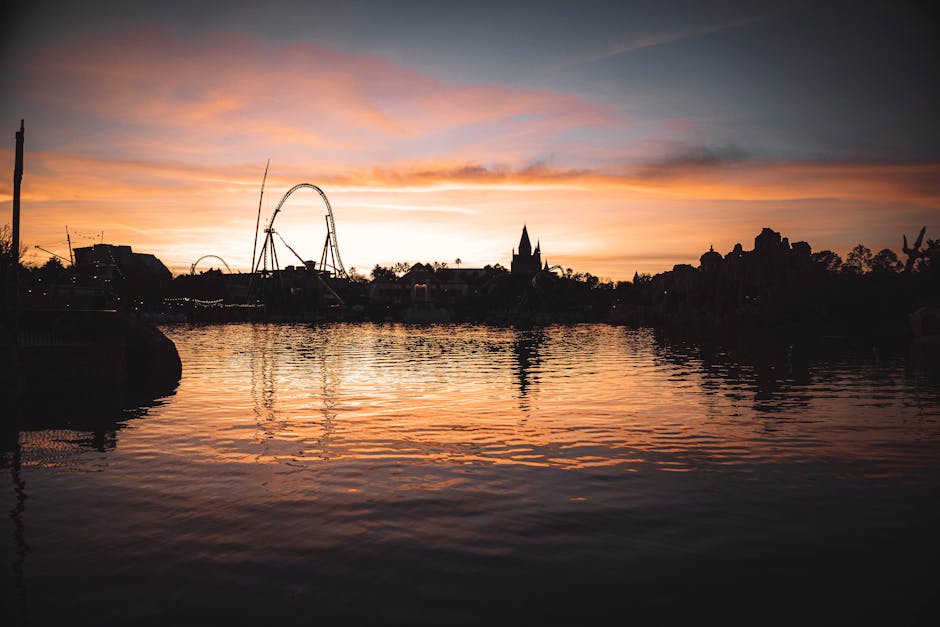
American Landmarks Trivia: Test Your Knowledge on Historic Sites

American Landmarks Trivia: Test Your Knowledge on Historic Sites

⏱️ 5 min read

The United States is home to some of the world's most recognizable landmarks, each with fascinating stories and historical significance that have shaped the nation's identity. From coast to coast, these iconic structures and sites serve as testaments to American ingenuity, perseverance, and cultural heritage. Understanding these landmarks goes beyond simply recognizing their silhouettes; it involves appreciating the intricate details, lesser-known facts, and historical contexts that make them truly remarkable.

The Statue of Liberty: More Than a Welcoming Symbol

Standing tall in New York Harbor, the Statue of Liberty remains one of America's most enduring symbols. However, many fascinating details about Lady Liberty often escape common knowledge. The statue was a gift from France, designed by sculptor Frédéric Auguste Bartholdi and engineered by Gustave Eiffel, who would later create the famous Eiffel Tower. The copper statue's distinctive green patina developed naturally over time through oxidation, a process that took approximately 25 years to complete.

The seven spikes on her crown represent the seven continents and seven seas, symbolizing universal liberty. The tablet she holds bears the date July 4, 1776, in Roman numerals, while the broken chains at her feet, often obscured from ground view, symbolize freedom from oppression. Standing at 305 feet from ground to torch, the statue required more than 300 different types of hammers to shape its copper sheets.

Mount Rushmore: Presidential Proportions and Hidden Details

Carved into the Black Hills of South Dakota, Mount Rushmore showcases the faces of four influential presidents: George Washington, Thomas Jefferson, Theodore Roosevelt, and Abraham Lincoln. The monumental sculpture took 14 years to complete, from 1927 to 1941, under the direction of sculptor Gutzon Borglum and his son Lincoln Borglum.

Each presidential head stands approximately 60 feet tall, with noses measuring around 20 feet long and mouths stretching 18 feet wide. The eyes alone span 11 feet across. Originally, Borglum planned to carve the presidents from head to waist, but funding constraints and his death in 1941 led to the project's completion at the head-and-shoulders level. Behind the sculpture lies the Hall of Records, a chamber carved into the mountain intended to house important American documents, though it was never fully completed as envisioned.

The Golden Gate Bridge: Engineering Marvel of the West

Spanning the Golden Gate Strait in San Francisco, this iconic suspension bridge connects the city to Marin County. When it opened in 1937, it held the title of the world's longest suspension bridge span at 4,200 feet, maintaining this record for 27 years. The bridge's distinctive "International Orange" color was specifically chosen for its visibility in fog and its aesthetic complement to the natural surroundings.

The bridge contains approximately 600,000 rivets in each tower, and the two main cables pass over the towers and are rooted in concrete anchorages on shore. Each cable is made up of 27,572 strands of wire, with a combined length that could circle the Earth's equator three times. The bridge can sway up to 27 feet sideways in strong winds, a deliberate feature of its flexible design that ensures structural integrity.

Independence Hall: The Birthplace of American Democracy

Located in Philadelphia, Pennsylvania, Independence Hall witnessed the signing of both the Declaration of Independence in 1776 and the United States Constitution in 1787. The Georgian-style building, originally constructed as the Pennsylvania State House, features the iconic Assembly Room where the Founding Fathers debated and shaped the nation's future.

The Liberty Bell, closely associated with Independence Hall, originally hung in the building's steeple. The bell's famous crack developed gradually over time, with the final expansion occurring in the 19th century. Contrary to popular belief, the bell was not rung on July 4, 1776, to announce the Declaration of Independence, as the document wasn't signed by most delegates until August of that year.

The Washington Monument: Obelisk with a Visible Timeline

The Washington Monument stands as the world's tallest predominantly stone structure and obelisk at 555 feet. Construction began in 1848 but wasn't completed until 1884 due to funding shortages and the Civil War. This interruption is visible today as a distinct color change approximately 150 feet up the monument, where construction resumed with marble from a different quarry.

The monument contains 193 commemorative stones from various states, countries, and organizations embedded in its interior walls. At its apex sits a small aluminum pyramid, which in 1884 was one of the most expensive metals available, more valuable than silver. The monument's foundation extends 36 feet below ground and is 126 feet square at its base, tapering to 34 feet square at its top.

The Alamo: Fortress of Texas Independence

The Alamo in San Antonio, Texas, originally served as a Spanish mission called Mission San Antonio de Valero, established in 1718. The site gained legendary status during the 1836 Battle of the Alamo, where approximately 200 defenders held out for 13 days against thousands of Mexican troops under General Santa Anna.

Many visitors are surprised to learn that the Alamo's distinctive curved parapet, now its most recognizable feature, was added in 1850 by the U.S. Army, 14 years after the famous battle. The complex originally covered three acres and included walls connecting various buildings, though only the church and Long Barrack remain standing today.

Testing Your Landmark Knowledge

Understanding these landmarks requires appreciating both their visual grandeur and their historical contexts. Each site contains layers of stories, from construction challenges to symbolic meanings, that contribute to their significance in American culture. Whether planning visits to these locations or simply expanding historical knowledge, recognizing these details transforms landmarks from mere tourist destinations into profound connections with the nation's past and the people who shaped it.