










Which type of cloud produces rain?

1 / 20 Questions
0 Points

Which type of cloud produces rain?

Cirrus

Nimbus

Stratus

Cumulus

Points won
0
Correct score
0%

More Questions

More Articles

USA Geography Trivia Quiz: 15 Facts About American Plains

USA Geography Trivia Quiz: 15 Facts About American Plains

⏱️ 4 min read

USA Geography Trivia Quiz: 15 Facts About American Plains

The American Plains represent one of North America's most distinctive geographical features, stretching from Canada to Texas and from the Rocky Mountains to the Mississippi River. This vast region has shaped American history, agriculture, and culture in countless ways. Here are 15 fascinating facts about the American Plains that showcase its unique characteristics and significance.

1. Geographical Extent

The American Plains cover approximately 1.2 million square miles, making them one of the largest continuous flat regions in the world. They span across ten U.S. states, from North Dakota to Texas, and extend into parts of Canada and Mexico.

2. Formation History

The Plains formed over millions of years through the erosion of the Rocky Mountains and the deposit of sediments. During the last ice age, glaciers helped flatten the northern portions, creating the characteristic level landscape we see today.

3. Great Plains Division

The region is divided into two distinct areas: the High Plains in the west, with elevations from 2,000 to 6,000 feet, and the Low Plains in the east, which gradually descend to around 1,000 feet near the Mississippi River.

4. Climate Characteristics

The Plains experience extreme temperature variations, with hot summers reaching over 100°F (38°C) and winters dropping below 0°F (-18°C). Annual precipitation varies dramatically from west to east, ranging from 10 to 40 inches per year.

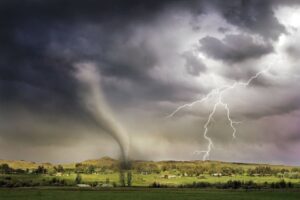
5. Tornado Alley

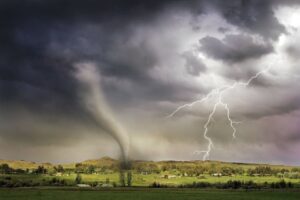
A significant portion of the Plains comprises "Tornado Alley," where approximately 1,000 tornadoes occur annually. This region experiences more tornadoes than any other place on Earth due to its unique geographical and atmospheric conditions.

6. Original Prairie Ecosystem

Before European settlement, the Plains were covered in native prairie grasses, with different species adapted to various rainfall levels. Less than 1% of the original tallgrass prairie remains today, making it one of North America's most endangered ecosystems.

7. Ogallala Aquifer

The Plains are home to the Ogallala Aquifer, one of the world's largest underground water sources. This aquifer supplies water to eight states and supports extensive agricultural irrigation throughout the region.

8. Historical Buffalo Range

The Plains once supported an estimated 30-60 million American bison (buffalo). These massive herds played a crucial role in maintaining the prairie ecosystem and were central to Native American cultures of the region.

9. Agricultural Significance

Today, the Plains are often called "America's Breadbasket," producing over 40% of the nation's wheat and significant portions of its corn, soybeans, and cotton. The region accounts for roughly one-fifth of America's agricultural output.

10. Wind Energy Leadership

The Plains states lead the nation in wind energy production, with Texas, Oklahoma, and Kansas ranking among the top producers. The region's consistent wind patterns make it ideal for renewable energy generation.

11. Population Distribution

Despite its vast size, the Plains region is relatively sparsely populated, with an average density of 10-20 people per square mile in many areas. This makes it one of the least densely populated regions in the United States.

12. Native American Heritage

The Plains were home to numerous Native American tribes, including the Lakota, Cheyenne, Comanche, and Kiowa. These nations developed sophisticated cultures adapted to the Plains environment and the buffalo-hunting way of life.

13. Dust Bowl Impact

During the 1930s, the Plains experienced the devastating Dust Bowl, when drought and poor farming practices led to massive soil erosion. This environmental disaster prompted significant changes in agricultural practices and soil conservation efforts.

14. River Systems

Major river systems crisscross the Plains, including the Missouri, Platte, Arkansas, and Red Rivers. These waterways were crucial for early exploration, settlement, and continue to be vital for agriculture and transportation.

15. Fossil Discoveries

The Plains region is rich in paleontological discoveries, with numerous important dinosaur fossils found in states like Montana, South Dakota, and Wyoming. The region's geological history has preserved countless prehistoric remains.

Conclusion

The American Plains represent a unique geographical region that has played a crucial role in shaping the United States. From its formation millions of years ago to its current status as an agricultural and energy powerhouse, the Plains continue to be vital to America's economy and ecology. Understanding these 15 facts helps appreciate the complexity and importance of this vast landscape that has been aptly called "America's Heartland."

These facts demonstrate how the Plains region combines natural wonders, historical significance, and modern importance in ways that make it one of North America's most distinctive geographical features. From its role in food production to its renewable energy potential, the American Plains remain crucial to the nation's future while preserving traces of its fascinating past.

Did You Know? 12 Quirky Facts About Global National Parks

Did You Know? 12 Quirky Facts About Global National Parks

⏱️ 4 min read

Did You Know? 12 Quirky Facts About Global National Parks

National parks across the globe are treasure troves of natural wonders and fascinating stories. From unexpected wildlife behaviors to bizarre geological formations, these protected areas harbor some of the most intriguing and lesser-known facts. Here are twelve surprising revelations about national parks worldwide that showcase their unique characteristics and peculiar features.

1. The World's Smallest National Park

Moyenne Island National Park in the Seychelles holds the record for the world's smallest national park, covering just 0.089 square kilometers. Despite its tiny size, it's home to over 2,000 plants, giant tortoises, and various bird species, making it one of the most densely biodiverse places on Earth.

2. Underwater Post Office

Vanuatu's Hideaway Island Marine National Park features the world's only underwater post office. Located 3 meters below sea level, visitors can dive down to mail special waterproof postcards to friends and family, complete with a unique waterproof postmark.

3. Glowing National Park

Puerto Rico's Mosquito Bay in Vasco Nuñez de Balboa National Park contains one of the brightest bioluminescent bays in the world. The water glows blue-green at night due to millions of microscopic organisms called dinoflagellates, creating a natural light show.

4. Moving Rocks Mystery

Death Valley National Park in the United States features the famous "sailing stones" phenomenon. These rocks mysteriously move across the desert floor, leaving long tracks behind them. Scientists discovered that thin sheets of ice, wind, and specific weather conditions cause this unusual movement.

5. Rainbow Mountains

Zhangye Danxia National Geological Park in China showcases extraordinary rainbow-colored mountains. The striped appearance results from layers of different colored sandstone and minerals being pressed together over 24 million years, creating a natural palette of reds, yellows, greens, and blues.

6. Volcanic Lightning Park

Taal Volcano National Park in the Philippines is one of the few places where visitors might witness volcanic lightning, a rare phenomenon where lightning occurs during volcanic eruptions. The park contains one of the world's lowest and deadliest volcanoes.

7. Underground National Park

New Mexico's Carlsbad Caverns National Park includes more than 119 known caves, formed when sulfuric acid dissolved limestone over millions of years. The largest chamber is called the Big Room, which could hold 6.3 football fields.

8. Tree-Climbing Lions

Queen Elizabeth National Park in Uganda is famous for its unusual tree-climbing lions. Unlike most lions, these big cats regularly climb large fig trees and spend hours lounging in their branches, a behavior rarely seen elsewhere in Africa.

9. Pink Lake Wonder

Lake Hillier in Recherche Archipelago Nature Reserve, Australia, maintains its bright pink color year-round. Unlike other pink lakes that change color, this one stays pink due to the presence of specific algae and bacteria, even when water is removed and bottled.

10. Soundless Valley

Haleakalā National Park in Hawaii features a unique "silent valley" where sound waves are naturally absorbed by the volcanic cinder landscape, creating an eerily quiet environment that seems to swallow noise.

11. Oldest National Park

Mongolia's Bogd Khan Uul National Park, established in 1778, predates Yellowstone (often cited as the world's first national park) by nearly 100 years. The park was created by the local government to protect the holy mountain and its surroundings.

12. Snow-Free Antarctic Valley

The McMurdo Dry Valleys in Antarctica's Asgard Range are among the world's most extreme deserts and the continent's largest relatively ice-free area. These valleys haven't seen rainfall in an estimated 2 million years and represent the closest Earth conditions to Mars.

Conclusion

These twelve remarkable facts demonstrate the incredible diversity and uniqueness of national parks worldwide. From the smallest park in the Seychelles to the ancient protected areas of Mongolia, each location offers distinctive features that make them truly extraordinary. These parks not only preserve natural wonders but also showcase some of the most unusual and fascinating phenomena on Earth, reminding us of the importance of protecting these remarkable spaces for future generations to explore and study.

Whether it's naturally moving rocks, underwater post offices, or pink lakes, these protected areas continue to surprise and captivate visitors with their quirky characteristics and natural phenomena. These fascinating features underscore the importance of national parks in preserving not just wildlife and landscapes, but also some of our planet's most unusual and remarkable natural wonders.