








































⏱️ 7 min read
The Great Wall of China stands as one of humanity's most remarkable architectural achievements, stretching across mountains, valleys, and deserts. While most people know it as an ancient fortification built to protect China from invasions, the Wall holds countless surprising secrets and fascinating details that even history enthusiasts might not know. From its construction methods to the myths surrounding it, these lesser-known facts reveal the true magnitude and wonder of this UNESCO World Heritage Site.
Surprising Facts About This Ancient Wonder
1. The Wall's Actual Length Defies Expectations
Contrary to popular belief that the Great Wall measures around 5,500 miles, archaeological surveys completed in 2012 revealed the total length of all wall sections built throughout Chinese history is approximately 13,170 miles (21,196 kilometers). This includes all branches, overlapping sections, and walls built during different dynasties, making it far more extensive than traditionally believed.
2. Construction Spanned Over Two Millennia
The Great Wall wasn't built in a single era but represents construction efforts spanning more than 2,000 years. The earliest walls date back to the 7th century BC, while the most famous sections were built during the Ming Dynasty (1368-1644 AD). Different dynasties contributed their own sections, creating a complex network of fortifications rather than one continuous structure.
3. Sticky Rice Created an Unbreakable Bond
Ming Dynasty engineers discovered an ingenious construction material: a mortar made from sticky rice flour mixed with slaked lime. This organic-inorganic composite created an incredibly strong binding agent that has helped portions of the Wall survive for centuries. Modern scientists have confirmed that this rice mortar is actually stronger than pure lime mortar and more resistant to damage.
4. The Wall Never Formed One Continuous Line
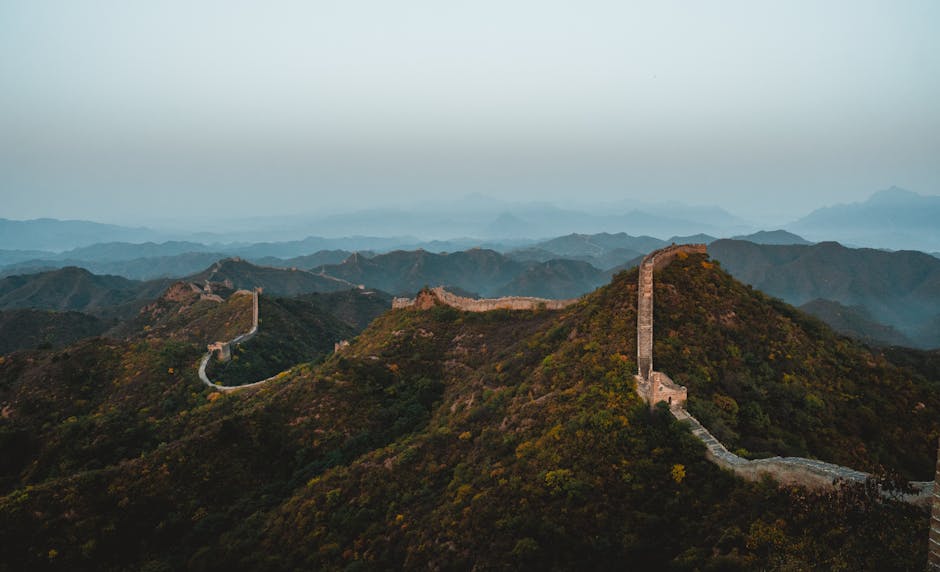
Despite popular imagery, the Great Wall was never a single, unbroken barrier. It consists of multiple parallel walls, overlapping sections, and natural barriers like rivers and mountains that served as defensive boundaries. Many sections exist kilometers apart, with gaps that were intentionally left or created by natural erosion over centuries.
5. Human Remains Were Not Used as Building Materials
A persistent myth claims that workers who died during construction were buried within the Wall itself. However, historians and archaeologists have found no evidence supporting this claim. While many workers certainly perished during construction due to harsh conditions, their bodies were buried in nearby graveyards, not incorporated into the structure.
6. The Wall Failed Its Primary Purpose
Despite its imposing presence, the Great Wall frequently failed to prevent invasions. The Mongols bypassed or breached it multiple times, and the Manchus eventually conquered China in 1644 by convincing a Ming general to open the gates at Shanhai Pass. The Wall's effectiveness relied more on the troops defending it than the structure itself.
7. Millions Contributed to Its Construction
Estimates suggest that over one million workers, including soldiers, peasants, and prisoners, participated in building the Great Wall during the Ming Dynasty alone. Throughout its entire construction history, tens of millions of people likely contributed to various sections, making it one of history's largest collaborative construction projects.
8. Modern Visibility from Space Is a Misconception
The claim that the Great Wall is visible from space with the naked eye is false. Astronauts have confirmed that while the Wall can be seen in low Earth orbit under perfect conditions with magnification, it's nearly impossible to distinguish from natural features without aid. This myth has been thoroughly debunked by space travelers themselves.
9. Watchtowers Served Multiple Strategic Functions
The approximately 25,000 watchtowers along the Wall weren't just lookout points. They functioned as signal stations using smoke during the day and fire at night, troop barracks, storage facilities for weapons and supplies, and command centers. Their strategic placement allowed for rapid communication across vast distances.
10. The Wall Features Sophisticated Defensive Architecture
The Wall's design incorporates advanced military architecture including crenellations for archers, multiple layers of defense, strategic height variations based on terrain, and carefully planned gates that created kill zones for invaders. The outer walls facing potential enemies were typically higher and thicker than inner walls.
11. Different Dynasties Used Varying Building Materials
Earlier sections built during the Qin Dynasty primarily used rammed earth, stones, and wood. Later, the Ming Dynasty utilized bricks and cut stone blocks, creating the more durable sections that tourists visit today. Northern sections used granite and limestone, while western portions incorporated adobe and sand due to material availability.
12. The Wall Created Its Own Unique Ecosystem
Over centuries, the Great Wall has become home to diverse plant and animal species. More than 200 plant species grow on and around the Wall, while various birds, mammals, and reptiles have made it their habitat. Some sections have become important ecological corridors connecting different environments.
13. Only Thirty Percent Remains in Good Condition
Despite preservation efforts, only about 30% of the Ming Dynasty wall remains intact. Natural erosion, vegetation growth, human damage, and theft of materials for other construction projects have destroyed or severely damaged significant portions. Some sections have completely disappeared, leaving only archaeological traces.
14. The Wall Influenced Chinese Language and Culture
The Great Wall has deeply influenced Chinese idioms, literature, poetry, and cultural identity. Phrases like "not reaching the Great Wall means not being a true hero" reflect its symbolic importance. It has inspired countless artistic works and remains central to Chinese national identity.
15. Ancient GPS Systems Guided Its Construction
Builders used sophisticated surveying techniques and astronomical observations to maintain consistent direction and elevation across mountainous terrain. They employed tools like the magnetic compass, plumb lines, and sighting devices to ensure structural integrity over thousands of miles despite challenging topography.
16. The Wall Regulated Trade Along the Silk Road
Beyond military defense, the Great Wall served crucial economic functions by controlling trade routes, particularly along the Silk Road. Gates and passes became checkpoints where officials collected taxes, regulated commerce, and controlled the movement of goods and people between China and Central Asia.
17. Temperature Extremes Test Its Endurance
The Wall endures extreme temperature variations, from scorching summers exceeding 100°F (38°C) to frigid winters dropping below -20°F (-29°C). These dramatic fluctuations cause expansion and contraction of materials, contributing to cracking and deterioration, particularly in exposed sections.
18. Modern Technology Aids Preservation Efforts
Conservationists now employ drones, 3D scanning, satellite imagery, and artificial intelligence to map, monitor, and preserve the Great Wall. These technologies help identify vulnerable sections, track deterioration, and plan restoration work more effectively than traditional methods.
19. The Wall Spans Multiple Climate Zones
Stretching from the Gobi Desert to the Yellow Sea, the Great Wall crosses mountains, grasslands, plateaus, and forests. This geographic diversity means different sections face unique preservation challenges and required distinct construction techniques adapted to local conditions and available materials.
20. Tourism Creates Both Benefits and Challenges
While tourism generates essential revenue for preservation, approximately 10 million annual visitors cause significant wear on popular sections like Badaling. Footfall erosion, graffiti, and littering threaten the Wall's integrity, prompting authorities to implement stricter regulations and redirect tourists to less-visited sections.
A Living Monument to Human Achievement
These twenty facts reveal that the Great Wall of China is far more complex and fascinating than its popular image suggests. From its unexpected construction materials and lengthy building period to its ecological significance and ongoing preservation challenges, the Wall continues to surprise researchers and visitors alike. Understanding these details enhances appreciation for this monumental achievement and highlights the importance of protecting it for future generations. Whether considering its military ineffectiveness despite imposing appearance, its role in trade regulation, or the sophisticated engineering that created it, the Great Wall remains an enduring testament to human ambition, ingenuity, and perseverance across centuries.