















Which phrase is most often linked to the American Dream?

1 / 20 Questions
0 Points

Which phrase is most often linked to the American Dream?

From zero to hero

Rags to riches

Coast to coast

Work to live

Points won
0
Correct score
0%

More Questions

More Articles

Top 10 Must-Know Facts About US Historic Landmarks

Top 10 Must-Know Facts About US Historic Landmarks

⏱️ 4 min read

Top 10 Must-Know Facts About US Historic Landmarks

The United States boasts numerous historic landmarks that tell the story of America's rich heritage and cultural significance. These monuments and sites serve as testament to the nation's history, architectural achievements, and pivotal moments. Here are ten essential facts about America's most iconic historic landmarks that every history enthusiast should know.

1. The Statue of Liberty's French Origins

Lady Liberty wasn't always green - the copper statue arrived from France in 1885 with a bright copper color. The iconic green patina developed over 20 years of exposure to air and seawater. The statue was a gift from France to commemorate the centennial of American independence, though it arrived a decade late. Its full name is "Liberty Enlightening the World," and it stands 305 feet tall from ground to torch.

2. Mount Rushmore's Hidden Chamber

Behind Abraham Lincoln's head lies a secret chamber known as the Hall of Records. Designed by sculptor Gutzon Borglum, this room was meant to house important American documents and artifacts. Though never completed as originally envisioned, in 1998, officials placed ceramic panels containing historical information inside the chamber for future generations.

3. Independence Hall's Revolutionary Role

Not only was the Declaration of Independence signed here in 1776, but Independence Hall also hosted the Constitutional Convention of 1787. Originally called the Pennsylvania State House, this Philadelphia landmark featured the Liberty Bell until 1976. The building's architecture significantly influenced colonial American design, inspiring numerous government buildings across the nation.

4. The Lincoln Memorial's Hidden Symbolism

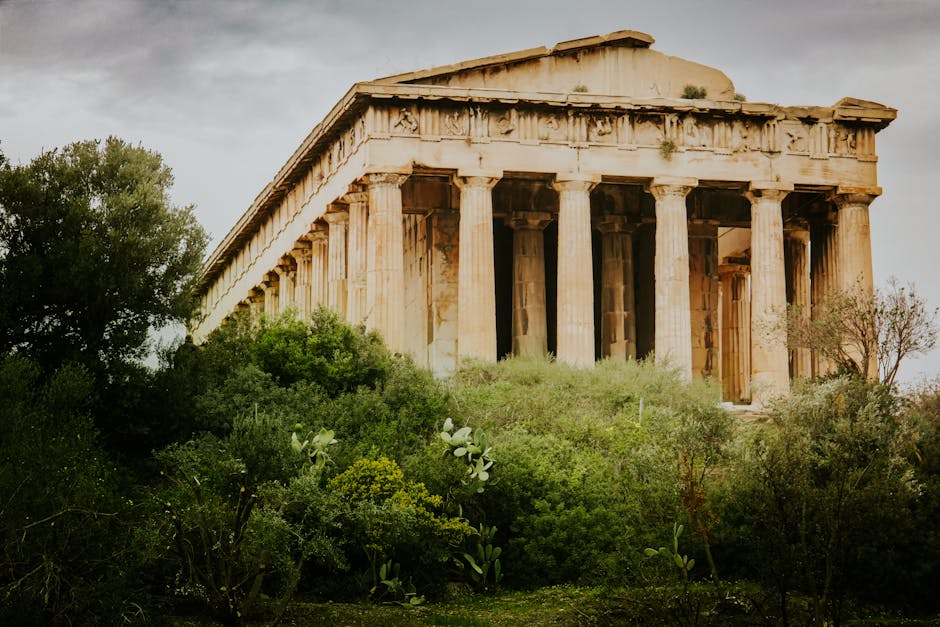
The Lincoln Memorial contains numerous symbolic elements often overlooked by visitors. The 36 columns represent the states in the Union at the time of Lincoln's death. The building's design was inspired by ancient Greek temples, specifically the Parthenon. Beneath the monument lies a 43,800-square-foot basement called the "undercroft," which was rediscovered during renovations in 1975.

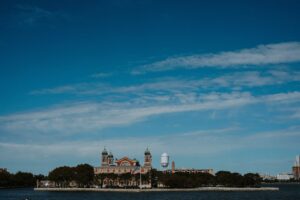
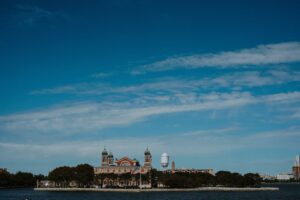
5. Ellis Island's Processing Numbers

Between 1892 and 1954, Ellis Island processed more than 12 million immigrants entering the United States. During its peak years, officials interviewed up to 5,000 people per day. Approximately 40% of all current U.S. citizens can trace at least one ancestor who passed through Ellis Island. The island actually grew from its original 3.3 acres to 27.5 acres through landfill operations.

6. The White House's Reconstruction History

After being burned by British forces in 1814, the White House underwent a major reconstruction. During the Truman administration (1949-1952), the entire interior was gutted and rebuilt while maintaining the historic exterior walls. The building contains 132 rooms, 35 bathrooms, and 6 levels. The first presidential movie screening was held in 1915, showing "The Birth of a Nation."

7. Alcatraz's Pre-Prison History

Before becoming a federal penitentiary, Alcatraz served as a military fortification, military prison, and the site of a Native American occupation (1969-1971). The island was first documented by Spanish explorer Juan Manuel de Ayala in 1775, who named it "La Isla de los Alcatraces" (Island of the Pelicans). The fortress built there was the first U.S. fort on the West Coast.

8. The Washington Monument's Two-Tone Construction

The distinct color change visible about one-third of the way up the Washington Monument marks where construction halted for 23 years due to lack of funds and the Civil War. When work resumed in 1876, marble from a different quarry was used, resulting in the slight color variation. The monument was briefly the world's tallest structure upon completion in 1884.

9. The Golden Gate Bridge's Paint Job

The Golden Gate Bridge's distinctive color, "International Orange," was originally just a primer. The U.S. Navy wanted it painted in black and yellow stripes for visibility, but consulting architect Irving Morrow chose the orange color for both aesthetic reasons and visibility in San Francisco's famous fog. The paint job never actually ends - painters continuously maintain the bridge year-round.

10. Grand Canyon's Ancient History

While the Grand Canyon became a national park in 1919, its history spans millions of years. The oldest rocks exposed in the canyon are nearly two billion years old. Native Americans have inhabited the area for at least 12,000 years, and the canyon contains over 4,000 documented archaeological sites. The first European to see the canyon was García López de Cárdenas in 1540.

These landmarks represent crucial pieces of American history, each telling unique stories of the nation's development, challenges, and achievements. From natural wonders to architectural marvels, these sites continue to inspire and educate millions of visitors annually about America's rich heritage and cultural significance. Their preservation ensures that future generations can experience and learn from these important historical monuments.

Did You Know? 12 Quirky Facts About US State Capitols

Did You Know? 12 Quirky Facts About US State Capitols

⏱️ 4 min read

Did You Know? 12 Quirky Facts About US State Capitols

State capitols are more than just government buildings - they're architectural marvels filled with fascinating stories and unique features. Here are twelve surprising and quirky facts about US state capitol buildings that showcase their distinctive characteristics and historical significance.

1. The Golden Dome That Isn't Gold

Vermont's state capitol in Montpelier features a distinctive dome that appears golden but is actually topped with real wood-carved Barre granite and covered with gold leaf. The current dome is the third iteration, having been rebuilt after fires in 1857 and 1932.

2. Texas-Sized Pride

The Texas State Capitol in Austin stands proudly as the largest state capitol building in the United States. It's actually 14 feet taller than the US Capitol in Washington, D.C. - a intentional design choice reflecting the state's famous pride. The building was partially funded by trading 3 million acres of public land.

3. The Hidden Swimming Pool

Nebraska's capitol in Lincoln contains a hidden swimming pool in its basement. Originally built in 1932 for state legislators to use during long sessions, the pool has since been drained and converted to storage space, though its tile work remains visible.

4. The Haunted Capitol of Idaho

Idaho's State Capitol in Boise is said to be haunted by several ghosts, including that of Governor Frank Steunenberg, who was assassinated in 1905. Staff members have reported mysterious footsteps and the sound of doors closing when no one is around.

5. A Capitol Without Corners

New Mexico's State Capitol in Santa Fe is unique as the only round state capitol building in the United States. Known as the "Roundhouse," its design is inspired by the Zia Sun Symbol, sacred to the state's indigenous Zia Pueblo people.

6. The Capitol That Moves

Louisiana's State Capitol in Baton Rouge is the tallest capitol building in the United States, standing at 450 feet. More interestingly, it actually sways slightly in strong winds, thanks to its innovative construction that allows for movement to prevent structural damage.

7. Oregon's Golden Pioneer

The Oregon State Capitol in Salem is topped by a distinctive golden pioneer statue, nicknamed the "Gold Man." The 23-foot-tall figure is covered in gold leaf and weighs 8.5 tons. It has survived multiple capitol fires and reconstructions since 1938.

8. Alaska's Double-Duty Building

The Alaska State Capitol in Juneau was originally built as the Federal and Territorial Building in 1931, before Alaska achieved statehood. It's one of only a few state capitols without a dome, due to the heavy snowfall the region receives.

9. Hawaii's Royal Connection

The Hawaii State Capitol in Honolulu stands on the grounds of the former Iolani Palace, the only royal palace ever used as an official state capitol building in the United States. The modern capitol's design includes reflecting pools representing the Pacific Ocean and columns resembling coconut palms.

10. Maryland's Wooden Dome

The Maryland State House in Annapolis features the largest wooden dome built without nails in North America. Constructed between 1772 and 1794, the dome was built using wooden pegs and timber compression to hold it together, demonstrating remarkable colonial engineering.

11. California's Secret Garden

The California State Capitol in Sacramento houses a little-known 40-acre garden featuring trees and plants from every county in the state. The Capitol Park includes trees from around the world, including a sequoia grown from a seed that traveled to the moon on Apollo 14.

12. Kansas's Underground Railroad

The Kansas State Capitol in Topeka features a network of underground tunnels that were originally built to transport coal for heating. Local legend suggests some tunnels may have been used as part of the Underground Railroad, though historical evidence is limited.

Conclusion

These twelve fascinating facts about US state capitols demonstrate how these buildings are more than just seats of government - they're repositories of state history, architectural innovation, and cultural significance. From hidden swimming pools to haunted hallways, from wooden domes to underground tunnels, each capitol building tells unique stories about its state's heritage and values. These architectural landmarks continue to serve as both functional government buildings and popular tourist destinations, offering visitors glimpses into the rich tapestry of American state history.

Whether it's the towering structure in Louisiana, the round design in New Mexico, or the royal connection in Hawaii, each state capitol building represents its state's individual character while maintaining its crucial role in state governance. These quirky facts remind us that history isn't just about dates and events - it's also about the fascinating details and stories that make each state capitol unique.