








Which mammal lays eggs instead of giving live birth?

1 / 10 Questions
0 Points

Which mammal lays eggs instead of giving live birth?

Bat

Dolphin

Platypus

Whale

Points won
0
Correct score
0%

More Questions

More Articles

Top 10 Must-Know Facts About the Andes Mountains

Top 10 Must-Know Facts About the Andes Mountains

⏱️ 4 min read

Top 10 Must-Know Facts About the Andes Mountains

The Andes Mountains, stretching along South America's western coast, represent Earth's longest continental mountain range and harbor countless geographical wonders. From their remarkable height to their rich biodiversity, these mountains have shaped the continent's history, climate, and culture. Here are ten essential facts that showcase the magnificence of this mountain range.

1. Record-Breaking Length and Coverage

The Andes Mountains extend over 7,000 kilometers (4,300 miles) through seven countries: Venezuela, Colombia, Ecuador, Peru, Bolivia, Chile, and Argentina. This makes them the longest continental mountain range in the world, with an average width of 200-700 kilometers. The range serves as a natural boundary between the Pacific coast and the eastern regions of South America.

2. Impressive Elevation Statistics

Mount Aconcagua, located in Argentina, stands as the highest peak in the Andes at 6,961 meters (22,838 feet), making it the highest mountain outside of Asia. The range contains numerous peaks exceeding 6,000 meters, with over 50 volcanoes reaching heights greater than 6,000 meters. This elevation contributes to diverse climate zones and ecosystems throughout the range.

3. Volcanic Activity and Formation

The Andes formed through tectonic plate activity, specifically the subduction of the Nazca and Antarctic plates beneath the South American plate. The range features approximately 200 potentially active volcanoes, including Ojos del Salado, the world's highest active volcano at 6,893 meters (22,615 feet). This ongoing geological activity continues to shape the mountain range.

4. Ancient Civilization Hub

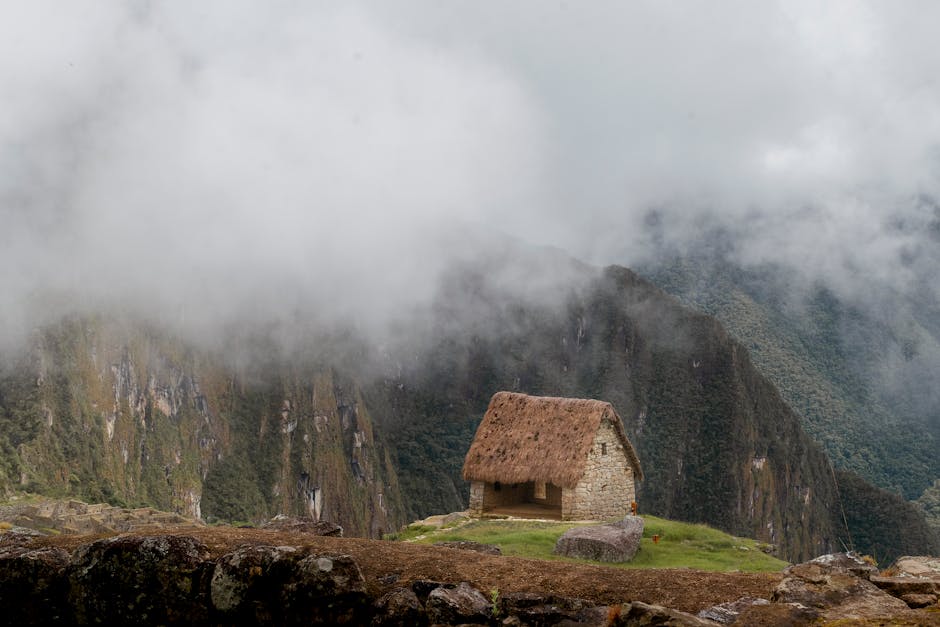
The Andes served as the cradle of several pre-Columbian civilizations, most notably the Inca Empire. The mountains' natural resources and defensive positions enabled the development of sophisticated agricultural systems, including terraced farming techniques that are still used today. Machu Picchu, situated at 2,430 meters (7,970 feet), stands as a testament to Incan engineering excellence.

5. Unique Biodiversity Hotspot

The mountain range hosts incredible biodiversity with numerous endemic species. The Andean condor, spectacled bear, and mountain tapir are among the iconic species found here. The range contains various ecosystems, from tropical rainforests to high-altitude páramos, supporting over 30,000 species of vascular plants and countless animal species.

6. Critical Water Source

The Andes function as South America's primary water tower, feeding major river systems including the Amazon and Orinoco Rivers. Glaciers in the range provide essential water resources to millions of people in surrounding regions. The mountains contain approximately 70% of the world's tropical glaciers, though these are rapidly declining due to climate change.

7. Climate Influence

The Andes significantly influence South America's climate patterns by creating rain shadows and various microclimates. The range blocks moisture-laden air from the Amazon Basin, resulting in the Atacama Desert's formation on the western side. This creates stark contrasts between eastern and western slopes, affecting precipitation patterns across the continent.

8. Natural Resource Repository

The mountains contain vast mineral deposits, making them economically significant. The range holds substantial reserves of copper, silver, gold, and lithium. The Cerro Rico in Bolivia, once the world's largest silver mine, exemplifies the mineral wealth found within these mountains. Modern mining operations continue to extract these valuable resources.

9. High-Altitude Adaptation

Communities living in the Andes have developed remarkable adaptations to high-altitude conditions. Native populations show genetic adaptations that help them thrive in low-oxygen environments. Traditional crops like quinoa and potatoes were first domesticated here, demonstrating the agricultural adaptation to high-altitude conditions.

10. Modern Environmental Challenges

The Andes face numerous environmental challenges, including glacier retreat, mining impact, and deforestation. Climate change particularly affects the region, with tropical glaciers receding at unprecedented rates. These changes threaten water supplies, biodiversity, and traditional ways of life for millions of people depending on the mountain ecosystem.

Conclusion

The Andes Mountains represent far more than just a geographical feature; they are a complex system that influences climate, supports unique biodiversity, provides essential resources, and has shaped human civilization for millennia. Understanding these ten crucial aspects helps appreciate the range's significance to South America and the world. As environmental challenges continue to affect this remarkable mountain range, its preservation becomes increasingly important for future generations.

Top 10 Global Inventions That Changed Life in the USA

Top 10 Global Inventions That Changed Life in the USA

⏱️ 5 min read

Throughout history, innovations from around the world have crossed borders and transformed American society in profound ways. While the United States has been a hub of innovation, many of the most transformative technologies and inventions that shaped daily life in America originated elsewhere. These global contributions revolutionized everything from communication and transportation to healthcare and entertainment, fundamentally altering how Americans live, work, and interact with one another.

Revolutionary Inventions That Transformed American Society

1. The Printing Press from Germany

Johannes Gutenberg's invention of the movable-type printing press in 1440 eventually revolutionized information dissemination in America. When this technology reached the colonies, it enabled the mass production of newspapers, books, and pamphlets that were crucial to the American Revolution. The press made education more accessible, allowed democratic ideas to spread rapidly, and laid the foundation for the First Amendment's protection of press freedom. Without this German innovation, the rapid expansion of literacy and the democratic exchange of ideas that defined American society would have been impossible.

2. The Steam Engine from Scotland

James Watt's improvements to the steam engine in the 1760s transformed American industry and transportation. This Scottish innovation powered the locomotives that connected the vast American continent, enabling westward expansion and creating a unified national economy. Steam-powered factories drove the Industrial Revolution in American cities, shifting the economy from agriculture to manufacturing. The steam engine made it possible to transport goods and people across great distances, fundamentally changing American commerce and settlement patterns throughout the 19th century.

3. Antibiotics from the United Kingdom

Alexander Fleming's discovery of penicillin in 1928 revolutionized healthcare in America and worldwide. The mass production of antibiotics during World War II saved countless American soldiers' lives and ushered in the modern era of medicine. This British discovery transformed infectious diseases from death sentences into treatable conditions, dramatically increasing American life expectancy and quality of life. The antibiotic revolution enabled more complex surgeries, reduced maternal and infant mortality, and made previously devastating bacterial infections manageable.

4. Paper from Ancient China

The Chinese invention of paper around 105 AD eventually became fundamental to American society. From the founding documents like the Declaration of Independence to everyday business transactions, paper enabled record-keeping, education, and communication that built American institutions. The technology allowed for widespread literacy, bureaucratic organization, and the preservation of knowledge. Even in today's digital age, the legacy of paper as a medium for contracts, currency, and official documents remains essential to American life and law.

5. The Telephone from Canada and Scotland

While Alexander Graham Bell patented his telephone invention in the United States, he was born in Scotland and conducted early work in Canada before immigrating to America. The telephone revolutionized American communication, shrinking distances and enabling real-time conversations across the continent. This invention transformed business operations, emergency services, and personal relationships. The infrastructure built for telephone networks later supported internet connectivity, making Bell's invention the ancestor of modern digital communication that defines contemporary American life.

6. Pasteurization from France

Louis Pasteur's development of pasteurization in the 1860s dramatically improved food safety in America. This French innovation made milk and other beverages safe to consume, preventing countless deaths from diseases like tuberculosis and typhoid fever. Pasteurization enabled the development of modern food distribution systems, allowing American cities to grow without relying solely on local food sources. The process extended shelf life, reduced foodborne illness, and made nutrition more accessible to American families across all economic levels.

7. The Bicycle from Germany and France

The development of the modern bicycle through innovations by Karl von Drais and the Michaux family transformed American transportation and society. Bicycles provided affordable personal mobility, contributing to women's liberation by offering independent transportation. The bicycle industry drove innovations in manufacturing, creating techniques later used in automobile production. The Good Roads Movement, spurred by cyclists, led to improved infrastructure that automobiles would later utilize. Bicycles democratized transportation and recreation in ways that reshaped American urban and suburban landscapes.

8. Vaccination from England

Edward Jenner's development of the smallpox vaccine in 1796 introduced the concept of vaccination that has protected millions of Americans. This English innovation eliminated smallpox in the United States and paved the way for vaccines against polio, measles, and other devastating diseases. Vaccination programs became cornerstones of American public health policy, enabling children to attend school safely and workers to remain productive. The principle Jenner discovered continues to protect Americans from infectious diseases and has been crucial during recent pandemic responses.

9. The Compass from Ancient China

The magnetic compass, invented in China during the Han Dynasty, was essential to European exploration of the Americas and subsequent American expansion. This navigation tool enabled transoceanic voyages that connected America to global trade networks. American explorers, sailors, and pioneers relied on compasses to navigate the wilderness, map territories, and establish trade routes. The compass made possible the maritime commerce that built American port cities and connected the nation to international markets, fundamentally shaping American economic development.

10. The Flush Toilet from England

Sir John Harington's invention of the flush toilet in 1596, later improved by Alexander Cumming and Thomas Crapper, revolutionized American sanitation and public health. The widespread adoption of modern plumbing systems in American cities dramatically reduced waterborne diseases like cholera and dysentery. This innovation enabled urban density by solving waste management challenges, making large American cities viable and healthy places to live. Indoor plumbing improved quality of life, privacy, and hygiene while reducing infant mortality and increasing overall life expectancy across American society.

The Lasting Impact of Global Innovation

These ten inventions demonstrate how global innovation has been integral to American progress and prosperity. From ancient Chinese discoveries to European industrial innovations, international ingenuity has continuously shaped American life. These technologies improved health, enabled communication, expanded mobility, and created the infrastructure for modern American society. They remind us that progress rarely occurs in isolation—instead, it results from the accumulated knowledge of human civilization shared across borders and generations. The American experience has been enriched immeasurably by embracing and building upon innovations from around the world, creating a society that benefits from global intellectual contributions while adding its own innovations to humanity's collective advancement.