









⏱️ 7 min read
Perched high above Athens, the Acropolis stands as one of the world's most iconic ancient landmarks. While millions of visitors flock to this UNESCO World Heritage Site each year, many remain unaware of the fascinating stories, architectural marvels, and historical secrets hidden within its marble columns and ancient stones. From its original vibrant colors to its survival through wars and natural disasters, the Acropolis continues to reveal surprises even to seasoned historians and archaeologists.
Remarkable Discoveries About Athens' Crown Jewel
1. The Parthenon Was Once a Riot of Color
Contrary to the pristine white marble image most people envision, the Parthenon was originally painted in vibrant colors. Blues, reds, and golds adorned the sculptures and architectural elements. Modern technology has revealed traces of these pigments, showing that ancient Greeks preferred their temples brilliantly decorated rather than the monochromatic appearance we see today, which resulted from centuries of weathering and pigment deterioration.
2. The Name Means "High City"
The word "Acropolis" derives from the Greek words "akron" (highest point) and "polis" (city). While Athens' Acropolis is the most famous, ancient Greece actually had many acropolises—fortified citadels built on elevated ground in various city-states. The Athenian Acropolis became synonymous with the term due to its cultural and historical significance.
3. A Massive Statue of Athena Once Dominated the Interior
Inside the Parthenon stood a colossal statue of Athena Parthenos, created by the renowned sculptor Phidias. Standing approximately 40 feet tall, the statue was made of gold and ivory (chryselephantine technique) and depicted the goddess in full armor. This priceless masterpiece disappeared in ancient times, and no one knows its exact fate, though historians believe it was either destroyed or melted down for its precious materials.
4. The Structures Use Optical Illusions
Ancient architects incorporated subtle curves and irregularities to counteract optical illusions. The Parthenon's columns bulge slightly in the middle (entasis) and lean inward, while the platform curves upward at its center. These refinements create the illusion of perfect straightness to the human eye. Without these adjustments, the building would appear to sag and the columns would seem to lean outward.
5. It Survived Being Used as a Gunpowder Storage Facility
During the Ottoman occupation of Athens in 1687, the Parthenon was being used to store gunpowder when Venetian forces attacked. A mortar shell struck the building, causing a catastrophic explosion that destroyed much of the structure and killed approximately 300 people sheltering inside. This single event caused more damage than the previous two thousand years combined.
6. The Acropolis Has Served Multiple Religions
Throughout its long history, the Acropolis has been a sacred space for different faiths. Originally dedicated to ancient Greek gods, the Parthenon was converted into a Christian church dedicated to the Virgin Mary during the Byzantine era, then transformed into a mosque during Ottoman rule, complete with a minaret. This religious evolution reflects the complex layers of Mediterranean history.
7. No Mortar Was Used in Construction
The ancient builders constructed the Parthenon using a technique called "dry stone construction," fitting massive marble blocks together so precisely that mortar wasn't necessary. Instead, they used iron clamps coated in lead to hold the blocks together. Unfortunately, many of these clamps were later stolen for their metal, causing additional structural damage over the centuries.
8. The Foundation Incorporates Material from an Earlier Temple
The current Parthenon was built on the foundations of an earlier temple known as the Older Parthenon or Pre-Parthenon, which was destroyed by the Persians in 480 BCE. Builders incorporated damaged column drums from this earlier structure into the north wall of the Acropolis, creating a memorial to the Persian destruction and a reminder of Athenian resilience.
9. Lord Elgin's Controversial Removal of Sculptures
Between 1801 and 1812, British diplomat Lord Elgin removed approximately half of the surviving Parthenon sculptures and transported them to Britain, where they remain in the British Museum. This controversial action, conducted with Ottoman permission, has sparked ongoing international debate about cultural heritage, with Greece repeatedly requesting the marbles' return.
10. A Miniature Replica Exists in Nashville
Nashville, Tennessee, houses a full-scale replica of the Parthenon, originally built in 1897 for the Tennessee Centennial Exposition. The permanent concrete structure that replaced it in 1920 includes a recreation of the Athena Parthenos statue, giving visitors a glimpse of how the original interior might have appeared with its towering golden goddess.
11. The Erechtheion's Mysterious Olive Tree
According to mythology, Athena and Poseidon competed for Athens' patronage on the Acropolis. Athena won by producing an olive tree, which grew on the spot where the Erechtheion now stands. An olive tree still grows there today, symbolically linking modern Athens to its mythological origins, though it's obviously not the original specimen.
12. The Caryatids Are Architectural Masterpieces
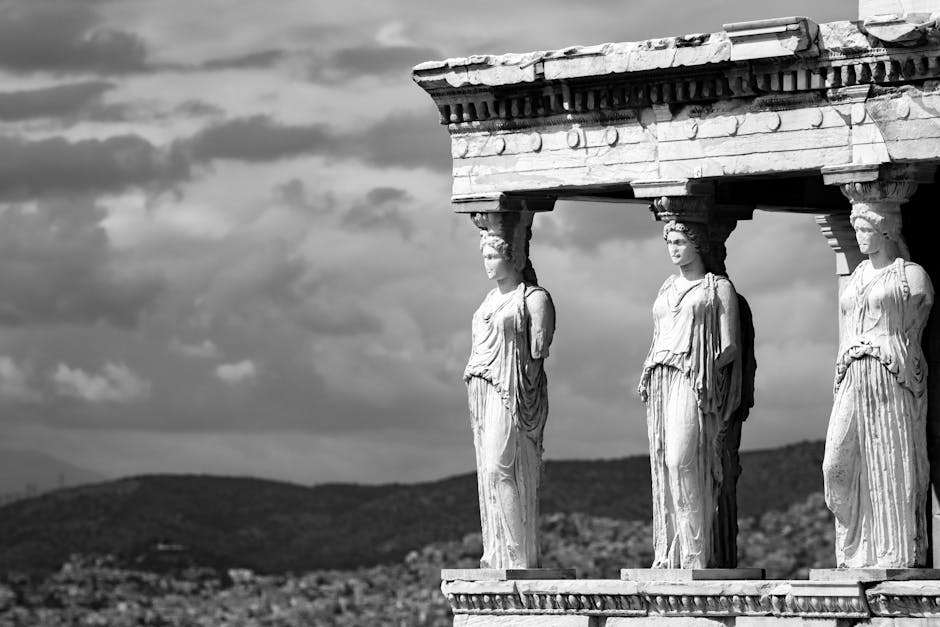
The Erechtheion features six female figures called Caryatids serving as supporting columns. Each maiden stands in a relaxed contrapposto pose, with one leg bearing weight while the other rests, demonstrating how sculptural art could seamlessly blend with architectural function. The originals have been moved to the Acropolis Museum for preservation, with replicas now standing in their place.
13. Ancient Graffiti Covers the Monuments
Visitors throughout history have left their marks on the Acropolis monuments. Ancient graffiti in various languages—Greek, Latin, and others—covers many surfaces, providing historians with valuable insights into who visited the site over millennia. Some inscriptions date back to Roman times, when the Acropolis was already considered an ancient wonder worth visiting.
14. The Site Contains Multiple Temples
While the Parthenon dominates attention, the Acropolis complex includes several other significant structures. The Temple of Athena Nike, the Propylaea gateway, the Erechtheion, and the Theater of Dionysus all contributed to making this hilltop a comprehensive religious and cultural center. Each building served distinct purposes in ancient Athenian society.
15. Modern Restoration Uses Ancient Techniques
Current restoration efforts, ongoing since 1975, employ traditional methods alongside modern technology. Craftspeople use marble from the same quarries used by ancient builders and titanium reinforcements instead of iron to prevent rust damage. The project aims to reverse previous restoration mistakes and stabilize the structures for future generations.
16. The Golden Ratio Appears Throughout
Ancient architects incorporated mathematical principles, including the golden ratio (approximately 1.618), into the Parthenon's design. This proportion, considered aesthetically perfect, appears in the relationship between the building's height and width, the spacing of columns, and numerous other architectural elements, contributing to the structure's harmonious appearance.
17. Sacred Snakes Once Lived on the Acropolis
Ancient Athenians believed sacred snakes inhabited the Acropolis, serving as guardians of the site and protectors of the city. Priestesses would offer honey cakes to these serpents, and their acceptance or rejection of the offerings was interpreted as a divine sign about Athens' future fortunes.
18. The Acropolis Influenced Western Architecture
The Parthenon's design has inspired countless buildings worldwide, particularly government structures and institutions. Elements like columned facades, triangular pediments, and classical proportions became hallmarks of Neoclassical architecture, from the United States Capitol to the British Museum, spreading Greek architectural ideals across continents and centuries.
19. Ancient Treasuries Funded the Construction
The Parthenon's construction was financed partially by funds from the Delian League, an alliance of Greek city-states formed to defend against Persian invasion. Pericles controversially redirected these collective defense funds to rebuild Athens' temples, essentially using allied contributions for Athenian glorification, though this decision resulted in one of history's greatest architectural achievements.
20. Earthquakes Have Shaped Its History
Despite Greece's seismic activity, the Acropolis has survived numerous earthquakes over 2,500 years. The ancient builders' sophisticated understanding of earthquake-resistant design, including the flexible dry-stone construction method, has helped these structures endure where more rigid buildings would have collapsed. The monuments' survival through countless tremors testifies to ancient Greek engineering brilliance.
The Enduring Legacy of Ancient Innovation
These twenty facts merely scratch the surface of the Acropolis's rich history and architectural significance. From its vibrant painted surfaces to its mathematical precision, from religious transformations to modern restoration challenges, the Acropolis continues to captivate and educate. Each stone tells stories of artistic achievement, political power, religious devotion, and human resilience. As restoration work progresses and new archaeological techniques reveal additional secrets, our understanding of this ancient wonder continues to deepen. The Acropolis remains not just a monument to ancient Greece's glory, but a living testament to humanity's enduring quest for beauty, meaning, and architectural perfection that transcends millennia.