
















Which is the largest U.S. territory by land area?

1 / 20 Questions
0 Points

Which is the largest U.S. territory by land area?

American Samoa

Guam

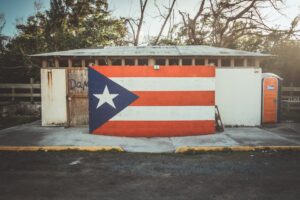
Puerto Rico

U.S. Virgin Islands

Points won
0
Correct score
0%

More Questions

More Articles

Did You Know? 20 Surprising Facts About US Inventions

Did You Know? 20 Surprising Facts About US Inventions

⏱️ 4 min read

Did You Know? 20 Surprising Facts About US Inventions

The United States has been a powerhouse of innovation throughout its history, producing countless inventions that have transformed the world. Here are 20 fascinating facts about American inventions that might surprise you.

1. The Internet's Hidden Origins

While many associate the internet with modern tech giants, it actually began as ARPANET in 1969, a US Department of Defense project. The first message ever sent between computers was at UCLA, though it crashed after typing just "LO" (attempting to type "LOGIN").

2. Bubble Gum's Accidental Discovery

Walter Diemer, an accountant at Fleer Chewing Gum Company, accidentally invented bubble gum in 1928 while experimenting with new gum recipes. The only food coloring available was pink, which is why bubble gum traditionally has this color.

3. Traffic Light Evolution

The first electric traffic light was installed in Cleveland, Ohio, in 1914. Invented by James Hoge, it featured only red and green lights and required manual operation by a police officer.

4. Microwave's Radar Roots

Percy Spencer discovered microwave cooking in 1945 when a chocolate bar melted in his pocket while working with radar equipment at Raytheon. The first commercial microwave oven was nearly 6 feet tall and weighed 750 pounds.

5. Band-Aid's Love Story

Johnson & Johnson employee Earle Dickson invented Band-Aids in 1921 for his wife, who frequently cut herself while cooking. The company initially sold them as long strips that users had to cut themselves.

6. Liquid Paper's Typing Legacy

Bette Nesmith Graham, mother of Monkees band member Michael Nesmith, invented Liquid Paper in 1956 while working as a typist. She initially distributed her correction fluid from her home.

7. Air Conditioning's Original Purpose

Willis Carrier invented modern air conditioning in 1902 not for human comfort, but to solve a humidity problem at a Brooklyn printing plant that was affecting paper quality.

8. Lightning Rod's Presidential Connection

Benjamin Franklin never patented his lightning rod invention, believing it should be freely available for public safety. This decision reflected his dedication to the common good.

9. Disposable Razor Revolution

King Camp Gillette invented the disposable razor blade in 1903, but initially struggled to sell the concept. His breakthrough came when the US military ordered them for troops in WWI.

10. Dental Floss's Silk Origins

New Orleans dentist Levi Spear Parmly invented dental floss in 1819, using silk threads. Mass production didn't begin until 1882 when the Codman and Shurtleft company started manufacturing unwaxed silk floss.

11. Credit Card's Restaurant Birth

The first credit card, Diners Club, was invented in 1950 when Frank McNamara forgot his wallet while dining. The first cards were cardboard and could only be used at 27 restaurants.

12. Blue Jeans' Gold Rush Connection

Levi Strauss didn't actually invent blue jeans alone. Jacob Davis, a tailor, approached Strauss about patenting the process of putting metal rivets in pants to make them more durable for miners.

13. Scotch Tape's Automotive Origins

Richard Drew invented Scotch tape in 1925 while working at 3M, developing it initially for use in auto painting. The name "Scotch" came from a customer's irritated reference to the company's thrifty use of adhesive.

14. Chocolate Chip Cookie Accident

Ruth Wakefield invented chocolate chip cookies in 1930 at the Toll House Inn. Contrary to popular belief, it wasn't an accident - she deliberately created them by adding chopped chocolate to her butter cookie recipe.

15. Windshield Wiper's Female Inventor

Mary Anderson invented the windshield wiper in 1903 after observing New York trolley drivers struggling to see during sleet storms. She never profited from her invention, which became standard in all cars by 1916.

16. Super Glue's Military Past

Super Glue was accidentally discovered by Dr. Harry Coover in 1942 while searching for materials to make clear plastic gun sights for the military. Its adhesive properties were initially considered a nuisance.

17. Potato Chip's Angry Origins

George Crum invented potato chips in 1853 at Moon's Lake House in Saratoga Springs, NY, after a customer complained about thick french fries. He sliced potatoes paper-thin out of spite.

18. Hearing Aid's Hollywood Connection

The first fully digital hearing aid was developed by Bell Laboratories in 1987, but earlier versions were worn by actress Marion Ross, who later played Mrs. Cunningham on "Happy Days."

19. Play-Doh's Wallpaper Roots

Play-Doh was originally created as a wallpaper cleaner in the 1930s. When heating homes switched from coal to natural gas, reducing wall soot, the product was repurposed as a children's toy.

20. GPS's Civilian Journey

While GPS was developed by the US Department of Defense in 1973, it wasn't available for civilian use until 1983, when President Reagan ordered it to be made freely available following the Korean Air Lines Flight 007 tragedy.

These inventions demonstrate America's innovative spirit and how many groundbreaking discoveries happened by accident or were created for entirely different purposes than their eventual use. They showcase the impact of American ingenuity on daily life worldwide, from simple conveniences to revolutionary technologies.

Top 10 Surprising Facts About the Anti-Slavery Movement

Top 10 Surprising Facts About the Anti-Slavery Movement

⏱️ 4 min read

Top 10 Surprising Facts About the Anti-Slavery Movement

The anti-slavery movement was a complex and multifaceted struggle that spanned centuries and continents. While many are familiar with prominent figures like Frederick Douglass and Harriet Tubman, numerous lesser-known aspects of this revolutionary movement shaped the course of human history. Here are ten surprising facts that illuminate the depth and breadth of the fight against slavery.

1. Women Led Many Early Anti-Slavery Societies

Contrary to popular belief, women were at the forefront of the abolition movement long before they had voting rights. Female anti-slavery societies emerged in the 1830s, with organizations like the Philadelphia Female Anti-Slavery Society leading the charge. These groups raised funds, organized boycotts of slave-produced goods, and created influential petition campaigns that helped shape public opinion.

2. Quakers Were the First Organized Religious Group to Oppose Slavery

In 1688, German Quakers in Germantown, Pennsylvania, issued the first formal Protestant protest against slavery in the American colonies. This groundbreaking document, known as the Germantown Protest, argued that slavery violated Christian principles and human rights, setting a precedent for religious opposition to the practice.

3. Former Slaves Paid to Free Others

Many freed slaves dedicated their earnings to purchasing the freedom of family members and other enslaved individuals. One remarkable example is Venture Smith, who worked for years to purchase not only his own freedom but also that of his wife and children, ultimately spending today's equivalent of hundreds of thousands of dollars.

4. International Economic Boycotts Played a Crucial Role

The "Free Produce Movement" of the early 1800s encouraged consumers to boycott goods produced by slave labor. This early form of ethical consumerism spread across the United States and Britain, creating economic pressure on slave-dependent industries and demonstrating the power of consumer choice in social movements.

5. Underground Railroad Extended to Mexico

While most people associate the Underground Railroad with routes to Canada, a significant southern route led to Mexico, which had abolished slavery in 1829. Thousands of enslaved people escaped through Texas into Mexico, where they established thriving communities known as "Freedmen's Colonies."

6. Children Were Active Abolitionists

Youth anti-slavery societies emerged in the 1830s and 1840s, with children collecting signatures for petitions, raising money through craft sales, and writing anti-slavery literature. These young activists helped spread the abolitionist message to future generations and demonstrated the movement's broad social reach.

7. Anti-Slavery Newspapers Were Dangerous to Produce

Publishers of abolitionist newspapers faced intense persecution, including mob violence and death threats. William Lloyd Garrison's printing press was destroyed by an angry mob in 1835, and numerous other editors were attacked or killed for their anti-slavery stance. Despite these dangers, over 20 anti-slavery newspapers circulated regularly by 1840.

8. Mathematics Played a Role in Anti-Slavery Arguments

Abolitionists used statistical analysis to challenge pro-slavery economic arguments. They created detailed mathematical models showing how free labor was more economically efficient than slave labor, helping to counter claims that slavery was necessary for economic prosperity. These studies were particularly influential among business-minded Northerners.

9. Native American Tribes Assisted Escaped Slaves

Several Native American nations, particularly the Seminoles, actively helped escaped slaves and even incorporated them into their communities. This cooperation led to the formation of unique cultural groups, such as the Black Seminoles, who maintained their own distinct identity while fighting against both slavery and colonial expansion.

10. International Diplomatic Pressure Aided Abolition

After Britain abolished slavery in 1833, it used its naval power and diplomatic influence to pressure other nations to end the slave trade. British ships patrolled international waters, intercepting slave ships and freeing their human cargo. This international pressure played a crucial role in ending the global slave trade.

Conclusion

The anti-slavery movement was far more diverse and complex than commonly portrayed in historical narratives. From children's activism to international economic boycotts, from mathematical arguments to cross-cultural alliances, the fight against slavery involved people from all walks of life using various innovative strategies. These ten facts highlight how the movement's success relied on the coordinated efforts of many different groups and approaches, ultimately leading to one of humanity's greatest moral achievements: the legal abolition of slavery in much of the world.

Understanding these lesser-known aspects of the anti-slavery movement provides valuable lessons for modern social justice movements, demonstrating how sustained, multi-faceted efforts across different sectors of society can bring about fundamental social change. The creativity, courage, and persistence of these historical activists continue to inspire similar movements today.