









⏱️ 8 min read
The United States boasts some of the world's most impressive bridges, engineering marvels that have shaped the nation's landscape and connected communities for generations. These architectural wonders tell stories of innovation, determination, and human ingenuity. From coast to coast, these structures stand as testaments to American engineering prowess and have become beloved symbols of their respective regions. Here are fascinating facts about the most iconic bridges spanning American waterways and valleys.
Engineering Marvels and Historical Significance
1. The Golden Gate Bridge's International Orange Color Was Originally Temporary
The iconic Golden Gate Bridge in San Francisco wasn't meant to be orange at all. The striking International Orange color was initially used as a sealant primer, but consulting architect Irving Morrow found it more visible in fog than the originally planned colors of gray or black-and-yellow stripes. The U.S. Navy had wanted the bridge painted with black and yellow stripes for visibility. Today, the bridge requires constant painting to maintain its distinctive hue and protect it from the harsh marine environment.
2. Brooklyn Bridge Cable Wire Could Circle the Earth Four Times
When completed in 1883, the Brooklyn Bridge was the longest suspension bridge in the world. The bridge contains approximately 14,000 miles of wire within its four main cables. Each cable measures 15.75 inches in diameter and consists of 5,434 individual wires bundled together. If unwound and laid end to end, these wires would stretch far enough to circle the Earth more than four times, showcasing the massive scale of this 19th-century engineering achievement.
3. The Chesapeake Bay Bridge-Tunnel Is Considered One of the Seven Engineering Wonders
The Chesapeake Bay Bridge-Tunnel spans 17.6 miles and combines bridges, tunnels, artificial islands, and trestle sections. Completed in 1964, it was designated as one of the "Seven Engineering Wonders of the Modern World" by the American Society of Civil Engineers. The structure includes two mile-long tunnels that allow ships to pass overhead, four man-made islands, and approximately 12 miles of low-level trestle, making it a unique feat of engineering that transforms from bridge to tunnel and back again.
4. San Francisco's Bay Bridge Moves More Traffic Than the Golden Gate
While the Golden Gate Bridge receives more tourist attention, the San Francisco-Oakland Bay Bridge actually carries significantly more vehicle traffic. Approximately 260,000 vehicles cross the Bay Bridge daily, compared to about 110,000 on the Golden Gate. The Bay Bridge is also longer, measuring 4.5 miles from end to end, and it consists of two distinct spans that meet at Yerba Buena Island in the middle of the bay.
Construction Challenges and Human Stories
5. Twenty-Seven Workers Died Building the Brooklyn Bridge
The construction of the Brooklyn Bridge came at a tremendous human cost. At least 27 workers lost their lives during the 14-year construction period. The bridge's designer, John Augustus Roebling, died from tetanus after a ferry accident crushed his foot while surveying the location. His son, Washington Roebling, took over but became paralyzed from decompression sickness (the bends) while working in the pressurized caissons underwater. Washington's wife, Emily Warren Roebling, became instrumental in completing the project.
6. The Mackinac Bridge Authority Offers a Driver Assistance Service
Michigan's Mackinac Bridge, connecting the Upper and Lower Peninsulas, is so tall and spans such open water that the Mackinac Bridge Authority provides a free service for drivers who are too frightened to cross. Trained drivers will transport nervous travelers and their vehicles across the five-mile span. The bridge stands 200 feet above water at its highest point, and strong winds can make crossing challenging for some drivers.
7. George Washington Bridge Was Originally Designed to Be Covered in Stone
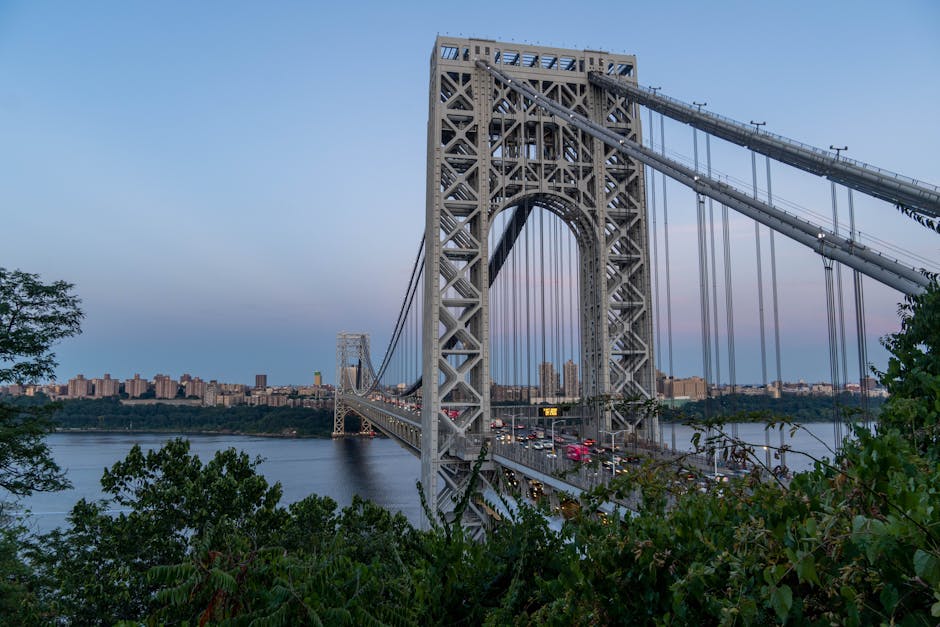
The George Washington Bridge connecting New York and New Jersey was designed by architect Cass Gilbert, who planned to encase the steel towers in concrete and granite. However, the Great Depression forced budget cuts, and the bare steel towers remained exposed. Many came to appreciate the industrial aesthetic, and the covering was never added. The bridge opened in 1931 with just the upper deck; the lower deck was added in 1962.
8. The New River Gorge Bridge Hosts an Annual Base Jumping Event
West Virginia's New River Gorge Bridge rises 876 feet above the river below, making it one of the highest vehicular bridges in the United States. Every October on "Bridge Day," the bridge closes to vehicles and becomes one of the few places in the U.S. where BASE jumping is legal. Hundreds of BASE jumpers from around the world participate in this annual event, alongside rappellers and spectators who gather to witness the spectacle.
Modern Engineering and Record-Breaking Features
9. The Verrazano-Narrows Bridge Towers Are Not Parallel
Due to the curvature of the Earth, the two towers of the Verrazano-Narrows Bridge in New York are 1.625 inches farther apart at their tops than at their bases, despite being perfectly perpendicular to the ground. Spanning 4,260 feet between towers when it opened in 1964, it was the world's longest suspension bridge span. The bridge was named after Italian explorer Giovanni da Verrazano, the first European to sail into New York Harbor.
10. Sunshine Skyway Bridge Required Ten Years to Complete Its Unique Design
Florida's Sunshine Skyway Bridge, completed in 1987, replaced an older bridge after a cargo ship collision caused a catastrophic collapse in 1980 that killed 35 people. The new bridge features a cable-stayed design with massive concrete dolphins protecting the main piers from ship impacts. Standing 430 feet tall, the distinctive yellow cables and sweeping design have made it one of the most recognizable bridges in America and earned it numerous architectural awards.
11. The Seven Mile Bridge Was Once the Longest Segmental Bridge in the World
Part of the Overseas Highway connecting the Florida Keys, the Seven Mile Bridge actually measures 6.765 miles long. When completed in 1982, it was the longest segmental bridge in the world, constructed from 440 precast concrete sections. The parallel Old Seven Mile Bridge, built in 1912 for the Overseas Railroad, now serves as a fishing pier and appeared in the movie "True Lies" during a memorable action sequence.
Architectural Innovation and Cultural Impact
12. The Royal Gorge Bridge Was the World's Highest for Seventy Years
Colorado's Royal Gorge Bridge, suspended 955 feet above the Arkansas River, held the title of world's highest bridge from its completion in 1929 until 2001. Unlike most bridges built for transportation, the Royal Gorge Bridge was constructed purely as a tourist attraction. It can support more than two million pounds despite swaying in high winds, and visitors can walk across its wooden planks while viewing the river nearly 1,000 feet below.
13. Covered Bridges Earned Their Roofs for Practical Engineering Reasons
The United States has more than 800 covered bridges remaining, with Pennsylvania, Ohio, and Vermont having the highest concentrations. These bridges weren't covered for aesthetic reasons or to provide shelter for travelers, as commonly believed. The roofs and siding were added to protect the wooden structural elements from weather, particularly rain and snow, significantly extending the bridges' lifespans from 10-15 years to 80-100 years. The covering protected the load-bearing trusses, not the road surface.
14. The Ambassador Bridge Is the Busiest International Border Crossing in North America
The Ambassador Bridge connecting Detroit, Michigan, and Windsor, Ontario, carries approximately 27 percent of all merchandise trade between the United States and Canada. Approximately 8,000 trucks cross the bridge daily, making it critical to both nations' economies. Completed in 1929, it was the longest suspension bridge in the world at that time. Remarkably, the bridge is privately owned, making it one of the few privately owned international border crossings.
15. The Bixby Creek Bridge Became an Icon Through Photography and Film
Located along California's Big Sur coastline, the Bixby Creek Bridge has become one of the most photographed bridges in America despite carrying just two lanes of Highway 1 traffic. Completed in 1932, it rises 280 feet above Bixby Creek and spans 714 feet. Its graceful concrete arch design against the dramatic Pacific coastline has made it a favorite subject for photographers and a filming location for numerous car commercials and movies, cementing its status as a California icon.
Conclusion
America's iconic bridges represent far more than methods of crossing water and valleys. They embody human ambition, engineering innovation, and the determination to overcome seemingly impossible obstacles. From the fog-shrouded towers of the Golden Gate to the tropical expanse of the Seven Mile Bridge, each structure carries its own unique story of challenge, tragedy, triumph, and vision. These bridges have shaped regional identities, facilitated commerce, connected communities, and inspired generations with their beauty and boldness. As both functional infrastructure and works of art, they continue to serve as powerful symbols of American ingenuity and remain essential components of the nation's transportation network, while also standing as beloved landmarks that define their landscapes.