








Which country has the most time zones?

1 / 10 Questions
0 Points

Which country has the most time zones?

Russia

USA

France

China

Points won
0
Correct score
0%

More Questions

More Articles

Ultimate Trivia on US National Parks and Their Ecosystems

Ultimate Trivia on US National Parks and Their Ecosystems

⏱️ 4 min read

Ultimate Trivia on US National Parks and Their Ecosystems

The United States National Park System encompasses an incredible variety of natural wonders, diverse ecosystems, and unique geological formations. This comprehensive collection of trivia highlights fascinating facts about America's most treasured landscapes and their intricate ecological systems.

Historical Milestones and establishment

Yellowstone National Park, established in 1872, holds the distinction of being the world's first national park. This groundbreaking designation set a precedent for conservation worldwide. The National Park Service itself wasn't created until 1916, when President Woodrow Wilson signed the Organic Act. Today, the system includes 63 national parks and numerous other protected areas.

Size and Scale

The National Park System contains some remarkable statistics regarding size and scale:

  • Wrangell-St. Elias National Park in Alaska is the largest national park, covering 13.2 million acres
  • Gateway Arch National Park in Missouri is the smallest, at just 91 acres
  • Death Valley National Park contains both the lowest point in North America (Badwater Basin at 282 feet below sea level) and terrain rising to over 11,000 feet
  • The entire National Park System manages over 85 million acres across all 50 states

Biodiversity Hotspots

National parks serve as crucial havens for biodiversity, protecting countless species of plants and animals. Great Smoky Mountains National Park, for instance, contains over 19,000 documented species, including:

  • More than 200 species of birds
  • Over 80 types of reptiles and amphibians
  • Approximately 1,500 flowering plant species
  • At least 130 species of trees

Unique Ecosystems

Each national park contains distinct ecosystems that contribute to America's natural heritage. Here are some notable examples:

  • Everglades National Park features the largest mangrove ecosystem in the Western Hemisphere
  • Joshua Tree National Park showcases the intersection of two desert ecosystems: the Mojave and Colorado
  • Olympic National Park contains three distinct ecosystems: subalpine forest, temperate rainforest, and Pacific coast
  • Mesa Verde National Park preserves ancient cliff dwellings within a unique desert environment

Geological Wonders

The national parks showcase remarkable geological features and processes:

  • Yellowstone contains about half of the world's geothermal features, including roughly 10,000 thermal features and 500 active geysers
  • The Grand Canyon exposes nearly two billion years of geological history in its layers
  • Mammoth Cave National Park protects the world's longest known cave system, with more than 400 miles explored
  • Hawaii Volcanoes National Park features some of the world's most active volcanoes

Climate Diversity

The National Park System encompasses virtually every climate type found in the United States:

  • Death Valley holds the record for the highest recorded temperature in North America at 134°F (56.7°C)
  • Mount McKinley in Denali National Park experiences some of the coldest temperatures in North America
  • Olympic National Park's Hoh Rain Forest receives up to 14 feet of rain annually
  • Saguaro National Park preserves the Sonoran Desert ecosystem, which receives less than 12 inches of rain annually

Endemic Species

Several national parks protect species that exist nowhere else on Earth:

  • Channel Islands National Park harbors 145 endemic species, including the island fox
  • Hawaii Volcanoes National Park protects numerous endemic species that evolved in isolation
  • Great Basin National Park contains the oldest known living organisms, bristlecone pines over 4,000 years old

Conservation Challenges

National parks face numerous contemporary challenges:

  • Climate change affects glacier size in Glacier National Park, with only 25 active glaciers remaining of the original 150
  • Invasive species threaten native ecosystems in virtually every park
  • Air pollution impacts visibility in many parks, particularly affecting the views in Grand Canyon
  • Increasing visitation creates challenges for resource protection and visitor management

Visitor Statistics

The popularity of national parks continues to grow:

  • Great Smoky Mountains National Park consistently ranks as the most visited national park, with over 12 million annual visitors
  • Zion National Park often requires a shuttle system to manage heavy visitation
  • The entire National Park System receives over 300 million recreational visits annually

Understanding these diverse aspects of U.S. National Parks highlights their importance as natural laboratories, recreational resources, and protected ecosystems. These parks not only preserve America's natural heritage but also provide crucial information about ecological processes, climate change, and the intricate relationships between species and their environments. As these protected areas face mounting challenges from climate change, increased visitation, and other pressures, their role in conservation and environmental education becomes increasingly vital.
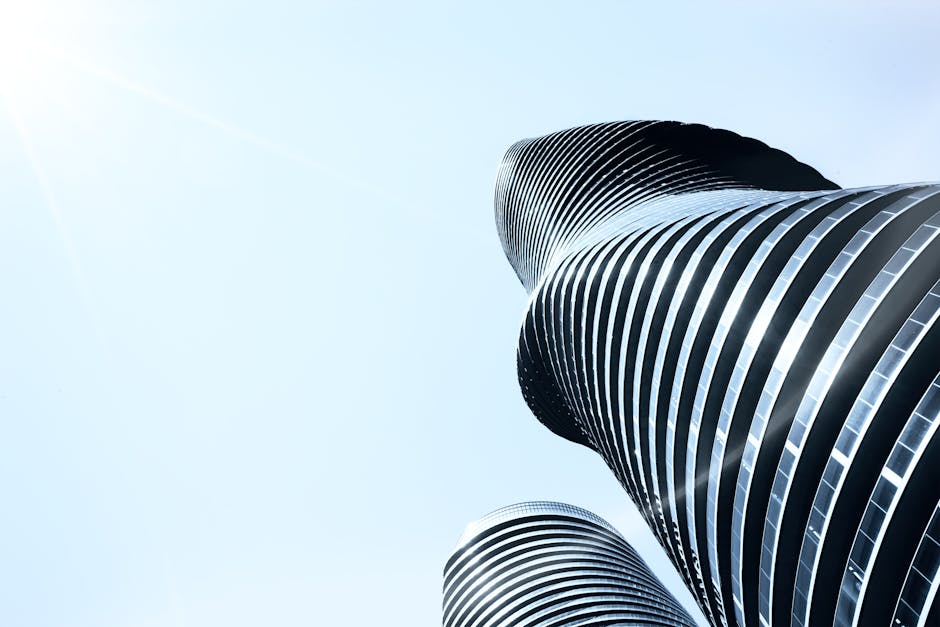
Top 10 Architectural Marvels in the USA and Beyond

Top 10 Architectural Marvels in the USA and Beyond

⏱️ 7 min read

Architecture has the power to inspire, challenge perceptions, and stand as a testament to human ingenuity across generations. From ancient structures that have withstood millennia to contemporary designs that push the boundaries of engineering, architectural marvels around the world demonstrate the evolution of design, technology, and cultural expression. These extraordinary structures represent more than mere buildings—they embody the aspirations, capabilities, and artistic vision of their creators and the societies that built them.

Iconic Architectural Achievements That Define Excellence

1. The Empire State Building: Art Deco Magnificence in Manhattan

Completed in 1931 during the height of the Great Depression, the Empire State Building remains one of New York City's most recognizable landmarks. Standing at 1,454 feet including its antenna, this 102-story skyscraper was the world's tallest building for nearly 40 years. The Art Deco masterpiece was designed by Shreve, Lamb & Harmon and constructed in a remarkable 410 days. Its limestone facade and distinctive setback design not only created an elegant silhouette against the Manhattan skyline but also complied with zoning laws requiring tall buildings to allow sunlight to reach street level. The building's efficiency as an office tower and its role in popular culture have cemented its status as an architectural icon.

2. Fallingwater: Harmonizing Architecture with Nature

Frank Lloyd Wright's Fallingwater, completed in 1939 in rural Pennsylvania, revolutionized residential architecture by integrating a home directly into its natural landscape. Built over a waterfall on Bear Run in the Mill Run section of Stewart Township, this weekend retreat for the Kaufmann family exemplifies Wright's philosophy of organic architecture. The cantilevered terraces extend boldly over the waterfall, creating a dramatic relationship between structure and nature. Constructed primarily of reinforced concrete, local sandstone, and steel, Fallingwater demonstrates how architecture can enhance rather than dominate its environment, earning recognition as one of the most important works of American architecture.

3. The Guggenheim Museum Bilbao: Titanium Transformation

Frank Gehry's Guggenheim Museum in Bilbao, Spain, opened in 1997 and immediately transformed both architecture and urban planning discourse. The museum's sculptural form, clad in titanium panels that shimmer and change appearance with weather and light conditions, broke conventional museum design paradigms. The irregular, curved forms were made possible through advanced computer-aided design technology, marking a pivotal moment in digital architecture. The building's economic impact on Bilbao coined the term "Bilbao Effect," referring to how a single architectural landmark can revitalize an entire city's economy and cultural identity.

4. The Pantheon: Rome's Timeless Engineering Triumph

Completed around 126 AD during Emperor Hadrian's reign, the Pantheon stands as ancient Rome's most complete architectural achievement. Its unreinforced concrete dome, spanning 142 feet in diameter, remained the world's largest for over 1,300 years. The oculus at the dome's center—the only light source—creates a dramatic connection between the earthly and celestial realms. The building's perfect proportions, with the dome's interior height equal to its diameter, demonstrate sophisticated mathematical understanding. The Pantheon's concrete composition, which varies in density from heavy travertine at the base to lightweight pumice at the top, showcases engineering ingenuity that continues to influence architects today.

5. Burj Khalifa: Reaching Unprecedented Heights

Dubai's Burj Khalifa, completed in 2010, redefined the possibilities of vertical construction at 2,717 feet with 163 floors. Designed by Adrian Smith of Skidmore, Owings & Merrill, the tower's Y-shaped floor plan and setback design reduce wind forces while maximizing views and natural light. The structure incorporates a bundled tube design inspired by the Hymenocallis flower, combining cultural symbolism with structural efficiency. Advanced pumping systems were developed specifically for this project to transport concrete to unprecedented heights. The Burj Khalifa represents more than record-breaking height—it demonstrates how engineering innovation can create vertical cities that address urban density challenges.

6. Sydney Opera House: Sculptural Shells by the Harbor

Jørn Utzon's Sydney Opera House, completed in 1973 after 14 years of construction, transformed architectural possibilities through its revolutionary shell structures. The building's distinctive white ceramic-tiled shells, often compared to billowing sails, required innovative engineering solutions that pushed computational and construction techniques to their limits. The precast concrete rib segments that form the shells were assembled using computer-calculated geometry—pioneering for its era. Despite construction controversies and cost overruns, the Opera House became Australia's most recognizable symbol and demonstrated how architecture could create powerful cultural identity while solving complex structural challenges.

7. The Gateway Arch: Engineering Elegance in St. Louis

Eero Saarinen's Gateway Arch, completed in 1965, stands as the world's tallest arch at 630 feet. This stainless steel monument to westward expansion combines mathematical precision with aesthetic grace through its catenary curve—the natural shape formed by a hanging chain. The hollow structure consists of carbon steel inner walls and stainless steel outer walls, with reinforced concrete between them up to 300 feet. A unique tram system inside carries visitors to an observation room at the apex. The Gateway Arch exemplifies how engineering calculations and artistic vision can merge to create structures that transcend their utilitarian purpose to become symbols of regional identity.

8. Sagrada Família: Gaudí's Unfinished Masterpiece

Antoni Gaudí's Sagrada Família in Barcelona, begun in 1882 and still under construction, represents architecture as ongoing evolution. The basilica combines Gothic and Art Nouveau forms with Gaudí's unique organic architectural language inspired by natural forms. Hyperbolic paraboloids, hyperboloids, and helicoids create spaces that seem to grow rather than be built. The interior forest of branching columns distributes weight organically while creating luminous spaces filtered through stained glass. Modern computer technology now aids in realizing Gaudí's vision from his models and drawings, demonstrating how historical and contemporary techniques can collaborate across centuries to complete an architectural dream.

9. The Glass House: Transparency and Modernist Philosophy

Philip Johnson's Glass House, completed in 1949 in New Canaan, Connecticut, distilled modernist architectural principles to their essence. The 1,728-square-foot pavilion features transparent glass walls on all sides within a steel frame, erasing boundaries between interior and exterior space. The minimal design includes only a brick cylinder containing the bathroom and a central fireplace for visual anchoring. Influenced by Mies van der Rohe's Farnsworth House, the Glass House became a personal laboratory where Johnson explored spatial relationships, transparency, and the relationship between architecture and landscape. The structure demonstrates how restraint and clarity can create spaces of profound architectural significance.

10. Hagia Sophia: Byzantine Architectural Innovation

Completed in 537 AD in Constantinople (modern Istanbul), Hagia Sophia revolutionized Byzantine architecture through its massive dome seemingly floating above the main worship space. Architects Anthemius of Tralles and Isidore of Miletus created a 102-foot diameter dome that appears weightless through ingenious use of pendentives—curved triangular sections that transition from the square base to the circular dome. The building incorporated 40 windows around the dome's base, creating the illusion that the dome rests on light itself. For nearly 1,000 years, Hagia Sophia remained the world's largest cathedral, demonstrating engineering prowess that influenced Islamic and Western architecture for centuries.

Enduring Legacy of Architectural Innovation

These ten architectural marvels span continents, centuries, and styles, yet share common threads of innovation, cultural significance, and technical achievement. From ancient Rome's concrete engineering to contemporary digital design, each structure pushed boundaries and expanded possibilities for what architecture could accomplish. They demonstrate that great architecture transcends functional requirements to become cultural symbols, economic catalysts, and sources of inspiration. Whether through seamless integration with nature, gravity-defying engineering, or revolutionary use of materials, these buildings continue to influence architects and capture public imagination, proving that exceptional design creates lasting value that extends far beyond construction completion dates.