⏱️ 7 min read
Ancient Egypt continues to captivate historians, archaeologists, and enthusiasts worldwide with its remarkable achievements and mysterious traditions. While many people are familiar with pyramids, mummies, and pharaohs, the civilization that flourished along the Nile River for over three millennia holds countless lesser-known secrets. These hidden aspects of Egyptian life reveal a society far more complex, innovative, and fascinating than commonly portrayed in popular culture.
Surprising Discoveries From the Land of the Pharaohs
1. Ancient Egyptians Invented the World's First Breath Mints
The ancient Egyptians were remarkably concerned with oral hygiene and fresh breath. They created breath-sweetening pellets made from frankincense, myrrh, cinnamon, and honey mixed with pine nuts and boiled with honey. This invention predated modern mints by thousands of years and demonstrated their sophisticated understanding of aromatic compounds and their effects.
2. Women Enjoyed Remarkable Legal Rights
Unlike many ancient civilizations, Egyptian women could own property, initiate divorce, run businesses, and serve as witnesses in legal proceedings. They could inherit wealth equally with men and maintain complete control over their dowries. Some women even became pharaohs, with Hatshepsut being one of the most successful rulers in Egyptian history, regardless of gender.
3. The Great Pyramid's Precision Defies Modern Engineering
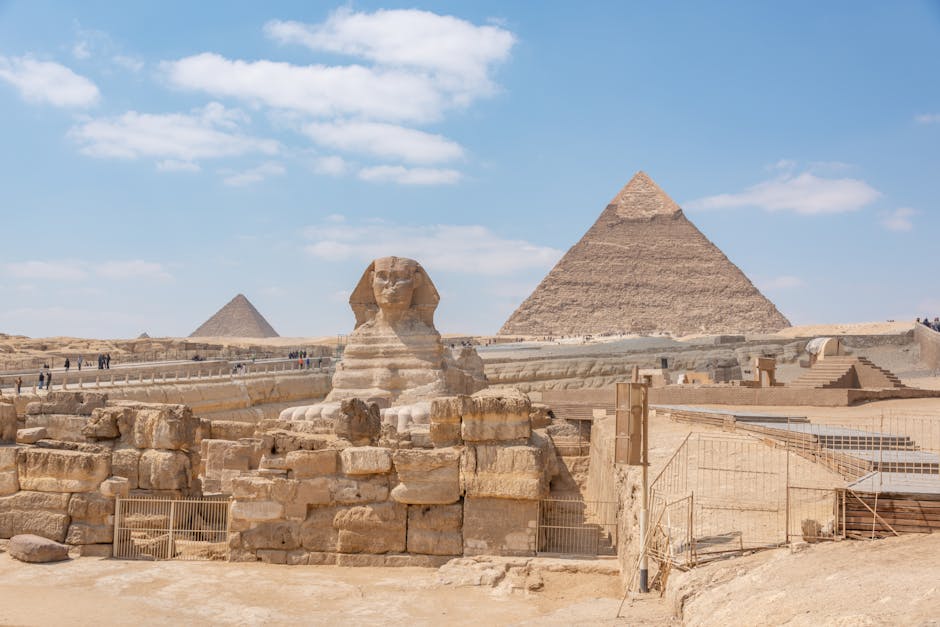
The Great Pyramid of Giza wasn't just massive—it was built with extraordinary precision. The base is level to within just 2.1 centimeters, and the sides are aligned to the cardinal directions with an accuracy of 1/15th of a degree. This level of precision required advanced mathematical and astronomical knowledge, and archaeologists still debate exactly how ancient builders achieved such accuracy without modern instruments.
4. Workers Building Pyramids Were Not Slaves
Contrary to popular belief, the pyramids were not built by slaves but by paid laborers. Archaeological evidence from workers' villages shows that pyramid builders received wages, medical care, and proper burials. They worked in rotating shifts, and their communities were provided with quality food, including meat and beer. Graffiti left by work gangs shows pride in their labor and loyalty to their pharaoh.
5. Cleopatra Lived Closer to the Moon Landing Than to the Pyramids
This remarkable fact highlights the immense span of ancient Egyptian civilization. Cleopatra VII ruled from 51-30 BCE, while the Great Pyramid was completed around 2560 BCE. More than 2,500 years separate Cleopatra from the pyramid builders, whereas only about 2,000 years separate her reign from the 1969 moon landing, putting the vast timeline of Egyptian history into stunning perspective.
6. The First Peace Treaty in History Was Egyptian
The Treaty of Kadesh, signed around 1259 BCE between Egyptian Pharaoh Ramesses II and Hittite King Hattusili III, is the earliest known peace treaty. After the inconclusive Battle of Kadesh, both parties agreed to end hostilities, establish boundaries, and create a mutual defense pact. Copies of this treaty are displayed at the United Nations headquarters as a symbol of early diplomatic achievement.
7. Ancient Egyptians Practiced Advanced Brain Surgery
Medical papyri reveal that Egyptian physicians performed sophisticated surgical procedures, including brain surgery. The Edwin Smith Papyrus describes 48 surgical cases, including skull fractures and brain injuries, with detailed examination procedures and treatments. Archaeological evidence from skulls shows successful trepanation procedures where patients survived and healed, demonstrating remarkable medical knowledge for the time.
8. Makeup Served Medicinal and Spiritual Purposes
The distinctive eye makeup worn by both Egyptian men and women wasn't merely cosmetic. The kohl eyeliner, made from lead-based compounds, helped reduce glare from the desert sun and actually protected against eye infections. Studies have shown that the lead compounds stimulated nitric oxide production, boosting immune response. The makeup also held religious significance, with different colors representing various deities.
9. Egyptian Children Played With Mechanical Toys
Archaeological discoveries reveal that ancient Egyptian children enjoyed surprisingly sophisticated toys, including wooden animals with movable parts, dolls with wigs and movable limbs, and even miniature boats. Some toys featured mechanical elements operated by strings, demonstrating not only advanced craftsmanship but also an understanding of simple machines and the importance placed on childhood entertainment.
10. They Had a Form of Postal Service
Ancient Egypt developed an efficient message delivery system using relay runners and later, during the New Kingdom period, a more organized postal service for government correspondence. Messages written on papyrus or ostraca (pottery shards) were transported along the Nile and via desert routes. This system enabled the pharaoh to maintain control over the vast kingdom and facilitated trade and diplomacy.
11. Egyptian Beer Was a Dietary Staple
Beer wasn't just a recreational beverage in ancient Egypt—it was a nutritional necessity and even currency. Workers received beer as part of their daily rations, with different qualities for different social classes. The beer was thick, nutritious, and made from partially baked bread mixed with water and dates. It provided essential calories and nutrients, and because of the brewing process, was safer to drink than water from the Nile.
12. The Library of Alexandria Held Unimaginable Knowledge
The Great Library of Alexandria, established around 300 BCE, was the largest repository of knowledge in the ancient world, housing an estimated 400,000 to 700,000 scrolls at its peak. Scholars from across the Mediterranean traveled there to study everything from mathematics and astronomy to medicine and literature. Its destruction represents one of history's greatest losses of accumulated human knowledge, though it likely declined gradually rather than burning in a single catastrophic event.
13. Egyptians Had Pregnancy Tests
Ancient Egyptian medical texts describe a pregnancy test where women would urinate on wheat and barley seeds. If the seeds sprouted, the woman was pregnant; if wheat grew faster, it indicated a male child, while barley suggested a female. Remarkably, modern experiments have shown this test was about 70% accurate at detecting pregnancy, as pregnant women's urine contains elevated levels of estrogen that promotes seed growth.
14. Pet Cats Received Mummification and Mourning Rituals
Egyptians revered cats so deeply that killing one, even accidentally, could result in the death penalty. When a beloved pet cat died, family members would shave their eyebrows as a sign of mourning and hold elaborate funeral ceremonies. Many cats were mummified and buried in special cat cemeteries with supplies for the afterlife. The ancient city of Bubastis was home to a massive temple complex dedicated to the cat goddess Bastet.
15. They Pioneered the 365-Day Calendar
The ancient Egyptians developed one of the first solar calendars around 3000 BCE, dividing the year into 365 days. They created twelve months of thirty days each, with five additional festival days to complete the year. This calendar was remarkably accurate and formed the basis for the Julian calendar introduced by Julius Caesar, which in turn influenced our modern Gregorian calendar. Their astronomical observations and mathematical precision enabled this achievement.
The Enduring Legacy of Ancient Innovation
These fifteen hidden facts reveal that ancient Egypt was far more than monuments and tombs. The civilization demonstrated advanced knowledge in medicine, engineering, law, and social organization that influenced countless societies that followed. From gender equality and workers' rights to medical procedures and astronomical precision, the Egyptians established foundations for modern civilization in ways that often go unrecognized. Their innovations in timekeeping, diplomacy, hygiene, and even entertainment show a society that valued knowledge, progress, and quality of life. Understanding these lesser-known aspects of ancient Egypt helps us appreciate the full scope of human achievement along the Nile and reminds us that historical civilizations were complex, innovative, and remarkably sophisticated. The mysteries and marvels of ancient Egypt continue to inspire research and discovery, ensuring that even more hidden facts await future revelation.