
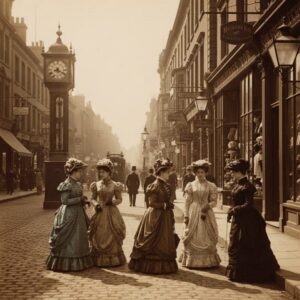






What item was too dangerous for women in the 1890s?

1 / 10 Questions
0 Points

What item was too dangerous for women in the 1890s?

Bicycles

Umbrellas

Reading glasses

High heels

Points won
0
Correct score
0%

More Questions

More Articles

USA History Trivia: 20 Questions on Historical Movements

USA History Trivia: 20 Questions on Historical Movements

⏱️ 4 min read

USA History Trivia: 20 Questions on Historical Movements

Throughout American history, various social, political, and cultural movements have shaped the nation's development. This comprehensive collection of 20 historical movement trivia questions highlights significant periods of change and activism in United States history. Test your knowledge about these influential movements that transformed American society.

1. The Progressive Movement (1890s-1920s)

Which president is most associated with the Progressive Era reforms? Answer: Theodore Roosevelt, who championed trust-busting, conservation, and consumer protection laws during his presidency from 1901-1909.

2. The Labor Movement

What significant labor organization was founded in 1886 and remains active today? Answer: The American Federation of Labor (AFL), which later merged with the Congress of Industrial Organizations (CIO) in 1955.

3. Women's Suffrage Movement

Which state was the first to grant women full voting rights? Answer: Wyoming, which passed women's suffrage in 1869 while still a territory, maintaining these rights when achieving statehood in 1890.

4. Civil Rights Movement

What significant civil rights organization was founded in 1909? Answer: The National Association for the Advancement of Colored People (NAACP), which continues to fight for racial equality today.

5. The Temperance Movement

Which organization led the charge for national prohibition? Answer: The Women's Christian Temperance Union (WCTU), founded in 1873, played a crucial role in passing the 18th Amendment.

6. The Environmental Movement

What 1962 book is credited with launching the modern environmental movement? Answer: "Silent Spring" by Rachel Carson, which exposed the dangers of pesticides.

7. The Gay Rights Movement

What 1969 event is considered the catalyst for the modern LGBTQ+ rights movement? Answer: The Stonewall Riots in New York City.

8. The Abolitionist Movement

Which anti-slavery newspaper, founded in 1831, became the voice of the abolitionist movement? Answer: The Liberator, published by William Lloyd Garrison.

9. The Native American Rights Movement

What 1973 protest brought national attention to Native American rights? Answer: The occupation of Wounded Knee by the American Indian Movement (AIM).

10. The Anti-War Movement

Which major protest against the Vietnam War occurred at Kent State University in 1970? Answer: The Kent State shootings, where National Guard troops fired on student protesters.

11. The Populist Movement

What political party emerged from the Populist Movement in the 1890s? Answer: The People's Party, which advocated for farmers' and workers' rights.

12. The Settlement House Movement

Who founded Hull House in Chicago in 1889? Answer: Jane Addams, who later won the Nobel Peace Prize for her social work.

13. The Chicano Movement

Which civil rights leader founded the United Farm Workers union in 1962? Answer: Cesar Chavez, along with Dolores Huerta.

14. The Free Speech Movement

At which university did the Free Speech Movement begin in 1964? Answer: The University of California, Berkeley.

15. The Disability Rights Movement

What 1990 legislation was a landmark victory for disability rights? Answer: The Americans with Disabilities Act (ADA).

16. The Consumer Protection Movement

Whose 1906 novel "The Jungle" led to major food safety reforms? Answer: Upton Sinclair's exposé of the meat-packing industry.

17. The Black Power Movement

Which organization, founded in 1966, became synonymous with the Black Power movement? Answer: The Black Panther Party.

18. The Second Great Awakening

Which religious movement of the early 1800s sparked various reform movements? Answer: The Second Great Awakening, which influenced abolition, temperance, and women's rights.

19. The Student Movement

What organization formed in 1960 to coordinate student activism? Answer: The Students for a Democratic Society (SDS).

20. The Modern Feminist Movement

What 1963 book is credited with sparking second-wave feminism? Answer: "The Feminine Mystique" by Betty Friedan.

Conclusion

These 20 historical movements represent crucial turning points in American history, demonstrating how organized activism and social movements have driven progress and change. From civil rights and women's suffrage to environmental protection and consumer safety, these movements have shaped modern American society and continue to influence contemporary social justice efforts. Understanding these historical movements provides valuable context for current social movements and reminds us of the power of collective action in creating meaningful change.

Top 10 Fun Facts About American Social Media Influencers

Top 10 Fun Facts About American Social Media Influencers

⏱️ 4 min read

Top 10 Fun Facts About American Social Media Influencers

Social media influencers have become a significant part of modern American culture, transforming how we consume content, make purchasing decisions, and interact online. Here are ten fascinating facts about American social media influencers that showcase their impact and the evolution of this digital phenomenon.

1. The Birth of Influencer Marketing

The concept of influencer marketing in America began around 2006 with the rise of early YouTube personalities. However, it wasn't until Instagram's launch in 2010 that the term "influencer" gained widespread use. The first documented influencer collaboration was PayPal's integration with YouTube creators in 2007, marking the beginning of a multi-billion dollar industry.

2. Income Disparities

The earning potential of American influencers varies dramatically. While top-tier influencers like Charli D'Amelio can earn up to $500,000 per sponsored post, studies show that micro-influencers (10,000-50,000 followers) typically earn between $250-$500 per post. Surprisingly, 97% of aspiring influencers earn less than minimum wage from their content creation efforts.

3. Education Trends

Contrary to popular belief, many successful American influencers are highly educated. A 2022 study revealed that 68% of full-time influencers with over 500,000 followers hold bachelor's degrees, and 22% have advanced degrees. Many studied marketing, communications, or business before transitioning to social media careers.

4. Geographic Distribution

While Los Angeles remains the epicenter of influencer culture, with 35% of major influencers based there, other cities are emerging as significant hubs. New York, Miami, Austin, and Atlanta now host growing influencer communities, with tax benefits and lower living costs attracting content creators to these locations.

5. Career Longevity

The average career span of an American social media influencer is surprisingly short. Data indicates that only 12% of influencers maintain their peak following and engagement rates for more than five years. This has led to a trend of diversification, with many influencers launching traditional businesses or investing in startups.

6. Content Creation Time

Professional influencers spend significantly more time creating content than most people realize. On average, successful influencers work 50-60 hours per week, with a single high-quality YouTube video taking 20-30 hours to plan, film, edit, and optimize. Instagram posts typically require 2-3 hours of preparation each.

7. Mental Health Impact

Studies focusing on American influencers reveal concerning mental health statistics. Approximately 72% of full-time influencers report experiencing burnout at least once a year, while 45% have taken extended breaks due to mental health concerns. This has led to increased transparency about mental health within the influencer community.

8. Demographics Shift

The age demographic of influential content creators is evolving. While millennials dominated the early influencer landscape, Gen Z creators now account for 46% of all influencer content. Additionally, there's been a 312% increase in creators over 50 years old since 2019, showing a diversification in age representation.

9. Revenue Sources

Contrary to common perception, sponsored posts aren't the primary income source for most successful influencers. On average, American influencers generate revenue through multiple channels: 30% from sponsored content, 25% from merchandise sales, 20% from affiliate marketing, 15% from platform monetization, and 10% from speaking engagements or consulting.

10. Legal Compliance

American influencers face increasingly strict regulations. The Federal Trade Commission (FTC) has implemented specific guidelines requiring disclosure of paid partnerships, with fines up to $43,792 per violation. In 2022, 84% of influencers reported working with legal advisors to ensure compliance with these regulations.

Conclusion

These ten facts demonstrate the complexity and evolution of the influencer landscape in America. From their educational backgrounds to work habits, mental health challenges, and legal obligations, influencers operate in a sophisticated professional environment that continues to evolve. As social media platforms develop and consumer behaviors change, the role of influencers in American culture remains dynamic and influential.

Understanding these aspects helps appreciate the professional nature of influencer work while highlighting the challenges and opportunities within this growing industry. As the digital landscape continues to evolve, these facts may change, but the impact of social media influencers on American culture and commerce appears set to endure.