
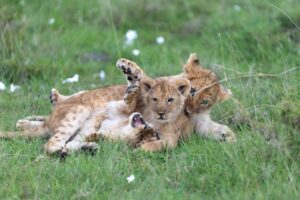




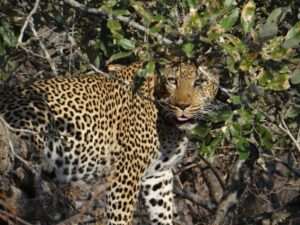



What is the scientific name of the African Lion?

1 / 20 Questions
0 Points

What is the scientific name of the African Lion?

Panthera leo

Felis catus

Panthera tigris

Panthera onca

Points won
0
Correct score
0%

More Questions

More Articles

Did You Know? 12 Quirky Facts About US Political Scandals

Did You Know? 12 Quirky Facts About US Political Scandals

⏱️ 4 min read

Did You Know? 12 Quirky Facts About US Political Scandals

Throughout American history, political scandals have shaped the nation's landscape, sometimes with unexpected twists and peculiar details that often go unnoticed. Here are twelve fascinating and lesser-known facts about some of America's most notorious political controversies.

1. The Teapot Dome's Literal Name Origin

The infamous 1920s Teapot Dome scandal got its name from a rock formation in Wyoming that resembled a teapot. The scandal involved Secretary of the Interior Albert Fall leasing Navy petroleum reserves to private oil companies in exchange for bribes, but few know that the actual geological formation still stands today, complete with a "spout" and "handle."

2. Missing Minutes Mystery

During the Watergate scandal, the famous 18½-minute gap in Nixon's White House tapes wasn't a simple deletion. Sound analysts discovered that the erasure required at least five separate attempts, with the tape being started and stopped multiple times. This suggests a deliberate effort rather than an accidental erasure.

3. The Iran-Contra's Nintendo Connection

During the Iran-Contra hearings, Lieutenant Colonel Oliver North's secretary, Fawn Hall, smuggled classified documents out of the White House by hiding them in her clothing. Years later, Nintendo created a character in their game "Contra" inspired by North, though they never officially acknowledged the connection.

4. Credit Card Gate

The 1991 House banking scandal revealed that 296 representatives had written over 8,300 bad checks. The most surprising part? The House Bank didn't charge overdraft fees or interest, operating more like an interest-free credit card service for Congress members.

5. The Whiskey Ring's Press Connection

The Grant administration's Whiskey Ring scandal of 1875 involved an unlikely conspirator: newspaper editors. They received payoffs to publish false reports about tax collection, making it the first major political scandal involving media manipulation.

6. Monica Lewinsky's Pizza Connection

During the Clinton scandal, investigators discovered that White House logs showed numerous pizza deliveries during late-night meetings. This detail became crucial as it helped corroborate timeline details, turning pizza delivery records into evidence in a presidential investigation.

7. Abscam's Hollywood Inspiration

The FBI's Abscam sting operation in the late 1970s borrowed techniques from the movie industry. Agents hired a real Hollywood makeup artist to disguise themselves as wealthy Arab sheiks, and the operation's name came from combining "Arab scam" into "Abscam."

8. The Pentagon Papers' Copying Marathon

Daniel Ellsberg and his colleagues spent months photocopying the 7,000-page Pentagon Papers. They worked at night using a small advertising agency's Xerox machine, taking turns to avoid suspicion. The total copying cost was reportedly under $1,000.

9. Tidal Basin Bombshell

The 1974 Wilbur Mills scandal became known as the "Tidal Basin" incident when the powerful congressman was found with stripper Fanne Foxe, who jumped into Washington's Tidal Basin to escape reporters. The water was only two feet deep, making her dramatic escape attempt rather ineffective.

10. Tea Pot Dome's Modern Echo

The Teapot Dome scandal led to the first time a presidential cabinet member served prison time. Albert Fall's conviction created a legal precedent that's still cited in modern corruption cases, particularly regarding the definition of bribery versus gifts.

11. The Missing Rose Mary Woods Photo

During the Watergate investigation, Nixon's secretary Rose Mary Woods demonstrated how she might have accidentally erased the tape, creating the famous "Rose Mary Stretch." The photograph of her attempted recreation became iconic, showing an impossible position that would have required maintaining an awkward stretch for 18.5 minutes.

12. The Senator's Horse

In the 1839 "Swartout Scandal," Customs Collector Samuel Swartwout embezzled $1.25 million (equivalent to approximately $35 million today) and fled to Europe. Among his purchased luxuries was a horse that he gifted to a Senator, which later became evidence in the investigation when the Senator couldn't explain its origin.

Conclusion

These twelve quirky facts demonstrate that American political scandals often contain surprising elements that go beyond their serious implications. From unusual evidence trails to bizarre coincidences, these details add fascinating layers to some of the nation's most significant political controversies. They remind us that even in the gravest political situations, human nature often produces unexpected and sometimes almost comedic elements that become part of the historical record.

Understanding these lesser-known aspects of political scandals provides valuable insight into how complex and multifaceted these events truly were, while also highlighting how the documentation of political misconduct has evolved throughout American history.

Fun American History Trivia: 18 Facts About the Space Program

Fun American History Trivia: 18 Facts About the Space Program

⏱️ 4 min read

Fun American History Trivia: 18 Facts About the Space Program

The American space program represents one of humanity's greatest achievements, filled with fascinating stories, groundbreaking innovations, and lesser-known details that shaped space exploration. Here are 18 intriguing facts about NASA and the U.S. space program that showcase its remarkable history.

1. The Birth of NASA

NASA wasn't America's first space agency. Its predecessor, the National Advisory Committee for Aeronautics (NACA), operated from 1915 until NASA's creation in 1958. The transition was prompted by the Soviet Union's launch of Sputnik 1 in 1957.

2. Hidden Figures Were Real

African American mathematicians, known as "human computers," played a crucial role in early space calculations. Katherine Johnson, Dorothy Vaughan, and Mary Jackson were among these pioneering women who performed complex mathematical calculations by hand.

3. The Original Mercury 7

NASA's first astronauts were all military test pilots selected from a pool of 508 candidates. These seven men—known as the Mercury 7—were chosen not just for their flying skills but also because they fit the physical requirements, including being under 5'11" tall due to spacecraft size limitations.

4. Space Food Evolution

The first American astronauts ate food squeezed from aluminum tubes, similar to toothpaste. Today's space food includes freeze-dried items, thermostabilized dishes, and even fresh fruits and vegetables delivered by cargo ships.

5. Moon Dust Smell

Apollo astronauts reported that moon dust has a distinct odor, describing it as similar to spent gunpowder or wet ashes. This smell was noticeable when they returned to their lunar module and removed their helmets.

6. Space Pen Myth

Contrary to popular belief, NASA didn't spend millions developing a pen that works in space. The Fisher Space Pen was independently developed by Paul Fisher and later adopted by both NASA and the Soviet space program.

7. First American in Space

Alan Shepard became the first American in space on May 5, 1961, aboard Freedom 7. His suborbital flight lasted just 15 minutes and reached an altitude of 116 miles.

8. The Apollo Program Cost

The entire Apollo program cost approximately $28 billion in 1960s dollars, equivalent to about $280 billion today. This represented about 4% of the federal budget during peak years.

9. Lost Moon Tapes

NASA accidentally recorded over the original high-quality video tapes of the Apollo 11 moon landing. The footage we see today is mostly from lower-quality recordings of TV broadcasts.

10. Space Race Technologies

NASA's innovations led to numerous everyday technologies, including memory foam, scratch-resistant lenses, cordless tools, and water filtration systems used worldwide today.

11. Skylab's Fiery End

America's first space station, Skylab, met a dramatic end in 1979 when it re-entered Earth's atmosphere, scattering debris across the Indian Ocean and parts of Western Australia.

12. First American Woman in Space

Sally Ride became the first American woman in space in 1983 aboard the Space Shuttle Challenger, though the Soviets had sent Valentina Tereshkova to space 20 years earlier.

13. Space Shuttle Tiles

Each Space Shuttle was covered with over 30,000 thermal protection tiles, each uniquely shaped and individually numbered. These tiles could withstand temperatures up to 2,300°F during reentry.

14. Mission Control Location

NASA's Johnson Space Center in Houston wasn't the original mission control location. The first Mercury missions were controlled from Cape Canaveral, Florida, before operations moved to Texas.

15. The Challenger Disaster's Impact

Following the 1986 Challenger disaster, NASA implemented the most extensive redesign and safety review in space program history, leading to 400 major changes in the Space Shuttle program.

16. ISS Construction

The International Space Station took 10 years and more than 30 missions to assemble. It's now the largest human-made structure in space, with a mass of approximately 925,000 pounds.

17. Hubble's Early Problem

When first launched in 1990, the Hubble Space Telescope had a serious flaw in its main mirror that required a Space Shuttle mission to correct, essentially giving the telescope "glasses" to see clearly.

18. Commercial Space Partnership

NASA's Commercial Crew Program, launched in 2011, marked the first time the agency partnered with private companies like SpaceX and Boeing to transport astronauts to space, fundamentally changing space exploration's future.

These 18 facts represent just a small fraction of the fascinating history behind America's space program. From its humble beginnings to current commercial partnerships, NASA's journey continues to inspire generations while pushing the boundaries of human achievement and scientific discovery. The space program's legacy extends far beyond space exploration, influencing technology, culture, and human aspirations for over six decades.