



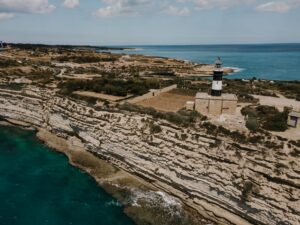



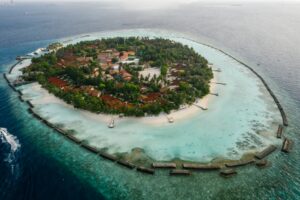

What is the largest island in the Mediterranean Sea?

1 / 20 Questions
0 Points

What is the largest island in the Mediterranean Sea?

Sicily

Cyprus

Crete

Sardinia

Points won
0
Correct score
0%

More Questions

More Articles

Did You Know? 12 Quirky Facts About Talk Shows

Did You Know? 12 Quirky Facts About Talk Shows

⏱️ 4 min read

Did You Know? 12 Quirky Facts About Talk Shows

Talk shows have been a cornerstone of television entertainment for decades, combining celebrity interviews, comedy, and human interest stories into compelling programming. Here are twelve fascinating facts about talk shows that reveal the quirky side of this enduring television format.

1. The First Late-Night Show Wasn't Actually at Night

Broadway Open House, considered the first late-night television talk show, actually aired at 7:30 PM when it debuted in 1950. The show, hosted by Jerry Lester, established many conventions still used in late-night television today, including the opening monologue and comedy sketches.

2. Johnny Carson's Secret Signal

During his 30-year reign on The Tonight Show, Johnny Carson had a secret signal with his producers. When an interview was becoming boring or uncomfortable, Carson would tug on his ear, signaling producers to create a distraction or cut to commercial.

3. Ellen's Record-Breaking Selfie

The famous Oscar selfie taken during Ellen DeGeneres's show in 2014 was actually a planned Samsung advertising stunt. However, it genuinely broke Twitter's servers and held the record for most retweeted post for several years, with over 3.3 million retweets.

4. Oprah's Car Giveaway Cost Millions

The famous "You get a car!" episode of The Oprah Winfrey Show in 2004 cost approximately $8 million. What many don't know is that recipients had to pay up to $7,000 in taxes on their "free" vehicles, leading some to decline the gift.

5. The Original "Shock Jock" Show

Joe Franklin's talk show, which ran from 1950 to 1993, is recognized as the first television talk show to feature controversial topics and confrontational interviews. This format would later influence hosts like Morton Downey Jr. and Jerry Springer.

6. Letterman's Pencils Were Fake

The pencils David Letterman famously threw at his camera during The Late Show weren't real pencils. They were specially made props with rubber erasers on both ends to prevent injury to crew members and damage to equipment.

7. The Tonight Show's Musical Heritage

The Tonight Show's theme song, "Johnny's Theme," was co-written by Paul Anka and Johnny Carson himself. Carson earned royalties from the song for decades, though few viewers knew he was partially responsible for its creation.

8. Phil Donahue's Revolutionary Format

Phil Donahue revolutionized talk shows in 1967 by being the first host to regularly leave the stage and interact with his studio audience using a wireless microphone. This technique is now standard practice across most talk shows.

9. Arsenio Hall's Political Impact

When Bill Clinton appeared on The Arsenio Hall Show in 1992 playing saxophone, it marked the first time a presidential candidate used a late-night talk show for campaign purposes. This appearance helped Clinton connect with younger voters and changed political campaigning forever.

10. The Secret of Conan's Hair

Conan O'Brien's distinctive hairstyle has its own prep team. During his talk show years, it reportedly took 20 minutes each day to style his hair into its signature pompadour, using a specific combination of products and techniques.

11. The Jerry Springer Show's Original Format

The Jerry Springer Show began in 1991 as a serious political talk show, as Springer was a former mayor of Cincinnati. It wasn't until ratings struggled that producers switched to the controversial format that made it famous.

12. James Corden's Carpool Karaoke Origins

The popular Carpool Karaoke segment wasn't originally created for The Late Late Show. Corden first did the concept in 2011 for a Comic Relief sketch in the UK with George Michael, years before bringing it to American television.

Conclusion

Talk shows have evolved significantly since their inception, creating countless memorable moments and establishing unique traditions along the way. From secret signals and expensive giveaways to groundbreaking formats and political watershed moments, these twelve facts demonstrate how talk shows have shaped television history and popular culture. As the format continues to evolve with new hosts and platforms, these quirky elements of talk show history remain fascinating testaments to the genre's enduring appeal.

World Geography Trivia: 20 Questions on Deserts

World Geography Trivia: 20 Questions on Deserts

⏱️ 6 min read

Deserts cover approximately one-third of Earth's land surface, creating some of the most extreme and fascinating environments on our planet. These arid landscapes hold countless mysteries, from their formation to the unique adaptations of life within them. Testing your knowledge about these remarkable regions reveals not only their geographical significance but also their cultural, historical, and ecological importance. Let's explore twenty intriguing questions that will challenge your understanding of the world's deserts.

Desert Geography Trivia Questions

1. The World's Largest Hot Desert

Which desert holds the title of the world's largest hot desert? The Sahara Desert in North Africa spans approximately 9 million square kilometers, making it nearly as large as the United States. This massive expanse stretches across eleven countries and continues to expand due to desertification processes.

2. Antarctica's Surprising Classification

What is the world's largest desert overall? Surprisingly, Antarctica claims this distinction as a polar desert, covering about 14 million square kilometers. Despite being covered in ice, it qualifies as a desert because it receives extremely little precipitation, averaging less than 50 millimeters annually in the interior.

3. The Driest Place on Earth

Where is the driest location on the planet? The Atacama Desert in Chile holds this record, with some areas receiving no measurable rainfall for decades. The town of Arica in the Atacama recorded a 173-month period without a single drop of rain between 1903 and 1918.

4. Desert Temperature Extremes

What is the highest temperature ever reliably recorded on Earth? Death Valley in the Mojave Desert, California, recorded 56.7°C (134°F) on July 10, 1913. This same location also demonstrates the dramatic temperature fluctuations deserts experience, with winter temperatures occasionally dropping below freezing.

5. The Arabian Desert's Vast Territory

Which desert occupies most of the Arabian Peninsula? The Arabian Desert encompasses much of Saudi Arabia, Yemen, Oman, and other Gulf states, covering approximately 2.3 million square kilometers. It's characterized by extensive sand seas, including the famous Rub' al Khali or "Empty Quarter," the world's largest continuous sand desert.

6. Australia's Arid Interior

How many major deserts does Australia contain? Australia has ten recognized deserts covering about 18% of the mainland, with the Great Victoria Desert being the largest. This extensive arid zone makes Australia the world's driest inhabited continent.

7. The Gobi's Cold Desert Climate

What makes the Gobi Desert unique among major deserts? Located in northern China and southern Mongolia, the Gobi is a cold desert that experiences snow and frost during winter months. It spans approximately 1.3 million square kilometers and sits at high elevation, contributing to its frigid temperatures.

8. Patagonian Desert Location

Which is the largest desert in the Americas? The Patagonian Desert in Argentina covers about 670,000 square kilometers, making it larger than the Sonoran or Chihuahuan deserts. It's a cold desert located in southern Argentina, created by the rain shadow effect of the Andes Mountains.

9. The Namib's Ancient Heritage

What is considered the world's oldest desert? The Namib Desert along Africa's southwestern coast has existed in arid or semi-arid conditions for approximately 55-80 million years. Its iconic red sand dunes, some reaching 300 meters in height, are among the tallest in the world.

10. Desertification Causes

What primary factors contribute to desert expansion? Desertification results from climate change, overgrazing, deforestation, and poor irrigation practices. The Sahara Desert expands southward at an estimated rate of 48 kilometers per year in some areas, threatening the Sahel region.

11. The Kalahari's Semi-Arid Nature

Why is the Kalahari sometimes debated as a true desert? Covering parts of Botswana, Namibia, and South Africa, the Kalahari receives more rainfall than typical deserts—between 125-500 millimeters annually. This semi-arid environment supports more vegetation and wildlife than most desert regions.

12. Sand Dune Coverage

What percentage of deserts consists of sand dunes? Contrary to popular belief, only about 20% of desert landscapes are covered by sand dunes, called ergs. The majority of deserts consist of rocky plains, gravel, or bare soil surfaces.

13. The Thar's Population Density

Which desert has the highest population density? The Thar Desert, shared by India and Pakistan, supports approximately 83 people per square kilometer despite its harsh conditions. This makes it the most densely populated desert in the world, with over 30 million inhabitants.

14. Desert Rain Shadow Formation

How do mountains create deserts? Many deserts form on the leeward side of mountain ranges through the rain shadow effect. As moist air rises over mountains, it cools and releases precipitation on the windward side, leaving the opposite side dry. This phenomenon created the Patagonian, Great Basin, and parts of the Gobi Desert.

15. The Mojave's Joshua Trees

What unique plant defines the Mojave Desert? The Joshua tree, found exclusively in the Mojave Desert ecosystem, has become the region's iconic symbol. These peculiar trees can live for several hundred years and grow up to 12 meters tall in this desert spanning California, Nevada, Utah, and Arizona.

16. Coastal Desert Formation

What creates coastal deserts? Cold ocean currents flowing along continental margins create coastal deserts by cooling the air above them, reducing its capacity to hold moisture. This mechanism formed the Atacama, Namib, and parts of the Baja California deserts.

17. The Sonoran's Biodiversity

Which desert is considered the most biologically diverse? The Sonoran Desert, spanning parts of Arizona, California, and Mexico, hosts the greatest variety of plant and animal species of any North American desert. It's home to the iconic saguaro cactus, which can live for 200 years and grow over 12 meters tall.

18. Desert Pavement Formation

What causes the smooth, rock-covered surfaces in some deserts? Desert pavement forms over thousands of years as wind removes fine particles, leaving behind a mosaic of closely packed stones. This protective layer, found in many deserts including parts of the Sahara, prevents further erosion.

19. The Taklamakan's Silk Road Significance

Which desert posed the greatest challenge to Silk Road travelers? The Taklamakan Desert in western China was so treacherous that its name reportedly means "go in and you won't come out." This 337,000-square-kilometer sand desert forced trade caravans to skirt its edges rather than cross directly through it.

20. Desert Rainfall Definitions

How much annual precipitation defines a desert? Regions receiving less than 250 millimeters (10 inches) of precipitation per year are typically classified as deserts. Hyper-arid deserts receive less than 25 millimeters annually, while semi-arid regions may receive up to 500 millimeters.

Conclusion

These twenty questions illuminate the remarkable diversity and complexity of Earth's desert regions. From the frozen expanses of Antarctica to the scorching sands of the Sahara, deserts demonstrate nature's ability to create life-supporting ecosystems in the most challenging conditions. Understanding these arid landscapes helps us appreciate their ecological importance, recognize the threats they face from climate change and human activity, and marvel at the adaptations that allow life to flourish in such extreme environments. Whether hot or cold, sandy or rocky, each desert contributes uniquely to our planet's geographical tapestry and continues to captivate researchers, travelers, and geography enthusiasts worldwide.