










What date is Independence Day celebrated in the United States?

1 / 20 Questions
0 Points

What date is Independence Day celebrated in the United States?

July 2nd

July 4th

July 14th

June 4th

Points won
0
Correct score
0%

More Questions

More Articles

USA Geography Trivia Quiz: 15 Facts About American Plains

USA Geography Trivia Quiz: 15 Facts About American Plains

⏱️ 4 min read

USA Geography Trivia Quiz: 15 Facts About American Plains

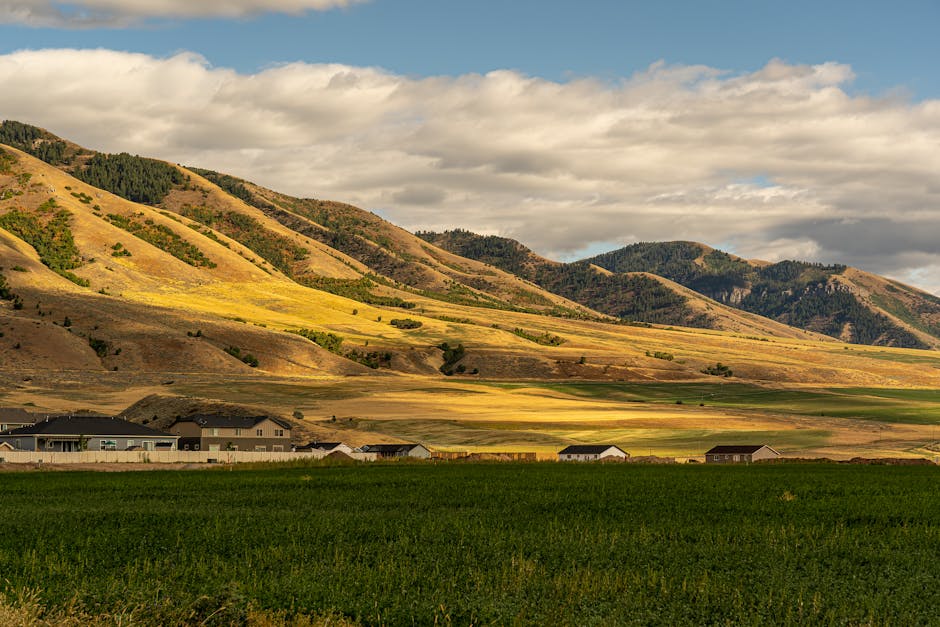
The American Plains represent one of North America's most distinctive geographical features, stretching from Canada to Texas and from the Rocky Mountains to the Mississippi River. This vast region has shaped American history, agriculture, and culture in countless ways. Here are 15 fascinating facts about the American Plains that showcase its unique characteristics and significance.

1. Geographical Extent

The American Plains cover approximately 1.2 million square miles, making them one of the largest continuous flat regions in the world. They span across ten U.S. states, from North Dakota to Texas, and extend into parts of Canada and Mexico.

2. Formation History

The Plains formed over millions of years through the erosion of the Rocky Mountains and the deposit of sediments. During the last ice age, glaciers helped flatten the northern portions, creating the characteristic level landscape we see today.

3. Great Plains Division

The region is divided into two distinct areas: the High Plains in the west, with elevations from 2,000 to 6,000 feet, and the Low Plains in the east, which gradually descend to around 1,000 feet near the Mississippi River.

4. Climate Characteristics

The Plains experience extreme temperature variations, with hot summers reaching over 100°F (38°C) and winters dropping below 0°F (-18°C). Annual precipitation varies dramatically from west to east, ranging from 10 to 40 inches per year.

5. Tornado Alley

A significant portion of the Plains comprises "Tornado Alley," where approximately 1,000 tornadoes occur annually. This region experiences more tornadoes than any other place on Earth due to its unique geographical and atmospheric conditions.

6. Original Prairie Ecosystem

Before European settlement, the Plains were covered in native prairie grasses, with different species adapted to various rainfall levels. Less than 1% of the original tallgrass prairie remains today, making it one of North America's most endangered ecosystems.

7. Ogallala Aquifer

The Plains are home to the Ogallala Aquifer, one of the world's largest underground water sources. This aquifer supplies water to eight states and supports extensive agricultural irrigation throughout the region.

8. Historical Buffalo Range

The Plains once supported an estimated 30-60 million American bison (buffalo). These massive herds played a crucial role in maintaining the prairie ecosystem and were central to Native American cultures of the region.

9. Agricultural Significance

Today, the Plains are often called "America's Breadbasket," producing over 40% of the nation's wheat and significant portions of its corn, soybeans, and cotton. The region accounts for roughly one-fifth of America's agricultural output.

10. Wind Energy Leadership

The Plains states lead the nation in wind energy production, with Texas, Oklahoma, and Kansas ranking among the top producers. The region's consistent wind patterns make it ideal for renewable energy generation.

11. Population Distribution

Despite its vast size, the Plains region is relatively sparsely populated, with an average density of 10-20 people per square mile in many areas. This makes it one of the least densely populated regions in the United States.

12. Native American Heritage

The Plains were home to numerous Native American tribes, including the Lakota, Cheyenne, Comanche, and Kiowa. These nations developed sophisticated cultures adapted to the Plains environment and the buffalo-hunting way of life.

13. Dust Bowl Impact

During the 1930s, the Plains experienced the devastating Dust Bowl, when drought and poor farming practices led to massive soil erosion. This environmental disaster prompted significant changes in agricultural practices and soil conservation efforts.

14. River Systems

Major river systems crisscross the Plains, including the Missouri, Platte, Arkansas, and Red Rivers. These waterways were crucial for early exploration, settlement, and continue to be vital for agriculture and transportation.

15. Fossil Discoveries

The Plains region is rich in paleontological discoveries, with numerous important dinosaur fossils found in states like Montana, South Dakota, and Wyoming. The region's geological history has preserved countless prehistoric remains.

Conclusion

The American Plains represent a unique geographical region that has played a crucial role in shaping the United States. From its formation millions of years ago to its current status as an agricultural and energy powerhouse, the Plains continue to be vital to America's economy and ecology. Understanding these 15 facts helps appreciate the complexity and importance of this vast landscape that has been aptly called "America's Heartland."

These facts demonstrate how the Plains region combines natural wonders, historical significance, and modern importance in ways that make it one of North America's most distinctive geographical features. From its role in food production to its renewable energy potential, the American Plains remain crucial to the nation's future while preserving traces of its fascinating past.

World Trivia: 20 Questions on Urban Landmarks

World Trivia: 20 Questions on Urban Landmarks

⏱️ 5 min read

World Trivia: 20 Questions on Urban Landmarks

Urban landmarks serve as iconic symbols of cities, representing cultural heritage, architectural innovation, and human achievement. This comprehensive guide presents 20 fascinating questions and answers about some of the world's most remarkable urban landmarks, offering insights into their history, construction, and cultural significance.

1. What's the actual height of the Eiffel Tower?

The Eiffel Tower stands at 324 meters (1,063 feet) tall, including its antenna. However, the tower's height varies by up to 15 centimeters depending on the temperature, as the iron structure expands and contracts.

2. Which famous landmark was originally built as a temporary structure?

The Space Needle in Seattle was built for the 1962 World's Fair and was initially planned to be temporary. It has since become the city's most recognizable landmark and receives over 2.3 million visitors annually.

3. What's hidden inside the Statue of Liberty's copper sheets?

The Statue of Liberty's copper exterior is supported by an intricate iron framework designed by Gustave Eiffel, the same engineer who created the Eiffel Tower. The framework allows the copper sheets to move independently, preventing damage from wind and temperature changes.

4. How many steps lead to the top of the Leaning Tower of Pisa?

The Leaning Tower of Pisa contains 297 steps leading to its top. The tower's famous lean, which began during construction in 1173, has been stabilized at 3.99 degrees from vertical.

5. What ancient landmark was built without using mortar?

Machu Picchu's structures were built using a technique called "ashlar," where stones were cut to fit together so perfectly that no mortar was needed. This engineering marvel has helped the structures survive earthquakes for centuries.

6. Which famous bridge was initially painted orange?

The Golden Gate Bridge in San Francisco was painted "International Orange" to enhance its visibility in fog and maintain its steel structure. This distinctive color has since become iconic.

7. What's the story behind the Sydney Opera House design?

Architect Jørn Utzon's winning design was initially rejected from the competition but was later rescued from a pile of discarded submissions by one of the judges. The building took 14 years to complete and cost $102 million.

8. How many rooms are in Buckingham Palace?

Buckingham Palace contains 775 rooms, including 52 royal and guest bedrooms, 188 staff bedrooms, 92 offices, and 78 bathrooms. The palace also features its own post office and cinema.

9. What material was originally planned for the Great Wall of China?

The earliest sections of the Great Wall were built using rammed earth and wood. The familiar stone and brick construction came later during the Ming Dynasty (1368-1644).

10. Which landmark features a secret apartment?

The Eiffel Tower contains a small apartment on its top level that Gustave Eiffel used for entertaining guests. It has been preserved and can be viewed by visitors today.

11. What's unique about the Empire State Building's spire?

The Empire State Building's spire was originally designed as a mooring mast for airships, though it was never used for this purpose. Today, it serves as a broadcasting antenna for numerous radio and television stations.

12. How deep are the Petronas Towers' foundations?

The Petronas Towers in Kuala Lumpur have foundations that extend 120 meters underground, requiring the largest concrete pour in Malaysian history to complete.

13. What's the weight of the Christ the Redeemer statue?

The Christ the Redeemer statue in Rio de Janeiro weighs 635 metric tons and stands 38 meters tall, not including its 8-meter pedestal.

14. Which landmark changes color at night?

The Oriental Pearl Tower in Shanghai features LED sequences that can display over 16 million color combinations, creating spectacular light shows each evening.

15. What's beneath the Colosseum?

The Colosseum's hypogeum, a network of underground tunnels and chambers, housed gladiators and wild animals before their appearances in the arena above.

16. How many stones make up the Great Pyramid?

The Great Pyramid of Giza consists of approximately 2.3 million stone blocks, each weighing between 2.5 and 15 tons, with some blocks weighing up to 80 tons.

17. What's special about the Taj Mahal's construction?

The Taj Mahal was built using optical illusions - its minarets lean slightly outward so that in the event of an earthquake, they would fall away from the main dome rather than onto it.

18. Which landmark has a revolving restaurant?

The CN Tower in Toronto features a revolving restaurant that makes a complete 360-degree rotation every 72 minutes, offering diners panoramic views of the city.

19. What's hidden inside Big Ben?

Big Ben houses a prison room that was used to incarcerate members of Parliament who had breached House rules. The last recorded use was in 1880.

20. Which landmark changes its height annually?

The Gateway Arch in St. Louis can vary in height by up to 6 centimeters depending on the temperature, as the stainless steel structure expands and contracts with temperature changes.

These urban landmarks continue to captivate millions of visitors annually, serving as testaments to human ingenuity, architectural excellence, and cultural heritage. Each structure tells a unique story of the era, people, and vision that created it, while continuing to inspire future generations of architects and engineers.