
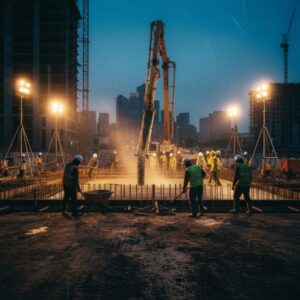






What common building material gets stronger when wet?

1 / 10 Questions
0 Points

What common building material gets stronger when wet?

Concrete

Wood

Bamboo

Clay

Points won
0
Correct score
0%

More Questions

More Articles

World Trivia: 20 Questions on Urban Landmarks

World Trivia: 20 Questions on Urban Landmarks

⏱️ 5 min read

World Trivia: 20 Questions on Urban Landmarks

Urban landmarks serve as iconic symbols of cities, representing cultural heritage, architectural innovation, and human achievement. This comprehensive guide presents 20 fascinating questions and answers about some of the world's most remarkable urban landmarks, offering insights into their history, construction, and cultural significance.

1. What's the actual height of the Eiffel Tower?

The Eiffel Tower stands at 324 meters (1,063 feet) tall, including its antenna. However, the tower's height varies by up to 15 centimeters depending on the temperature, as the iron structure expands and contracts.

2. Which famous landmark was originally built as a temporary structure?

The Space Needle in Seattle was built for the 1962 World's Fair and was initially planned to be temporary. It has since become the city's most recognizable landmark and receives over 2.3 million visitors annually.

3. What's hidden inside the Statue of Liberty's copper sheets?

The Statue of Liberty's copper exterior is supported by an intricate iron framework designed by Gustave Eiffel, the same engineer who created the Eiffel Tower. The framework allows the copper sheets to move independently, preventing damage from wind and temperature changes.

4. How many steps lead to the top of the Leaning Tower of Pisa?

The Leaning Tower of Pisa contains 297 steps leading to its top. The tower's famous lean, which began during construction in 1173, has been stabilized at 3.99 degrees from vertical.

5. What ancient landmark was built without using mortar?

Machu Picchu's structures were built using a technique called "ashlar," where stones were cut to fit together so perfectly that no mortar was needed. This engineering marvel has helped the structures survive earthquakes for centuries.

6. Which famous bridge was initially painted orange?

The Golden Gate Bridge in San Francisco was painted "International Orange" to enhance its visibility in fog and maintain its steel structure. This distinctive color has since become iconic.

7. What's the story behind the Sydney Opera House design?

Architect Jørn Utzon's winning design was initially rejected from the competition but was later rescued from a pile of discarded submissions by one of the judges. The building took 14 years to complete and cost $102 million.

8. How many rooms are in Buckingham Palace?

Buckingham Palace contains 775 rooms, including 52 royal and guest bedrooms, 188 staff bedrooms, 92 offices, and 78 bathrooms. The palace also features its own post office and cinema.

9. What material was originally planned for the Great Wall of China?

The earliest sections of the Great Wall were built using rammed earth and wood. The familiar stone and brick construction came later during the Ming Dynasty (1368-1644).

10. Which landmark features a secret apartment?

The Eiffel Tower contains a small apartment on its top level that Gustave Eiffel used for entertaining guests. It has been preserved and can be viewed by visitors today.

11. What's unique about the Empire State Building's spire?

The Empire State Building's spire was originally designed as a mooring mast for airships, though it was never used for this purpose. Today, it serves as a broadcasting antenna for numerous radio and television stations.

12. How deep are the Petronas Towers' foundations?

The Petronas Towers in Kuala Lumpur have foundations that extend 120 meters underground, requiring the largest concrete pour in Malaysian history to complete.

13. What's the weight of the Christ the Redeemer statue?

The Christ the Redeemer statue in Rio de Janeiro weighs 635 metric tons and stands 38 meters tall, not including its 8-meter pedestal.

14. Which landmark changes color at night?

The Oriental Pearl Tower in Shanghai features LED sequences that can display over 16 million color combinations, creating spectacular light shows each evening.

15. What's beneath the Colosseum?

The Colosseum's hypogeum, a network of underground tunnels and chambers, housed gladiators and wild animals before their appearances in the arena above.

16. How many stones make up the Great Pyramid?

The Great Pyramid of Giza consists of approximately 2.3 million stone blocks, each weighing between 2.5 and 15 tons, with some blocks weighing up to 80 tons.

17. What's special about the Taj Mahal's construction?

The Taj Mahal was built using optical illusions - its minarets lean slightly outward so that in the event of an earthquake, they would fall away from the main dome rather than onto it.

18. Which landmark has a revolving restaurant?

The CN Tower in Toronto features a revolving restaurant that makes a complete 360-degree rotation every 72 minutes, offering diners panoramic views of the city.

19. What's hidden inside Big Ben?

Big Ben houses a prison room that was used to incarcerate members of Parliament who had breached House rules. The last recorded use was in 1880.

20. Which landmark changes its height annually?

The Gateway Arch in St. Louis can vary in height by up to 6 centimeters depending on the temperature, as the stainless steel structure expands and contracts with temperature changes.

These urban landmarks continue to captivate millions of visitors annually, serving as testaments to human ingenuity, architectural excellence, and cultural heritage. Each structure tells a unique story of the era, people, and vision that created it, while continuing to inspire future generations of architects and engineers.
Top 10 Hidden Stories Behind Global Skyscrapers

Top 10 Hidden Stories Behind Global Skyscrapers

⏱️ 6 min read

The world's tallest buildings stand as monuments to human ambition and engineering prowess, dominating skylines across continents. Yet beneath their gleaming facades and record-breaking heights lie fascinating tales of intrigue, innovation, and sometimes tragedy that rarely make it into tourist brochures. These architectural giants harbor secrets that reveal much about the cities they inhabit and the eras in which they were built.

Untold Tales from the World's Most Iconic Towers

1. The Empire State Building's Secret Floor

The Empire State Building contains a mysterious 103rd floor that few visitors ever see. Originally designed as a mooring mast for dirigibles, this secret level served as an observation deck accessible only to VIPs for decades. During World War II, it functioned as a strategic lookout point for enemy aircraft. Today, this hidden space occasionally opens for exclusive events, offering unparalleled views that differ from the standard observation decks. The building also houses numerous concealed passageways and mechanical spaces that were crucial during its 1930s construction, when it rose at an unprecedented rate of four-and-a-half stories per week.

2. Burj Khalifa's Vanishing Act Technology

The world's tallest building employs a groundbreaking condensate collection system that captures moisture from the air conditioning units throughout its 163 floors. This water would otherwise evaporate into the atmosphere, but the Burj Khalifa harvests approximately 15 million gallons annually—enough to fill 20 Olympic-sized swimming pools. This collected water irrigates the tower's surrounding landscape and sustains its elaborate fountain system. Additionally, the building's upper floors experience different sunset times than ground level, with residents on higher floors breaking their Ramadan fast later than those below, necessitating a special fatwa to determine appropriate prayer times.

3. The Chrysler Building's Hidden Automotive Showroom

Walter Chrysler commissioned his namesake building with a remarkable secret purpose: the 71st floor originally served as an exclusive apartment for the automobile magnate himself, complete with a private dining room and gymnasium. More intriguingly, the building's distinctive Art Deco ornamentation incorporates actual automotive elements, including replicas of Chrysler radiator caps and hood ornaments transformed into architectural features. The famous eagle gargoyles at the 61st floor are modeled after the 1929 Chrysler Plymouth hood ornaments, creating a vertical automobile advertisement that few observers recognize from street level.

4. Shanghai Tower's Double-Skin Facade Mystery

China's tallest building features an innovative double-layer glass skin that creates a breathable buffer zone between interior and exterior environments. This architectural technique reduces heating and cooling costs by 50%, but it also creates strange acoustic phenomena. Maintenance workers report hearing conversations from dozens of floors away, carried through the 120 vertical sky gardens that puncture the inner layer. The building's twisted design, rotating two degrees per floor, wasn't merely aesthetic—it reduces wind loads by 24% compared to rectangular towers, a crucial consideration given Shanghai's typhoon susceptibility.

5. Willis Tower's Retractable Glass Balconies Secret

Chicago's Willis Tower (formerly Sears Tower) houses "The Ledge," glass balconies extending four feet outside the building's 103rd floor. What visitors don't realize is that these structures can retract entirely into the building during extreme weather or maintenance. The glass boxes support five tons despite being less than two inches thick, using layers designed to crack in a specific pattern that maintains structural integrity even if damaged. Engineers also installed them with a slight upward tilt—imperceptible to occupants—that creates the psychological illusion of falling forward, intensifying the experience.

6. Taipei 101's Giant Pendulum Damper

At the heart of Taiwan's former tallest building hangs a 730-ton tuned mass damper that serves as the tower's secret weapon against earthquakes and typhoons. This massive golden sphere, visible to visitors, counteracts building sway by moving in opposition to wind and seismic forces. However, few know that the damper has its own mascot character, "Damper Baby," which appears in educational materials throughout the building. During the 2015 Typhoon Soudelor, the sphere swung more than three feet—its greatest recorded movement—while building occupants barely felt the storm's 100-mph winds.

7. One World Trade Center's Symbolic Architecture

America's tallest building incorporates numerous hidden numerical references to the nation's founding. Its height of 1,776 feet directly commemorates the year of American independence. The building's base dimensions—200 feet by 200 feet—match exactly those of the original Twin Towers' footprints. Less obviously, the tower's square base transforms into an octagon at its midpoint before becoming a perfect circle at the observation deck, symbolizing the geometric transition from earth-bound foundation to limitless sky. The building's antenna was designed to withstand winds exceeding 170 mph and can intercept radio frequencies for security purposes.

8. Petronas Towers' Islamic Geometry

Malaysia's iconic twin towers embed complex Islamic patterns into their floor plans and architectural details that aren't apparent from outside. Each tower's footprint is based on two interlocking squares rotated 45 degrees, creating an eight-pointed star—a fundamental Islamic geometric form. The towers' 88 floors weren't chosen arbitrarily; the number eight holds significance in both Chinese numerology (important for Malaysia's Chinese population) and Islamic tradition. The skybridge connecting the towers at levels 41 and 42 isn't rigidly attached but sits on ball bearings, allowing each tower to move independently during high winds without stressing the connection.

9. The Shard's Railway Foundation

London's tallest building rests directly above one of Europe's busiest railway stations, London Bridge Station. Construction required engineers to drive piles through active rail lines, necessitating work during 90-minute windows between train services. The building's glass facade contains 11,000 individual panels, but no two are exactly alike due to computational design that optimized each piece for its specific location and sun exposure. The top floors remain deliberately unfinished as architectural "veils," creating an appearance of dissolving into the sky that honors English landscape painter J.M.W. Turner's atmospheric style.

10. Lotte World Tower's Vertical Forest

South Korea's tallest building contains a little-known "green core" system where living plants are integrated into the building's structural columns. These aren't merely decorative—the plants process air for occupants while providing psychological benefits demonstrated to reduce stress among workers. The building also features a tuned liquid column damper containing water that sloshes in opposition to building movement, creating a surprisingly effective stabilization system. During construction, a time capsule was sealed within the building's foundation containing predictions about Seoul in 2115, when the tower celebrates its 100th anniversary.

Conclusion

These hidden stories reveal that skyscrapers are far more than simple vertical solutions to urban density. They embody cultural values, respond to environmental challenges, and push technological boundaries in ways that remain invisible to casual observers. From automotive showrooms concealed in Art Deco spires to massive pendulums swinging silently through observation floors, each tower harbors secrets that reflect humanity's endless quest to reach higher while solving the complex problems such ambitions create. Understanding these hidden narratives transforms how we perceive these giants, revealing them as dynamic structures filled with innovation, symbolism, and occasionally delightful surprises that continue shaping the cities they define.