









⏱️ 7 min read
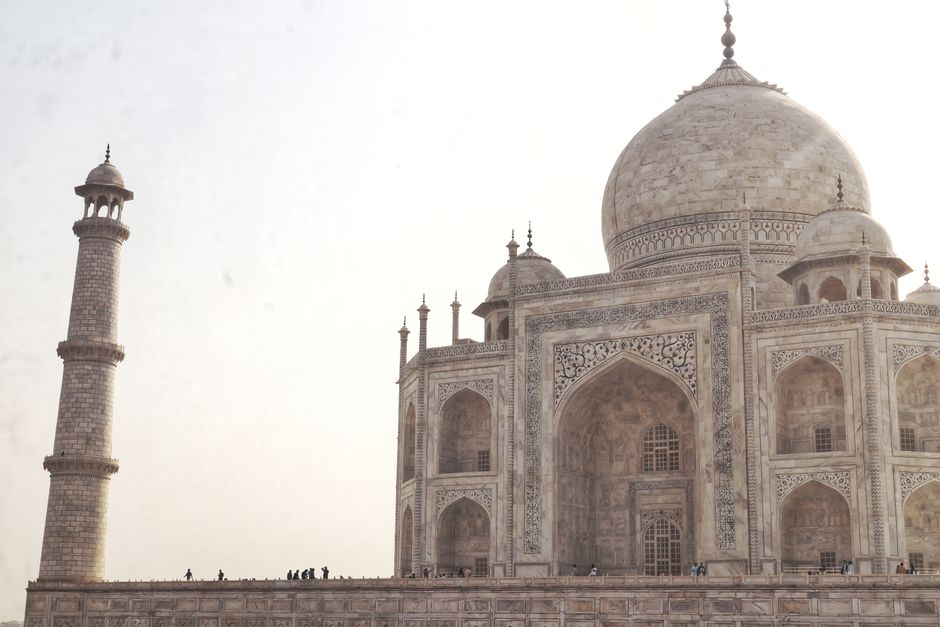
Standing majestically on the banks of the Yamuna River in Agra, India, the Taj Mahal is universally recognized as one of the world's most beautiful architectural achievements. While millions know it as a monument to eternal love, this ivory-white marble mausoleum harbors numerous fascinating secrets and lesser-known details that make it even more remarkable than most visitors realize. From its construction techniques to its symbolic elements, here are twenty surprising facts that reveal the hidden depths of this UNESCO World Heritage Site.
The Hidden Stories Behind the World's Most Famous Monument
1. A Monument Born From Grief
Emperor Shah Jahan commissioned the Taj Mahal in 1632 as a tomb for his beloved third wife, Mumtaz Mahal, who died during the birth of their fourteenth child. The emperor was so devastated by her death that his hair reportedly turned gray overnight, and he wore mourning clothes for two years. This profound grief inspired what would become the ultimate expression of love in architectural form.
2. The Massive Scale of Construction
The construction of the Taj Mahal required approximately 20,000 workers, including masons, stonecutters, inlay craftsmen, carvers, painters, calligraphers, dome builders, and other artisans. These skilled workers were recruited from across India and Central Asia, making it a truly international project. The main construction took about 22 years to complete, finishing around 1653.
3. Precious Materials From Across Asia
More than 1,000 elephants were used to transport the building materials to the construction site. The white marble came from Rajasthan, while 28 different types of precious and semi-precious stones were imported for the intricate inlay work. Jade and crystal came from China, turquoise from Tibet, lapis lazuli from Afghanistan, sapphire from Sri Lanka, and carnelian from Arabia, making the Taj Mahal a repository of Asia's finest materials.
4. The Color-Changing Marvel
The Taj Mahal appears to change color throughout the day depending on the light conditions. It appears pinkish in the morning, milky white in the evening, and golden under moonlight. This phenomenon occurs due to the translucent quality of the white marble and how it reflects different wavelengths of light at various times.
5. Perfect Symmetry With One Exception
The Taj Mahal is renowned for its perfect symmetry in almost every aspect of its design. However, there is one deliberate asymmetry: the cenotaphs inside the main chamber. While Mumtaz Mahal's tomb is positioned at the exact center, Shah Jahan's tomb was placed beside hers, slightly disrupting the perfect symmetry because he had not originally planned to be buried there.
6. The Foundation Engineering Wonder
The foundation of the Taj Mahal extends approximately 50 meters below ground level. To create a stable base in the sandy riverbank soil, wells were dug and filled with stone and rubble. Ebony logs were used as foundation posts because ebony becomes harder when exposed to moisture, creating an incredibly stable foundation that has lasted nearly 400 years.
7. The Myth of the Black Taj Mahal
Legend has it that Shah Jahan planned to build an identical black marble mausoleum for himself across the river, connected to the Taj Mahal by a bridge. However, historical evidence for this "Black Taj Mahal" is disputed, and most scholars believe it to be a romantic myth rather than historical fact.
8. Anti-Theft Scaffolding Design
The scaffolding used during construction was revolutionary for its time. Instead of being built from bamboo tied together with rope, the builders used brick scaffolding. According to legend, when construction was complete, Shah Jahan announced that anyone could keep the bricks they retrieved from the scaffolding, ensuring its rapid removal by local people.
9. Optical Illusion in the Minarets
The four minarets surrounding the Taj Mahal were designed to lean slightly outward rather than standing perfectly straight. This deliberate architectural choice ensured that in the event of an earthquake or collapse, the minarets would fall away from the main tomb structure rather than onto it, protecting the central mausoleum.
10. The Calligraphy Perspective Trick
The Arabic calligraphy inscribed on the walls features letters that increase in size as they ascend the walls. This technique, known as anamorphosis, creates an optical illusion making all the letters appear uniform in size when viewed from ground level, compensating for the perspective distortion that would otherwise occur.
11. The Garden's Symbolic Meaning
The Taj Mahal's gardens, known as the Charbagh, are divided into four parts representing the four rivers of Paradise mentioned in the Quran: water, milk, wine, and honey. This Persian-style garden design symbolizes the Islamic concept of Paradise on Earth, making the monument not just a tomb but a representation of heaven itself.
12. World War II Protection Measures
During World War II, the entire Taj Mahal was covered with bamboo scaffolding to disguise it as a stockpile of bamboo and protect it from potential bomber attacks. Similar protective measures were taken during the Indo-Pakistani wars of 1965 and 1971, demonstrating the monument's importance to national heritage.
13. The Precious Stone Theft
Many of the precious stones that once adorned the Taj Mahal were looted by British soldiers and government officials during the Indian Rebellion of 1857. The monument suffered from neglect during British rule until Lord Curzon ordered a major restoration project in the early 1900s, which included installing the large brass lamp in the interior chamber.
14. Environmental Pollution Threats
The white marble of the Taj Mahal has been gradually yellowing due to air pollution from nearby factories and traffic. In response, the Indian government established the Taj Trapezium Zone, a 10,400 square kilometer area around the monument where strict emissions standards are enforced, and polluting industries are banned or required to use cleaner technologies.
15. The Hidden Riverside Rooms
Beneath the Taj Mahal, at ground level on the riverside, are approximately 22 rooms that were sealed with brick and mortar by the Archaeological Survey of India. These rooms, which are not accessible to tourists, have sparked numerous theories about their contents, though they were likely used for storage or as tomb chambers for other members of the royal family.
16. The Astronomical Alignment
The Taj Mahal was designed with careful attention to astronomical alignments. The main gateway frames the tomb perfectly, and on the spring and autumn equinoxes, the sun sets directly behind the main dome when viewed from the gateway, creating a spectacular silhouette effect.
17. The Legend of Craftsmen's Hands
A popular but unsubstantiated legend claims that Shah Jahan ordered the hands of the master craftsmen to be cut off after completion to prevent them from ever creating another structure as beautiful as the Taj Mahal. However, no historical evidence supports this gruesome tale, and it's likely a myth that emerged to enhance the monument's mystique.
18. The Pietra Dura Masterwork
The intricate inlay work on the Taj Mahal, known as pietra dura, involves cutting and fitting precisely shaped pieces of colored stone into marble. Some flowers are composed of up to 60 different pieces of stone. This technique was imported from Italy and perfected by Mughal craftsmen to an unprecedented level of sophistication.
19. The Acoustically Designed Dome
The main dome of the Taj Mahal was designed with remarkable acoustic properties. A single note played inside the dome resonates for approximately 28 seconds. This acoustic engineering was intentional, allowing the recitation of prayers and Quranic verses to be amplified and sustained throughout the chamber.
20. The Incomplete Riverside View
Most visitors view the Taj Mahal from the main entrance side, but the monument was actually designed to be approached from the Yamuna River. The riverside view reveals a different perspective of the architecture, and archaeological evidence suggests there may have been additional garden structures on the opposite bank that were never completed or have been lost to time.
A Timeless Testament to Love and Artistry
These twenty facts reveal that the Taj Mahal is far more than a beautiful building—it's a masterpiece of engineering, artistry, and symbolic design that continues to captivate people nearly four centuries after its construction. From its color-changing marble to its hidden chambers, from its international materials to its acoustic marvels, every aspect of the monument demonstrates the extraordinary vision and skill of its creators. Understanding these hidden details enriches our appreciation of this wonder of the world and reminds us why it remains one of humanity's most treasured architectural achievements.