

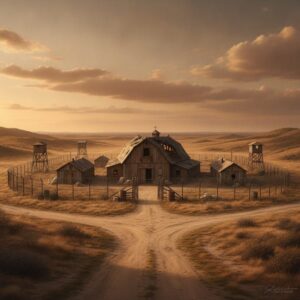









U.S. Cults That Tried to Build Their Own Countries Inside America

1 / 10 Questions
0 Points

What religious group built Rajneeshpuram, a self-governing city in Oregon complete with its own police force and airport?

Heaven's Gate

The Branch Davidians

The Rajneeshees

The Manson Family

Points won
0
Correct score
0%

More Questions

More Articles

Did You Know These 15 Fun Facts About US Weather?

Did You Know These 15 Fun Facts About US Weather?

⏱️ 7 min read

The United States experiences some of the most diverse and extreme weather patterns on Earth. From scorching deserts to frozen tundras, towering tornadoes to devastating hurricanes, the American landscape showcases nature's full meteorological spectrum. The sheer size and geographical variety of the country create conditions for weather phenomena that are rarely seen elsewhere in the world. Here are fifteen fascinating facts about US weather that demonstrate just how remarkable and sometimes bizarre the nation's climate can be.

Amazing Weather Phenomena Across America

1. Tornado Alley Hosts Most of the World's Twisters

The United States experiences more tornadoes than any other country on the planet, with an average of 1,200 tornadoes touching down each year. The region known as Tornado Alley, stretching from Texas through Oklahoma, Kansas, and Nebraska, provides the perfect conditions for these violent storms. The collision of warm, moist air from the Gulf of Mexico with cool, dry air from Canada creates the ideal environment for supercell thunderstorms that spawn tornadoes. This unique geographical setup makes tornado formation far more common in the US than anywhere else globally.

2. Death Valley Holds the Western Hemisphere Temperature Record

Death Valley, California, recorded the highest reliably measured air temperature in the Western Hemisphere at 134°F (56.7°C) on July 10, 1913, at Furnace Creek. This desert location regularly experiences summer temperatures exceeding 120°F, and the ground temperature can reach a staggering 201°F. The valley's extreme heat results from its below-sea-level elevation, clear skies, low humidity, and surrounding mountains that trap hot air.

3. Alaska and Hawaii Create Incredible Climate Extremes

The United States is one of the few countries that can claim both arctic and tropical climates within its borders. Alaska's northernmost point experiences polar conditions with temperatures dropping below -50°F, while Hawaii enjoys year-round tropical warmth with temperatures rarely falling below 60°F. This represents a temperature range of over 110 degrees between the nation's coldest and warmest states, showcasing extraordinary climate diversity.

4. The Great Lakes Generate Their Own Weather Systems

The Great Lakes are so massive that they create their own localized weather patterns, particularly the phenomenon known as lake-effect snow. When cold air masses move over the warmer lake waters, they pick up enormous amounts of moisture and heat, creating intense snowfall on the downwind shores. Cities like Buffalo, New York, and Cleveland, Ohio, can receive several feet of snow in just 24 hours from these systems, even when surrounding areas remain clear.

5. Mount Washington Experiences Extreme Wind Speeds

Mount Washington in New Hampshire held the world record for the highest directly measured surface wind speed for over 60 years. On April 12, 1934, observers recorded a wind gust of 231 miles per hour at the summit. The mountain's unique position at the convergence of several major storm tracks and its prominent peak create conditions for exceptionally violent winds, making it one of the most dangerous small mountains in the world.

6. Lightning Strikes the United States Millions of Times Annually

The United States experiences approximately 25 million cloud-to-ground lightning strikes each year. Florida earns the title of "Lightning Capital of America," with the area between Tampa and Orlando experiencing the highest concentration of lightning activity in the country. The warm, humid conditions and sea breeze convergence zones create perfect conditions for the thunderstorms that generate this electrical phenomenon.

7. The Dust Bowl Created Black Blizzards

During the 1930s, the Great Plains experienced one of the most severe environmental disasters in US history. Massive dust storms, called "black blizzards," darkened skies and buried homes under drifts of soil. These storms resulted from severe drought combined with poor farming practices, and some were so large they carried dust all the way to the East Coast, even coating ships in the Atlantic Ocean with prairie soil.

8. Hail Larger Than Softballs Has Fallen in the Plains

The United States experiences some of the largest hailstones ever recorded. The record-holding hailstone fell in Vivian, South Dakota, on July 23, 2010, measuring 8 inches in diameter and weighing nearly 2 pounds. These massive ice chunks form in powerful supercell thunderstorms where strong updrafts repeatedly cycle ice particles through freezing layers of clouds, adding layers of ice with each pass.

9. Hurricane Season Brings Devastating Tropical Storms

The Atlantic hurricane season, running from June through November, poses significant threats to coastal United States. The nation's Gulf Coast and Atlantic seaboard are particularly vulnerable, with hurricanes bringing catastrophic winds, storm surge, and flooding. Some hurricanes have caused over $100 billion in damages, with Hurricane Katrina in 2005 standing as one of the costliest natural disasters in American history.

10. Temperature Swings Can Exceed 100 Degrees in Hours

The United States has experienced some of the most dramatic temperature changes ever recorded. In Loma, Montana, the temperature rose 103 degrees in just 24 hours, climbing from -54°F to 49°F on January 15, 1972. These extreme temperature swings typically occur when powerful chinook winds descend from mountain ranges, rapidly warming the air through compression.

11. Drought and Flood Cycles Create Agricultural Challenges

The United States experiences cyclical patterns of extreme drought and flooding that significantly impact agriculture and water resources. California's cycle between severe drought and atmospheric river events demonstrates these extremes, with some years bringing virtually no rainfall and others delivering dangerous flooding. These patterns are influenced by Pacific Ocean temperature variations and atmospheric circulation patterns.

12. The Jet Stream Dictates National Weather Patterns

The jet stream, a high-altitude river of air flowing across North America, plays a crucial role in determining US weather. This powerful current steers weather systems across the continent and can create prolonged periods of unusual weather when it becomes stuck in certain patterns. When the jet stream dips far south, arctic air can plunge into normally mild regions, while northern areas may experience unseasonably warm conditions.

13. Microbursts Create Dangerous Downdrafts

Microbursts are intense, localized columns of sinking air that can produce damaging winds exceeding 150 miles per hour. These phenomena are particularly dangerous to aircraft during takeoff and landing. The United States, particularly the Southwest during monsoon season and the Southeast during summer, experiences frequent microbursts that can cause significant damage in very small areas, sometimes leaving one side of a street destroyed while the other remains untouched.

14. Snowfall Records Defy Expectations

Mount Baker in Washington State holds the world record for the most snowfall in a single season, with 1,140 inches (95 feet) falling during the 1998-1999 winter season. Meanwhile, some areas of the Sierra Nevada regularly receive over 400 inches of snow annually. These incredible snowfall totals result from moisture-laden Pacific storms hitting mountainous terrain, forcing air upward where it cools and dumps massive amounts of precipitation.

15. Heat Waves and Cold Snaps Break Records Regularly

The United States regularly experiences record-breaking temperature events that affect millions of people. Summer heat waves can persist for weeks, with temperatures exceeding 100°F across vast regions, while polar vortex events can send Arctic air plunging southward, bringing subzero temperatures to areas that rarely freeze. These extreme temperature events can strain power grids, threaten public health, and cause billions of dollars in economic impacts.

Understanding America's Weather Diversity

These fifteen facts highlight the extraordinary variety and intensity of weather phenomena experienced across the United States. From the world's most violent tornadoes to record-breaking temperature extremes, from devastating hurricanes to massive snowfalls, American weather encompasses virtually every type of meteorological event imaginable. This diversity stems from the nation's vast geography, varied topography, and position between major ocean currents and air masses. Understanding these weather patterns not only satisfies curiosity but also helps Americans prepare for and respect the powerful forces of nature that shape daily life across this diverse nation.

Top 10 Key Moments in Global Women’s History

Top 10 Key Moments in Global Women’s History

⏱️ 6 min read

Throughout history, women have fought tirelessly for recognition, equality, and fundamental human rights. Their struggles and achievements have shaped societies, influenced legislation, and transformed the way the world views gender roles. From groundbreaking legal victories to revolutionary social movements, these pivotal moments represent turning points that have progressively advanced women's rights and opportunities across the globe. Understanding these historical milestones provides essential context for contemporary discussions about gender equality and reminds us of the courageous individuals who paved the way for future generations.

Transformative Moments That Changed Women's Lives Forever

1. New Zealand Grants Women's Suffrage in 1893

New Zealand became the first self-governing nation to grant women the right to vote in 1893, setting a powerful precedent for the global women's suffrage movement. Led by suffragist Kate Sheppard, women collected massive petitions that eventually convinced Parliament to pass the Electoral Act. This historic achievement demonstrated that women could participate fully in democratic processes and inspired suffragists worldwide to intensify their campaigns. The success in New Zealand proved that women's political participation wouldn't destabilize society, as opponents had claimed, but rather strengthened democratic representation.

2. The Seneca Falls Convention of 1848

The first women's rights convention in the United States took place in Seneca Falls, New York, in July 1848. Organized by Elizabeth Cady Stanton and Lucretia Mott, approximately 300 attendees discussed the social, civil, and religious rights of women. The convention produced the Declaration of Sentiments, modeled after the Declaration of Independence, which outlined grievances and set an agenda for the women's rights movement. This gathering marked the formal beginning of the organized women's rights movement in America and established a framework for advocacy that would continue for more than a century.

3. The 19th Amendment Ratified in 1920

After decades of activism, protests, and advocacy, American women secured the constitutional right to vote when the 19th Amendment was ratified on August 18, 1920. This victory came after years of strategic organizing, civil disobedience, and the tireless efforts of suffragists like Susan B. Anthony, Alice Paul, and Ida B. Wells. The amendment represented a major milestone in democratic participation, though it's important to note that many women of color continued to face discriminatory barriers to voting for decades afterward. Nevertheless, this constitutional guarantee fundamentally transformed American political life and empowered millions of women.

4. Simone de Beauvoir Publishes "The Second Sex" in 1949

French philosopher and writer Simone de Beauvoir published "The Second Sex," a groundbreaking analysis of women's oppression and the social construction of femininity. Her famous assertion that "one is not born, but rather becomes, a woman" challenged biological determinism and examined how society shapes gender roles. This influential work laid intellectual foundations for second-wave feminism and provided a philosophical framework for understanding gender inequality. The book's impact extended far beyond academia, influencing activists and thinkers worldwide and remaining relevant to contemporary feminist discourse.

5. The United Nations Adopts CEDAW in 1979

The Convention on the Elimination of All Forms of Discrimination Against Women (CEDAW) was adopted by the United Nations General Assembly in 1979, creating an international bill of rights for women. This landmark treaty defined discrimination against women and established an agenda for national action to end such discrimination. CEDAW addressed women's rights in political life, education, employment, healthcare, and family relations. With nearly 190 countries ratifying the convention, it became a powerful tool for advocating women's rights globally and holding governments accountable for gender-based discrimination.

6. The Birth Control Pill Approved in 1960

The U.S. Food and Drug Administration approved the first oral contraceptive pill in 1960, revolutionizing reproductive rights and women's autonomy over their bodies. Developed by scientists Gregory Pincus and John Rock, with funding from women's rights advocate Margaret Sanger and philanthropist Katharine McCormick, the pill gave women unprecedented control over family planning. This medical advancement had profound social implications, enabling women to pursue education and careers with greater freedom and fundamentally altering relationships, sexuality, and family structures. The availability of reliable contraception became central to women's liberation movements worldwide.

7. Title IX Enacted in the United States in 1972

The passage of Title IX of the Education Amendments prohibited sex-based discrimination in any education program or activity receiving federal financial assistance. While often associated with sports, Title IX's impact extended to admissions, financial aid, sexual harassment policies, and academic programs. This legislation opened doors for women in higher education and athletics, dramatically increasing female participation in sports and professional fields previously dominated by men. The law established that educational institutions receiving federal funding must provide equal opportunities regardless of sex, fundamentally transforming American education.

8. Women Gain the Right to Vote in Saudi Arabia in 2015

Saudi Arabia granted women the right to vote and run for office in municipal elections in 2015, marking a significant milestone in one of the world's most restrictive countries for women's rights. Though limited to local elections, this change represented progress in a nation where women had long faced severe restrictions on mobility, employment, and decision-making. Twenty women were elected to municipal councils in the first election where they could participate. While substantial barriers to equality remained, this development signaled gradual shifts in one of the last countries to recognize women's political participation rights.

9. The #MeToo Movement Goes Viral in 2017

Originally founded by activist Tarana Burke in 2006, the #MeToo movement gained global momentum in October 2017 when allegations against powerful figures in entertainment sparked widespread sharing of sexual harassment and assault experiences. Millions of women worldwide used the hashtag to share their stories, breaking long-held silences around sexual violence and workplace harassment. The movement led to significant consequences for perpetrators, policy changes in organizations, and heightened awareness of systemic gender-based violence. It demonstrated the power of collective voice and social media in advancing women's rights and safety.

10. The First Women's March in 2017

On January 21, 2017, millions of people participated in Women's Marches across the globe, making it one of the largest single-day protests in history. Initially organized in Washington, D.C., the march expanded to over 600 cities worldwide, with participants advocating for women's rights, reproductive freedom, healthcare, environmental protection, and social justice. The demonstration reflected intersectional feminism's growing influence and showcased women's political mobilization power. The march spawned ongoing activism and increased political engagement, contributing to record numbers of women running for and winning elected office in subsequent years.

The Ongoing Journey Toward Equality

These ten pivotal moments represent critical junctures in the global struggle for women's rights and equality. From securing basic political participation rights to challenging deeply ingrained social structures, each milestone built upon previous victories while illuminating work that remained. These achievements resulted from the courage, persistence, and collective action of countless individuals who refused to accept inequality as inevitable. While significant progress has been made, challenges persist in areas including economic equality, representation in leadership, reproductive rights, and violence against women. Understanding this history empowers contemporary activists and reminds us that social change requires sustained effort, strategic organizing, and unwavering commitment to justice. The legacy of these moments continues to inspire new generations to advance the unfinished work of achieving full equality for women worldwide.