



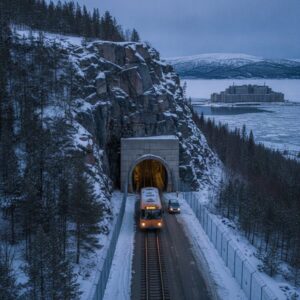






Towns Where Everyone Lives in a Single Building Together

1 / 10 Questions
0 Points

Which Alaska town houses nearly everyone under one roof?

Juneau

Nome

Whittier

Barrow

Points won
0
Correct score
0%

More Questions

More Articles

Top 10 Surprising Facts About Geological History

Top 10 Surprising Facts About Geological History

⏱️ 7 min read

The Earth beneath our feet holds secrets spanning billions of years, with geological processes that have shaped our planet in ways that often defy imagination. From ancient supercontinents to catastrophic mass extinctions, the geological record reveals a dynamic world constantly in flux. Understanding these remarkable phenomena not only helps us comprehend our planet's past but also provides crucial insights into its future. Here are ten fascinating discoveries that challenge our perceptions of geological time and Earth's incredible transformation over the eons.

Remarkable Discoveries from Earth's Deep Past

1. The Earth Once Had Purple Oceans

Before the familiar green chlorophyll dominated Earth's photosynthetic organisms, ancient microbes likely used retinal-based molecules that absorbed green light and reflected red and violet wavelengths. This means Earth's early oceans may have appeared distinctly purple rather than blue-green. Scientists studying ancient microbial pigments discovered that retinal-based photosynthesis was probably more common than chlorophyll-based systems during the early Archean eon, approximately 3.5 billion years ago. This purple Earth phase could have lasted for millions of years before oxygen-producing cyanobacteria became dominant, fundamentally changing both the atmosphere and the ocean's appearance.

2. Mountains Existed Before Complex Life

Geological evidence reveals that mountain ranges as tall as the modern Himalayas existed over a billion years before animals even evolved. The ancient Grenville Mountains, formed around 1.2 billion years ago during the assembly of the supercontinent Rodinia, likely reached elevations of 8,000 meters or more. These pre-life mountain ranges underwent complete erosion cycles, their sediments spread across continents, leaving only their deep metamorphic roots visible today in places like Eastern North America and Scotland. This demonstrates that Earth's most dramatic geological processes operated on massive scales long before life witnessed them.

3. Antarctica Was Once a Tropical Paradise

Fossil evidence conclusively shows that Antarctica hosted lush rainforests and diverse wildlife as recently as 50 million years ago. During the Eocene epoch, when global temperatures were significantly warmer, Antarctica enjoyed a temperate to subtropical climate with palm trees, ferns, and diverse fauna including marsupials and early relatives of modern birds. Drilling projects in the Ross Sea have recovered pollen from tropical plants and evidence of soil formation typical of warm, wet climates. This Antarctic greenhouse world persisted until the Drake Passage opened approximately 40 million years ago, allowing circumpolar ocean currents to isolate the continent thermally, triggering its deep freeze.

4. The Longest Day on Earth Was Only Four Hours

When Earth first formed about 4.5 billion years ago, a day lasted merely four hours due to the planet's rapid rotation. The Moon's gravitational pull has been gradually slowing Earth's spin through tidal friction, lengthening our days by approximately 1.7 milliseconds per century. This means that during the Devonian period, around 400 million years ago, a year contained roughly 400 days, each lasting about 22 hours. Geological evidence for this comes from growth rings in ancient corals and rhythmic layering in tidal sediments called tidal rhythmites, which preserve a record of Earth's changing rotation rate throughout geological history.

5. Most of Earth's History Had No Ice Anywhere

Contrary to popular perception, Earth's normal state throughout most of geological time has been completely ice-free at both poles. For approximately 80-90% of the past 500 million years, the planet existed in a "greenhouse" state with no permanent ice caps. The current Cenozoic Ice Age, which began around 34 million years ago with Antarctic glaciation, represents an unusual "icehouse" phase. During typical greenhouse periods, such as the Cretaceous, sea levels were 100-200 meters higher than today, and temperate forests thrived within the Arctic Circle. Understanding these ice-free intervals helps geologists comprehend the full range of Earth's climate variability.

6. A Day's Rain Once Lasted Two Million Years

The Carnian Pluvial Episode, occurring approximately 232 million years ago during the Triassic period, represents one of the most bizarre climate events in Earth's history. This extended period of intense rainfall lasted between one and two million years, transforming vast desert regions into humid environments and fundamentally reshaping terrestrial ecosystems. Evidence from sedimentary rock layers across multiple continents shows a sudden shift from arid to humid conditions, with massive deposits of clay and organic material. This prolonged deluge may have been triggered by massive volcanic eruptions in the Wrangellia Large Igneous Province, which injected enormous quantities of carbon dioxide into the atmosphere, intensifying the hydrological cycle and potentially enabling the rise of dinosaurs.

7. Earth's Magnetic Field Has Reversed Hundreds of Times

The geological record preserved in volcanic rocks demonstrates that Earth's magnetic field has reversed its polarity at least 183 times in the past 83 million years, with the process occurring irregularly every 200,000 to 300,000 years on average. During these reversals, compasses would point south instead of north, and the transition may take anywhere from 1,000 to 10,000 years to complete. The last reversal occurred 780,000 years ago, meaning we're statistically overdue for another flip. Paleomagnetists discovered this phenomenon by studying the alignment of iron-bearing minerals in solidified lava flows from different time periods, which faithfully record the magnetic field direction at the moment of cooling.

8. The Largest Extinction Wasn't Caused by an Asteroid

While the dinosaur-killing asteroid impact 66 million years ago captures public imagination, the Permian-Triassic extinction 252 million years ago was far more devastating, eliminating approximately 96% of marine species and 70% of terrestrial vertebrates. This catastrophe, often called "The Great Dying," was primarily caused by massive volcanic eruptions in Siberia that covered an area the size of the continental United States with lava up to 3 kilometers thick. These Siberian Traps released vast quantities of carbon dioxide and methane, triggering runaway global warming, ocean acidification, and oxygen depletion. The recovery took 10 million years, longer than any other extinction event, fundamentally resetting life's evolutionary trajectory.

9. Continents Move Faster Than Your Fingernails Grow

Plate tectonics drives continents across Earth's surface at rates of 2-10 centimeters per year, slightly faster than the average fingernail growth rate of 3.5 millimeters per month. While this seems imperceptibly slow, over geological time spans these movements are dramatic. The Atlantic Ocean, for instance, widens by about 2.5 centimeters annually as the Americas drift away from Europe and Africa. In just 10 million years, continents can travel 100-1,000 kilometers. GPS measurements now track these movements with millimeter precision, confirming that India is still crashing into Asia at 5 centimeters per year, continuing to push up the Himalayas even today.

10. Earth's Oxygen Catastrophe Nearly Ended Life

The Great Oxidation Event, occurring approximately 2.4 billion years ago, represents one of the most dramatic transformations in Earth's history and was catastrophic for most existing life forms. When cyanobacteria evolved oxygen-producing photosynthesis, they gradually poisoned the atmosphere with this highly reactive gas, which was toxic to the dominant anaerobic organisms. Free oxygen also reacted with atmospheric methane, a powerful greenhouse gas, causing global temperatures to plummet and triggering the Huronian glaciation, possibly Earth's longest ice age lasting 300 million years. This "oxygen catastrophe" caused a mass extinction but ultimately paved the way for complex life, as the new oxygen-rich atmosphere enabled the evolution of larger, more energetically efficient organisms.

Understanding Earth's Dynamic History

These ten remarkable facts illustrate that Earth's geological history is far stranger and more dynamic than commonly imagined. From purple oceans to reversing magnetic fields, from continent-sized volcanic eruptions to climate shifts lasting millions of years, our planet has undergone transformations that challenge our everyday experience of a seemingly stable world. The geological record serves as both a time machine revealing Earth's deep past and a laboratory for understanding the fundamental processes that continue to shape our world. By studying these ancient events, geologists gain crucial perspectives on current environmental changes and develop better predictions about our planet's future trajectory.

Top 10 Global Cultural Festivals You Need to See

Top 10 Global Cultural Festivals You Need to See

⏱️ 7 min read

Cultural festivals serve as vibrant windows into the soul of civilizations, offering travelers and culture enthusiasts unique opportunities to witness centuries-old traditions, artistic expressions, and communal celebrations. From ancient religious ceremonies to modern artistic gatherings, these events showcase humanity's diverse heritage and unite people across geographical and cultural boundaries. Experiencing these festivals firsthand provides invaluable insights into different worldviews, social customs, and the shared human desire to celebrate life through color, music, and ritual.

Essential Cultural Celebrations Around the World

1. Rio Carnival: Brazil's Spectacular Street Party

The Rio Carnival stands as the world's largest and most famous festival, attracting over two million visitors daily during its five-day celebration. Held annually before Lent, this extravaganza transforms Rio de Janeiro into a pulsating showcase of samba music, elaborate costumes, and parade competitions. The Sambadrome parades feature competing samba schools that spend the entire year preparing choreographed performances with thousands of dancers, massive floats, and costumes adorned with feathers, sequins, and precious stones. Beyond the official parades, street parties called "blocos" take over neighborhoods, creating an inclusive atmosphere where locals and visitors dance together until dawn.

2. Diwali: India's Festival of Lights

Diwali, celebrated by over one billion people worldwide, represents the triumph of light over darkness and good over evil. This five-day Hindu festival illuminates India and other countries with millions of oil lamps, candles, and fireworks. Families clean and decorate their homes with intricate rangoli designs made from colored powders, exchange gifts and sweets, and gather for prayers honoring Lakshmi, the goddess of prosperity. The festival's spiritual significance varies across regions, commemorating different mythological events, but the underlying themes of renewal, hope, and family unity remain constant. The sight of entire cities glowing with lights creates an unforgettable visual spectacle.

3. Oktoberfest: Munich's Bavarian Beer Celebration

Germany's Oktoberfest has evolved from a royal wedding celebration in 1810 into the world's largest folk festival, welcoming approximately six million visitors annually. Held in Munich from late September to early October, this sixteen-day festival showcases Bavarian culture through traditional music, folk costumes, and specially brewed Oktoberfest beers served exclusively in massive one-liter steins. Fourteen large beer tents operated by Munich's historic breweries offer authentic German cuisine including pretzels, sausages, and roasted chicken. Beyond the beer consumption, the festival features amusement park rides, parades with decorated horse-drawn beer wagons, and performances by traditional brass bands.

4. Day of the Dead: Mexico's Colorful Tribute to Ancestors

Día de los Muertos represents a profound Mexican tradition that honors deceased loved ones through vibrant celebrations rather than somber mourning. Observed primarily on November 1st and 2nd, this indigenous festival predating Spanish colonization blends pre-Hispanic beliefs with Catholic traditions. Families create elaborate altars called "ofrendas" decorated with marigold flowers, photographs, favorite foods, and sugar skulls to welcome spirits back to the living world. Public spaces fill with skeleton decorations, face painting depicting "calaveras," and street processions featuring music and dancing. UNESCO recognized this tradition as an Intangible Cultural Heritage of Humanity, acknowledging its cultural significance and unique perspective on death and remembrance.

5. Chinese New Year: The Spring Festival Spectacular

Chinese New Year, also called the Spring Festival, marks the most important celebration in Chinese culture, observed by over 1.5 billion people globally. This fifteen-day festival beginning with the new moon typically falls between January 21st and February 20th, with each year dedicated to one of twelve zodiac animals. Festivities include thorough house cleaning to sweep away bad fortune, family reunion dinners featuring symbolic foods, and the gifting of red envelopes containing money. The celebration culminates in the Lantern Festival, featuring elaborate lantern displays, dragon and lion dances, and spectacular fireworks meant to ward off evil spirits and welcome prosperity for the coming year.

6. La Tomatina: Spain's Legendary Tomato Fight

The small Spanish town of Buñol hosts one of the world's most unusual festivals each August, when approximately 20,000 participants engage in a massive tomato fight. This hour-long food battle uses over 150,000 tomatoes, transforming the streets into rivers of red pulp. What began in 1945 as a spontaneous youth brawl has evolved into a highly organized event with specific rules, including crushing tomatoes before throwing to avoid injuries. The festival's absurdist nature and pure fun have made it internationally famous, though participation is now ticketed to manage crowd sizes. The town cleans up remarkably quickly, as the tomato's acidic properties actually help sanitize the streets.

7. Holi: India's Festival of Colors

Holi celebrates the arrival of spring and the victory of good over evil through an explosion of colored powders and water. This Hindu festival, observed in March, transforms participants into living rainbows as they throw vibrant gulal powder and spray colored water at friends and strangers alike. The celebration begins with evening bonfires symbolizing the burning of evil, followed by daylong color battles accompanied by music, dancing, and traditional sweets. Holi's message of unity and joy transcends religious boundaries, with the temporary dissolution of social hierarchies as people of all backgrounds join the colorful chaos. The festival has gained international popularity, with color runs and Holi-inspired events worldwide.

8. Carnival of Venice: Italy's Masquerade Tradition

The Venice Carnival revives centuries-old masquerade traditions dating back to the 12th century, when masks allowed Venetians to dissolve class distinctions temporarily. This two-week festival preceding Lent transforms Venice into an elaborate stage where participants don ornate costumes and elaborate masks, recreating the city's Renaissance glory. The festival features costume competitions, grand balls in historic palaces, theatrical performances, and street entertainers. Traditional Venetian masks like the elegant Bauta or mysterious Moretta carry historical significance, while St. Mark's Square becomes the festival's vibrant heart. The combination of Venice's stunning architecture and the artistic costumes creates a dreamlike atmosphere transporting visitors to another era.

9. Mardi Gras: New Orleans' Jazz-Filled Celebration

New Orleans' Mardi Gras represents America's most distinctive cultural festival, blending French Catholic traditions with African, Spanish, and Caribbean influences. This multi-week celebration peaks on Fat Tuesday with elaborate parade floats, marching bands, and the tradition of throwing beads, coins, and trinkets to crowds. Krewe organizations, some dating back over 150 years, prepare year-round for their parade appearances, creating spectacular floats and costumes. Beyond the famous Bourbon Street parties, the festival showcases New Orleans' musical heritage through brass bands, jazz performances, and traditional Creole cuisine. The festival's colors of purple, green, and gold symbolize justice, faith, and power respectively.

10. Songkran: Thailand's Water Festival

Thailand's traditional New Year celebration has evolved into the world's largest water fight, with entire cities engaging in good-natured water warfare each April. Originally a gentle ritual of pouring water on Buddha statues and elders' hands for blessings, Songkran now features massive street water battles using water guns, buckets, and hoses. The three-day festival coincides with the hottest time of year, making the water fights a welcome relief. Beyond the aquatic fun, Songkran maintains spiritual significance through temple visits, merit-making activities, and traditional ceremonies. Cities like Bangkok and Chiang Mai become battlegrounds where locals and tourists unite in joyful, soaking celebration.

Experiencing Cultural Unity Through Celebration

These ten festivals represent humanity's remarkable cultural diversity while simultaneously highlighting universal themes of community, tradition, and celebration. Whether participating in Brazil's samba parades, India's colorful powder battles, or Thailand's water fights, travelers gain authentic insights into different cultures' values and histories. These events demonstrate that despite geographical distances and cultural differences, the human need to gather, celebrate, and honor traditions remains constant. Attending these festivals offers transformative experiences that create lasting memories while fostering cross-cultural understanding and appreciation for our world's rich cultural tapestry.