
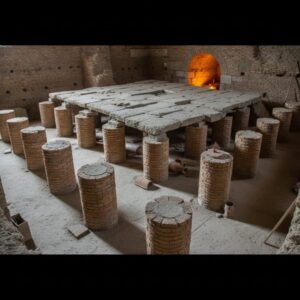
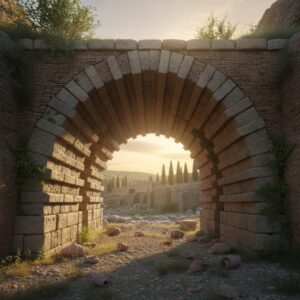
The History of Ancient Rome’s Engineering Marvels

1 / 10 Questions
0 Points

What revolutionary building material did ancient Romans invent that could set underwater?

Volcanic glass composite

Limestone mortar

Roman concrete (opus caementicium)

Waterproof clay bricks

Points won
0
Correct score
0%

More Questions

More Articles

Fun American Trivia: 18 Facts About US National Landmarks

Fun American Trivia: 18 Facts About US National Landmarks

⏱️ 7 min read

The United States is home to some of the world's most iconic landmarks, each with fascinating stories and surprising details that even frequent visitors might not know. From architectural marvels to natural wonders, these monuments and sites represent American history, ingenuity, and natural beauty. Discover these captivating facts about America's most celebrated national landmarks that will give you a new appreciation for these treasured sites.

Architectural Wonders and Engineering Feats

The Statue of Liberty's French Connection

Lady Liberty was a gift from France to commemorate the alliance between the two nations during the American Revolution. Designed by French sculptor Frédéric Auguste Bartholdi, the statue was shipped to the United States in 350 individual pieces packed in 214 crates. The copper exterior is only 3/32 of an inch thick, about the width of two pennies stacked together, and the distinctive green patina developed naturally over time due to oxidation.

Mount Rushmore's Hidden Hall of Records

Behind Abraham Lincoln's head, there's a secret chamber that few people know exists. Sculptor Gutzon Borglum intended to create a Hall of Records to house important American documents. While never fully completed during his lifetime, in 1998, a repository was finally installed containing copies of the Declaration of Independence, Constitution, Bill of Rights, and the story of Mount Rushmore's creation, sealed in a titanium vault.

The Golden Gate Bridge's International Orange Color

The Golden Gate Bridge wasn't meant to be orange. The U.S. Navy wanted it painted in black and yellow stripes for visibility, while others suggested candy-stripe patterns. The distinctive International Orange color was originally just the primer, but consulting architect Irving Morrow championed keeping it, arguing it complemented the natural surroundings and enhanced visibility in fog.

The Washington Monument's Changing Marble Shade

The Washington Monument displays a visible color change about 150 feet up its facade. Construction halted for 23 years due to lack of funds and the Civil War, and when work resumed in 1876, the marble came from a different quarry. Despite efforts to match the original stone, the new marble was slightly different in shade, creating the distinct line visible today.

Natural Landmarks with Surprising Stories

The Grand Canyon's Unexplored Caves

While millions visit the Grand Canyon annually, approximately 1,000 caves exist within the canyon walls, and only 335 have been recorded and documented. Even fewer have been thoroughly explored and mapped. These caves contain important archaeological and paleontological resources, and many remain off-limits to preserve their delicate ecosystems and ancient artifacts.

Yellowstone's Underground Supervolcano

Yellowstone National Park sits atop one of the world's largest active volcanic systems. The Yellowstone Caldera is a supervolcano that last erupted approximately 640,000 years ago. The magma chamber beneath the park is responsible for the geothermal features that make Yellowstone famous, including Old Faithful and the park's many hot springs and geysers.

Niagara Falls' Temporary Shutdown

In 1969, the U.S. Army Corps of Engineers actually turned off the American Falls portion of Niagara Falls for several months. They diverted the Niagara River's flow to study the rock face and remove loose rocks to prevent further erosion. During this time, visitors could walk on the dry riverbed, and thousands came to witness this rare phenomenon.

Presidential Monuments and Memorials

The Lincoln Memorial's Spelling Error

A carving error on the Lincoln Memorial remained unnoticed for years. In the inscription of Lincoln's Second Inaugural Address, the letter "F" in "FUTURE" was initially carved as an "E." The mistake was later corrected by filling in a portion of the "E" to transform it into an "F," and the repair is still faintly visible upon close inspection.

Jefferson Memorial's Temporary Plaster Construction

The Thomas Jefferson Memorial was built during World War II when bronze was desperately needed for the war effort. The statue of Jefferson inside was originally made of plaster painted to look like bronze. It wasn't until 1947, after the war ended, that the plaster statue was replaced with the bronze version visitors see today.

Historical Landmarks and Their Secrets

The Liberty Bell's Mysterious Crack Origin

Despite being one of America's most recognizable symbols, no one knows exactly when or how the Liberty Bell cracked. The most widely accepted theory suggests it cracked during its first test ring upon arrival in Philadelphia in 1752. It was recast twice, and the famous crack that silenced the bell likely occurred in the early 19th century, though the exact date remains disputed among historians.

Alcatraz Island's Military History

Before becoming America's most notorious federal prison, Alcatraz served as a military fortress and military prison for nearly 80 years. The island was home to the first lighthouse on the West Coast and served as a military fortification during the Civil War. The famous federal penitentiary only operated for 29 years, from 1934 to 1963, a fraction of the island's total history.

Independence Hall's Original Purpose

Independence Hall in Philadelphia wasn't built to be a monument—it was constructed as the Pennsylvania State House starting in 1732. It served as the meeting place for the Second Continental Congress and later hosted the Constitutional Convention. Both the Declaration of Independence and the U.S. Constitution were debated and signed in this building, earning it its iconic status retroactively.

Modern Landmarks with Fascinating Details

The Gateway Arch's Unique Construction Method

St. Louis's Gateway Arch is the tallest man-made monument in the United States at 630 feet. During its construction from 1963 to 1965, the two legs were built simultaneously from the ground up. The final section was inserted at the top in a carefully calculated ceremony, with firefighters hosing down the south leg to contract the steel in the morning sun, allowing the pieces to fit together perfectly.

Space Needle's Lightning Rod System

Seattle's Space Needle, built for the 1962 World's Fair, is struck by lightning multiple times each year. The structure is equipped with 25 lightning rods and is designed to safely conduct electrical charges into the ground. The building can withstand winds up to 200 miles per hour and has seismic dampers to help it weather earthquakes, swaying approximately one inch per 10 miles per hour of wind.

Unexpected Landmark Features

Hoover Dam's Embedded Artifacts

Within the concrete of Hoover Dam lie various tools, equipment, and even, according to persistent rumors, human remains. While officials maintain that no workers are entombed in the dam, the concrete was poured in individual blocks that cured at different rates, and small items like tools, lunch pails, and boots were occasionally left behind or dropped during the massive construction project.

Devils Tower's Vertical Cracks

Devils Tower in Wyoming, America's first national monument designated in 1906, features remarkably regular vertical cracks created by cooling magma. These columns, some as wide as 8 feet in diameter, formed as the volcanic rock cooled and contracted underground. The tower rises 867 feet from its base and is considered sacred by multiple Native American tribes who have cultural and spiritual connections to the site.

Old Faithful's Predictable Yet Changing Schedule

Yellowstone's Old Faithful geyser earned its name from its reliable eruptions, but it's become slightly less predictable over time. While it erupts approximately every 90 minutes, the interval has lengthened over the years, partly due to earthquake activity and partly due to vandalism by early tourists who threw objects into the geyser. Despite these changes, it remains one of the most predictable geothermal features on Earth.

Statue of Liberty's Full Name and Symbolism

The Statue of Liberty's official name is "Liberty Enlightening the World," reflecting its original purpose as a beacon of freedom and democracy. The seven spikes on her crown represent the seven continents and seven seas. The tablet she holds is inscribed with the date July 4, 1776, in Roman numerals, and the broken shackles at her feet, often unnoticed by visitors, symbolize freedom from oppression and the abolition of slavery.

Preserving American Heritage

These 18 fascinating facts reveal that America's national landmarks hold far more stories than what appears on the surface. From hidden chambers and construction secrets to natural phenomena and historical quirks, each landmark represents layers of American history, innovation, and cultural significance. Whether they're architectural achievements, natural wonders, or historical sites, these landmarks continue to inspire millions of visitors while keeping their secrets and surprises intact for future generations to discover. Understanding these details deepens our appreciation for the vision, effort, and historical circumstances that created these enduring symbols of American heritage.

Did You Know These 15 Facts About US Space Missions?

Did You Know These 15 Facts About US Space Missions?

⏱️ 7 min read

The United States has been at the forefront of space exploration for more than six decades, achieving remarkable milestones that have expanded humanity's understanding of the cosmos. From the early days of the Space Race to contemporary missions exploring distant planets, American space programs have consistently pushed the boundaries of what's possible. The following collection reveals fascinating and lesser-known details about US space missions that showcase the innovation, courage, and scientific achievement that define this extraordinary chapter of human history.

Remarkable Discoveries from America's Journey Beyond Earth

1. The First American in Space Flew a Manual Mission

When Alan Shepard became the first American in space aboard Freedom 7 on May 5, 1961, his 15-minute suborbital flight was largely manually controlled. Unlike Soviet missions that relied heavily on automated systems, Shepard had direct control over his spacecraft's attitude, demonstrating that humans could effectively operate in the space environment. This manual capability became a defining characteristic of the Mercury program and proved essential for the complex missions that followed.

2. Apollo Astronauts Left Reflectors Still Used Today

During the Apollo missions, astronauts placed retroreflector arrays on the lunar surface that continue to serve scientific purposes more than five decades later. Scientists regularly bounce laser beams off these devices to measure the precise distance between Earth and the Moon, which has revealed that the Moon is slowly drifting away from Earth at approximately 3.8 centimeters per year. This ongoing experiment represents one of the longest-running scientific studies in history.

3. Skylab's Unexpected Rescue Mission Saved America's First Space Station

When Skylab launched in 1973, a critical meteoroid shield tore away during ascent, also ripping off one solar panel and jamming another. The space station's interior temperatures soared to dangerous levels. NASA engineers devised an ingenious solution: the first crew deployed a makeshift parasol through an airlock, and a subsequent crew installed an external sunshade during a challenging spacewalk. These improvised repairs allowed Skylab to host three successful crews and complete groundbreaking research.

4. Voyager's Golden Record Contains Sounds of Earth

Launched in 1977, both Voyager spacecraft carry identical golden phonograph records containing sounds and images selected to portray the diversity of life and culture on Earth. The records include greetings in 55 languages, music from different cultures and eras, natural sounds like thunder and bird songs, and 116 images. These time capsules were designed to communicate the story of our world to any intelligent extraterrestrial life that might encounter them in the distant future.

5. The Space Shuttle Could Land at Only One Degree Angle

The Space Shuttle had an incredibly steep glide slope of approximately 20 degrees during landing approach—seven times steeper than a commercial airliner. Pilots had essentially one chance to land correctly, as the unpowered orbiter couldn't go around for another attempt. This demanding flight characteristic earned the Shuttle the nickname "flying brick" and required extensive simulator training for every commander who flew it.

6. Mars Rovers Were Designed to Last Only 90 Days

Spirit and Opportunity, the Mars Exploration Rovers that landed in 2004, were engineered for 90-day missions. Remarkably, Spirit operated for six years, and Opportunity continued functioning for nearly 15 years, far exceeding expectations. This extraordinary longevity allowed these rovers to make discoveries about Mars' watery past that revolutionized our understanding of the Red Planet's potential to have harbored life.

7. Apollo 11's Computer Had Less Power Than a Modern Calculator

The Apollo Guidance Computer that navigated astronauts to the Moon operated with just 64 kilobytes of memory and processed instructions at 0.043 MHz. By comparison, a basic modern calculator possesses significantly more computing power. Yet this remarkable piece of 1960s technology successfully guided multiple missions to the Moon and back, demonstrating the ingenuity of early aerospace engineers who maximized every available resource.

8. Hubble Space Telescope Was Initially Blurry

After Hubble's launch in 1990, scientists discovered a devastating flaw: the telescope's primary mirror had been ground to the wrong specifications, causing spherical aberration that produced blurry images. NASA mounted a complex repair mission in 1993, installing corrective optics that functioned like contact lenses for the telescope. This fix transformed Hubble into the revolutionary observatory that has since captured some of the most iconic images of the universe.

9. The International Space Station Travels at 17,500 Miles Per Hour

The ISS orbits Earth approximately every 90 minutes at a speed of about five miles per second, meaning astronauts aboard experience 16 sunrises and sunsets every 24 hours. This remarkable velocity is necessary to counteract Earth's gravitational pull and maintain a stable orbit roughly 250 miles above the planet's surface. The station has been continuously occupied since November 2000, representing more than two decades of uninterrupted human presence in space.

10. Sally Ride Faced Absurd Questions About Space Flight

When Sally Ride prepared to become America's first woman in space in 1983, NASA engineers asked whether 100 tampons would be sufficient for her week-long mission, revealing the organization's unfamiliarity with women's needs. Despite such challenges and intense media scrutiny about her gender rather than her qualifications, Ride professionally completed her mission and became an inspiration for generations of women in science and engineering fields.

11. Apollo 13's Carbon Dioxide Crisis Required Ingenious Problem-Solving

After an oxygen tank explosion crippled Apollo 13, the crew retreated to the Lunar Module, designed to support two people for two days, not three people for four days. Carbon dioxide levels rose dangerously as the module's scrubbers became saturated. Engineers on the ground devised a solution using only materials available on the spacecraft: plastic bags, cardboard, tape, and socks were fashioned into an adapter that allowed Command Module scrubbers to work in the Lunar Module, saving the crew's lives.

12. New Horizons Traveled Nine Years to Reach Pluto

Launched in 2006, the New Horizons spacecraft traveled more than three billion miles over nine years to conduct the first flyby of Pluto in 2015. Despite being the fastest spacecraft ever launched at the time, reaching speeds over 36,000 miles per hour, the immense distances involved required nearly a decade of travel. The mission revealed Pluto's complex geology, including nitrogen ice plains and possible subsurface oceans, transforming our understanding of the distant dwarf planet.

13. Gemini Astronauts Practiced Spacewalks Underwater

After early Gemini spacewalks proved unexpectedly exhausting and dangerous, NASA developed underwater training to simulate the weightlessness of space. This neutral buoyancy training technique, still used today, allows astronauts to practice complex tasks for extended periods while experiencing conditions similar to working in space. The Neutral Buoyancy Laboratory contains a massive pool holding 6.2 million gallons of water where astronauts train on mockups of space station modules.

14. The Challenger Disaster Changed NASA's Safety Culture Forever

The loss of Space Shuttle Challenger and its seven crew members in 1986 resulted from O-ring failure in cold temperatures and a flawed decision-making process that ignored engineering concerns. This tragedy led to comprehensive changes in NASA's safety protocols, communication procedures, and organizational culture. The disaster demonstrated that even well-established programs must continuously prioritize safety and maintain open channels for expressing technical concerns.

15. Curiosity Rover Sang Happy Birthday to Itself on Mars

On August 5, 2013, NASA's Curiosity rover celebrated its first anniversary of landing on Mars by playing "Happy Birthday" through its onboard sample analysis instrument. This marked the first time a song was played on another planet. While seemingly whimsical, the activity served to test the instrument's capabilities and demonstrated the rover's operational status, while also providing a humanizing moment that captured public imagination about robotic exploration.

Continuing the Legacy of Exploration

These fifteen remarkable facts illustrate the breadth and depth of American space exploration achievements. From overcoming technical challenges with innovative solutions to pushing the boundaries of human endurance and robotic capability, US space missions have consistently demonstrated that seemingly impossible goals can be achieved through dedication, ingenuity, and perseverance. As new missions prepare to return humans to the Moon and eventually journey to Mars, these historical accomplishments provide both inspiration and practical lessons. The legacy of American space exploration continues to evolve, building upon decades of experience while embracing new technologies and approaches that promise even more extraordinary discoveries in the years ahead.