
t1

Points won
0
Correct score
0%

More Questions

More Articles

USA Landmarks Trivia: 15 Facts About National Memorials

USA Landmarks Trivia: 15 Facts About National Memorials

⏱️ 4 min read

USA Landmarks Trivia: 15 Facts About National Memorials

National memorials in the United States serve as powerful reminders of the country's history, honoring significant individuals and events that shaped the nation. Here are 15 fascinating facts about some of America's most iconic national memorials that showcase their historical significance and architectural brilliance.

1. Lincoln Memorial's Hidden Symbolism

The Lincoln Memorial contains numerous symbolic elements, including the 36 columns representing the states of the Union at the time of Lincoln's death. Lesser known is that Lincoln's hands form the letters 'A' and 'L' in American Sign Language, though this was unintentional in the design.

2. Mount Rushmore's Secret Chamber

Behind Abraham Lincoln's head at Mount Rushmore lies a hidden chamber called the Hall of Records. Originally intended to house important American documents and artifacts, the room remains unfinished but contains a titanium vault with historical records.

3. Vietnam Veterans Memorial's Reflective Design

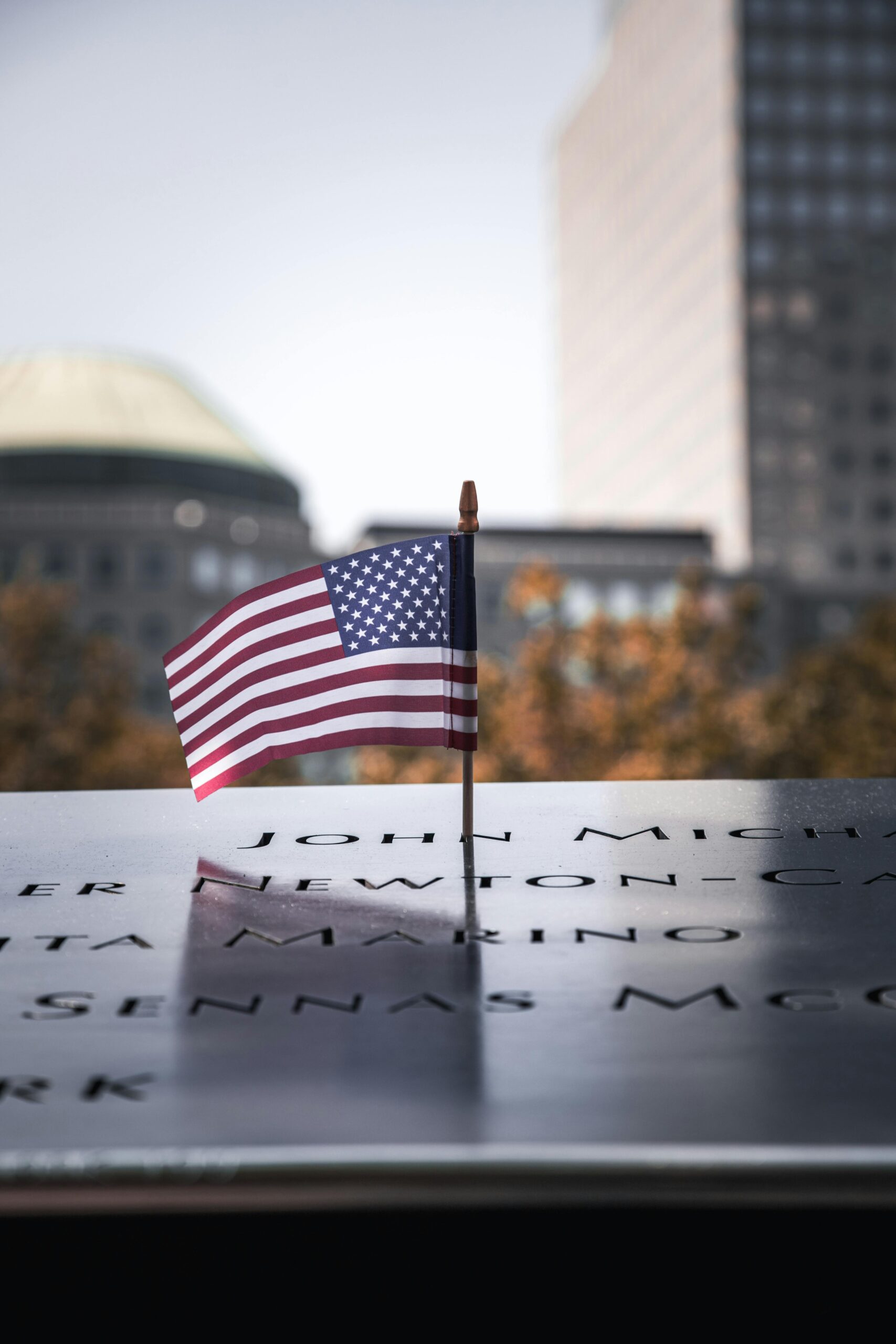
The black granite walls of the Vietnam Veterans Memorial were specifically designed to be reflective, allowing visitors to see their own reflection alongside the names of the fallen, creating a symbolic connection between the past and present.

4. Washington Monument's Dual-Colored Stone

The Washington Monument's construction was halted for 23 years due to funding issues and the Civil War. When work resumed, stone from a different quarry was used, resulting in a visible color change approximately one-third up the monument.

5. Liberty Bell's Famous Crack

The Liberty Bell's iconic crack didn't appear all at once. The initial crack developed in 1752 during testing, and subsequent repair attempts actually made it worse. The final crack that silenced the bell forever occurred in 1846 during a celebration of George Washington's birthday.

6. Jefferson Memorial's Tidal Basin Location

The Jefferson Memorial's location was specifically chosen to create a direct line of sight between it and the White House, forming a cross axis with the Washington Monument, symbolizing the balance of power in American democracy.

7. Pearl Harbor Memorial's Oil Leakage

The USS Arizona Memorial in Pearl Harbor continues to leak oil from its sunken wreckage. Known as the "black tears" or "tears of the Arizona," the ship still releases about 2-9 quarts of oil daily into the harbor.

8. Martin Luther King Jr. Memorial's Stone Selection

The Stone of Hope featuring Dr. King's likeness was carved from Chinese granite, making it the only major memorial on the National Mall not carved from American stone, causing some controversy during its construction.

9. Korean War Veterans Memorial's Reflection Wall

The stainless steel wall at the Korean War Veterans Memorial creates a mirror image of the 19 statues, appearing to show 38 soldiers - representing the 38th parallel that divides North and South Korea.

10. 9/11 Memorial's Survivor Tree

The Survivor Tree at the 9/11 Memorial was discovered severely damaged but alive in the rubble of Ground Zero. After being nursed back to health, it was replanted at the memorial as a symbol of resilience and renewal.

11. FDR Memorial's Water Features

The Franklin Delano Roosevelt Memorial features multiple water elements, each representing different aspects of his presidency, including the Great Depression (still pools) and World War II (chaotic waterfalls).

12. World War II Memorial's State Pillars

The World War II Memorial includes 56 granite pillars arranged in a semicircle, representing each U.S. state and territory during the war. Each pillar is adorned with oak and wheat bronze wreaths, symbolizing industrial and agricultural strength.

13. Space Shuttle Challenger Memorial

A little-known memorial at Arlington National Cemetery honors the crew of the Space Shuttle Challenger. The memorial's base contains actual debris from the shuttle, sealed within the structure.

14. Marine Corps War Memorial's Photo Origin

The Marine Corps War Memorial (Iwo Jima Memorial) is based on Joe Rosenthal's famous photograph of six Marines raising the American flag on Mount Suribachi. The bronze statue stands 78 feet tall and weighs 100 tons.

15. Gateway Arch Mathematical Precision

The Gateway Arch in St. Louis is an inverted weighted catenary curve, built with mathematical precision. If you were to multiply its width by four, you would get its exact height of 630 feet, making it the tallest man-made monument in the United States.

These national memorials stand as testaments to American history, engineering excellence, and artistic achievement. Each memorial tells a unique story while incorporating thoughtful design elements that add deeper meaning to their commemorative purpose. From hidden chambers to mathematical precision, these monuments continue to fascinate visitors with their lesser-known features and historical significance.
Top 10 Must-Know Facts About American Radio History

Top 10 Must-Know Facts About American Radio History

⏱️ 4 min read

Top 10 Must-Know Facts About American Radio History

American radio has played a pivotal role in shaping the nation's culture, entertainment, and communication landscape. From its humble beginnings to its golden age and modern transformation, here are ten essential facts that showcase the remarkable journey of radio in American history.

1. The Birth of Commercial Radio

KDKA in Pittsburgh made history on November 2, 1920, when it became America's first licensed commercial radio station. The station's inaugural broadcast covered the Harding-Cox presidential election results, marking the beginning of a new era in mass communication. This groundbreaking moment established the framework for what would become a nationwide network of commercial radio stations.

2. The Golden Age of Radio

The 1930s and 1940s are considered radio's golden age, when up to 80% of Americans regularly tuned in to their favorite programs. Shows like "The Shadow," "Little Orphan Annie," and "The War of the Worlds" captured audiences' imaginations. During this period, families would gather around their radio sets for entertainment, news, and soap operas, making radio the primary medium for mass entertainment.

3. FDR's Fireside Chats

President Franklin D. Roosevelt revolutionized political communication through his famous "Fireside Chats" between 1933 and 1944. These informal radio addresses allowed him to speak directly to the American people about important issues, from the Great Depression to World War II. This innovative use of radio helped establish a more intimate connection between the presidency and the public.

4. The Creation of the Federal Radio Commission

In 1927, the Federal Radio Commission (FRC) was established to regulate the increasingly crowded radio airwaves. This predecessor to the Federal Communications Commission (FCC) was created through the Radio Act of 1927, establishing the government's role in managing broadcast frequencies and licensing stations.

5. The Rise of Radio Networks

The National Broadcasting Company (NBC) launched in 1926, followed by Columbia Broadcasting System (CBS) in 1927. These networks revolutionized radio by creating coast-to-coast programming through affiliated stations. This system established the model for broadcast networks that continues to influence media today.

6. Radio's Role in World War II

During World War II, radio became crucial for both news reporting and propaganda. War correspondents like Edward R. Murrow brought the conflict into American homes through vivid radio reports. The medium also played a vital role in maintaining morale through entertainment programs for troops and civilians alike.

7. The FM Revolution

Edwin Armstrong invented Frequency Modulation (FM) broadcasting in 1933, introducing superior sound quality compared to AM radio. Despite initial resistance from the radio industry, FM radio gained popularity in the 1960s and 1970s, particularly for music broadcasting, leading to the diverse radio landscape we know today.

8. The Impact of Rock 'n' Roll Radio

The 1950s saw radio DJs like Alan Freed popularize rock 'n' roll music, fundamentally changing American popular culture. This era introduced the concept of the radio personality and helped break down racial barriers in music, as stations began playing both black and white artists, contributing to the civil rights movement.

9. The Development of All-News Radio

In 1965, WINS in New York became the first all-news radio station, pioneering a format that would become crucial for information delivery. This innovation demonstrated radio's ability to adapt to changing media landscapes and audience needs, establishing a model followed by stations nationwide.

10. The Digital Transformation

The introduction of satellite radio (Sirius XM) in 2001 and the rise of internet radio and podcasting have transformed the medium for the digital age. These technological advances have preserved radio's relevance while expanding its reach and programming possibilities, ensuring its continued importance in American media.

Conclusion

From its inception as a revolutionary communication tool to its current status as a diverse digital medium, American radio history reflects the nation's technological advancement and cultural evolution. These ten significant developments highlight radio's enduring impact on American society, demonstrating its remarkable ability to adapt and remain relevant through changing times. Understanding this history provides valuable insights into both media development and American cultural transformation over the past century.

Radio continues to evolve in the digital age, building upon its rich history while embracing new technologies and formats. This adaptability, combined with radio's intimate connection to American cultural life, ensures its ongoing significance in the nation's media landscape.