










Scientific Equipment Used to Prove Paranormal Claims Are Fake

1 / 10 Questions
0 Points

What tool do ghost hunters use that just finds bad wiring?

Spirit box

Ouija board

EMF meter

Dowsing rod

Points won
0
Correct score
0%

More Questions

More Articles

Fun Landmarks Trivia: 20 Facts About Global Wonders

Fun Landmarks Trivia: 20 Facts About Global Wonders

⏱️ 4 min read

Fun Landmarks Trivia: 20 Facts About Global Wonders

From ancient wonders to modern marvels, landmarks around the world captivate millions of visitors annually. Here are 20 fascinating facts about some of Earth's most remarkable monuments and structures that showcase human ingenuity and natural beauty.

1. Great Wall's True Length

The Great Wall of China isn't actually one continuous wall but a network of walls spanning 13,171 miles. Contrary to popular belief, it cannot be seen from space with the naked eye, despite its impressive length.

2. Eiffel Tower's Color Changes

The Eiffel Tower has been painted 19 different times since its construction in 1889. Its current brown color is actually a specially formulated "Eiffel Tower Brown" that requires 60 tons of paint every seven years.

3. Petra's Hidden Features

Only 15% of the ancient city of Petra has been excavated. The vast majority remains underground, suggesting countless undiscovered treasures beneath the Jordanian desert.

4. Taj Mahal's Optical Illusion

The minarets of the Taj Mahal were deliberately built tilting slightly outward. This architectural trick ensures that if they were to collapse, they would fall away from the main dome rather than onto it.

5. Christ the Redeemer's Lightning Protection

The iconic statue in Rio de Janeiro is struck by lightning approximately 6 times per year. It's made of reinforced concrete and soapstone, with lightning rods in the head and arms to prevent damage.

6. Easter Island's Moving Mystery

The massive Moai statues of Easter Island, weighing up to 86 tons each, were moved up to 11 miles from their quarry site using a sophisticated "walking" technique developed by ancient Polynesians.

7. Statue of Liberty's Original Color

Lady Liberty was originally copper-colored when erected in 1886. Its iconic green patina developed naturally over 20 years due to oxidation of the copper skin.

8. Stonehenge's Welsh Origins

The bluestones used in Stonehenge's construction were quarried in Wales, approximately 160 miles away, and transported to the site around 2500 BCE.

9. Leaning Tower's Intentional Lean

Modern engineers maintain the Leaning Tower of Pisa at a precise angle of 3.99 degrees. If straightened completely, the tower would likely become unstable due to its centuries-old foundation.

10. Machu Picchu's Earthquake Protection

The stones in Machu Picchu are cut so precisely and fit so tightly that not even a knife blade can fit between them, creating an earthquake-resistant structure.

11. Sydney Opera House's Tiles

The iconic sail-shaped roof consists of 1,056,006 Swedish-made ceramic tiles, arranged in a chevron pattern to create its distinctive appearance.

12. Colosseum's Naval History

The Roman Colosseum was occasionally flooded to stage naval battles called naumachiae, using an elaborate system of underground channels and mechanisms.

13. Mount Rushmore's Secret Room

Behind Abraham Lincoln's head is a hidden chamber called the Hall of Records, designed to store important American documents for future generations.

14. Angkor Wat's Astronomical Alignment

The temples of Angkor Wat are precisely aligned with the spring equinox, creating a spectacular solar alignment where the sun rises directly over the central tower.

15. Big Ben's Time Keeping

The famous clock is adjusted using old British pennies placed on or removed from its pendulum - adding one penny changes its speed by 0.4 seconds per day.

16. Hagia Sophia's Hidden Cross

Beneath its Islamic mosaics, the Hagia Sophia contains numerous Christian symbols and crosses, preserved beneath layers of plaster for centuries.

17. Golden Gate's Paint Job

The Golden Gate Bridge's distinctive color, "International Orange," was originally just a primer. The color was kept because it provided visibility in San Francisco's frequent fog.

18. Parthenon's Perfect Proportions

The Parthenon incorporates the Golden Ratio throughout its design, with its façade fitting perfectly into a golden rectangle.

19. Chichen Itza's Sound Effects

When you clap at the base of the main pyramid, the echo mimics the sound of the quetzal bird, a sacred animal to the Maya civilization.

20. Burj Khalifa's Temperature Gradient

The temperature at the top of the Burj Khalifa is typically 15°F (8°C) cooler than at ground level, due to its extreme height of 2,717 feet.

These fascinating facts demonstrate how landmarks worldwide continue to surprise and educate us about human achievement, architectural innovation, and cultural significance. From ancient engineering marvels to modern architectural feats, each landmark holds secrets and stories that make them even more remarkable than they appear at first glance.
Did You Know These 20 Facts About the Statue of Liberty?

Did You Know These 20 Facts About the Statue of Liberty?

⏱️ 4 min read

Did You Know These 20 Facts About the Statue of Liberty?

The Statue of Liberty stands as one of the most recognizable symbols of freedom and democracy worldwide. While many know its iconic appearance, there are numerous fascinating facts about Lady Liberty that often surprise both tourists and history enthusiasts. Here are 20 remarkable facts about this magnificent monument.

1. A Gift from France

The Statue of Liberty was a gift from France to commemorate the centennial of American independence. French sculptor Frédéric Auguste Bartholdi designed the statue, and it was officially dedicated on October 28, 1886.

2. Original Copper Color

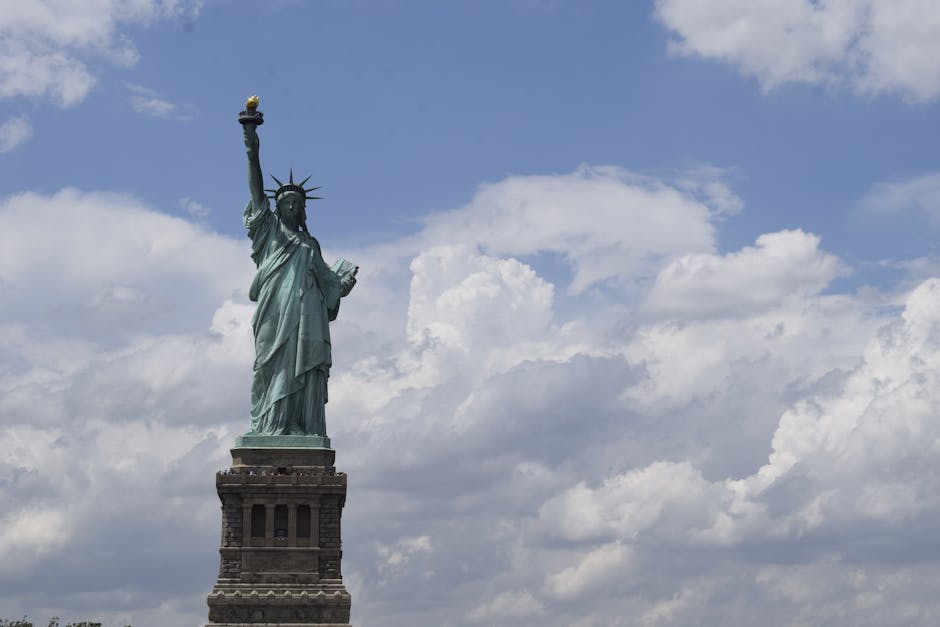
When first erected, the Statue of Liberty was a dull copper color. Its current green patina developed over time due to oxidation of the copper sheets that form its exterior.

3. Broken Chains at Her Feet

Many visitors don't notice the broken chains at Liberty's feet, symbolizing freedom from oppression and slavery. These chains are partially hidden from ground view but remain a powerful symbol.

4. Seven Spikes

The crown features seven spikes, representing the seven seas and seven continents, symbolizing universal liberty and freedom worldwide.

5. Torch Renovation

The original torch was replaced in 1984 with a new copper torch covered in 24k gold leaf. The original is now displayed in the statue's museum.

6. Face Model

It's believed that Bartholdi modeled Liberty's face after his mother, Charlotte Bartholdi, though he never officially confirmed this.

7. Internal Structure

Gustave Eiffel, who later designed the Eiffel Tower, created the statue's internal steel and copper framework, allowing it to withstand strong winds.

8. Tablet Inscription

The tablet in Liberty's left hand bears the Roman numerals "JULY IV MDCCLXXVI" (July 4, 1776), marking American independence.

9. Lightning Strikes

The statue gets struck by lightning approximately 600 times per year due to its height and metal construction.

10. Wind Tolerance

The statue can sway up to 3 inches in strong winds, while its torch can move up to 6 inches.

11. Size Statistics

From base to torch, the statue measures 305 feet and 6 inches. Her index finger alone is 8 feet long, and her face is more than 8 feet tall.

12. Weight Facts

The copper sheets forming the statue's exterior weigh 62,000 pounds, while the entire structure weighs 450,000 pounds.

13. Pedestal Funding

While France provided the statue, Americans were responsible for funding the pedestal. Publisher Joseph Pulitzer helped raise money through newspaper campaigns.

14. Assembly Process

The statue arrived in 350 pieces packed in 214 crates and took four months to assemble on Liberty Island.

15. Climbing History

Until 1916, visitors could climb up to the torch. Access was restricted after damage caused by German saboteurs during World War I.

16. Original Location

The island where the statue stands was originally called Bedloe's Island. It was renamed Liberty Island in 1956.

17. UNESCO Status

The Statue of Liberty became a UNESCO World Heritage site in 1984, recognizing its universal cultural significance.

18. Color Change Science

The statue's green patina is about 3/32 of an inch thick and consists of copper carbonate, which actually protects the underlying copper from further deterioration.

19. Restoration Project

A major restoration project from 1984 to 1986 replaced the torch and strengthened the internal structure, ensuring the statue's preservation for future generations.

20. Ellis Island Connection

Between 1892 and 1954, the statue welcomed over 12 million immigrants arriving at nearby Ellis Island, earning its nickname "Mother of Exiles."

Conclusion

The Statue of Liberty continues to stand as a remarkable testament to freedom, engineering, and international friendship. These 20 facts demonstrate not only its historical significance but also its complex construction, ongoing preservation efforts, and enduring symbolism. From its French origins to its current status as a global icon, Lady Liberty remains one of the world's most fascinating monuments, holding secrets and stories that continue to captivate visitors from around the globe.