










Planets and Moons in Our Solar System Where It Rains Weird Things

1 / 10 Questions
0 Points

On which planet does it rain diamonds formed from methane in the atmosphere?

Neptune

Mars

Venus

Mercury

Points won
0
Correct score
0%

More Questions

More Articles

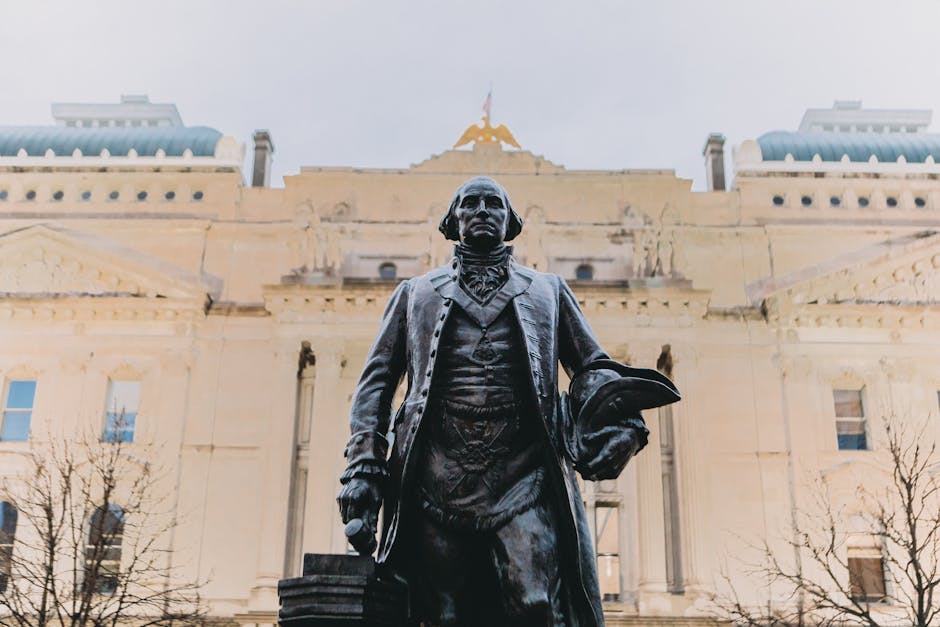
18 Fun Facts About American Historical Figures

18 Fun Facts About American Historical Figures

⏱️ 4 min read

18 Fun Facts About American Historical Figures

American history is filled with fascinating characters who shaped the nation through their actions, innovations, and leadership. Here are 18 surprising and entertaining facts about some of America's most notable historical figures that you might not have learned in history class.

1. Benjamin Franklin's Swimming Innovation

Benjamin Franklin invented swim fins when he was just 11 years old. He created wooden panels that attached to his hands and feet to help him swim faster, making him one of the earliest inventors of modern swimming equipment.

2. George Washington's Dental Journey

Contrary to popular belief, George Washington's false teeth weren't made of wood. They were actually constructed from various materials including hippopotamus ivory, human teeth, lead, brass screws, and gold wire.

3. Thomas Jefferson's Pet Mock

Thomas Jefferson kept a mockingbird named Dick as a pet. The bird would often perch on his shoulder while he worked and would join him in singing duets. Jefferson even taught the bird to take food from between his lips.

4. Abraham Lincoln's Wrestling Career

Before becoming president, Abraham Lincoln was an accomplished wrestler. With only one recorded defeat in 300 matches, he was inducted into the Wrestling Hall of Fame in 1992.

5. Theodore Roosevelt's Daily Coffee Habit

Theodore Roosevelt consumed approximately a gallon of coffee every day. He used a cup described as "more in the nature of a bathtub" and would often add up to seven lumps of sugar to each serving.

6. John Adams's Morning Ritual

John Adams started each day with a tankard of hard cider, believing it promoted good health. He lived to be 90 years old, making him one of the longest-living Founding Fathers.

7. James Madison's Unique Physical Distinction

James Madison was the smallest president in U.S. history, standing at only 5'4" and weighing approximately 100 pounds. Despite his small stature, he was a powerful political force.

8. Mark Twain's Halley's Comet Connection

Mark Twain was born during an appearance of Halley's Comet in 1835 and died during its next appearance in 1910. He accurately predicted the year of his death based on this astronomical phenomenon.

9. Edgar Allan Poe's Military Service

Edgar Allan Poe enlisted in the U.S. Army under the alias "Edgar A. Perry" and achieved the rank of Sergeant Major during his two-year service, before attending West Point.

10. Andrew Jackson's Parrot Scandal

Andrew Jackson's pet parrot had to be removed from his funeral for swearing too much. The bird had picked up colorful language from its owner and chose an inappropriate moment to display its vocabulary.

11. John Quincy Adams's Swimming Habit

John Quincy Adams regularly swam naked in the Potomac River for exercise. He was the first president to be interviewed by a female journalist, who caught him off guard during one of his morning swims.

12. Alexander Hamilton's Age Deception

Alexander Hamilton likely lied about his age when he arrived in America. Historical records suggest he may have made himself younger to appear more impressive as a college student and political prodigy.

13. Paul Revere's Day Job

Paul Revere worked as a dentist before his famous midnight ride. He used his metalworking skills to create dental prosthetics and was one of America's first forensic dentists.

14. Harriet Tubman's Military Leadership

Harriet Tubman was the first woman to lead an armed military raid during the Civil War. She guided the Combahee River Raid, which freed more than 700 enslaved people.

15. Clara Barton's Patent Office Career

Before founding the American Red Cross, Clara Barton was the first woman to work as a clerk in the U.S. Patent Office, receiving equal pay to her male counterparts - a rarity in the 1850s.

16. Robert E. Lee's Union Offer

Robert E. Lee was initially offered command of the Union Army before choosing to lead Confederate forces. His decision was primarily based on loyalty to his home state of Virginia.

17. Susan B. Anthony's Arrest Record

Susan B. Anthony was arrested for voting in the 1872 presidential election and fined $100, which she never paid. The government never pursued collection of the fine.

18. Frederick Douglass's Photography Passion

Frederick Douglass was the most photographed American of the 19th century, sitting for more portraits than even Abraham Lincoln. He believed photography could help combat racial prejudice by presenting dignified images of African Americans.

These fascinating details about American historical figures remind us that even the most prominent leaders and innovators in U.S. history were complex individuals with unique personalities, interests, and quirks. Their lesser-known stories add depth to our understanding of American history and make these legendary figures more relatable to modern audiences.
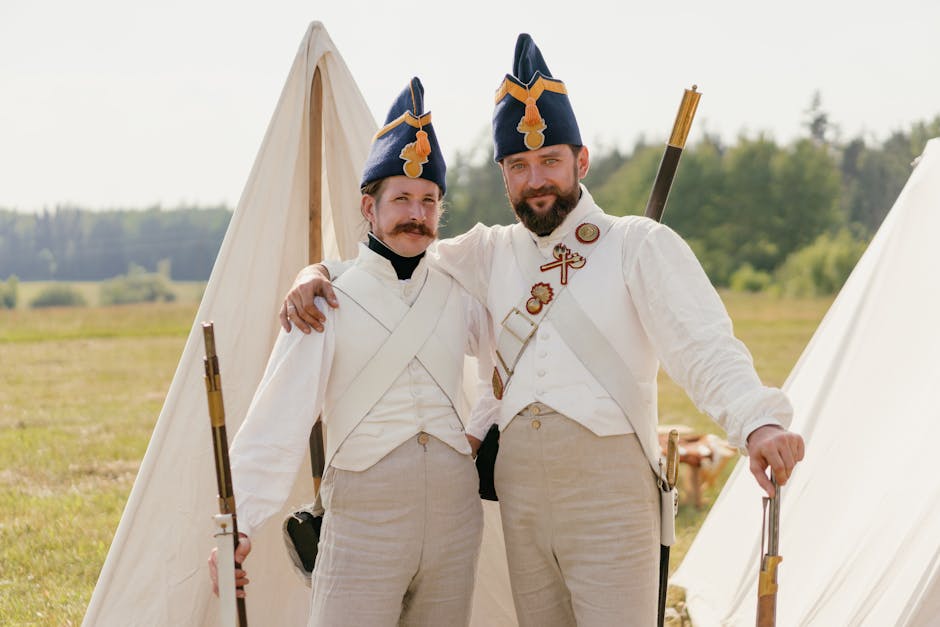
Top 10 Key Events in the American Industrial Revolution

Top 10 Key Events in the American Industrial Revolution

⏱️ 6 min read

The American Industrial Revolution transformed the United States from an agrarian society into an economic powerhouse between the late 18th and early 20th centuries. This period of rapid industrialization brought sweeping changes to manufacturing, transportation, communication, and daily life. The revolution fundamentally altered how Americans worked, lived, and interacted with one another, setting the stage for modern America. Understanding the pivotal moments that drove this transformation provides insight into how the nation evolved into a global industrial leader.

Defining Moments That Shaped Industrial America

1. Samuel Slater's Textile Mill Opens in 1790

Often called the "Father of the American Industrial Revolution," Samuel Slater established the first successful water-powered cotton spinning mill in Pawtucket, Rhode Island. Slater had memorized the design of British textile machinery and recreated it in America, defying British laws that prohibited the export of industrial technology. His mill marked the beginning of the American factory system and demonstrated that large-scale manufacturing could succeed in the United States. The success of Slater's mill sparked the growth of textile manufacturing throughout New England, creating the foundation for America's industrial economy.

2. The Introduction of Interchangeable Parts in 1798

Eli Whitney revolutionized manufacturing by developing the concept of interchangeable parts while fulfilling a government contract for muskets. This innovation meant that components could be mass-produced to standardized specifications and easily replaced, rather than being individually crafted by skilled artisans. The system dramatically reduced production time, lowered costs, and made repairs simpler. Interchangeable parts became the cornerstone of American mass production, eventually spreading to clock-making, sewing machines, and ultimately the automobile industry, fundamentally changing manufacturing philosophy worldwide.

3. The Erie Canal Completion in 1825

Stretching 363 miles from Albany to Buffalo, the Erie Canal connected the Atlantic Ocean to the Great Lakes, creating an unprecedented transportation corridor. This engineering marvel reduced shipping costs by nearly 95 percent and cut travel time from weeks to days. The canal transformed New York City into the nation's commercial capital and opened western territories to settlement and trade. It sparked a canal-building boom across America and demonstrated the economic benefits of large-scale infrastructure projects, encouraging further investment in transportation networks that would facilitate industrial growth.

4. The Baltimore and Ohio Railroad Begins Operation in 1830

As the first common carrier railroad in the United States, the Baltimore and Ohio Railroad inaugurated the railway age in America. Railroads proved faster, more reliable, and more versatile than canals, capable of operating year-round regardless of weather conditions. The rapid expansion of railroads created enormous demand for iron, steel, coal, and lumber while opening vast western territories to development. Railways became the backbone of American commerce, enabling the movement of raw materials to factories and finished goods to markets across the continent, knitting the nation together economically.

5. Samuel Morse's Telegraph Demonstration in 1844

When Samuel Morse sent the message "What hath God wrought" from Washington to Baltimore, he inaugurated the era of electronic communication. The telegraph allowed information to travel faster than any physical means of transportation, revolutionizing business, journalism, and military operations. Railroad companies used telegraphs to coordinate train movements, businesses could communicate instantly with distant suppliers and customers, and news could spread across the country in hours rather than weeks. This innovation compressed time and space, making the vast American landscape more manageable and integrated.

6. Elias Howe Patents the Sewing Machine in 1846

The invention and subsequent improvement of the sewing machine transformed clothing production from a hand-crafted, time-intensive process to a mechanized industry. Isaac Singer later improved upon Howe's design and aggressively marketed sewing machines to both factories and households. Ready-made clothing became widely available and affordable, changing fashion, consumer culture, and the textile industry. The sewing machine industry also pioneered installment payment plans, making expensive products accessible to working-class families and establishing new patterns of consumer credit.

7. Edwin Drake Strikes Oil in Pennsylvania in 1859

Colonel Edwin Drake's successful oil well in Titusville, Pennsylvania, launched the petroleum industry and inaugurated a new energy era. Initially used primarily for kerosene lighting, petroleum products soon found applications in lubrication for machinery and eventually as fuel for internal combustion engines. The oil industry created vast fortunes, spawned new refining technologies, and established John D. Rockefeller's Standard Oil as one of America's first major corporations. Petroleum would become the lifeblood of industrial society, powering transportation, manufacturing, and eventually plastics production.

8. The Transcontinental Railroad Completion in 1869

When the Union Pacific and Central Pacific railroads met at Promontory Summit, Utah, they created the first continuous rail connection between the Atlantic and Pacific coasts. This achievement, accomplished under harsh conditions by thousands of workers including many Chinese and Irish immigrants, reduced cross-country travel from months to less than a week. The transcontinental railroad accelerated westward expansion, facilitated the exploitation of western resources, and created a truly national market. It represented American industrial ambition and engineering prowess while also marking the beginning of the end for Native American independence on the Plains.

9. Alexander Graham Bell Invents the Telephone in 1876

Bell's invention of the practical telephone introduced real-time voice communication across distances, fundamentally transforming business operations and social interactions. Unlike the telegraph, which required trained operators and used coded messages, the telephone allowed anyone to communicate directly. The rapid spread of telephone networks created new industries in equipment manufacturing and service provision, while enabling businesses to coordinate operations more efficiently. The telephone accelerated the pace of business, changed urban architecture with the elimination of message-runner systems, and eventually became an indispensable tool of modern life.

10. Thomas Edison Opens the Pearl Street Power Station in 1882

Edison's central power station in New York City marked the beginning of the electric utility industry, delivering direct current electricity to customers in lower Manhattan. This innovation extended productive hours beyond daylight, transformed factory operations with electric motors, and gradually replaced dangerous gas lighting in homes and streets. Electrification became one of the most transformative forces of the late Industrial Revolution, enabling new industries, changing household labor, and creating the modern electrical grid. Edison's system demonstrated that electricity could be generated centrally and distributed commercially, establishing the model for modern power utilities.

The Lasting Impact of Industrial Transformation

These ten pivotal events collectively revolutionized American society, economy, and culture. They established manufacturing systems, transportation networks, communication technologies, and energy sources that propelled the United States to global economic leadership. The innovations sparked during this period created new industries, generated unprecedented wealth, and drew millions of immigrants seeking opportunity. While the Industrial Revolution brought tremendous progress, it also introduced challenges including labor exploitation, urban overcrowding, and environmental degradation that society continues addressing today. Understanding these foundational events helps explain how modern America emerged and the complex legacy of rapid industrialization that continues shaping contemporary life.