
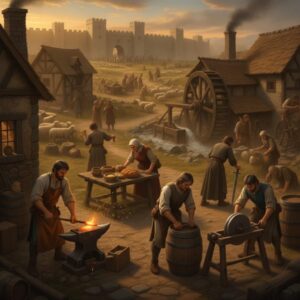

Medieval Crimes That Seem Ridiculous by Modern Standards

1 / 10 Questions
0 Points

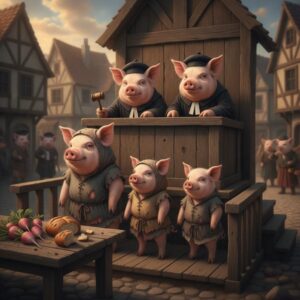
Which animal could be put on trial in medieval courts?

Pigs

Dogs

Horses

Cats

Points won
0
Correct score
0%

More Questions

More Articles

Did You Know? 15 Fun Facts About Medieval Europe

Did You Know? 15 Fun Facts About Medieval Europe

⏱️ 4 min read

Did You Know? 15 Fun Facts About Medieval Europe

The Medieval period, spanning roughly from the 5th to the 15th century, was a fascinating time in European history. From peculiar customs to groundbreaking innovations, this era was filled with intriguing details that continue to captivate historians and history enthusiasts alike. Here are 15 fascinating facts about Medieval Europe that might surprise you.

1. The Three-Field System Revolution

Medieval farmers developed the three-field system of crop rotation, which significantly improved agricultural productivity. This innovation divided farmland into three sections: one for winter crops, one for spring crops, and one left fallow, revolutionizing food production across Europe.

2. The Origin of Banking

Modern banking practices originated in Medieval Italy. The Medici family of Florence became one of Europe's most powerful families by creating a banking system that included the introduction of double-entry bookkeeping and letters of credit.

3. Castle Windows Were Designed for Left-Handed Defense

Medieval castle spiral staircases were built clockwise, with a purpose: defenders could use their right hand (holding a sword) more easily, while attackers climbing up would have their sword hands (usually right) against the wall, limiting their movement.

4. The Birth of Universities

The first universities in Europe were founded during the Medieval period. The University of Bologna, established in 1088, is considered the oldest university in continuous operation in the world.

5. Exotic Pest Control

Medieval Europeans kept cats not just as pets but primarily as a means of controlling the rat population, which was essential during the time of the Black Death. However, when cats were later associated with witchcraft and killed en masse, rat populations soared.

6. Medieval Fast Food

Cities had "fast food" establishments called cookshops where busy workers could purchase pre-prepared meals. These establishments were particularly popular in London and Paris, serving everything from meat pies to soup.

7. The Invention of Eyeglasses

Eyeglasses were invented in Northern Italy around 1286. Initially, they were primarily used by monks for reading and writing manuscripts, and were considered a symbol of wisdom and learning.

8. Medieval Sports

Football existed in Medieval times, but it was far more violent and had few rules. Entire villages would compete against each other, and games could last for days, often resulting in serious injuries and property damage.

9. The Power of Beer

Beer was a daily drink in Medieval Europe, consumed by adults and children alike. It was often safer to drink than water due to the brewing process killing harmful bacteria, and monks were among the best brewers of the time.

10. Unusual Medical Treatments

Medieval doctors often prescribed treacle (a medicine made from opium) or ground precious stones as remedies for various ailments. They also believed in the theory of the four humors, leading to treatments like bloodletting.

11. The Medieval Warm Period

From about 950 to 1250 CE, Europe experienced unusually warm temperatures, known as the Medieval Warm Period. This climate change allowed Vikings to colonize Greenland and led to increased crop yields across Europe.

12. Fashion Police

Many Medieval European countries had sumptuary laws that regulated what people could wear based on their social class. These laws prohibited lower classes from wearing certain colors, fabrics, or styles reserved for nobility.

13. The Rise of Chess

Chess became extremely popular during the Medieval period, arriving in Europe through Persian and Arabic influence. The game was used to teach military strategy to nobles, and the queen piece became the most powerful piece during this era.

14. Architectural Innovation

The Gothic architectural style, featuring pointed arches and flying buttresses, was developed during this period. These innovations allowed for taller buildings with larger windows, revolutionizing cathedral construction.

15. Marriage Customs

Medieval marriages were often arranged for political or economic reasons, but contrary to popular belief, the average age for marriage was relatively late: around 25 for men and 21 for women in most of Northern Europe.

Conclusion

These 15 fascinating facts demonstrate that Medieval Europe was far more complex and innovative than often portrayed. From the development of universities and banking systems to architectural innovations and social customs, this period laid the groundwork for many aspects of modern European society. While some practices may seem strange by today's standards, they represent important steps in human civilization's development and offer valuable insights into how our ancestors lived and thought.
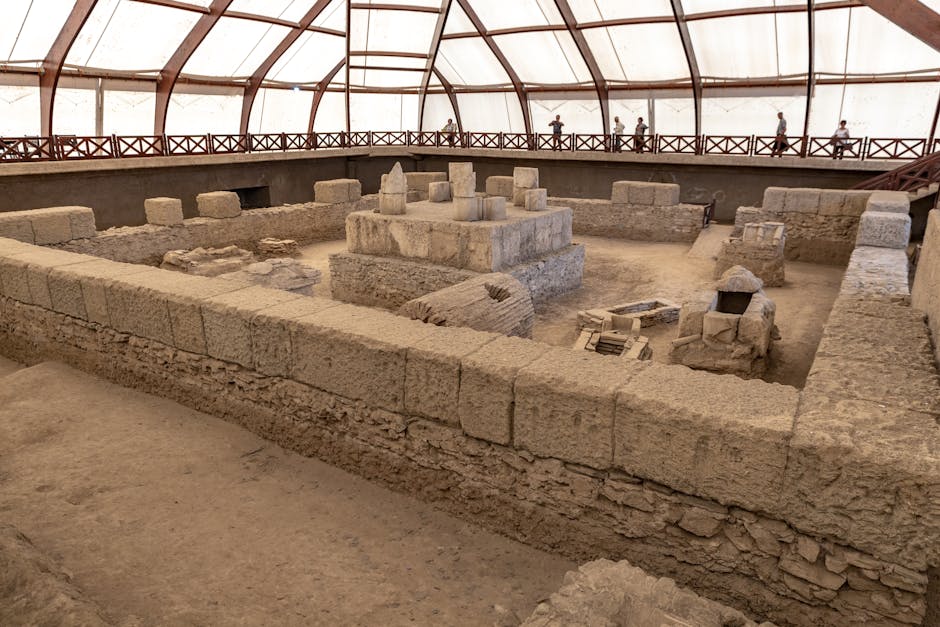
Fun History Trivia: 18 Facts About the Age of Discovery

Fun History Trivia: 18 Facts About the Age of Discovery

⏱️ 7 min read

The Age of Discovery, spanning roughly from the early 15th century to the 17th century, represents one of the most transformative periods in human history. This era witnessed European explorers venturing beyond their known world, mapping new territories, establishing trade routes, and forever changing the course of civilization. While many know the basic narrative of Columbus and Magellan, this period is rich with fascinating details that often go unnoticed in traditional history lessons.

Remarkable Facts from the Era of Exploration

1. Prince Henry the Navigator Never Actually Sailed

Despite his famous moniker, Prince Henry of Portugal never actually commanded a ship or sailed on exploratory voyages himself. Instead, he established a navigation school at Sagres and sponsored numerous expeditions along the African coast. His true contribution was as a patron and organizer of exploration, funding sailors and cartographers who would push the boundaries of the known world during the early 1400s.

2. The Treaty That Divided the World in Half

In 1494, Spain and Portugal signed the Treaty of Tordesillas, which literally drew a line down the Atlantic Ocean dividing all newly discovered lands between the two powers. This papal-mediated agreement gave Portugal rights to territories east of the line, including Brazil and routes to Africa and Asia, while Spain received everything to the west. Other European nations were completely excluded from this audacious division of the globe.

3. Scurvy Killed More Sailors Than Storms

The greatest threat to long-distance sea voyages wasn't weather or warfare—it was scurvy. This vitamin C deficiency disease killed an estimated two million sailors during the Age of Discovery. Symptoms included bleeding gums, tooth loss, and eventually death. It wasn't until the late 18th century that British naval surgeon James Lind definitively proved that citrus fruits could prevent the disease.

4. Magellan's Original Fleet Had 270 Men, Only 18 Returned

When Ferdinand Magellan set out to circumnavigate the globe in 1519 with five ships and 270 men, few could have predicted the catastrophic losses. Magellan himself was killed in the Philippines in 1521, and only one ship, the Victoria, completed the journey in 1522 with just 18 survivors. Despite the tremendous casualties, this voyage proved Earth's circumference and the vastness of the Pacific Ocean.

5. The Spice Trade Was Worth More Than Gold

The primary motivation for many exploratory voyages was access to Asian spices, particularly pepper, cinnamon, nutmeg, and cloves. These commodities were literally worth their weight in gold—and sometimes more. A pound of nutmeg in Europe could be worth the equivalent of several years' wages for a common laborer, explaining why explorers risked their lives to find direct routes to the Spice Islands.

6. Vikings Beat Columbus to America by 500 Years

Norse explorer Leif Erikson established a settlement in Newfoundland around 1000 CE, nearly five centuries before Columbus's 1492 voyage. The archaeological site at L'Anse aux Meadows provides concrete evidence of this Viking presence in North America. However, unlike Columbus's voyages, the Norse expeditions didn't lead to lasting European colonization or widespread knowledge of the Americas.

7. Columbus Died Believing He'd Reached Asia

Christopher Columbus never accepted that he had discovered a continent unknown to Europeans. Until his death in 1506, he insisted that the Caribbean islands he encountered were part of Asia, specifically outlying islands near Japan and China. He made four voyages to the Americas and never once acknowledged finding a "New World."

8. The Mysterious Disappearance of Roanoke Colony

In 1587, 115 English colonists settled on Roanoke Island in present-day North Carolina. When supply ships returned in 1590, the entire colony had vanished without a trace, leaving only the word "CROATOAN" carved into a post. This mysterious disappearance remains one of America's oldest unsolved mysteries and illustrates the tremendous risks faced by early colonial endeavors.

9. Vasco da Gama's Violent Path to India

Portuguese explorer Vasco da Gama is celebrated for finding a sea route to India in 1498, but his methods were extraordinarily brutal. On subsequent voyages, he bombarded cities, tortured pilots for navigational information, and once locked hundreds of Muslim pilgrims in a ship and burned them alive. His ruthless tactics established Portuguese dominance in the Indian Ocean trade.

10. The Columbian Exchange Transformed Global Cuisine

The Age of Discovery initiated a massive transfer of plants, animals, and foods between hemispheres. Tomatoes, potatoes, chocolate, and corn traveled from the Americas to Europe, Asia, and Africa. Meanwhile, wheat, rice, coffee, and livestock moved to the Americas. This biological exchange fundamentally altered global cuisines and agricultural practices worldwide.

11. Portuguese Explorers Reached Japan by Accident

In 1543, Portuguese traders became the first Europeans to reach Japan when their ship was blown off course during a storm. Landing on Tanegashima Island, they introduced firearms to Japanese society, weapons that would revolutionize Japanese warfare. This accidental encounter opened centuries of trade and cultural exchange between Japan and Europe.

12. The Race for the Northwest Passage Lasted Centuries

Explorers spent over 400 years searching for a navigable route through the Arctic connecting the Atlantic and Pacific Oceans. Countless expeditions ended in failure, shipwreck, and death in the frozen waters. The Northwest Passage wasn't successfully navigated until Norwegian explorer Roald Amundsen completed the journey between 1903 and 1906.

13. China's Treasure Fleet Dwarfed European Ships

Between 1405 and 1433, Chinese Admiral Zheng He commanded massive fleets that sailed as far as East Africa. His treasure ships reportedly measured over 400 feet long, making Columbus's Santa Maria (approximately 85 feet) look like a rowboat by comparison. China's decision to end these voyages and turn inward remains one of history's great what-ifs.

14. Amerigo Vespucci Gave America Its Name

The continents of the Americas weren't named after Christopher Columbus but after Italian explorer Amerigo Vespucci. His letters describing the South American coast convinced European cartographers that these lands were indeed a new continent, not part of Asia. In 1507, German mapmaker Martin Waldseemüller suggested naming the land "America" in Vespucci's honor.

15. Sailors Believed the Equator Could Kill Them

Early European sailors harbored superstitious fears about crossing the equator. Many believed the intense heat would turn them black, boil the ocean, or make their ships burst into flames. When Portuguese explorers finally crossed the equator in the 1470s and survived, it marked both a psychological and geographical breakthrough in European exploration.

16. The Manila Galleons Connected Three Continents

Starting in 1565, Spanish galleons sailed annually between Manila in the Philippines and Acapulco in Mexico, creating the first global trade route. These ships carried Asian silks and porcelain to the Americas, then returned with Mexican silver. This transpacific route operated for 250 years and represented the first truly global commercial network.

17. Navigation Relied on Dead Reckoning and Prayer

Before accurate clocks and modern instruments, sailors used "dead reckoning"—estimating their position based on speed, time, and direction. Latitude could be determined using the sun and stars, but calculating longitude accurately remained impossible until the 18th century. Many ships simply got lost, explaining why explorers often stumbled upon lands accidentally.

18. Indigenous Peoples Had Advanced Civilizations

European explorers didn't discover empty wilderness but encountered sophisticated civilizations. The Aztec capital of Tenochtitlan housed approximately 200,000 people, making it larger than most European cities of the time. The Inca Empire had advanced road systems, agricultural terraces, and administrative structures. The narrative of "discovering" inhabited lands reflects European perspective rather than historical reality.

The Lasting Legacy of an Era

The Age of Discovery fundamentally reshaped human civilization, creating connections between previously isolated populations and initiating processes of globalization that continue today. While often romanticized, this era involved tremendous human costs, including colonization, slavery, and the decimation of indigenous populations through disease and conquest. Understanding these eighteen facts provides a more nuanced view of this complex period—one that celebrates human courage and curiosity while acknowledging its darker consequences. The legacy of these exploratory voyages continues to influence modern geopolitics, cultural exchange, and our understanding of the interconnected world we inhabit today.