









⏱️ 6 min read
Coastal monuments stand as testaments to human achievement, engineering prowess, and cultural significance. These remarkable structures, positioned where land meets sea, have witnessed centuries of maritime activity, welcomed travelers, and commemorated pivotal moments in history. From ancient lighthouses guiding ships safely to shore to modern architectural marvels celebrating freedom and hope, coastal landmarks continue to captivate millions of visitors annually. The following collection explores fascinating facts about some of the world's most iconic coastal monuments.
Iconic Coastal Monuments and Their Secrets
1. The Statue of Liberty's Copper Transformation
Originally gleaming like a new penny when unveiled in 1886, the Statue of Liberty's copper exterior has oxidized over 137 years to achieve its distinctive blue-green patina. This chemical reaction created a protective layer that actually helps preserve the monument from further corrosion in its coastal environment on Liberty Island in New York Harbor.
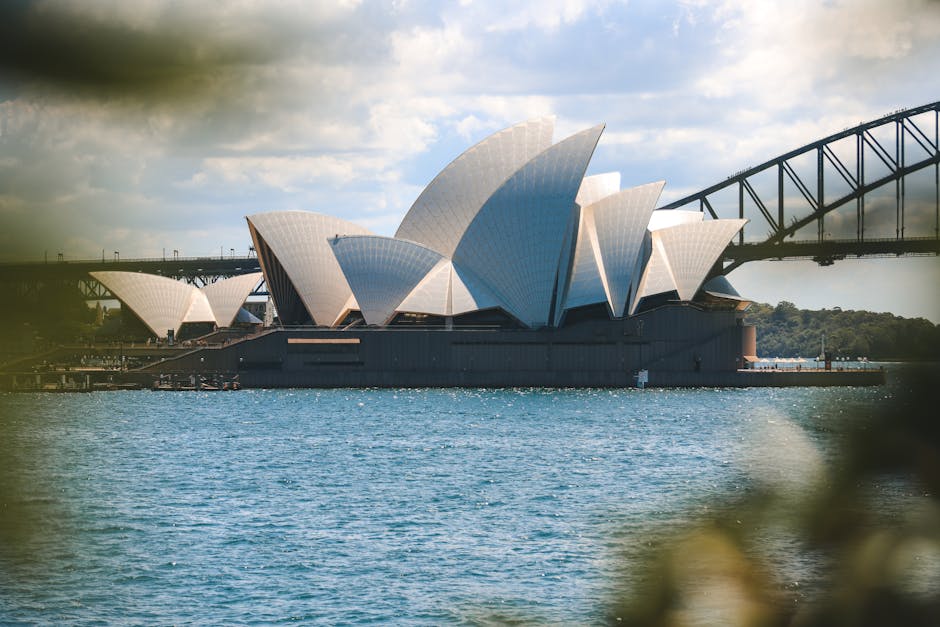
2. Sydney Opera House's Tile Mathematics
The Sydney Opera House, positioned magnificently on Bennelong Point, features over one million tiles covering its iconic sail-like shells. These weren't randomly placed—Swedish-made tiles were arranged in precise chevron patterns, with each of the shells requiring different mathematical calculations to account for their unique curvature.
3. Tower of Hercules Ancient Engineering
Standing on the Galician Atlantic coast of Spain, the Tower of Hercules has been operational since the 2nd century AD, making it the world's oldest functioning lighthouse. This Roman-built structure has guided ships for nearly 2,000 years and achieved UNESCO World Heritage status in 2009.
4. Christ the Redeemer's Lightning Rod Status
Overlooking Rio de Janeiro's Guanabara Bay, the Christ the Redeemer statue serves as a frequent target for lightning strikes due to its elevated position on Corcovado Mountain. The monument is struck approximately three to five times annually, requiring regular maintenance and restoration of its soapstone exterior.
5. Little Mermaid Statue's Turbulent History
Copenhagen's Little Mermaid, perched on a rock in the harbor since 1913, has experienced numerous acts of vandalism including decapitation, arm removal, and paint attacks. Despite standing just 4.1 feet tall, this modest bronze statue has become Denmark's most photographed monument.
6. Gateway Arch's Earthquake Resistance
St. Louis's Gateway Arch, though located on the Mississippi River rather than an ocean coast, incorporates revolutionary engineering allowing it to sway up to 18 inches in high winds. Its stainless steel construction and catenary curve design make it resistant to both wind and seismic activity.
7. Marine Drive Mumbai's Art Deco Concentration
Mumbai's Marine Drive promenade along the Arabian Sea features the world's second-largest collection of Art Deco buildings after Miami. This 3.6-kilometer stretch, known as the "Queen's Necklace" for its nighttime appearance, showcases over 200 Art Deco structures built in the 1930s.
8. Eddystone Lighthouse's Multiple Lives
The current Eddystone Lighthouse, standing in the English Channel, is actually the fourth iteration built on the treacherous Eddystone Rocks. Its predecessors were destroyed by storm, fire, and structural failure, with the current tower completing construction in 1882 and standing 49 meters tall.
9. Venice's Campanile Collapse and Reconstruction
St. Mark's Campanile, overlooking the Venetian Lagoon, dramatically collapsed in 1902 after standing for over 1,000 years. The city vowed to rebuild it "dov'era, com'era" (where it was, as it was), completing an exact replica in 1912 with modern engineering reinforcements.
10. Burj Al Arab's Helipad Tennis Match
Dubai's sail-shaped Burj Al Arab, built on an artificial island extending into the Persian Gulf, features a helipad 211 meters above sea level that has hosted extraordinary events including tennis matches between Roger Federer and Andre Agassi, demonstrating the monument's iconic status beyond architecture.
11. Portland Head Light's Presidential Connection
Maine's Portland Head Light, commissioned by George Washington in 1791, stands as the oldest lighthouse in the state. Washington personally oversaw aspects of its construction, making it one of few monuments with direct presidential involvement in its creation.
12. The Motherland Calls Sword Specifications
Volgograd's "The Motherland Calls" statue, though inland, commemorates the Battle of Stalingrad near the Volga River. Its 33-meter steel sword weighs 14 tons and sways up to 6 inches in strong winds, making it one of the tallest statues in the world at 85 meters.
13. Cape Hatteras Lighthouse's Relocation
The Cape Hatteras Lighthouse in North Carolina's Outer Banks was moved 2,900 feet inland in 1999 to protect it from coastal erosion. This engineering feat relocated all 4,830 tons of the 208-foot structure over 23 days, preserving America's tallest brick lighthouse.
14. Marseille's Notre-Dame de la Garde Maritime Blessings
Perched 149 meters above Marseille's Old Port, Notre-Dame de la Garde has served as a sailors' sanctuary since 1214. The basilica's interior contains numerous model ships hung as ex-votos by sailors thanking the Virgin Mary for protection, creating a unique maritime museum within a place of worship.
15. Moai Statues' Coastal Orientation
Easter Island's famous Moai statues, carved between 1400 and 1650 AD, predominantly face inland toward villages rather than the sea. However, the seven Moai at Ahu Akivi uniquely face the ocean, aligning with the spring and autumn equinoxes, demonstrating advanced astronomical knowledge.
16. Table Mountain's Biodiversity Record
Cape Town's Table Mountain, overlooking the Atlantic Ocean, hosts more plant species within its boundaries than exist in the entire United Kingdom. This flat-topped monument supports over 2,200 species of plants, with 70% found nowhere else on Earth.
17. Sugarloaf Mountain's Cable Car Innovation
Rio de Janeiro's Pão de Açúcar (Sugarloaf Mountain), rising from Guanabara Bay, was made accessible to the public in 1912 through one of the world's first cable car systems. The original system has been modernized multiple times while maintaining its historic route.
18. Bass Harbor Head Light's Artistic Legacy
Maine's Bass Harbor Head Light, positioned on Mount Desert Island's rocky coast, has become one of the most photographed lighthouses in America despite never being open to the public. Its picturesque setting has inspired countless painters and photographers since its 1858 construction.
19. The Kelpies' Scale and Symbolism
Scotland's Kelpies, standing near the Forth and Clyde Canal leading to the Firth of Forth, are the world's largest equine sculptures at 30 meters tall. These steel monuments honor the horse-powered heritage of Scottish industry and canal systems, requiring 600 tons of structural steel and 990 individually shaped steel plates.
20. Nazaré Lighthouse's Wave-Watching Purpose
Portugal's Nazaré Lighthouse, perched on a clifftop 110 feet above the Atlantic, provides the perfect vantage point for observing some of the world's largest waves. The nearby Nazaré Canyon creates waves exceeding 80 feet, attracting big-wave surfers from around the globe and making the lighthouse a crucial monitoring station.
Conclusion
Coastal monuments represent humanity's enduring relationship with the sea, combining artistic vision with engineering excellence. These twenty landmarks demonstrate how geography, history, and culture converge to create structures that transcend their functional purposes. Whether guiding ships, commemorating historical events, or simply celebrating natural beauty, these coastal monuments continue to inspire wonder and serve as gathering points for communities worldwide. Their preservation ensures future generations can appreciate both their historical significance and architectural magnificence, standing as eternal witnesses where civilization meets the vast ocean.