

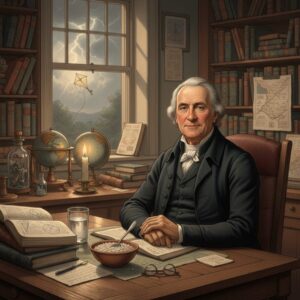








Famous Diets Endorsed by Historical Figures

1 / 10 Questions
0 Points

Which ancient Greek mathematician survived on bread, honey, and vegetables, believing eating meat promoted violence and sullied the soul?

Archimedes

Aristotle

Pythagoras

Euclid

Points won
0
Correct score
0%

More Questions

More Articles

Top 10 American Landmarks With Cultural Significance

Top 10 American Landmarks With Cultural Significance

⏱️ 6 min read

The United States is home to some of the world's most iconic landmarks, each telling a unique story about the nation's history, values, and cultural identity. These structures and sites serve as powerful symbols that connect Americans to their past while inspiring future generations. From monuments honoring civil rights leaders to natural wonders that sparked conservation movements, these landmarks represent pivotal moments and enduring ideals that have shaped American society.

Monuments That Define American Identity

1. The Statue of Liberty: Symbol of Immigration and Freedom

Standing tall in New York Harbor since 1886, the Statue of Liberty represents America's identity as a nation of immigrants. This gift from France commemorates the alliance between the two nations and embodies the ideals of liberty and democracy. For millions of immigrants arriving at Ellis Island, Lady Liberty was the first glimpse of their new homeland. The statue's torch and broken chains at her feet symbolize enlightenment and the abolition of slavery, making it a powerful representation of freedom and opportunity. Today, it remains one of the most recognizable symbols of American values worldwide, attracting millions of visitors who come to honor the immigrant experience.

2. Mount Rushmore: Presidential Legacy Carved in Stone

Carved into the Black Hills of South Dakota, Mount Rushmore features the 60-foot faces of four presidents: George Washington, Thomas Jefferson, Theodore Roosevelt, and Abraham Lincoln. Created between 1927 and 1941, this monumental sculpture represents the birth, growth, development, and preservation of the United States. However, the landmark also carries complex cultural significance, as it was carved on land sacred to the Lakota Sioux people, highlighting ongoing conversations about indigenous rights and historical memory in America.

3. The Lincoln Memorial: Honoring Unity and Civil Rights

More than just a tribute to the 16th president, the Lincoln Memorial has become a gathering place for civil rights activism. Built in 1922, this neoclassical monument gained additional cultural significance when Marian Anderson performed there in 1939 after being denied access to other venues due to racial segregation. Most notably, Dr. Martin Luther King Jr. delivered his historic "I Have a Dream" speech from its steps in 1963. The memorial continues to serve as a backdrop for peaceful protests and demonstrations, cementing its role as a symbol of equality and justice.

4. Independence Hall: Birthplace of American Democracy

Located in Philadelphia, Independence Hall witnessed the signing of both the Declaration of Independence in 1776 and the U.S. Constitution in 1787. This Georgian-style building represents the foundational principles of American government and the revolutionary ideas that challenged monarchical rule. The Liberty Bell, housed nearby, adds to the site's cultural significance as a symbol of freedom and independence. Together, these landmarks represent the philosophical and practical birth of the American nation.

Natural Wonders With Cultural Impact

5. The Grand Canyon: Conservation and Natural Heritage

The Grand Canyon's designation as a national park in 1919 marked a turning point in American conservation efforts. This natural wonder, carved by the Colorado River over millions of years, represents the nation's commitment to preserving its natural heritage for future generations. The canyon holds deep spiritual significance for several Native American tribes, including the Havasupai, Hopi, and Navajo peoples, who have called the region home for centuries. Its protection helped establish the precedent for the national park system, reflecting American values of environmental stewardship.

6. Ellis Island: Gateway to the American Dream

Between 1892 and 1954, more than 12 million immigrants passed through Ellis Island's immigration station. This landmark represents the diverse tapestry of American society and the courage of those who left everything behind for a new beginning. Today, the Ellis Island National Museum of Immigration preserves the stories of these arrivals, making it a pilgrimage site for millions of Americans seeking to understand their family histories and connect with their ancestral roots.

Landmarks of Remembrance and Reflection

7. Pearl Harbor and the USS Arizona Memorial

The USS Arizona Memorial in Hawaii honors the 1,177 crew members who lost their lives during the Japanese attack on Pearl Harbor on December 7, 1941. This solemn landmark marks America's entry into World War II and serves as a reminder of the sacrifices made during wartime. The memorial, built over the sunken battleship, represents national resilience and the "date which will live in infamy," while promoting peace and understanding between former adversaries.

8. The Vietnam Veterans Memorial: Healing Through Remembrance

Dedicated in 1982, the Vietnam Veterans Memorial in Washington, D.C., features a black granite wall inscribed with the names of more than 58,000 Americans who died or went missing during the Vietnam War. Maya Lin's innovative design created a new paradigm for war memorials, focusing on individual sacrifice rather than glorifying conflict. The wall's reflective surface allows visitors to see themselves alongside the names, creating a powerful connection between past and present and facilitating national healing after a divisive war.

9. The Alamo: Texas Independence and American Expansion

The Alamo mission in San Antonio, Texas, site of the famous 1836 battle, symbolizes courage and sacrifice in the face of overwhelming odds. This landmark represents Texas's struggle for independence from Mexico and subsequent annexation to the United States. The phrase "Remember the Alamo" became a rallying cry that reflects American frontier spirit and the complex history of westward expansion, including its impacts on Mexican and Native American populations.

10. Martin Luther King Jr. Memorial: Civil Rights and Social Justice

Opened in 2011, this is the first memorial on the National Mall dedicated to an African American and a non-president. The 30-foot statue of Dr. King emerging from the "Stone of Hope" honors his leadership in the civil rights movement and his advocacy for equality, justice, and nonviolent social change. The memorial includes inscriptions of his most powerful quotes, inspiring continued progress toward his vision of a just society and serving as a testament to the ongoing struggle for civil rights in America.

Preserving Cultural Memory

These ten landmarks collectively illustrate the complexity and richness of American cultural heritage. They represent triumph and tragedy, unity and division, natural splendor and human achievement. Each site invites reflection on the values, struggles, and aspirations that have shaped the nation. By preserving and honoring these landmarks, Americans maintain connections to their shared history while acknowledging diverse perspectives and experiences. These cultural touchstones remind us that landmarks are more than physical structures—they are repositories of memory, identity, and meaning that continue to resonate across generations, inspiring dialogue about who we are as a nation and who we aspire to become.
Fun History Trivia: 18 Facts About the Progressive Era

Fun History Trivia: 18 Facts About the Progressive Era

⏱️ 7 min read

The Progressive Era, spanning roughly from the 1890s to the 1920s, stands as one of America's most transformative periods. This age of reform saw unprecedented changes in politics, society, economics, and daily life as Americans grappled with the consequences of rapid industrialization and urbanization. From groundbreaking constitutional amendments to the rise of investigative journalism, this era reshaped the nation in ways that continue to influence contemporary society.

Political and Constitutional Reforms

1. The Birth of Direct Democracy Through Constitutional Amendment

The 17th Amendment, ratified in 1913, fundamentally altered American democracy by establishing the direct election of U.S. Senators. Prior to this reform, state legislatures selected senators, a system that reformers argued led to corruption and removed citizens from the democratic process. This change represented a major victory for Progressive activists who sought to make government more responsive to ordinary citizens rather than political machines and wealthy interests.

2. Women's Suffrage Achieved After Decades of Struggle

The 19th Amendment, ratified in 1920, granted women the constitutional right to vote after a campaign that lasted more than seventy years. Progressive Era suffragists like Carrie Chapman Catt and Alice Paul employed diverse strategies, from peaceful lobbying to militant protests, to secure this fundamental right. The amendment's passage represented the culmination of Progressive beliefs in expanding democracy and recognizing women's full citizenship.

3. Prohibition's Controversial Implementation

The 18th Amendment, ratified in 1919, prohibited the manufacture, sale, and transportation of alcoholic beverages throughout the United States. Progressive reformers viewed alcohol as a root cause of poverty, domestic violence, and social decay. Though later repealed, Prohibition demonstrated the Progressive Era's confidence in using government power to engineer social change and moral improvement.

4. The Income Tax Revolution

The 16th Amendment, ratified in 1913, gave Congress the power to levy an income tax without apportioning it among states based on population. This constitutional change provided the federal government with a stable revenue source and enabled the expansion of government services that Progressives championed. It also reflected Progressive ideals about wealth redistribution and funding social programs.

Social Reform and Urban Transformation

5. Settlement Houses Bridge Class Divides

Settlement houses, pioneered by reformers like Jane Addams at Chicago's Hull House (founded in 1889), provided crucial services to immigrant and working-class communities. These institutions offered English classes, childcare, healthcare, and cultural programs while also serving as laboratories for social research. Settlement workers lived among the communities they served, embodying the Progressive commitment to cross-class cooperation and scientific social reform.

6. Child Labor Laws Protect Young Workers

Progressive reformers campaigned vigorously against child labor, documenting through photographs and investigations how children as young as five worked in dangerous factories, mines, and mills. While federal child labor laws faced legal challenges, many states passed protective legislation during this era, establishing minimum age requirements and limiting working hours for minors. These reforms reflected Progressive concerns about protecting vulnerable populations and ensuring children received education rather than exploitation.

7. The Pure Food and Drug Act Ensures Consumer Safety

Passed in 1906, this landmark legislation prohibited the manufacture, sale, or transportation of adulterated or misbranded food and drugs. The law emerged from Progressive Era concerns about corporate malfeasance and public health, spurred by muckraking journalists who exposed unsanitary conditions in food production and fraudulent patent medicine claims. This act laid the foundation for modern consumer protection regulations.

Muckraking Journalism and Public Awareness

8. Upton Sinclair Exposes Meatpacking Horrors

Sinclair's novel "The Jungle" (1906) shocked Americans with its graphic descriptions of unsanitary conditions in Chicago's meatpacking industry. While Sinclair intended to promote socialism, the book instead catalyzed food safety reforms, including the Meat Inspection Act. This work exemplified how Progressive Era muckrakers used investigative journalism to expose corporate abuses and mobilize public opinion for reform.

9. Ida Tarbell Takes on Standard Oil

Tarbell's meticulously researched series "The History of the Standard Oil Company" (1904) documented John D. Rockefeller's ruthless business practices and monopolistic control. Her journalism contributed to the 1911 Supreme Court decision ordering Standard Oil's dissolution under the Sherman Antitrust Act, demonstrating the power of investigative reporting to challenge corporate concentration and promote economic fairness.

Environmental and Conservation Efforts

10. Theodore Roosevelt Champions Conservation

President Roosevelt established 150 national forests, five national parks, and eighteen national monuments, protecting approximately 230 million acres of public land. His conservation efforts reflected Progressive beliefs in scientific management of natural resources and government responsibility to preserve wilderness for future generations. Roosevelt's activism transformed the federal government's role in environmental stewardship.

11. The National Park Service Is Established

Created in 1916, the National Park Service institutionalized Progressive Era conservation ideals by managing America's national parks and monuments. This agency reflected the Progressive confidence in expert administration and the belief that natural wonders should be preserved for public enjoyment rather than private exploitation.

Labor and Economic Reform

12. Triangle Shirtwaist Factory Fire Sparks Labor Reforms

The 1911 fire that killed 146 garment workers, mostly young immigrant women, became a catalyst for workplace safety legislation. The tragedy exposed dangerous working conditions and locked exit doors that prevented escape. In response, New York and other states passed comprehensive factory safety laws, fire codes, and worker protection regulations that became models for national labor reform.

13. The Federal Reserve System Modernizes Banking

Established in 1913, the Federal Reserve created a central banking system to stabilize the economy, regulate banks, and manage the money supply. This institution reflected Progressive Era faith in expert management and government intervention to prevent financial panics and protect economic stability.

Political Party Transformations

14. The Bull Moose Party Splits Republicans

In 1912, Theodore Roosevelt formed the Progressive Party (nicknamed the "Bull Moose Party") after losing the Republican nomination. The party platform advocated women's suffrage, social welfare programs, labor protections, and business regulation. Though Roosevelt lost the election, the campaign demonstrated the broad appeal of Progressive reforms and pushed both major parties toward reformist positions.

Educational and Intellectual Developments

15. Progressive Education Transforms Schools

Educational reformer John Dewey advocated for experiential learning, critical thinking, and education's role in preparing democratic citizens. Progressive educators moved away from rote memorization toward hands-on activities, vocational training, and child-centered instruction. These innovations reflected broader Progressive Era beliefs in scientific approaches to social improvement and adapting institutions to modern industrial society.

16. Universities Embrace Social Science Research

Progressive Era universities expanded social science departments, where researchers studied urban problems, labor conditions, and social welfare needs. This academic work provided empirical evidence supporting reform campaigns and reflected the Progressive faith in scientific expertise as a tool for social improvement. Professors often worked directly with government agencies and reform organizations, blurring lines between scholarship and activism.

Women's Expanding Roles

17. Women Enter Professional Life

The Progressive Era saw increasing numbers of women entering teaching, nursing, social work, and other professions. Women's colleges expanded, and some coeducational universities began admitting female students. While professional opportunities remained limited compared to men's, these changes reflected shifting attitudes about women's capabilities and proper roles in society.

18. The Birth Control Movement Emerges

Activists like Margaret Sanger challenged laws prohibiting contraceptive information, arguing that birth control was essential for women's health, autonomy, and economic independence. Though controversial and legally restricted, the movement gained momentum during the Progressive Era, reflecting changing attitudes about sexuality, women's rights, and family planning.

The Progressive Era's Enduring Legacy

These eighteen facts illustrate how the Progressive Era fundamentally reshaped American society, politics, and government. From constitutional amendments that expanded democracy to regulatory agencies that protected consumers and workers, Progressive reformers established frameworks that continue governing contemporary life. Their faith in expertise, government intervention, and social improvement through systematic reform created institutions and policies that remain relevant today. While some Progressive Era initiatives proved misguided or incomplete, the era's core commitment to addressing industrialization's challenges through democratic reform established precedents that continue influencing debates about government's proper role in promoting social welfare and economic fairness.