
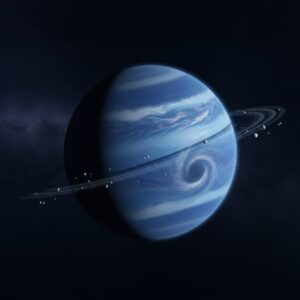




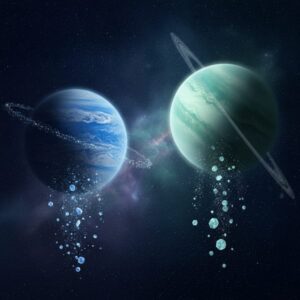



Planets and Moons in Our Solar System Where It Rains Weird Things

1 / 10 Questions
0 Points

On which planet does it rain diamonds formed from methane in the atmosphere?

Neptune

Mars

Venus

Mercury

Points won
0
Correct score
0%

More Questions

More Articles

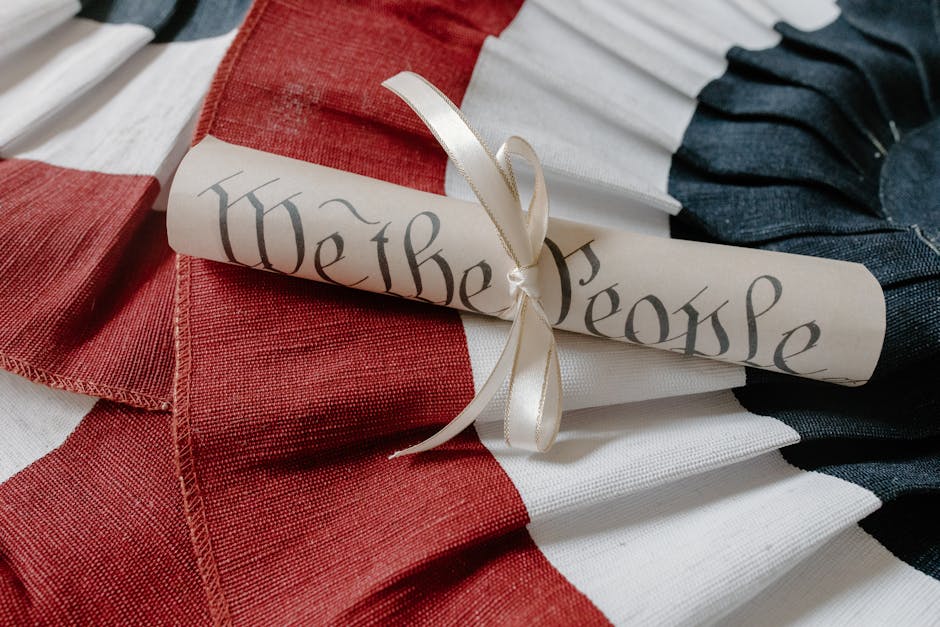
US History Trivia: From Founding Fathers to Global Events

US History Trivia: From Founding Fathers to Global Events

⏱️ 4 min read

US History Trivia: From Founding Fathers to Global Events

American history is rich with fascinating facts, pivotal moments, and surprising details that have shaped the nation. From the early colonial period to modern times, countless events and figures have contributed to the American story. This comprehensive collection of historical trivia provides insight into the lesser-known aspects of United States history.

The Founding Fathers and Early America

The founding fathers of America were an intriguing group with numerous surprising facts about their lives and contributions. Benjamin Franklin, besides being a founding father, was also an accomplished inventor and the first United States Postmaster General. He never patented his inventions, believing they should be freely available to benefit society.

  • Thomas Jefferson and John Adams both died on July 4, 1826 - exactly 50 years after the adoption of the Declaration of Independence
  • George Washington never lived in the White House; John Adams was the first president to reside there
  • Eight of the first nine presidents were born British subjects
  • The Liberty Bell was not named such until the 1830s when abolitionists adopted it as their symbol

Revolutionary War and Early Republic

The American Revolution period contains numerous fascinating details that often go unmentioned in standard history texts. The Revolutionary War began before the Declaration of Independence was signed, and many crucial events shaped the conflict's outcome.

  • Paul Revere never shouted "The British are coming!" as this would have revealed his position to British patrols
  • George Washington's army was supported by French, German, and Polish military advisers
  • The first American woman to receive a military pension was Margaret Cochran Corbin, who fought in the Revolutionary War
  • The United States had no standing army for seven years after the Revolutionary War ended

19th Century America

The 1800s marked a period of tremendous growth and change in American history, featuring westward expansion, civil war, and industrial revolution. This century shaped modern America in countless ways.

  • The Civil War was the first American war photographed extensively
  • Abraham Lincoln created the Secret Service on the day he was assassinated
  • The California Gold Rush brought approximately 300,000 people to California
  • The first American woman to run for president was Victoria Woodhull in 1872

World Wars and Global Impact

America's involvement in global conflicts significantly influenced its role in world affairs. Both World Wars marked turning points in American history and international relations.

  • The first American military casualty in World War I was a sailor named John Eopolucci, who died in March 1917
  • During World War II, the U.S. military developed a bomb shaped like a bat that would release thousands of actual bats carrying tiny incendiary devices
  • The Pentagon was built in just 16 months during World War II
  • The U.S. purchased Alaska from Russia in 1867 for $7.2 million, approximately two cents per acre

Cold War Era

The Cold War period brought significant technological advancements and social changes to American society. This era marked the space race, nuclear arms development, and various proxy conflicts.

  • The Space Race led to numerous everyday inventions, including memory foam, scratch-resistant lenses, and cordless tools
  • The CIA once considered using cats as spies during the Cold War in "Operation Acoustic Kitty"
  • The Interstate Highway System was initially designed for military transportation
  • The Berlin Wall fell in 1989, but the official reunification of Germany wasn't completed until 1990

Modern American History

Recent American history continues to reveal interesting facts and connections that shape our understanding of current events and their historical context.

  • The first email from space was sent in 1991 by astronauts on the Space Shuttle Atlantis
  • The United States did not have an official national anthem until 1931
  • Alaska is the northernmost, westernmost, and easternmost state in the United States
  • The first mobile phone call was made in 1973 by Motorola employee Martin Cooper

Presidential Trivia

The American presidency has produced numerous interesting facts and coincidences throughout history. These details provide insight into the nation's highest office and those who have held it.

  • William Henry Harrison gave the longest inaugural address and had the shortest presidency
  • Gerald Ford was the only president never elected as either president or vice president
  • James Madison was the shortest president at 5'4", while Abraham Lincoln was the tallest at 6'4"
  • John Tyler, born in 1790, has two living grandsons as of 2023

Understanding these historical facts and trivia pieces helps provide context for major events in American history and reveals the complex tapestry of people and events that have shaped the nation. While some of these facts might seem trivial, they contribute to a fuller understanding of American history and its impact on the modern world. From the founding fathers to recent technological achievements, American history continues to fascinate and educate, offering valuable lessons for future generations.
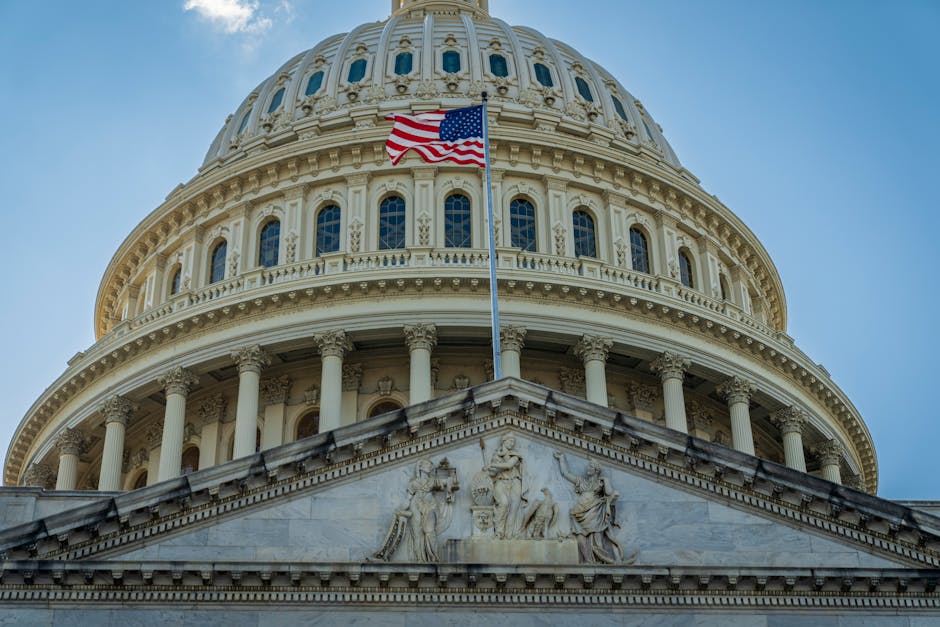
Fun American Trivia: 18 Facts About National Landmarks

Fun American Trivia: 18 Facts About National Landmarks

⏱️ 7 min read

America's national landmarks stand as testaments to the nation's rich history, architectural ingenuity, and natural wonders. These iconic structures and sites attract millions of visitors annually, yet many harbor fascinating secrets and surprising facts that even frequent visitors might not know. From engineering marvels to historical curiosities, these landmarks offer endless opportunities for discovery and wonder.

Architectural Wonders and Engineering Feats

The Statue of Liberty's French Connection

The Statue of Liberty was originally a copper color when first assembled in 1886, not the distinctive green patina seen today. This beloved symbol of freedom was a gift from France, designed by sculptor Frédéric Auguste Bartholdi. The statue's framework was engineered by Gustave Eiffel, who would later build the famous Eiffel Tower. The copper exterior gradually oxidized over approximately 30 years, creating the iconic green coating that now protects the underlying metal from further corrosion.

The Golden Gate Bridge's International Orange Hue

Despite its name, the Golden Gate Bridge isn't golden at all. The bridge's distinctive "International Orange" color was initially intended only as a primer. However, consulting architect Irving Morrow found the shade enhanced the bridge's visibility in San Francisco's famous fog while complementing the natural surroundings. The U.S. Navy had wanted the bridge painted in black and yellow stripes for maximum visibility, but Morrow's aesthetic vision prevailed.

Mount Rushmore's Secret Chamber

Behind Abraham Lincoln's hairline on Mount Rushmore lies a hidden chamber that sculptor Gutzon Borglum intended as a "Hall of Records." This 70-foot vault was designed to house important American documents and artifacts. Though never completed as originally envisioned, in 1998, a repository of porcelain enamel panels describing the carving's history was placed inside a teakwood box within the chamber, sealed behind a granite capstone.

The Washington Monument's Two-Toned Mystery

The Washington Monument displays a distinct color change approximately 150 feet up its height. Construction began in 1848 but was halted in 1854 due to funding issues and the Civil War. When construction resumed in 1877, the original marble quarry was depleted, forcing builders to use marble from a different source. This resulted in the visible demarcation line that remains today, telling the story of America's tumultuous mid-19th century history.

Natural Landmarks and Geographic Marvels

The Grand Canyon's Astonishing Depth

The Grand Canyon plunges to depths of over one mile, with its deepest point reaching approximately 6,000 feet. The Colorado River has carved through rock layers spanning nearly two billion years of geological history. Remarkably, the canyon continues to deepen at a rate of about six inches per century, making it an ever-evolving natural wonder that reveals Earth's ancient past.

Yellowstone's Supervolcano Status

Yellowstone National Park sits atop one of the world's largest active volcanic systems. The Yellowstone Caldera measures approximately 34 by 45 miles and last erupted about 640,000 years ago. The park's famous geysers, hot springs, and mud pots are all powered by the massive magma chamber beneath the surface, making Yellowstone a living laboratory for geothermal activity.

Niagara Falls' Reversed Flow

In 1969, the American Falls portion of Niagara Falls was completely "turned off" for several months. The U.S. Army Corps of Engineers diverted the Niagara River's flow to conduct geological studies and remove loose rocks from the base. During this time, visitors could walk on the dry riverbed, revealing a landscape typically hidden beneath millions of gallons of rushing water.

Historical Monuments and Presidential Landmarks

The Liberty Bell's Famous Crack

The Liberty Bell's iconic crack didn't occur during the American Revolution as many believe. The bell cracked the first time it was rung upon arrival in Philadelphia in 1752. It was recast twice before developing its famous irreparable crack sometime in the early 19th century, possibly while tolling for Chief Justice John Marshall's funeral in 1835.

Independence Hall's Dual Declaration

Independence Hall witnessed not one but two of America's founding documents. Both the Declaration of Independence in 1776 and the U.S. Constitution in 1787 were debated and signed within its walls. The building also served as the meeting place for the Second Continental Congress and housed the Liberty Bell until 1976.

The Lincoln Memorial's Misspelled Word

The Lincoln Memorial contains a carved error that was later corrected. The word "FUTURE" in the inscription of Lincoln's Second Inaugural Address was initially carved as "EUTURE." The carver accidentally carved an 'E' instead of an 'F,' then attempted to correct the error by filling in the 'E' and recarving an 'F,' evidence of which can still be detected upon close inspection.

Unexpected Landmark Characteristics

The Empire State Building's Lightning Rod Function

The Empire State Building is struck by lightning approximately 23 times per year on average. The building's height and location make it an ideal lightning rod for the New York City area. The spire was specifically designed to serve as a lightning conductor, safely channeling electrical charges into the ground and protecting the structure and its occupants.

Alcatraz Island's Garden History

During its years as a federal penitentiary, Alcatraz Island was home to beautiful gardens tended by inmates. The island's first military gardener, Frederic Law Olmsted Jr., brought in topsoil and planted gardens in the 1860s. Later, inmates cultivated flowers and plants, creating surprisingly lush gardens that still survive today despite decades of neglect after the prison's closure in 1963.

The Hoover Dam's Concrete Curing Challenge

If the Hoover Dam's concrete had been poured in a single continuous operation, it would have taken 125 years to cool and cure properly. Engineers solved this problem by pouring the concrete in individual columns and blocks, inserting cooling pipes carrying river water through the structure. This ingenious method reduced the curing time and prevented cracking from heat buildup.

Maritime and Coastal Landmarks

The USS Arizona Memorial's Oil Tears

The sunken USS Arizona at Pearl Harbor still releases oil, often called "the tears of the Arizona" or "black tears." The battleship continues to leak approximately nine quarts of oil per day from its fuel tanks. Scientists estimate that the ship may continue releasing oil for another 500 years, serving as a perpetual reminder of the December 7, 1941 attack.

Cape Hatteras Lighthouse's Historic Move

In 1999, the Cape Hatteras Lighthouse was moved 2,900 feet inland to save it from coastal erosion. This engineering feat required moving the 4,830-ton brick structure along a specially designed track system. The lighthouse, America's tallest at 210 feet, was successfully relocated in just 23 days, preserving this historic beacon for future generations.

Western Expansion Landmarks

Gateway Arch's Swaying Capability

The Gateway Arch in St. Louis was designed to sway up to 18 inches in high winds, though it typically moves no more than one inch. The stainless steel monument stands 630 feet tall and is the tallest man-made monument in the Western Hemisphere. Its legs are equilateral triangles that taper from 54 feet wide at the base to 17 feet at the top.

Old Faithful's Predictable Unpredictability

Old Faithful geyser in Yellowstone isn't as faithful as its name suggests. While it remains remarkably consistent, eruption intervals vary from 45 to 125 minutes, averaging about 90 minutes. The geyser's timing has gradually lengthened over the years, partially due to earthquake activity and decades of vandalism when visitors threw objects into the vent. Park rangers can predict eruptions within 10 minutes based on the duration of the previous eruption.

Preserving America's Heritage

The Ongoing Restoration Efforts

National landmarks require constant maintenance and restoration to preserve them for future generations. The National Park Service, along with various preservation organizations, invests millions of dollars annually in conservation efforts. These projects range from structural reinforcement to historical research, ensuring that these treasured sites continue to educate and inspire visitors while maintaining their historical integrity and significance.

These 18 fascinating facts barely scratch the surface of the rich stories embedded within America's national landmarks. Each monument, building, and natural wonder serves as a tangible connection to the nation's past while standing as a symbol of enduring values and achievements. Whether celebrating human ingenuity, natural beauty, or historical significance, these landmarks continue to captivate imaginations and foster appreciation for the diverse tapestry of American heritage. Understanding these lesser-known details deepens our connection to these sites and reminds us why their preservation remains vital for educating and inspiring current and future generations.