










Alcoholic Drinks That Were Created for Children

1 / 10 Questions
0 Points

Which bitter Italian liqueur was originally marketed as a medicinal digestive tonic in the 1800s?

Campari

Cynar

Fernet-Branca

Aperol

Points won
0
Correct score
0%

More Questions

More Articles

Did You Know? 15 Fun Facts About US Geographical Sites

Did You Know? 15 Fun Facts About US Geographical Sites

⏱️ 4 min read

Did You Know? 15 Fun Facts About US Geographical Sites

The United States boasts an incredible variety of geographical features and natural wonders. From towering mountains to deep canyons, each location holds fascinating secrets and surprising facts. Here are 15 remarkable facts about some of America's most interesting geographical sites that showcase the country's diverse landscape.

1. Death Valley's Mysterious Moving Rocks

At Death Valley's Racetrack Playa, rocks seemingly move across the desert floor on their own, leaving long trails behind them. Scientists discovered that thin sheets of ice, wind, and specific weather conditions cause this mysterious phenomenon, solving a puzzle that had confused visitors for decades.

2. Mammoth Cave's Hidden Passages

Kentucky's Mammoth Cave is the world's longest known cave system, with more than 400 miles of surveyed passageways. Remarkably, experts estimate that there could be another 600 miles yet to be discovered, making this natural wonder even more extensive than currently mapped.

3. Mount Denali's True Height

While Mount Denali in Alaska stands at 20,310 feet above sea level, its base-to-peak height is actually greater than Mount Everest. When measured from base to peak, Denali rises about 18,000 feet, compared to Everest's 12,000-foot rise from its base.

4. The Ever-Growing Great Salt Lake

Utah's Great Salt Lake contains so much salt that it's impossible to sink in its waters. The lake's salinity levels can reach up to 27%, making it even saltier than the Dead Sea in some areas. The salt content continues to increase as water evaporates.

5. Hawaii's Continuous Growth

The Hawaiian Islands continue to grow thanks to volcanic activity. The Big Island grows by approximately 42 acres per year due to lava flows from Kilauea and other active volcanoes, constantly reshaping the island's coastline.

6. The Grand Canyon's Ancient History

The Grand Canyon contains rock layers that date back nearly two billion years, representing almost half of Earth's history. The oldest exposed rocks in the canyon, called the Vishnu Schist, were formed during the Precambrian era.

7. Yellowstone's Supervolcano Secret

Yellowstone National Park sits atop one of the world's largest supervolcanoes. The underground magma chamber is so vast that if it were to erupt, it could cover most of North America in ash and potentially trigger a global climate crisis.

8. Mississippi River's Ancient Course

The Mississippi River once flowed backwards during the New Madrid earthquakes of 1811-1812. These powerful seismic events temporarily reversed the river's flow, created new lakes, and caused bells to ring as far away as Boston.

9. Crater Lake's Pure Waters

Oregon's Crater Lake is the deepest lake in the United States at 1,943 feet. The water is also among the purest in the world, with visibility reaching up to 100 feet deep due to the absence of incoming streams carrying sediments.

10. The Appalachian Mountains' Age

The Appalachian Mountains are among the oldest mountains in the world, originally reaching heights similar to the Himalayas. Over millions of years of erosion, they have been worn down to their current, more modest elevations.

11. Florida's Hidden Mountains

While Florida is known for being flat, it actually has underwater mountains. The Florida Middle Grounds, located in the Gulf of Mexico, rise several hundred feet from the seafloor, creating a unique underwater ecosystem.

12. The Great Lakes' Water Supply

The Great Lakes contain 21% of the world's surface fresh water and 84% of North America's surface fresh water. Lake Superior alone contains enough water to cover all of North and South America in one foot of water.

13. The Badlands' Rapid Erosion

South Dakota's Badlands are eroding at a rate of one inch per year, making them one of the fastest-eroding landscapes on Earth. Scientists estimate that they will completely erode away in another 500,000 years.

14. The San Andreas Fault's Movement

The San Andreas Fault moves about two inches per year on average. At this rate, Los Angeles and San Francisco will be adjacent to each other in approximately 15 million years as the Pacific Plate continues to slide northward.

15. Alaska's Glacier Count

Alaska is home to more than 100,000 glaciers, but only 616 of them have been named. These glaciers cover approximately 5% of the state's total area and represent about 95% of all glaciers found in the United States.

Conclusion

These 15 fascinating geographical facts demonstrate the incredible diversity and dynamic nature of America's landscape. From moving rocks and growing islands to ancient mountains and underground supervolcanoes, the United States continues to surprise with its remarkable geological features and natural phenomena. Understanding these unique characteristics helps appreciate the complex and ever-changing nature of our country's geography.
Top 10 Surprising Facts About the Great Salt Lake

Top 10 Surprising Facts About the Great Salt Lake

⏱️ 4 min read

Top 10 Surprising Facts About the Great Salt Lake

The Great Salt Lake in Utah stands as one of North America's most unique natural wonders. This remarkable body of water harbors numerous fascinating characteristics that many people might not know about. Here are ten surprising facts that showcase the lake's extraordinary features and significance.

1. It's Actually a Remnant of a Massive Prehistoric Lake

The Great Salt Lake is what remains of Lake Bonneville, an ancient lake that covered much of present-day Utah about 30,000 years ago. Lake Bonneville was nearly 1,000 feet deep and covered an area roughly the size of Lake Michigan. Following the last ice age, climate changes caused the lake to gradually shrink, leaving behind the Great Salt Lake and several smaller bodies of water.

2. Saltier Than the Ocean

While the ocean's average salinity is about 3.5%, the Great Salt Lake's salinity ranges from 5% to 27% depending on the area and water levels. The north arm of the lake is particularly salty, reaching saturation levels that make it one of the saltiest bodies of water in the world. This extreme salinity creates an environment where few organisms can survive, but those that do thrive in remarkable ways.

3. Home to Billions of Brine Shrimp

Despite its harsh conditions, the lake supports an enormous population of brine shrimp. These tiny crustaceans have adapted to the extreme salinity and serve as a crucial food source for millions of migrating birds. The brine shrimp industry harvests these creatures for use in aquaculture and pet food, generating millions of dollars annually for Utah's economy.

4. Color-Changing Waters

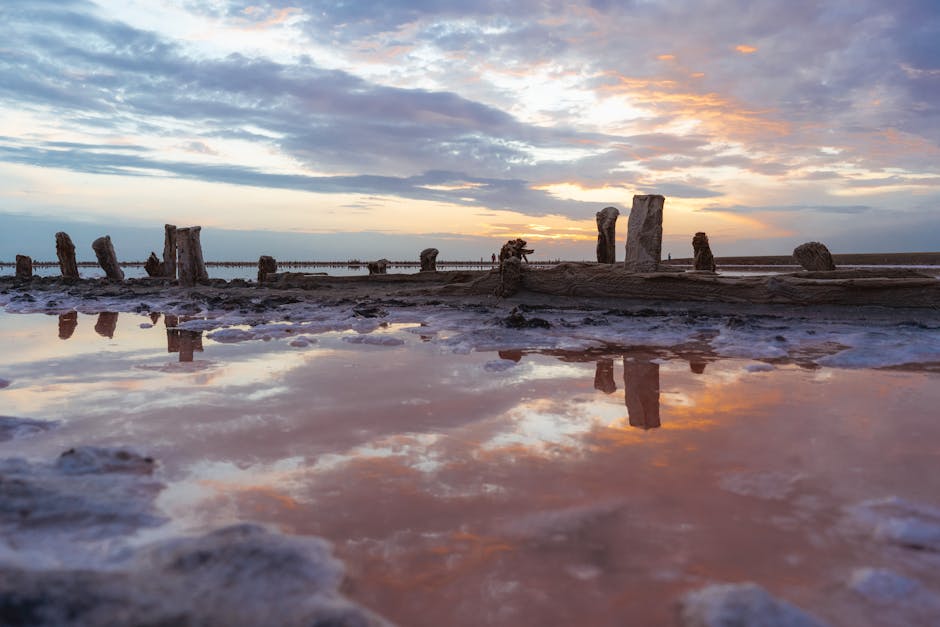
Different sections of the Great Salt Lake display varying colors, from blue to pink. The remarkable pink hue in some areas is caused by halophilic bacteria and algae that thrive in high-salt environments. The railroad causeway that divides the lake has created distinct ecosystems, with the north arm appearing much pinker due to higher salt concentration.

5. No Fish Can Survive in the Main Body

The extreme salinity of the lake makes it impossible for fish to survive in its main body. While some fish can live in the fresher water near river inlets, the lake's hypersaline environment is too harsh for most aquatic vertebrates. However, this hasn't stopped the lake from supporting a diverse ecosystem of other organisms adapted to these conditions.

6. Fluctuating Size and Shape

The lake's surface area can vary dramatically, from about 950 square miles to over 3,300 square miles, depending on water levels. This fluctuation occurs due to changes in precipitation, evaporation rates, and water diversion for human use. In recent years, the lake has been shrinking at an alarming rate, raising concerns about environmental impacts.

7. Critical Bird Habitat

The Great Salt Lake serves as a crucial stopover point for millions of migratory birds. It's estimated that more than 10 million birds from over 250 species use the lake annually. The lake provides essential nesting and feeding grounds for various species, including one of the largest populations of Wilson's phalaropes in the world.

8. Natural Hot Springs

Several natural hot springs exist around the Great Salt Lake's shores, created by geothermal activity in the area. These springs, such as the Crystal Hot Springs, have been used for recreation and therapeutic purposes since Native American times. The mineral-rich waters emerge from underground at temperatures reaching up to 134°F (56.7°C).

9. Economic Importance

The lake contributes significantly to Utah's economy through various industries. Mineral extraction operations harvest salt, magnesium, and potash from the lake's waters. The brine shrimp industry, recreation, and tourism generate hundreds of millions of dollars annually. Additionally, the lake's effect on local weather patterns helps produce Utah's famous "Greatest Snow on Earth."

10. Mysterious Floating Islands

The Great Salt Lake features several floating islands, most notably Floating Island and Gunnison Island. These islands appear to "float" as water levels change, though they are actually connected to the lake bottom. Gunnison Island serves as a crucial nesting site for American white pelicans and is protected as a wildlife sanctuary.

The Great Salt Lake continues to fascinate scientists, environmentalists, and visitors with its unique characteristics and ecological importance. As climate change and human activities impact this remarkable ecosystem, understanding and preserving this natural wonder becomes increasingly crucial. The lake's distinctive features, from its extreme salinity to its vital role in supporting migratory birds, make it an irreplaceable part of North America's natural heritage.