











American Tupperware Party Culture and Direct Sales Living Rooms

1 / 10 Questions
0 Points

What year did Brownie Wise pioneer the Tupperware party concept that turned suburban living rooms into sales showrooms?

1963

1942

1948

1955

Points won
0
Correct score
0%

More Questions

More Articles

Top 10 Must-Know Facts About the Pacific Islands

Top 10 Must-Know Facts About the Pacific Islands

⏱️ 4 min read

Top 10 Must-Know Facts About the Pacific Islands

The Pacific Islands represent one of Earth's most diverse and fascinating regions, comprising thousands of islands scattered across the vast Pacific Ocean. These islands, with their rich cultural heritage, unique ecosystems, and strategic importance, hold countless fascinating aspects. Here are ten essential facts that provide insight into this remarkable region.

1. Geographical Diversity

The Pacific Islands consist of three main subregions: Melanesia, Micronesia, and Polynesia. Melanesia includes countries like Fiji and Papua New Guinea; Micronesia comprises smaller islands like Guam and the Marshall Islands; and Polynesia spans from Hawaii to New Zealand. Together, these regions cover approximately 30 million square kilometers of ocean, making it the world's largest geographical region.

2. Volcanic Origins

Most Pacific Islands were formed through volcanic activity or coral reef development. The region sits along the "Ring of Fire," a zone of frequent seismic and volcanic activity. Many islands continue to experience volcanic activity, with some new islands forming and others slowly disappearing beneath the waves due to erosion and rising sea levels.

3. Biodiversity Hotspot

The Pacific Islands are renowned for their exceptional biodiversity, hosting numerous endemic species found nowhere else on Earth. The region contains about 25% of the world's coral reefs and thousands of unique plant and animal species. Notable examples include the Komodo dragon in Indonesia and the diverse bird species of New Guinea, making it a crucial area for global conservation efforts.

4. Cultural Heritage

The Pacific Islands boast an incredible cultural diversity, with over 1,000 different languages spoken across the region. Traditional navigation techniques, using stars and wave patterns, allowed ancient Pacific peoples to traverse vast ocean distances. Many islands maintain strong cultural traditions, including traditional dance, music, and art forms that have been preserved for generations.

5. Climate Vulnerability

These islands are among the most vulnerable regions to climate change impacts. Rising sea levels threaten many low-lying atolls, while increasing ocean temperatures affect coral reef ecosystems. Some nations, like Tuvalu and Kiribati, face the possibility of complete submersion within the next century, making them potential climate refugees.

6. Strategic Importance

The Pacific Islands hold significant strategic value in global politics and commerce. During World War II, many islands served as crucial military bases, and today they continue to be important for international shipping routes and military operations. The region also contains valuable natural resources, including fishing grounds and mineral deposits.

7. Economic Challenges

Despite their natural wealth, many Pacific Island nations face significant economic challenges. Limited land area, isolation from major markets, and vulnerability to natural disasters create obstacles to economic development. Tourism, fishing, and agriculture form the backbone of many island economies, while some nations rely heavily on foreign aid and remittances.

8. Unique Time Zones

The Pacific Islands span multiple time zones, with some interesting quirks. The International Date Line runs through the region, creating situations where adjacent islands can be a day apart. Kiribati adjusted its time zone in 1995 to be the first nation to enter the new millennium, resulting in a unique zigzag pattern in the International Date Line.

9. Ancient Settlement History

Archaeological evidence suggests human settlement of the Pacific Islands began over 3,000 years ago. The Austronesian expansion, one of history's greatest maritime migrations, saw people gradually colonize islands across the vast Pacific. This remarkable feat of navigation and colonization represents one of humanity's most impressive achievements in exploration.

10. Natural Resources

The Pacific Islands possess significant natural resources, both on land and in their surrounding waters. Deep-sea mineral deposits, including rare earth elements and precious metals, represent potential future wealth. The region's exclusive economic zones contain some of the world's richest fishing grounds, though sustainable management remains a challenge.

Conclusion

The Pacific Islands represent a unique convergence of natural wonders, cultural diversity, and modern challenges. From their volcanic origins to their strategic importance in global affairs, these islands continue to play a crucial role in world history. Understanding these ten essential facts provides valuable insight into a region that, despite its relatively small land area, has an outsized impact on global biodiversity, culture, and climate change discussions. As the world continues to evolve, the Pacific Islands remain at the forefront of many critical global issues, from environmental conservation to cultural preservation.
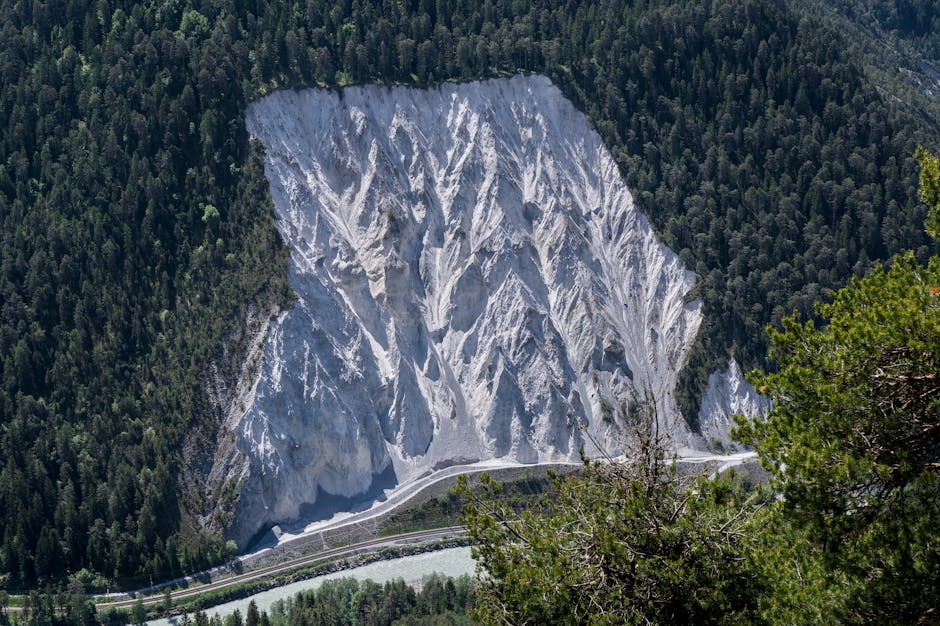
Did You Know? 15 Fun Facts About Geographical Sites

Did You Know? 15 Fun Facts About Geographical Sites

⏱️ 7 min read

Our planet is filled with remarkable geographical wonders that continue to surprise and fascinate us. From hidden features of famous landmarks to unusual natural phenomena, these locations hold secrets that even seasoned travelers might not know. The following collection reveals extraordinary facts about some of the world's most intriguing geographical sites that will change the way you view our planet's diverse landscape.

Extraordinary Discoveries About the World's Geographical Wonders

1. Mount Everest Isn't Actually the Tallest Mountain

While Mount Everest holds the record for the highest elevation above sea level at 29,032 feet, it's not technically the tallest mountain on Earth. That distinction belongs to Mauna Kea in Hawaii, which measures over 33,500 feet from its base on the ocean floor to its summit. However, only 13,796 feet of Mauna Kea are visible above sea level, making Everest the highest point one can stand on Earth's surface.

2. The Dead Sea Is Disappearing at an Alarming Rate

The Dead Sea, famous for its extreme salinity that allows people to float effortlessly, is shrinking by more than three feet per year. This geographical marvel, located at the lowest point on Earth's surface at 1,410 feet below sea level, has lost approximately one-third of its surface area since the 1960s due to water diversion and mineral extraction, creating massive sinkholes along its shores.

3. Antarctica Contains Most of Earth's Freshwater

The frozen continent of Antarctica holds approximately 70% of the world's freshwater and 90% of its ice. If all this ice were to melt, global sea levels would rise by about 200 feet. Despite being covered in ice, Antarctica is technically classified as a desert because it receives so little precipitation, averaging only about two inches per year in the interior regions.

4. The Sahara Desert Occasionally Gets Snow

The world's largest hot desert has witnessed snowfall multiple times in recent decades, with notable events occurring in 1979, 2016, 2018, and 2021. The town of Ain Sefra in Algeria, known as the "Gateway to the Sahara," has been photographed with sand dunes covered in snow, creating a surreal landscape that contradicts our typical image of this arid region.

5. Australia's Great Barrier Reef Is Visible from Space

The Great Barrier Reef stretches over 1,400 miles along the Queensland coast and is the largest living structure on Earth. Composed of billions of tiny organisms called coral polyps, this massive reef system covers an area of approximately 133,000 square miles and is one of the few biological structures visible from outer space, comparable in visibility to the Great Wall of China.

6. The Grand Canyon Reveals Two Billion Years of Geological History

The rock layers exposed in the Grand Canyon represent nearly half of Earth's history, with the oldest rocks at the bottom dating back approximately 1.8 billion years. The canyon itself, however, is relatively young in geological terms, carved primarily over the past 5-6 million years by the Colorado River. This natural wonder descends over a mile deep and spans up to 18 miles wide in certain sections.

7. Lake Baikal Holds More Water Than All the Great Lakes Combined

Located in Siberia, Russia, Lake Baikal is the world's deepest and oldest freshwater lake, reaching depths of 5,387 feet and estimated to be 25-30 million years old. This ancient lake contains approximately 20% of the world's unfrozen surface freshwater, more than all five North American Great Lakes combined. It's also home to thousands of plant and animal species found nowhere else on Earth.

8. The Amazon River Has No Bridges Crossing It

Despite being approximately 4,000 miles long and passing through several cities, the Amazon River has zero bridges spanning its width. This is primarily because most of the river flows through dense rainforest with few roads and settlements, making bridges economically impractical. The river is so wide in many places that it would require massive engineering projects to construct bridges that could withstand the river's seasonal flooding.

9. Iceland Is Slowly Splitting Apart

Iceland sits atop the Mid-Atlantic Ridge, where the North American and Eurasian tectonic plates are gradually separating. The island is literally being pulled apart at a rate of approximately two centimeters per year. Visitors can actually walk between these two continental plates in Thingvellir National Park, witnessing one of the few places on Earth where a divergent plate boundary is visible above sea level.

10. Mount Kilimanjaro's Snow Is Rapidly Vanishing

The iconic snow-capped peak of Mount Kilimanjaro in Tanzania has lost more than 85% of its ice fields since 1912. Scientists predict that Africa's highest mountain may be completely ice-free within the next few decades due to climate change and reduced precipitation. The mountain's glaciers, which have existed for approximately 11,700 years, are disappearing at an accelerating rate.

11. The Caspian Sea Is Actually a Lake

Despite its name, the Caspian Sea is technically the world's largest lake, covering approximately 143,000 square miles. This massive body of water is bordered by five countries and contains brackish water rather than pure freshwater. It's called a "sea" partly due to its immense size and partly because it was once connected to the world's oceans millions of years ago.

12. Angel Falls Drops Water That Turns to Mist

Venezuela's Angel Falls, the world's highest uninterrupted waterfall at 3,212 feet, is so tall that much of its water evaporates or turns to mist before reaching the ground during dry season. Named after American aviator Jimmie Angel who was the first to fly over the falls in 1933, this natural wonder plunges from the Auyán-tepui mountain in Canaima National Park.

13. The Mariana Trench Could Swallow Mount Everest

The deepest point in Earth's oceans, the Challenger Deep in the Mariana Trench, reaches approximately 36,000 feet below sea level. If Mount Everest were placed at the bottom of this trench, its peak would still be more than a mile underwater. The pressure at this depth is over 1,000 times greater than at sea level, yet scientists have discovered thriving ecosystems in this extreme environment.

14. Victoria Falls Creates a Natural Phenomenon Called "Moonbows"

Victoria Falls on the Zambia-Zimbabwe border produces so much mist that it creates rare lunar rainbows, or "moonbows," during full moon nights. These ethereal rainbows appear white to the human eye due to low light conditions, though cameras can capture their colors. The falls also generates a permanent column of spray that can be seen from up to 30 miles away.

15. The Eye of the Sahara Is a Mysterious Geological Structure

The Richat Structure, also known as the Eye of the Sahara, is a massive circular formation in Mauritania spanning approximately 30 miles in diameter. Originally thought to be an impact crater, geologists now believe it was formed by erosion of a geological dome. This striking bull's-eye pattern is clearly visible from space and has become a landmark for astronauts orbiting Earth.

The Endless Wonders of Our Planet

These fifteen remarkable facts demonstrate that even the most famous geographical sites harbor surprises that continue to intrigue scientists and travelers alike. From disappearing glaciers to underwater trenches deeper than mountains are tall, from lakes larger than seas to rivers without bridges, our planet's geographical features remind us of Earth's dynamic nature and the ongoing processes that shape our world. Understanding these extraordinary characteristics not only enriches our appreciation of these natural and geological wonders but also highlights the importance of preserving them for future generations to study and admire.