











U.S. Islands That America Accidentally Forgot It Owned for Decades

1 / 10 Questions
0 Points

Which Pacific island did the U.S. claim in 1857, abandon after mining, then have to reclaim in 1935 after Britain took it over?

Midway Atoll

Johnston Atoll

Jarvis Island

Palmyra Atoll

Points won
0
Correct score
0%

More Questions

More Articles

18 Fun Facts About the Age of Enlightenment

18 Fun Facts About the Age of Enlightenment

⏱️ 3 min read

18 Fun Facts About the Age of Enlightenment

The Age of Enlightenment, also known as the Age of Reason, was a transformative intellectual and philosophical movement that swept across Europe during the 17th and 18th centuries. Here are 18 fascinating facts about this revolutionary period that shaped modern thinking and society.

1. The Coffee House Revolution

Coffee houses became intellectual hubs during the Enlightenment, serving as meeting places where people could discuss philosophy, politics, and science. In London alone, there were over 3,000 coffee houses by 1675, nicknamed "Penny Universities" because admission cost just one penny.

2. The Encyclopedia Movement

Denis Diderot and Jean le Rond d'Alembert produced the "Encyclopédie," a massive 28-volume work containing 71,818 articles and 3,129 illustrations. It took 26 years to complete and aimed to compile all human knowledge in one collection.

3. Scientific Revolution Connection

The Enlightenment was closely tied to the Scientific Revolution, with Isaac Newton's "Principia Mathematica" becoming a symbol of the age. His work demonstrated that the universe followed predictable, mathematical laws.

4. Women's Salons

Female intellectuals hosted salons where philosophers and thinkers gathered. Madame Geoffrin's salon in Paris was particularly famous, attracting luminaries like Voltaire and Montesquieu.

5. Religious Transformation

The period saw the rise of Deism, a religious philosophy that believed in God but rejected organized religion and supernatural elements. Many founding fathers of America, including Thomas Jefferson, were Deists.

6. Revolutionary Impact

Enlightenment ideas directly influenced both the American and French Revolutions, promoting concepts like natural rights, popular sovereignty, and separation of powers.

7. The Republic of Letters

A vast network of correspondence between intellectuals across Europe created the "Republic of Letters," with an estimated 50,000 letters exchanged between scholars during the period.

8. Educational Reform

The Enlightenment revolutionized education, promoting universal schooling and secular curricula. Prussia implemented the first modern education system during this period.

9. Medical Advances

The period saw significant medical breakthroughs, including Edward Jenner's development of vaccination and William Harvey's accurate description of blood circulation.

10. Literary Innovation

The novel emerged as a major literary form during the Enlightenment, with works like Daniel Defoe's "Robinson Crusoe" pioneering new narrative techniques.

11. Musical Evolution

Classical music flourished with composers like Mozart and Haydn, whose works reflected Enlightenment values of clarity, symmetry, and rational order.

12. Agricultural Revolution

Scientific farming methods developed during the Enlightenment led to the Agricultural Revolution, dramatically increasing food production and population growth.

13. Economic Theories

Adam Smith's "The Wealth of Nations" (1776) established modern economic theory and promoted free market principles that still influence economics today.

14. Gender Equality Debates

Mary Wollstonecraft's "A Vindication of the Rights of Woman" (1792) marked one of the first systematic arguments for women's rights and equality.

15. Scientific Societies

The Royal Society in London and the French Academy of Sciences were established, creating formal institutions for scientific research and discourse.

16. Art and Architecture

Neoclassicism emerged as the dominant artistic style, emphasizing reason and order through symmetrical designs and references to classical antiquity.

17. Press Freedom

The concept of freedom of the press developed during this period, with philosophers like John Milton arguing against censorship in works like "Areopagitica."

18. Linguistic Innovation

The first modern dictionaries were compiled during the Enlightenment, including Samuel Johnson's Dictionary of the English Language (1755), which standardized English spelling and usage.

Conclusion

The Age of Enlightenment was a remarkable period that fundamentally changed how humans thought about science, politics, religion, and society. These 18 facts demonstrate the era's lasting impact on modern civilization, from our educational systems to our political institutions. The movement's emphasis on reason, individual rights, and scientific inquiry continues to influence contemporary thought and culture, making it one of history's most significant intellectual movements.
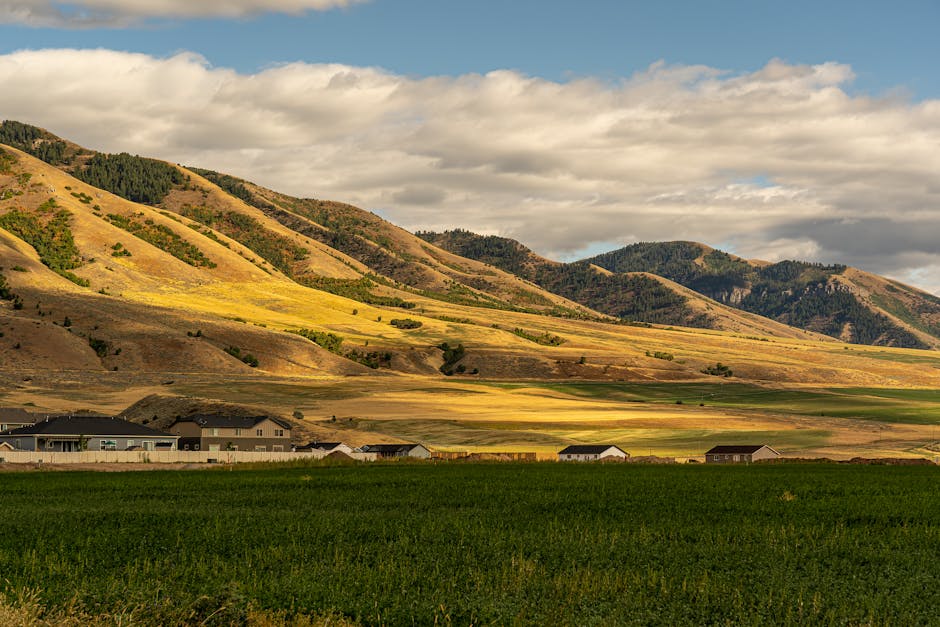
USA Geography Trivia Quiz: 15 Facts About American Forests

USA Geography Trivia Quiz: 15 Facts About American Forests

⏱️ 6 min read

The United States is home to some of the most diverse and magnificent forest ecosystems on Earth, spanning millions of acres across varying climates and terrains. From towering redwoods on the Pacific coast to dense hardwood forests in the Appalachians, these natural treasures play crucial roles in the nation's ecology, economy, and cultural heritage. Understanding the scope and significance of American forests reveals fascinating insights into the country's natural landscape and environmental history.

Essential Facts About America's Forested Landscapes

1. The Vast Expanse of American Forest Coverage

Approximately 766 million acres of forest cover the United States, representing about one-third of the nation's total land area. This extensive coverage makes the U.S. home to roughly 8% of the world's forests. These forested lands span from sea to shining sea, encompassing everything from tropical forests in Hawaii and Puerto Rico to boreal forests in Alaska. The sheer magnitude of this forest coverage underscores the importance of proper management and conservation efforts to maintain these vital ecosystems for future generations.

2. Alaska's Dominance in Forest Territory

Alaska stands as the undisputed champion of forested states, containing approximately 129 million acres of forestland. This represents nearly 17% of all forest area in the United States. The Last Frontier's vast boreal forests, also known as taiga, stretch across the interior, while temperate rainforests flourish in the southeastern panhandle, including the renowned Tongass National Forest, which itself covers 16.7 million acres.

3. The Ancient Bristlecone Pines

The oldest living trees in America, and among the oldest in the world, are the bristlecone pines found in California, Nevada, and Utah. These remarkable trees can live for over 5,000 years, with the oldest known specimen named "Methuselah" estimated to be around 4,853 years old. These gnarled, weather-beaten survivors thrive in harsh, high-elevation environments where few other trees can survive, making them living witnesses to millennia of human history.

4. Redwood Giants of the Pacific Coast

Coast redwoods in California hold the distinction of being the tallest trees on Earth, with some specimens exceeding 380 feet in height. The tallest known tree, named "Hyperion," stands at approximately 380.3 feet tall. These magnificent trees, found primarily in a narrow coastal strip of northern California, can live for over 2,000 years and create unique forest ecosystems characterized by filtered light, high humidity, and diverse understory vegetation.

5. The National Forest System's Establishment

The U.S. National Forest System, administered by the Forest Service, encompasses 193 million acres across 154 national forests and 20 national grasslands. Established in 1905 under President Theodore Roosevelt's administration, this system was created to protect and manage forest resources for sustained use. The national forests serve multiple purposes, including timber production, watershed protection, recreation, and wildlife habitat preservation.

6. The Great Smoky Mountains' Biodiversity

The forests of Great Smoky Mountains National Park contain more tree species than all of northern Europe. This park, straddling the Tennessee-North Carolina border, hosts over 100 native tree species, making it one of the most biodiverse temperate forests in the world. The variation in elevation, abundant rainfall, and lack of glaciation during ice ages contributed to this remarkable diversity.

7. Private Ownership Dominance

Surprisingly, private individuals and corporations own approximately 56% of America's forestland, totaling around 423 million acres. This includes family forest owners, timber companies, and other private entities. Federal ownership accounts for about 31%, while state and local governments own roughly 11%. This ownership pattern significantly influences forest management practices and conservation strategies across the nation.

8. The Tongass Temperate Rainforest

America's largest national forest, the Tongass in southeastern Alaska, encompasses nearly 17 million acres of temperate rainforest. This ecosystem is among the world's largest remaining intact temperate rainforests and contains massive Sitka spruce, western hemlock, and cedar trees. The Tongass plays a critical role in carbon sequestration, storing significant amounts of carbon in both its trees and soil.

9. Forest Fire's Natural Role

Many American forest ecosystems, particularly in the western United States, evolved with fire as a natural and necessary component. Certain species, like lodgepole pines and giant sequoias, have adapted to fire, with some requiring fire to release seeds from their cones. The suppression of natural fires over the past century has led to fuel accumulation and more catastrophic wildfires, prompting managers to reconsider fire management strategies.

10. The Appalachian Forest Belt

The Appalachian Mountain range contains one of the most extensive deciduous forest systems in the world, stretching over 1,500 miles from Maine to Georgia. These forests host incredible biodiversity, including numerous salamander species, and display spectacular fall foliage that attracts millions of visitors annually. The region's forests also serve as crucial headwaters for major river systems supplying water to millions of Americans.

11. Carbon Storage Powerhouses

American forests store approximately 14% of total U.S. carbon emissions annually, making them vital tools in combating climate change. These forests sequester roughly 866 million metric tons of carbon dioxide equivalent per year. Forest soils also store substantial amounts of carbon, often exceeding the amount stored in the trees themselves, highlighting the importance of protecting both above and below-ground forest components.

12. The Diversity of Forest Types

The United States contains numerous distinct forest types, from tropical rainforests in Hawaii to dry pinyon-juniper woodlands in the Southwest. Major forest types include northern hardwoods, southern pine forests, Pacific Northwest coniferous forests, oak-hickory forests, and maple-beech-birch associations. This diversity results from variations in climate, elevation, soil types, and precipitation patterns across the continent.

13. Economic Contributions of Forest Industries

America's forest products industry contributes approximately $300 billion annually to the U.S. economy and provides nearly one million jobs. Beyond timber, forests support recreation and tourism industries worth billions more. Hunting, fishing, hiking, camping, and other forest-based recreational activities generate substantial economic benefits for rural communities while providing quality-of-life improvements for millions of Americans.

14. Reforestation Success Stories

The total forest area in the United States has remained relatively stable over the past century, with approximately the same amount of forestland today as existed in 1910. This stability represents a remarkable recovery from extensive deforestation during the 19th and early 20th centuries. Natural regeneration, replanting efforts, and the abandonment of marginal agricultural lands have allowed forests to reclaim millions of acres in the eastern United States.

15. Wildlife Habitat Importance

American forests provide critical habitat for thousands of wildlife species, including approximately 400 threatened and endangered species. From the spotted owl in Pacific Northwest old-growth forests to the red-cockaded woodpecker in southern pine ecosystems, these forests support complex food webs and biodiversity. Large mammals such as black bears, elk, and deer depend on forest habitats, while countless bird species use forests for breeding, migration stopover points, or year-round residence.

Conclusion

America's forests represent irreplaceable natural resources that provide environmental, economic, and social benefits extending far beyond their boundaries. From the oldest living organisms on Earth to the tallest trees ever measured, from carbon storage to biodiversity hotspots, these forests embody the natural heritage of the United States. Understanding these facts helps illuminate why forest conservation and sustainable management remain critical priorities for ensuring these landscapes continue to thrive and serve future generations. Whether publicly or privately owned, temperate or tropical, these forests collectively form a vital component of America's natural infrastructure and global environmental health.