
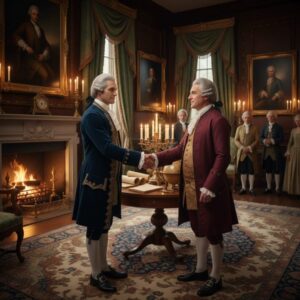





Which US president created the modern handshake?

1 / 10 Questions
0 Points

Which US president created the modern handshake?

George Washington

Theodore Roosevelt

Thomas Jefferson

Abraham Lincoln

Points won
0
Correct score
0%

More Questions

More Articles

Did You Know? Secrets Behind the Statue of Liberty and Other US Wonders

Did You Know? Secrets Behind the Statue of Liberty and Other US Wonders

⏱️ 4 min read

Did You Know? Secrets Behind the Statue of Liberty and Other US Wonders

The United States is home to some of the world's most iconic landmarks, each harboring fascinating secrets and little-known facts that make them even more remarkable. From the Statue of Liberty to Mount Rushmore, these monuments hold stories that often go untold to the millions of visitors they receive each year.

The Statue of Liberty: Hidden Facts and Mysteries

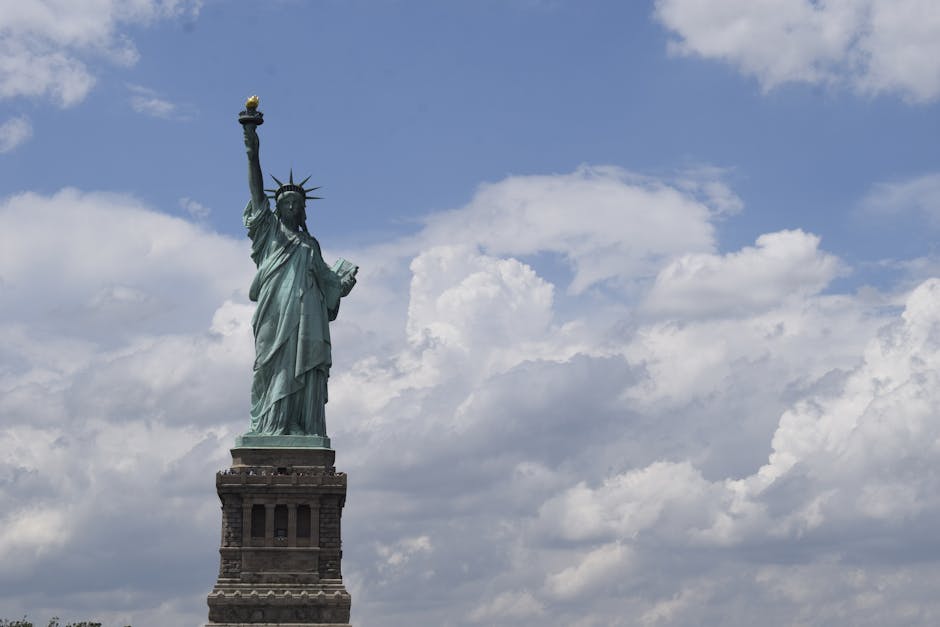
Lady Liberty stands as a symbol of freedom and democracy, but few know that she wasn't always the green color we see today. Originally, the statue was a dull copper color. The current green patina developed over time due to oxidation of the copper skin. This natural aging process actually helps protect the statue from further deterioration.

  • The statue's face was reportedly modeled after the sculptor Frédéric Auguste Bartholdi's mother
  • The seven spikes on her crown represent the seven continents and seas
  • The chains at her feet symbolize breaking free from tyranny
  • Her torch was restored in 1984 and covered with 24k gold leaf

Another lesser-known fact is that the Statue of Liberty was originally intended for Egypt, not America. Bartholdi initially designed it as a lighthouse for the Suez Canal, but when Egypt refused due to costs, he modified the design and proposed it to the United States.

Mount Rushmore's Hidden Chamber

Behind the massive carved heads of Mount Rushmore lies a secret chamber known as the Hall of Records. Sculptor Gutzon Borglum intended this room to house important American historical documents and artifacts. Although never completed as originally envisioned, in 1998, officials placed a titanium vault in the chamber containing historical documents and information about the monument's construction.

  • The carving took 14 years to complete (1927-1941)
  • Over 400 workers helped create the monument
  • The faces are 60 feet high
  • The original plan included the presidents' bodies down to their waists

Gateway Arch: Engineering Marvel

St. Louis's Gateway Arch holds several architectural secrets that make it a true engineering wonder. The arch is designed to sway up to 18 inches in either direction without structural damage, and it's as tall as it is wide (630 feet). During construction, surveyors had to be incredibly precise - if they had been off by as little as 1/64th of an inch, the two sides wouldn't have met in the middle.

  • The arch contains a unique tram system that carries visitors to the top
  • Its stainless steel exterior is actually a sandwich of two walls with concrete in between
  • The foundation extends 60 feet underground
  • It's the tallest man-made monument in the United States

Space Needle's Hidden Features

Seattle's Space Needle was built for the 1962 World's Fair and includes several innovative features that weren't publicly known for years. The structure was designed to withstand winds of up to 200 mph and earthquakes up to magnitude 9.0. The restaurant level contains a sophisticated counterweight system that helps stabilize the building during high winds.

  • The original revolving restaurant turntable was powered by a 1 horsepower motor
  • The tower has 25 lightning rods
  • Paint colors were chosen to complement the Pacific Northwest sky
  • The elevator cables can withstand winds up to 200 mph

The Lincoln Memorial's Hidden Symbols

The Lincoln Memorial contains numerous symbolic elements that many visitors overlook. The number of steps leading up to the chamber is significant - there are 87 steps from the Reflecting Pool to the Lincoln chamber, representing the famous words "four score and seven" from the Gettysburg Address.

  • Lincoln's hands form "A" and "L" in American Sign Language
  • There are 36 columns, one for each state at the time of Lincoln's death
  • A typo in Lincoln's Second Inaugural Address was accidentally carved into the wall
  • The statue faces east so that the sun symbolically rises on Lincoln each day

Golden Gate Bridge's Secret Paint Job

San Francisco's Golden Gate Bridge's distinctive color, "International Orange," wasn't the original plan. The U.S. Navy wanted it painted in black and yellow stripes to ensure visibility for passing ships. The consulting architect, Irving Morrow, chose the orange color because it provided visibility in the fog while complementing the natural surroundings and enhancing the bridge's architectural features.

  • The bridge is constantly being painted, year-round
  • It contains enough wire in its main cables to circle the earth three times
  • The towers can move several feet in either direction to accommodate thermal expansion
  • Special painters called "Halfway to Hell Club" members painted the underside of the bridge

These American landmarks continue to captivate visitors not only through their impressive visible features but also through their hidden secrets and engineering marvels. Each structure represents a unique combination of architectural innovation, historical significance, and human achievement that has helped shape the nation's identity and cultural landscape.

Did You Know? 20 Fun Facts About US Inventions

Did You Know? 20 Fun Facts About US Inventions

⏱️ 6 min read

The United States has been a powerhouse of innovation, producing countless inventions that have transformed everyday life around the globe. From household appliances to groundbreaking technology, American ingenuity has shaped the modern world in remarkable ways. These fascinating facts about US inventions reveal surprising origins, unexpected applications, and the creative minds behind some of history's most influential creations.

Revolutionary Innovations That Changed the World

1. The Traffic Light System Started with Two Colors

The first electric traffic light was installed in Cleveland, Ohio, in 1914 by James Hoge. Interestingly, it only featured red and green lights initially. The yellow caution light wasn't added until later, transforming how cities managed vehicle flow and significantly reducing accidents at intersections.

2. Benjamin Franklin's Lightning Rod Had a Musical Twist

While Benjamin Franklin is famous for inventing the lightning rod in 1752, he also created the glass armonica, a musical instrument that produced ethereal sounds from rotating glass bowls. Both Mozart and Beethoven composed music specifically for this American invention.

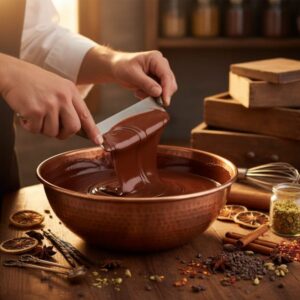
3. The Chocolate Chip Cookie Was a Happy Accident

In 1938, Ruth Wakefield at the Toll House Inn in Massachusetts invented chocolate chip cookies by accident. She expected chocolate pieces to melt into her cookie dough, but instead, they held their shape, creating one of America's most beloved desserts.

4. Assembly Line Production Revolutionized Manufacturing

Henry Ford didn't invent the automobile, but his introduction of the moving assembly line in 1913 revolutionized manufacturing worldwide. This innovation reduced the time to build a car from over 12 hours to just 93 minutes, making automobiles affordable for average Americans.

5. The ATM Prototype Used Radioactive Materials

Luther Simjian invented an early version of the ATM in 1939 in New York City. His Bankmatic machine used radioactive carbon to verify deposits. Although it didn't catch on immediately, his concept laid groundwork for modern automated banking.

Household Items with American Origins

6. Safety Pins Were Invented to Pay Off Debt

Walter Hunt invented the safety pin in 1849 to pay off a $15 debt. He designed and patented the device in just three hours, then sold the rights for $400. Today, billions of safety pins are produced annually worldwide.

7. The Microwave Oven Came from Radar Technology

Percy Spencer discovered microwave cooking in 1945 while working on radar equipment for Raytheon. A chocolate bar melted in his pocket near a magnetron, leading to the invention of the microwave oven, which would eventually become a kitchen staple.

8. Bubble Wrap Was Originally Designed as Wallpaper

In 1957, engineers Alfred Fielding and Marc Chavannes created bubble wrap while trying to make textured wallpaper. When that failed, they marketed it as greenhouse insulation before discovering its perfect use as protective packaging material.

9. The Zipper Took Decades to Perfect

While several inventors contributed to zipper development, Gideon Sundback, working in New Jersey, created the modern zipper in 1913. However, it wasn't called a "zipper" until the B.F. Goodrich Company used the term in 1923 for boots featuring the fastener.

10. Disposable Diapers Started with Shower Curtains

Marion Donovan invented the first waterproof disposable diaper in 1946 using a shower curtain. She later improved the design with absorbent paper, though manufacturers initially rejected her idea. The concept eventually became a multi-billion dollar industry.

Medical and Scientific Breakthroughs

11. Coca-Cola Was Originally Marketed as Medicine

Pharmacist John Pemberton invented Coca-Cola in 1886 in Atlanta, Georgia, as a patent medicine claiming to cure various ailments including headaches and nervous disorders. It contained coca leaf extract until 1903 and was initially sold at pharmacy soda fountains.

12. The Pacemaker Was a Garage Project

Wilson Greatbatch accidentally invented the implantable pacemaker in 1956 while building a heart rhythm recorder. He grabbed the wrong resistor, and the circuit produced electrical pulses perfect for regulating heartbeats, saving countless lives.

13. Super Glue Was Discovered Twice by Accident

Harry Coover discovered cyanoacrylate (Super Glue) in 1942 while trying to make clear plastic gun sights during World War II. He rediscovered its adhesive properties in 1951 and finally recognized its commercial potential, leading to its 1958 market release.

14. The Cotton Gin Transformed Agriculture

Eli Whitney's cotton gin, invented in 1793, could clean cotton fifty times faster than manual processing. This invention dramatically changed American agriculture and textile production, though it also had significant social and economic consequences.

Entertainment and Communication Innovations

15. The Phonograph Could Record and Playback Sound

Thomas Edison invented the phonograph in 1877, creating the first device capable of both recording and reproducing sound. His initial recording was "Mary Had a Little Lamb," marking the birth of the recording industry.

16. Television Technology Combined Multiple Innovations

Philo Farnsworth demonstrated the first fully electronic television system in 1927 at age 21. His image dissector camera tube made modern television possible, though he spent years fighting patent battles with RCA.

17. The Computer Mouse Started with a Wooden Shell

Douglas Engelbart invented the computer mouse in 1964 at Stanford Research Institute. The first prototype was handmade from wood with a single button. He called it a "mouse" because the tail-like cord came out the end.

18. Email Transformed Communication Forever

Ray Tomlinson sent the first email in 1971 while working on ARPANET. He chose the @ symbol to separate the user name from the computer name, a convention still used today in billions of email addresses worldwide.

Aviation and Transportation Advances

19. The Wright Brothers' First Flight Lasted 12 Seconds

Orville and Wilbur Wright achieved powered flight on December 17, 1903, in Kitty Hawk, North Carolina. The first flight covered 120 feet in 12 seconds, but by day's end, they had flown 852 feet in 59 seconds, launching the aviation age.

20. GPS Technology Has Military Origins

The Global Positioning System was developed by the US Department of Defense in 1973, becoming fully operational in 1995. Initially restricted to military use, GPS was made available to civilians and now guides billions of people daily through navigation apps.

The Legacy of American Innovation

These twenty inventions represent just a fraction of American contributions to global progress. From accidental discoveries to deliberate innovations, US inventors have consistently pushed boundaries and solved problems in creative ways. Many of these inventions emerged from unexpected circumstances, proving that innovation often requires curiosity, persistence, and willingness to see potential in mistakes. The impact of American ingenuity continues to influence modern life, with many of these inventions serving as foundations for further technological advancement. Understanding the origins of everyday items and groundbreaking technologies provides appreciation for the innovative spirit that continues to drive progress and improve lives worldwide.