


Which President Is On The One Dollar Bill?

1 / 10 Questions
0 Points

Which President Is On The One Dollar Bill?

George Washington

George Clinton

George H.W. Bush

George Bush

Points won
0
Correct score
0%

More Questions

More Articles

Top 10 Architectural Marvels From Unexpected Places

Top 10 Architectural Marvels From Unexpected Places

⏱️ 4 min read

Top 10 Architectural Marvels From Unexpected Places

While iconic architectural landmarks like the Eiffel Tower and Taj Mahal are widely recognized, some of the world's most impressive architectural achievements exist in unexpected locations. These hidden gems showcase remarkable engineering, cultural significance, and innovative design, yet remain relatively unknown to many. Here are ten architectural marvels from surprising places around the globe.

1. Heydar Aliyev Center - Baku, Azerbaijan

Designed by acclaimed architect Zaha Hadid, this flowing, curved structure breaks from the rigid Soviet architecture that once dominated Baku. The building's fluid form represents the optimistic future of Azerbaijan while challenging traditional architectural boundaries. Its distinctive wave-like structure appears to rise from the ground without a single straight line, making it a masterpiece of modern design in an unexpected location.

2. Lotus Temple - New Delhi, India

While India is known for its traditional temples, the Lotus Temple presents a striking contrast with its contemporary design. This Bahá'í House of Worship, completed in 1986, comprises 27 free-standing marble "petals" arranged to form a lotus shape. The structure has won numerous architectural awards and attracts millions of visitors annually, yet remains lesser-known compared to India's classical monuments.

3. Harpa Concert Hall - Reykjavik, Iceland

Rising from Iceland's harsh volcanic landscape, Harpa's crystalline structure features a stunning glass facade inspired by the country's basalt formations. The building's hexagonal panels change colors with the light, creating a dynamic interplay with the surrounding environment. This architectural masterpiece has transformed Reykjavik's cultural landscape since its completion in 2011.

4. Great Mosque of Djenné - Mali

Located in one of Africa's least-visited countries, this UNESCO World Heritage site is the world's largest mud-built structure. The mosque's unique architectural style, known as the Sudano-Sahelian architecture, features distinctive protruding wooden support beams and an elaborate facade. The entire community participates in its annual maintenance, making it a remarkable example of sustainable architecture.

5. Temppeliaukio Church - Helsinki, Finland

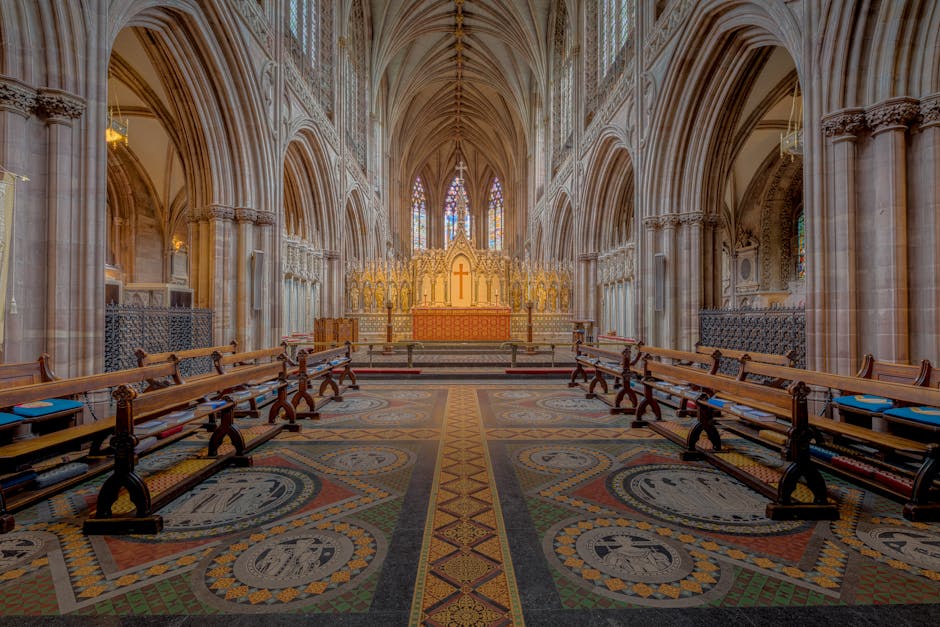
Carved directly into solid rock, this Lutheran church demonstrates exceptional architectural innovation. Known as the "Rock Church," its circular interior is topped with a copper dome supported by concrete beams. The natural rock walls provide exceptional acoustics, making it both an architectural marvel and a popular concert venue.

6. Hang Nga Guesthouse - Da Lat, Vietnam

Often called the "Crazy House," this unconventional structure resembles a giant tree with sculptural elements representing natural forms. Designed by architect Dang Viet Nga, the building defies conventional architecture with its organic shapes and surreal design elements. Its fairytale-like appearance has made it one of Vietnam's most unique architectural attractions.

7. Metropol Parasol - Seville, Spain

While Seville is known for its historic architecture, this modern wooden structure stands as the world's largest wooden building. Completed in 2011, its mushroom-shaped parasols create a distinctive waffle-like canopy over the city's ancient quarter. The structure provides shade, houses archaeological exhibits, and features panoramic walkways.

8. Buzludzha Monument - Bulgaria

This abandoned communist-era monument sits atop a remote mountain peak in Bulgaria. Though now derelict, its UFO-like concrete structure represents a remarkable achievement in brutal modernist architecture. The building's dramatic setting and innovative design make it a significant example of 20th-century political architecture.

9. Las Lajas Sanctuary - Ipiales, Colombia

Built inside a canyon spanning a river gorge, this Gothic Revival church seems to defy gravity. The basilica bridge connects two cliffs, rising 150 feet from the bottom of the canyon. Its dramatic setting and architectural achievement make it one of South America's most spectacular religious buildings, despite its remote location.

10. Crooked House - Sopot, Poland

Known locally as Krzywy Domek, this surreal building appears to be melting or distorted. Inspired by the fairytale illustrations of Jan Marcin Szancer, the structure features curved walls, undulating lines, and warped windows. Despite its unusual appearance, it functions as a successful commercial building, housing restaurants and shops.

These architectural marvels demonstrate that extraordinary design can emerge from unexpected places, challenging our preconceptions about where significant architecture can be found. Each structure represents a unique combination of cultural influence, engineering innovation, and artistic vision, contributing to the global architectural heritage in its own distinctive way. From religious buildings to modern cultural centers, these examples show how architectural excellence knows no geographical boundaries.

These lesser-known architectural achievements continue to inspire designers and attract visitors who venture beyond the usual tourist destinations. They serve as reminders that remarkable architecture can arise anywhere, shaped by local culture, available materials, and creative vision, often resulting in structures that rival or surpass their more famous counterparts in both innovation and impact.
Did You Know These 10 Fun Facts About American Holidays?

Did You Know These 10 Fun Facts About American Holidays?

⏱️ 7 min read

American holidays are filled with traditions, celebrations, and historical significance that bring communities together throughout the year. However, beneath the surface of familiar festivities lie fascinating stories and surprising facts that many people have never heard. From presidential proclamations to commercial transformations, the evolution of American holidays reveals quirky details and unexpected origins that add depth to these cherished occasions.

Surprising Truths Behind America's Most Beloved Celebrations

1. Thanksgiving Was Only Intermittently Celebrated for Centuries

While many Americans believe Thanksgiving has been celebrated annually since the Pilgrims' 1621 feast, this holiday actually had a sporadic history. After the initial celebration, Thanksgiving was observed irregularly, declared by individual colonies or states on different dates. It wasn't until 1863, during the Civil War, that President Abraham Lincoln proclaimed Thanksgiving a national holiday to be celebrated on the last Thursday of November. Even then, the date shifted again when President Franklin D. Roosevelt moved it up one week in 1939 to extend the Christmas shopping season, causing such controversy that Congress eventually fixed the date as the fourth Thursday in November in 1941.

2. Independence Day Wasn't Always July 4th in Everyone's Mind

Americans celebrate Independence Day on July 4th, but the Continental Congress actually voted to declare independence on July 2nd, 1776. John Adams famously wrote to his wife Abigail that July 2nd would be "the most memorable epocha in the history of America" and believed that date would be celebrated by future generations. The Declaration of Independence was formally adopted on July 4th, which is why that date became the official holiday. Interestingly, both Adams and Thomas Jefferson died on July 4th, 1826, exactly fifty years after the Declaration was adopted.

3. Memorial Day Started with a Different Name and Purpose

Originally known as Decoration Day, Memorial Day began in the years following the Civil War as a time to decorate the graves of fallen soldiers with flowers. The first widely recognized observance occurred on May 30th, 1868, when flowers were placed on the graves of both Union and Confederate soldiers at Arlington National Cemetery. The date was chosen because it wasn't the anniversary of any particular battle. The holiday wasn't officially called Memorial Day until 1967, and it didn't become a federal holiday with the current last-Monday-in-May date until the Uniform Monday Holiday Act took effect in 1971.

4. Valentine's Day Has Mysterious and Multiple Origins

The Catholic Church recognizes at least three different saints named Valentine or Valentinus, all of whom were martyred. One legend suggests that Saint Valentine was a priest who performed marriages for young lovers in secret after Emperor Claudius II banned marriage for young men, believing single soldiers fought better. Another account claims Valentine was killed for attempting to help Christians escape Roman prisons. The holiday's association with romantic love didn't firmly establish itself until Geoffrey Chaucer's poetry in the 14th century, and the tradition of exchanging cards didn't become widespread in America until the 1850s.

5. Labor Day Was Born from Violent Strikes and Worker Protests

Labor Day's origins are rooted in the late 19th-century labor movement and violent clashes between workers and authorities. The holiday was created during a period of intense labor unrest, particularly following the Pullman Strike of 1894, where federal troops killed several workers. President Grover Cleveland, facing a re-election year and trying to reconcile with the labor movement, rushed legislation through Congress to make Labor Day a federal holiday just six days after the strike ended. Interestingly, Cleveland chose the first Monday in September rather than May 1st (International Workers' Day) to avoid associations with socialist and communist movements.

6. Halloween's Candy Tradition Is Surprisingly Recent

While Halloween has been celebrated in various forms for centuries, trick-or-treating for candy only became a widespread American tradition after World War II. Before the 1950s, children received homemade treats, coins, nuts, or toys. Candy companies recognized a marketing opportunity and began creating individually wrapped, inexpensive candies specifically for Halloween distribution. The practice exploded in popularity during the 1950s and 1960s, turning Halloween into the candy-centric holiday it is today. Halloween now generates over $3 billion in candy sales annually, making it the largest candy-selling holiday of the year.

7. Presidents' Day Honors No President Specifically

Despite popular belief, there is no federal holiday officially called "Presidents' Day" that celebrates all presidents. The federal holiday is legally still named "Washington's Birthday" and is meant to honor George Washington alone. The Uniform Monday Holiday Act of 1971 moved the celebration from February 22nd (Washington's actual birthday) to the third Monday in February, which can never fall on his actual birthday. Retailers coined the term "Presidents' Day" to create sales events, and many states adopted it to also honor Abraham Lincoln, whose birthday is February 12th. Some states celebrate the day as a tribute to all presidents, though this was never the federal government's intention.

8. New Year's Day Wasn't Always January First

For much of history, Americans celebrated the new year on different dates depending on their cultural background. The British Empire, including the American colonies, celebrated New Year's Day on March 25th until 1752, when they adopted the Gregorian calendar and moved it to January 1st. Different cultures within America still celebrate new year traditions on various dates: the Chinese New Year falls between late January and mid-February, Rosh Hashanah occurs in September or October, and Nowruz is celebrated on the spring equinox. The tradition of dropping a ball in Times Square didn't begin until 1907, and it was originally an iron and wood sphere weighing 700 pounds.

9. Martin Luther King Jr. Day Took Nearly Two Decades to Establish Nationally

The campaign to establish Martin Luther King Jr. Day as a federal holiday began just four days after his assassination in 1968, but it faced significant opposition and wasn't signed into law until 1983 by President Ronald Reagan. Even then, it took until 2000 for all fifty states to recognize it as a state holiday, with South Carolina being the last state to do so. The holiday is observed on the third Monday of January, close to King's birthday of January 15th. It remains the only federal holiday commemorating an African American and one of only four holidays honoring a specific individual.

10. Veterans Day and Armistice Day Share a Precise Historical Moment

Veterans Day is celebrated on November 11th because it marks the exact moment when World War I hostilities ceased: the 11th hour of the 11th day of the 11th month in 1918. Originally called Armistice Day, it specifically honored World War I veterans until 1954, when President Dwight D. Eisenhower signed legislation changing the name to Veterans Day to honor all American veterans. Unlike Memorial Day, which honors those who died in service, Veterans Day celebrates all who have served in the U.S. military. The United States is one of the few countries that maintains the original November 11th date, while many other nations observe Remembrance Day on the nearest Sunday.

The Rich Tapestry of American Holiday Traditions

These ten fascinating facts reveal that American holidays are far more complex and interesting than their modern celebrations might suggest. From contested dates and evolving purposes to commercial influences and political compromises, each holiday carries layers of history that reflect the nation's changing values, struggles, and triumphs. Understanding these origins and transformations enriches our appreciation of these special days and reminds us that traditions are living, evolving aspects of culture rather than static rituals. The next time you celebrate an American holiday, you'll have a deeper understanding of the remarkable journey that brought these observances into modern life.