



Which Country Gifted The Statue Of Liberty?

1 / 10 Questions
0 Points

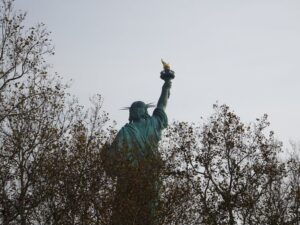
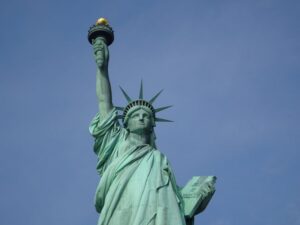
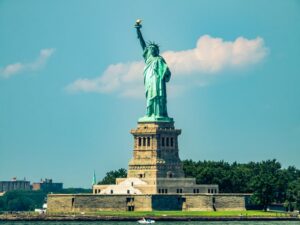
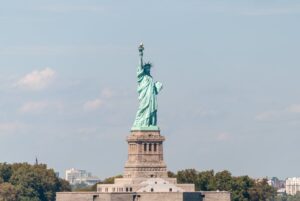
Which Country Gifted The Statue Of Liberty?

France

Spain

England

Italy

Points won
0
Correct score
0%

More Questions

More Articles

Top 10 Key Moments in Global Women’s History

Top 10 Key Moments in Global Women’s History

⏱️ 6 min read

Throughout history, women have fought tirelessly for recognition, equality, and fundamental human rights. Their struggles and achievements have shaped societies, influenced legislation, and transformed the way the world views gender roles. From groundbreaking legal victories to revolutionary social movements, these pivotal moments represent turning points that have progressively advanced women's rights and opportunities across the globe. Understanding these historical milestones provides essential context for contemporary discussions about gender equality and reminds us of the courageous individuals who paved the way for future generations.

Transformative Moments That Changed Women's Lives Forever

1. New Zealand Grants Women's Suffrage in 1893

New Zealand became the first self-governing nation to grant women the right to vote in 1893, setting a powerful precedent for the global women's suffrage movement. Led by suffragist Kate Sheppard, women collected massive petitions that eventually convinced Parliament to pass the Electoral Act. This historic achievement demonstrated that women could participate fully in democratic processes and inspired suffragists worldwide to intensify their campaigns. The success in New Zealand proved that women's political participation wouldn't destabilize society, as opponents had claimed, but rather strengthened democratic representation.

2. The Seneca Falls Convention of 1848

The first women's rights convention in the United States took place in Seneca Falls, New York, in July 1848. Organized by Elizabeth Cady Stanton and Lucretia Mott, approximately 300 attendees discussed the social, civil, and religious rights of women. The convention produced the Declaration of Sentiments, modeled after the Declaration of Independence, which outlined grievances and set an agenda for the women's rights movement. This gathering marked the formal beginning of the organized women's rights movement in America and established a framework for advocacy that would continue for more than a century.

3. The 19th Amendment Ratified in 1920

After decades of activism, protests, and advocacy, American women secured the constitutional right to vote when the 19th Amendment was ratified on August 18, 1920. This victory came after years of strategic organizing, civil disobedience, and the tireless efforts of suffragists like Susan B. Anthony, Alice Paul, and Ida B. Wells. The amendment represented a major milestone in democratic participation, though it's important to note that many women of color continued to face discriminatory barriers to voting for decades afterward. Nevertheless, this constitutional guarantee fundamentally transformed American political life and empowered millions of women.

4. Simone de Beauvoir Publishes "The Second Sex" in 1949

French philosopher and writer Simone de Beauvoir published "The Second Sex," a groundbreaking analysis of women's oppression and the social construction of femininity. Her famous assertion that "one is not born, but rather becomes, a woman" challenged biological determinism and examined how society shapes gender roles. This influential work laid intellectual foundations for second-wave feminism and provided a philosophical framework for understanding gender inequality. The book's impact extended far beyond academia, influencing activists and thinkers worldwide and remaining relevant to contemporary feminist discourse.

5. The United Nations Adopts CEDAW in 1979

The Convention on the Elimination of All Forms of Discrimination Against Women (CEDAW) was adopted by the United Nations General Assembly in 1979, creating an international bill of rights for women. This landmark treaty defined discrimination against women and established an agenda for national action to end such discrimination. CEDAW addressed women's rights in political life, education, employment, healthcare, and family relations. With nearly 190 countries ratifying the convention, it became a powerful tool for advocating women's rights globally and holding governments accountable for gender-based discrimination.

6. The Birth Control Pill Approved in 1960

The U.S. Food and Drug Administration approved the first oral contraceptive pill in 1960, revolutionizing reproductive rights and women's autonomy over their bodies. Developed by scientists Gregory Pincus and John Rock, with funding from women's rights advocate Margaret Sanger and philanthropist Katharine McCormick, the pill gave women unprecedented control over family planning. This medical advancement had profound social implications, enabling women to pursue education and careers with greater freedom and fundamentally altering relationships, sexuality, and family structures. The availability of reliable contraception became central to women's liberation movements worldwide.

7. Title IX Enacted in the United States in 1972

The passage of Title IX of the Education Amendments prohibited sex-based discrimination in any education program or activity receiving federal financial assistance. While often associated with sports, Title IX's impact extended to admissions, financial aid, sexual harassment policies, and academic programs. This legislation opened doors for women in higher education and athletics, dramatically increasing female participation in sports and professional fields previously dominated by men. The law established that educational institutions receiving federal funding must provide equal opportunities regardless of sex, fundamentally transforming American education.

8. Women Gain the Right to Vote in Saudi Arabia in 2015

Saudi Arabia granted women the right to vote and run for office in municipal elections in 2015, marking a significant milestone in one of the world's most restrictive countries for women's rights. Though limited to local elections, this change represented progress in a nation where women had long faced severe restrictions on mobility, employment, and decision-making. Twenty women were elected to municipal councils in the first election where they could participate. While substantial barriers to equality remained, this development signaled gradual shifts in one of the last countries to recognize women's political participation rights.

9. The #MeToo Movement Goes Viral in 2017

Originally founded by activist Tarana Burke in 2006, the #MeToo movement gained global momentum in October 2017 when allegations against powerful figures in entertainment sparked widespread sharing of sexual harassment and assault experiences. Millions of women worldwide used the hashtag to share their stories, breaking long-held silences around sexual violence and workplace harassment. The movement led to significant consequences for perpetrators, policy changes in organizations, and heightened awareness of systemic gender-based violence. It demonstrated the power of collective voice and social media in advancing women's rights and safety.

10. The First Women's March in 2017

On January 21, 2017, millions of people participated in Women's Marches across the globe, making it one of the largest single-day protests in history. Initially organized in Washington, D.C., the march expanded to over 600 cities worldwide, with participants advocating for women's rights, reproductive freedom, healthcare, environmental protection, and social justice. The demonstration reflected intersectional feminism's growing influence and showcased women's political mobilization power. The march spawned ongoing activism and increased political engagement, contributing to record numbers of women running for and winning elected office in subsequent years.

The Ongoing Journey Toward Equality

These ten pivotal moments represent critical junctures in the global struggle for women's rights and equality. From securing basic political participation rights to challenging deeply ingrained social structures, each milestone built upon previous victories while illuminating work that remained. These achievements resulted from the courage, persistence, and collective action of countless individuals who refused to accept inequality as inevitable. While significant progress has been made, challenges persist in areas including economic equality, representation in leadership, reproductive rights, and violence against women. Understanding this history empowers contemporary activists and reminds us that social change requires sustained effort, strategic organizing, and unwavering commitment to justice. The legacy of these moments continues to inspire new generations to advance the unfinished work of achieving full equality for women worldwide.

Top 12 Surprising Facts About the Statue of Liberty’s History

Top 12 Surprising Facts About the Statue of Liberty’s History

⏱️ 7 min read

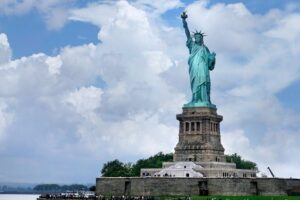
Standing tall in New York Harbor, the Statue of Liberty has welcomed millions of immigrants and visitors to American shores for over a century. While most people recognize Lady Liberty as a symbol of freedom and democracy, her fascinating history contains numerous surprising details that even dedicated history enthusiasts might not know. From her unconventional origins to unexpected engineering challenges, these remarkable facts reveal the complex story behind one of the world's most iconic landmarks.

Unexpected Origins and Construction

1. France Nearly Ran Out of Money Midway Through

The ambitious project to create the Statue of Liberty faced severe financial difficulties that almost derailed it entirely. French fundraising efforts, led by Édouard de Laboulaye and sculptor Frédéric Auguste Bartholdi, struggled to gather sufficient funds. The French people contributed through lotteries, theatrical performances, and public fees, but progress remained slow. It took nearly a decade of fundraising campaigns in France alone to complete the statue. Meanwhile, Americans showed little initial enthusiasm for funding the pedestal, requiring newspaper publisher Joseph Pulitzer to launch an aggressive campaign shaming wealthy donors and encouraging small donations from ordinary citizens.

2. The Original Color Was Copper Brown

Today's iconic green patina wasn't part of the original design. When the Statue of Liberty was first unveiled, she gleamed with a brilliant copper-brown metallic sheen. The statue is constructed from 300 copper sheets, each only 2.4 millimeters thick, hammered into shape and attached to an iron framework. The transformation to the familiar blue-green color occurred gradually over approximately 30 years due to oxidation. By 1906, the patina had fully developed, and there was actually debate about restoring the original copper color. Fortunately, officials decided the green coating protected the copper underneath and had become part of Liberty's identity.

3. Egypt Rejected the Initial Design

Before Lady Liberty found her home in New York Harbor, Bartholdi actually designed her for Egypt. He proposed a massive lighthouse sculpture of a robed woman holding a torch to stand at the entrance of the Suez Canal, which was completed in 1869. Bartholdi called the design "Egypt Bringing Light to Asia." However, the Egyptian government rejected the proposal, deeming it too expensive. Rather than abandoning his vision entirely, Bartholdi reworked the concept, transforming the robed figure into the representation of Libertas, the Roman goddess of liberty, that now stands in New York.

Engineering and Design Marvels

4. Gustave Eiffel's Hidden Contribution

While Bartholdi receives credit as the statue's sculptor, the renowned engineer Gustave Eiffel, who would later design the Eiffel Tower, created the internal structure that makes the statue possible. Eiffel designed an innovative iron framework consisting of a central pylon with secondary skeletal framework that supports the copper skin. This flexible design allows the statue to sway slightly in strong winds and expand and contract with temperature changes. The copper exterior is attached to the framework with iron saddle bars, creating a curtain-wall effect that was revolutionary for its time and influenced modern skyscraper construction.

5. The Torch Has Been Replaced Multiple Times

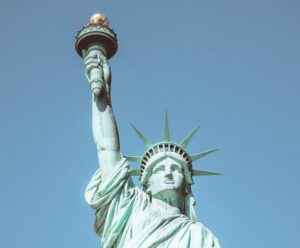
The torch that Liberty holds high above New York Harbor isn't the original. The first torch suffered water damage from years of visitors climbing inside it and modifications made in 1916 that cut windows into it for illumination. During the 1980s restoration, engineers discovered the original torch was beyond repair. A new torch, covered in 24-karat gold leaf and faithful to Bartholdi's original design, replaced it in 1986. The original torch is now on display in the statue's museum, where visitors can examine it up close.

6. The Tablet Contains a Hidden Date

Lady Liberty holds a tablet in her left arm inscribed with "JULY IV MDCCLXXVI"—July 4, 1776, in Roman numerals. This date commemorates American independence. However, many visitors don't realize that the statue itself commemorates a different significant date: the abolition of slavery. The broken shackles and chains at Liberty's feet, difficult to see from ground level, reference the Thirteenth Amendment and the end of slavery in America. Bartholdi designed these elements deliberately, though they're often overlooked in favor of more visible features.

Journey and Assembly

7. She Traveled in 214 Crates

Transporting the massive statue from France to America presented enormous logistical challenges. The statue was disassembled into 350 individual pieces and packed into 214 wooden crates for the transatlantic journey aboard the French frigate Isère in 1885. The ship encountered violent storms that nearly sank it, threatening to send Lady Liberty to the ocean floor. After arrival, reassembly took four months, with workers using Bartholdi's detailed instructions and numbering system to reconstruct the monument piece by piece on Bedloe's Island, now known as Liberty Island.

8. The First Public View Happened in Paris

Before Americans ever saw their gift, the completed statue stood in Paris for nearly a year. Towering over Parisian rooftops near the Parc Monceau in 1884, the statue became a sensation among French citizens. This presentation allowed donors to see the finished product and generated publicity for the project. Photographs from this period show the incongruous sight of Lady Liberty rising above typical Parisian architecture, creating a surreal juxtaposition that captured international attention and built anticipation for her eventual installation in New York.

Political and Cultural Significance

9. Suffragettes Protested at the Dedication

During the statue's dedication ceremony on October 28, 1886, women's suffrage activists staged a protest in New York Harbor. They found it hypocritical to celebrate liberty with a female statue while denying women the right to vote. Suffragettes chartered a boat and circled Liberty Island during the ceremony, holding banners demanding voting rights. The women weren't allowed to attend the official dedication on the island, which was an all-male affair except for Bartholdi's wife and de Lesseps' granddaughter. This protest highlighted the gap between America's ideals and reality.

10. Immigration Connection Came Later

While the Statue of Liberty is now synonymous with immigration and Ellis Island, this association wasn't part of the original intent. The statue was designed to commemorate Franco-American friendship and celebrate the abolition of slavery following the Civil War. The immigration connection developed organically as millions of immigrants passed by the statue while arriving at Ellis Island between 1892 and 1954. Emma Lazarus's poem "The New Colossus," with its famous lines "Give me your tired, your poor, your huddled masses," wasn't added to the pedestal until 1903, seventeen years after the dedication.

Modern Challenges and Preservation

11. Lightning Strikes Her 600 Times Annually

Standing 305 feet tall from ground to torch, Lady Liberty serves as a natural lightning rod. The statue endures approximately 600 lightning strikes each year, with some particularly intense strikes captured in dramatic photographs. Fortunately, Eiffel's iron framework is grounded, channeling electrical charges safely into the earth. This natural phenomenon was anticipated in the design, demonstrating the engineering foresight that has allowed the statue to withstand extreme weather conditions for over a century without major structural damage from electrical storms.

12. The Crown's Windows Symbolize Global Reach

The seven spikes radiating from Liberty's crown aren't merely decorative—each ray represents one of the seven continents and seven seas, symbolizing universal liberty. The 25 windows in the crown are said to represent gemstones found on earth and the heaven's rays shining over the world. Visitors who climb the 354 steps to the crown can peer through these windows for spectacular views of New York Harbor. However, access is limited to only 240 people per day due to the narrow staircase and safety concerns, making it one of the most exclusive observation points in America.

A Living Monument

The Statue of Liberty's history extends far beyond her role as a harbor landmark. From her rejected origins in Egypt to the suffragette protests at her dedication, from Eiffel's hidden engineering genius to the replacement torch, each fact reveals layers of complexity in this monument's story. Understanding these surprising historical details transforms how we view Lady Liberty—not as a static symbol, but as a living monument that has evolved in meaning and significance over nearly 140 years. Her ability to represent different ideals to different generations, while physically withstanding the elements and the test of time, demonstrates why she remains one of the world's most powerful and enduring symbols of hope and freedom.