








⏱️ 6 min read
The United States National Park System represents one of America's greatest achievements in conservation, protecting some of the most spectacular landscapes and ecosystems on Earth. From the geothermal wonders of Yellowstone to the vast wilderness areas scattered across the nation, these protected lands hold fascinating secrets and remarkable stories. These trivia facts reveal the extraordinary history, unique features, and surprising details that make America's national parks truly exceptional destinations.
Fascinating Facts About America's Natural Treasures
1. Yellowstone's Historic Status as the World's First National Park
Yellowstone earned the distinction of becoming the world's first national park when President Ulysses S. Grant signed it into law on March 1, 1872. This groundbreaking decision set a precedent that inspired countries around the globe to establish their own protected areas. The park's creation came after expeditions in the 1860s and 1870s revealed the region's extraordinary geothermal features, including geysers, hot springs, and mud pots. The establishment of Yellowstone marked a revolutionary idea: that wild lands should be preserved for public enjoyment rather than solely exploited for resources.
2. The Supervolcano Beneath Yellowstone's Surface
Beneath Yellowstone's stunning landscape lies one of the world's largest active volcanic systems. The Yellowstone Caldera, often called a supervolcano, measures approximately 34 by 45 miles and contains a massive magma chamber. This volcanic hotspot powers the park's famous geothermal features. The volcano has experienced three major eruptions in the past 2.1 million years, with the most recent occurring about 640,000 years ago. Scientists continuously monitor the area, though they emphasize that an eruption is not imminent.
3. Old Faithful's Predictable Performance
Old Faithful, Yellowstone's most famous geyser, erupts with remarkable consistency, though not exactly on schedule as many believe. The geyser shoots water approximately 130 to 180 feet into the air during eruptions that last between 1.5 to 5 minutes. Rangers can predict eruptions within a 10-minute window by measuring the duration of the previous eruption. Longer eruptions indicate longer intervals before the next one, typically ranging from 60 to 110 minutes. This reliability has made Old Faithful an icon of the National Park System since the park's earliest days.
4. The National Park Service's Founding Year
While Yellowstone became a national park in 1872, the National Park Service itself wasn't established until August 25, 1916. President Woodrow Wilson signed the Organic Act, creating the federal bureau responsible for managing national parks and monuments. Before this, various government departments haphazardly managed different parks. The NPS now oversees more than 420 sites, including 63 designated national parks, along with monuments, battlefields, recreation areas, and historic sites across all 50 states and U.S. territories.
5. Yellowstone's Incredible Geothermal Concentration
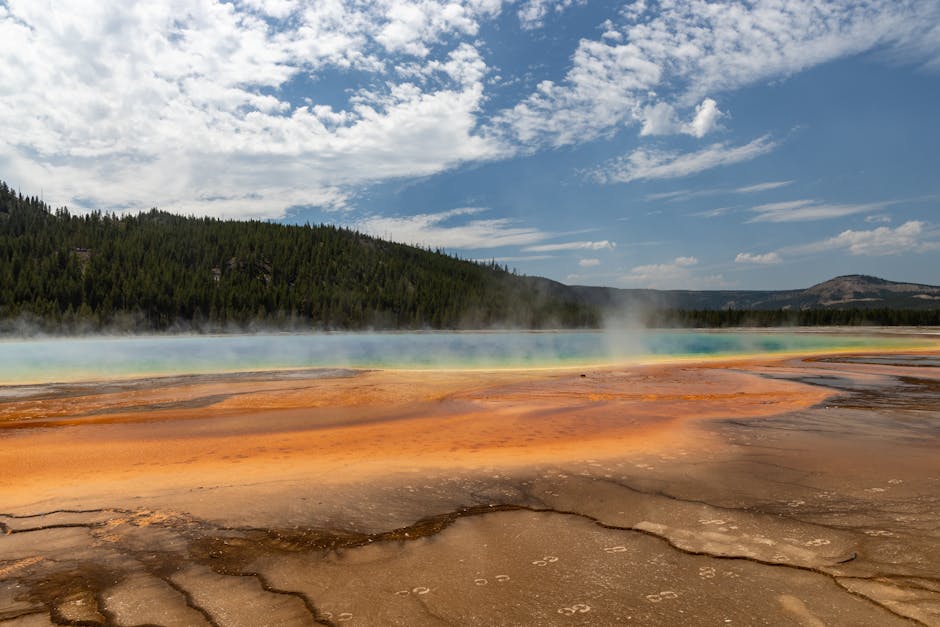
Yellowstone contains more than half of the world's active geysers, with over 500 geysers among its 10,000-plus geothermal features. This concentration is unmatched anywhere on Earth. The park also hosts numerous hot springs, fumaroles, and mud pots, creating an otherworldly landscape. The Grand Prismatic Spring, the largest hot spring in the United States, displays brilliant colors created by thermophilic bacteria that thrive in the extreme temperatures, producing vibrant oranges, yellows, greens, and blues in concentric rings.
6. The Vastness of America's Largest National Park
Wrangell-St. Elias National Park and Preserve in Alaska holds the title of America's largest national park, encompassing over 13.2 million acres—larger than Yellowstone, Yosemite, and Switzerland combined. This massive park contains the continent's largest collection of glaciers and peaks above 16,000 feet. In stark contrast, Hot Springs National Park in Arkansas is the smallest at just 5,550 acres, demonstrating the remarkable diversity in size across the National Park System.
7. Yellowstone's Role as a Wildlife Sanctuary
Yellowstone serves as the core of the Greater Yellowstone Ecosystem, one of the largest nearly intact temperate-zone ecosystems on Earth. The park provides critical habitat for 67 mammal species, including grizzly bears, wolves, bison, and elk. The reintroduction of gray wolves in 1995 represented one of the most successful conservation efforts in history, restoring ecological balance and creating a trophic cascade that transformed the landscape. Today, Yellowstone's bison herd is one of the few genetically pure populations remaining in North America.
8. The Most Visited National Park
Great Smoky Mountains National Park consistently ranks as America's most visited national park, welcoming over 12 million visitors annually—more than double the visitors to the Grand Canyon. Its popularity stems from multiple factors: no entrance fee, location between major population centers, stunning biodiversity with over 19,000 documented species, and the scenic Blue Ridge Parkway connection. The park straddles the North Carolina-Tennessee border and preserves Appalachian mountain culture alongside its natural wonders.
9. Yellowstone Lake's Hidden Depths
Yellowstone Lake, one of the highest-elevation lakes in North America at 7,733 feet, holds surprising secrets beneath its surface. The lake covers 136 square miles with depths reaching 400 feet. Hydrothermal vents on the lake floor create warm water pockets even when the surface is frozen. Scientists have discovered deep underwater geysers, canyons, and craters, making the lake floor resemble an alien landscape. The lake remains frozen for approximately half the year, with ice sometimes reaching three feet thick.
10. Death Valley's Extreme Record
Death Valley National Park holds the world record for the highest reliably recorded air temperature: 134°F (56.7°C) on July 10, 1913, at Furnace Creek. The park represents a land of extremes, featuring the lowest point in North America at Badwater Basin (282 feet below sea level), while Telescope Peak towers at 11,043 feet. Despite its forbidding name and harsh conditions, Death Valley supports over 1,000 plant species and numerous animals specially adapted to desert survival.
11. The Underground Marvel of Mammoth Cave
Mammoth Cave National Park in Kentucky protects the world's longest known cave system, with over 420 miles of surveyed passageways—and experts believe hundreds more miles remain undiscovered. The cave system has been explored for centuries, with evidence of Native American use dating back 4,000 years. The limestone labyrinth features enormous chambers, underground rivers, and unique ecosystems. New passages are regularly discovered, continually extending the cave's documented length and maintaining its status as the planet's most extensive cave network.
12. The African American Legacy in National Park Formation
Buffalo Soldiers, African American cavalry regiments, played a crucial role in early National Park management. From 1891 to 1913, these soldiers served as some of the first park rangers in Yosemite, Sequoia, and General Grant (now Kings Canyon) National Parks. They built trails, fought forest fires, stopped poachers, and protected the parks before the National Park Service existed. Their contributions were essential to preserving these natural wonders, though their story remained largely untold for decades. Today, their legacy is increasingly recognized as a vital chapter in National Park history.
Preserving Natural Wonders for Future Generations
These twelve fascinating facts barely scratch the surface of the remarkable stories contained within America's National Park System. From Yellowstone's world-changing designation as the first national park to the extreme environments of Death Valley, from underground cave systems to active supervolcanoes, these protected lands offer endless opportunities for discovery and wonder. The National Park Service's mission to preserve these treasures while making them accessible ensures that future generations will continue to experience the same awe that inspired their protection over a century ago.