



















Which herb is traditionally used to make mojito cocktails?

1 / 20 Questions
0 Points

Which herb is traditionally used to make mojito cocktails?

Spearmint

Basil

Cilantro

Parsley

Points won
0
Correct score
0%

More Questions

More Articles

Did You Know? 20 Fun Facts About Global Inventions

Did You Know? 20 Fun Facts About Global Inventions

⏱️ 4 min read

Did You Know? 20 Fun Facts About Global Inventions

Throughout human history, inventions have shaped our world and transformed how we live. From accidental discoveries to purposeful innovations, these creations have left an indelible mark on civilization. Here are 20 fascinating facts about global inventions that demonstrate human ingenuity and creativity across different cultures and time periods.

1. Post-it Notes: A Failed Experiment

In 1968, scientist Spencer Silver at 3M was attempting to create a super-strong adhesive but instead developed a weak, reusable adhesive. This "failure" eventually became the Post-it Note, now used billions of times annually worldwide.

2. The Ancient Chinese Compass

The first compass wasn't used for navigation but for feng shui. Created in China during the Han Dynasty (2nd century BCE), it was initially a fortune-telling device before becoming a crucial navigation tool.

3. Microwave's Accidental Discovery

Percy Spencer discovered microwave cooking in 1945 when a chocolate bar melted in his pocket while working with magnetrons. He was standing near active radar equipment at Raytheon Corporation.

4. Television's Global Evolution

Television wasn't invented by a single person but evolved through contributions from multiple inventors across different countries. Philo Farnsworth demonstrated the first electronic television system in 1927.

5. The Japanese Bullet Train

The Shinkansen, introduced in 1964, was the world's first high-speed rail system. Its design was inspired by the streamlined shape of a kingfisher's beak.

6. Velcro's Natural Inspiration

Swiss engineer George de Mestral invented Velcro after examining burrs that stuck to his clothes and his dog's fur during a hunting trip in 1941.

7. India's Zero Revolution

The concept of zero as a number was developed in ancient India around 458 CE. This mathematical innovation revolutionized calculations and laid the foundation for modern mathematics.

8. The First Computer Mouse

Douglas Engelbart invented the computer mouse in the 1960s. The first prototype was made of wood and had only one button.

9. Arabic Coffee Origins

Coffee was first discovered in Ethiopia, but it was Arab scholars who first roasted and brewed coffee beans, creating the beverage we know today around the 15th century.

10. The Roman Concrete Mystery

Ancient Roman concrete is more durable than modern versions. The secret ingredient was volcanic ash, creating structures that have lasted over 2,000 years.

11. German Automobile Pioneer

Karl Benz patented the first gasoline-powered car in 1886. His wife, Bertha Benz, completed the first long-distance automobile journey to prove its viability.

12. Australian Wi-Fi Innovation

Wi-Fi technology was developed by CSIRO researchers in Australia. The breakthrough came while researching radio astronomy and detecting exploding black holes.

13. Swedish Safety Match

Gustaf Erik Pasch invented the safety match in 1844, separating the striking surface from the match head to prevent accidental ignition.

14. Korean Alphabet Creation

Hangul, the Korean alphabet, was invented by King Sejong in 1443. It was specifically designed to be easy to learn and increase literacy rates.

15. Scottish Penicillin Discovery

Alexander Fleming discovered penicillin in 1928 when he noticed mold killing bacteria in a petri dish he had forgotten to clean before going on vacation.

16. Dutch Microscope Revolution

Antonie van Leeuwenhoek created the first practical microscope in the 1670s, enabling the discovery of microorganisms and revolutionizing biology.

17. Brazilian Aircraft Innovation

Alberto Santos-Dumont, a Brazilian inventor, made the first controlled powered flight in Europe in 1906, contributing significantly to early aviation development.

18. Finnish Text Messaging

The first commercial SMS message was sent in Finland in 1993, marking the beginning of modern mobile communication methods.

19. Egyptian Paper Evolution

Ancient Egyptians invented papyrus around 3000 BCE, creating the first paper-like writing material and revolutionizing information storage and transmission.

20. New Zealand's Electric Fence

Bill Gallagher Sr. invented the electric fence in New Zealand in 1937 after observing his horse using the car as a scratching post, leading to modern farm management practices.

Conclusion

These 20 inventions from around the globe demonstrate how human innovation knows no boundaries. From accidental discoveries to purposeful creations, each invention has contributed to human progress in unique ways. They remind us that great ideas can come from anywhere and that the spirit of innovation continues to drive human advancement across all cultures and nations.

These inventions also highlight how different cultures and countries have contributed to our modern world, showing that technological progress is truly a global effort. Whether it's ancient civilizations laying the groundwork for modern mathematics or recent innovations in digital technology, each discovery builds upon previous knowledge to create something new and valuable for humanity.
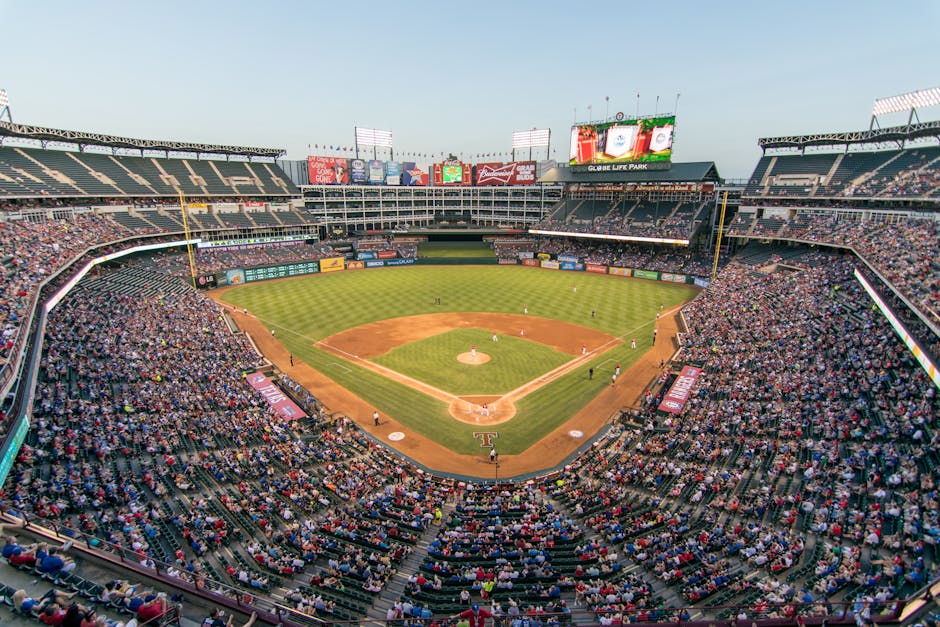
Trivia on US Sports: Baseball

Trivia on US Sports: Baseball

⏱️ 4 min read

Trivia on US Sports: Baseball

Fascinating Baseball Trivia: America's Pastime Through the Ages

Baseball has been an integral part of American culture for over 150 years, and throughout its rich history, the sport has accumulated countless interesting facts, records, and unusual occurrences. This collection of baseball trivia showcases the depth and complexity of America's favorite pastime.

Historical Milestones

The first professional baseball team, the Cincinnati Red Stockings, was established in 1869, marking the beginning of professional baseball in America. The team went undefeated in their first season, with a remarkable 57-0 record, setting a standard for excellence that would inspire future generations.

  • The first World Series was played in 1903 between the Boston Americans (now Red Sox) and the Pittsburgh Pirates
  • The first night game in Major League Baseball was played on May 24, 1935, at Cincinnati's Crosley Field
  • The American League adopted the designated hitter rule in 1973, creating a fundamental difference between the two leagues that lasted until 2022

Notable Records and Statistics

Baseball is often called a "game of numbers," and its statistical history contains some remarkable achievements that have stood the test of time. Some records seem virtually unbreakable in the modern era:

  • Joe DiMaggio's 56-game hitting streak (1941)
  • Cal Ripken Jr.'s 2,632 consecutive games played
  • Cy Young's 511 career wins
  • Nolan Ryan's 7 no-hitters
  • Pete Rose's 4,256 career hits

Unusual Rules and Traditions

Baseball features numerous unique rules and traditions that have evolved over time. Some of these peculiarities make the sport distinctively American and add to its charm:

  • The seventh-inning stretch tradition reportedly began when President William Howard Taft stood to stretch during a game in 1910
  • Until 1920, it was legal to "doctor" the baseball using saliva or other substances
  • The practice of using new baseballs began after Ray Chapman's death in 1920 when he was hit by a darkened, scuffed ball
  • The height of the pitcher's mound was standardized at 10 inches in 1969 after the "Year of the Pitcher" in 1968

Ballpark Facts

Baseball stadiums have their own unique characteristics and historical significance. Each ballpark features distinct dimensions and architectural elements that can affect gameplay:

  • Fenway Park, opened in 1912, is the oldest active Major League Baseball stadium
  • The Green Monster at Fenway Park stands 37 feet, 2 inches high
  • Coors Field in Denver uses humidors to store baseballs due to the effects of high altitude on ball flight
  • The ivy on Wrigley Field's outfield walls was planted in 1937

Equipment Evolution

Baseball equipment has undergone significant changes since the sport's inception. These modifications have improved player safety and performance:

  • The first baseball gloves were introduced in the 1870s and were considered a sign of weakness
  • Batting helmets weren't mandatory until 1971
  • Cork-centered baseballs replaced rubber-centered ones in 1910
  • The modern baseball contains 108 double stitches

Statistical Oddities

Baseball's extensive statistical record-keeping has produced some fascinating coincidences and unusual achievements:

  • The longest professional baseball game lasted 33 innings between the Pawtucket Red Sox and Rochester Red Wings in 1981
  • The shortest complete game in MLB history lasted just 51 minutes (1919)
  • Only 23 perfect games have been pitched in MLB history since 1876
  • The Chicago Cubs went 108 years between World Series championships (1908-2016)

Cultural Impact

Baseball has significantly influenced American culture beyond the playing field:

  • "Take Me Out to the Ball Game" was written in 1908 by Jack Norworth, who had never attended a baseball game
  • The term "bullpen" allegedly originated from Bull Durham tobacco advertisements displayed in warm-up areas
  • Baseball cards were first produced in the 1860s as advertising vehicles
  • The phrase "southpaw" for left-handed pitchers originated because most ballparks were built with home plate facing west

Modern Developments

Contemporary baseball continues to evolve with technological advances and rule changes:

  • Video replay review was implemented league-wide in 2014
  • The pitch clock was introduced in 2023 to speed up gameplay
  • Advanced analytics and statcast technology now measure previously unquantifiable aspects of the game
  • The universal designated hitter rule was adopted in 2022

These fascinating facts and figures represent just a small portion of baseball's rich tapestry of history and tradition. The sport continues to generate new statistics, records, and memorable moments with each passing season, adding to its legacy as America's pastime. Whether discussing historical achievements, unusual rules, or modern innovations, baseball's complexity and depth provide endless material for discussion and appreciation.